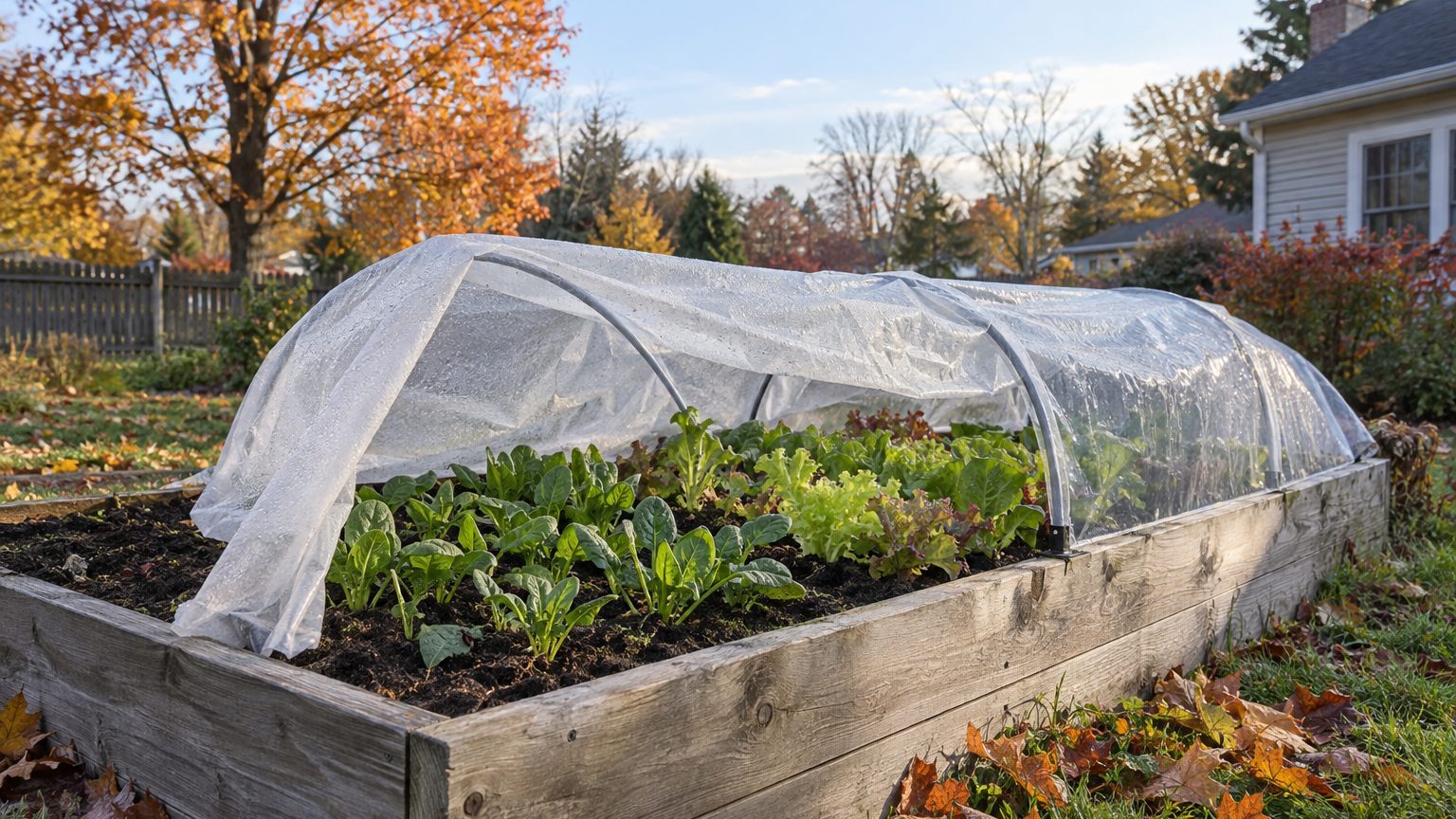

In South Carolina, season extension mostly means moving the edges of an already long season. Cool-season crops can go in earlier and stay later, and a cover can carry them through the odd hard night. At the Charleston airport station, the last spring freeze falls between February 28 and March 17, and the first fall freeze between November 20 and December 5. Covers help inside that frame, but warm soil, daylight and humid summers set the real limits.
When the soil is warm enough in South Carolina
The date most people want is the last spring freeze. At the Charleston airport station (USW00013880), the NOAA NCEI 1991-2020 Climate Normals put it between February 28 and March 17, using the 30-70% band of 32F freeze probabilities. That is a probability, not a promise, and some years will freeze outside the range. It also describes one airport. Peninsular Charleston is milder than the station, and the Upstate runs several weeks tighter at both ends.
Treat that date as a proxy. A freeze date tells you when the sky stops threatening your seedlings. It says little about whether the ground is ready to feed them. Soil warms after the frost risk ends, not with it, and cold February soil holds seeds back in ways a calendar cannot show. A pea or a spinach seed will tolerate the chill. Beans, squash, tomatoes and peppers will sit and sulk, or rot.
What a cover does in the meantime
A cover works on heat the ground has already stored. Soil soaks up sun by day and releases that warmth at night. Fabric or plastic over hoops traps some of it in still air near the plants, and a second layer inside the first (a light fabric under a hooped tunnel, say) adds another pocket of calm air. The gain is real but variable. It depends on the material, the clarity of the night, the wind, and whether the soil was warm and moist to begin with. Over cold, dry ground in late winter, a cover has little heat to hold.
That variability matters because a cover shifts the limit. It does not remove it. A bed of tender transplants under fabric is not frost-proof, and one clear, still night after a mild week can take the whole bed. Hardy crops sit comfortably in that margin. Tender ones should not be gambled on it.
Covers can also warm the soil ahead of planting. Laid over the bed some time before you sow, they let the ground gather heat that bare soil would lose to the wind. A cheap soil thermometer, pushed a couple of inches down in the morning, tells you more than the calendar does. Compare the reading with the minimum germination temperature on your seed packet.
If your structure is closed (a cold frame with a lid, a tunnel with sealed ends), ventilation is part of keeping the crop alive. A closed frame in spring sun can cook its contents within an hour, even on a cold morning. Prop it open on any sunny day.
How long the season lasts here
Both frost ranges come from the same Charleston airport station, so the arithmetic is fair. The last spring freeze runs from February 28 to March 17, and the first fall freeze from November 20 to December 5.
| Scenario | Last spring freeze | First fall freeze | Days between |
|---|---|---|---|
| Shortest window | March 17 | November 20 | 248 |
| Longest window | February 28 | December 5 | 280 |
So the freeze-free stretch at this station runs from about 248 to 280 days. That is the better part of a year. Compare it with a northern garden that gets perhaps half as long, and the whole logic of planting changes. Those numbers apply to the Charleston station only.
What a long window allows
A long window allows a second sowing, and often a third. Lettuce, radishes, beets and carrots do not have to be sown once and hoped over. A bed can be planted in early spring, cleared in early summer and sown again in late summer for a fall harvest, with the late edge of the window as the finish line. The Extending the Season: What a Cover Buys, and What It Cannot page explains what a cover adds at either end of the season. The succession sowing guide on this site covers the spacing between sowings.
The window also changes the transplant question. In a short season, a transplant buys weeks you cannot get any other way, and the root check is worth paying. Here, root crops that resent disturbance can go in as seed, and a failed sowing can simply be redone. Transplants earn their place mainly with heat-lovers such as tomatoes and peppers, which need a head start in warm soil rather than a few extra weeks of calendar.
The frost-free window is also not the same as a good growing window. Midsummer, in the middle of those 248 to 280 days, is often the hardest part for cool-season crops. Gardeners in Extending the Growing Season in Louisiana face a similar long, humid stretch, while Extending the Growing Season in Arizona shows what a long season looks like when the problem is dry heat.
Heat and water in South Carolina
Here is a gap to flag. Coastal and midland South Carolina summers are hot and humid, which is enough to say that heat and moisture are real issues. Your county extension office can give you local figures. What the data do support is a different governing fact: light and cold, working together.
Latitude and the daylight threshold
The Charleston station sits at 32.90 degrees north. That is the latitude of one city, not of a state that spans several degrees, so a reader near the edge of South Carolina should look up their own. Latitude matters because day length, not warmth, tells an onion to stop making leaves and start making a bulb. It also sets the date in late fall when daylight drops below what most crops need to keep growing. After that date, a cover holds a crop alive rather than growing it. Spinach and kale under fabric in December will mostly sit and wait, not add leaf. At this latitude that date arrives later and bites less than in a northern state, which is part of why winter gardening here is rewarding. For onions, it means choosing types suited to shorter days, because a long-day type will bulb late or poorly.
How cold the coldest month gets
The coldest month at the reference station has a mean daily minimum of 38.9 F. That is the average low, not the record low and not the monthly average, so it tells you about typical nights rather than the worst ones. Above freezing on average means a light fabric is often enough for ordinary winter nights. But an average hides the cold snaps, and a snap well below it is exactly when a bare or lightly covered bed gets hurt. Those are the nights when a framed, closed structure (vented again at first sun) does what fabric alone cannot.
The USDA Plant Hardiness Zone Map (2023, built on 1991-2020 normals) puts South Carolina across 7a to 9a. The system rests on one variable, the average annual extreme minimum, so it tells you about perennial survival, not about vegetable timing. Use the zone of your own location, and expect Charleston and the Upstate to differ.
Where summers are hot and humid, covers change jobs. Heavy plastic left over a bed in warm weather turns it into an oven. Shade, airflow and mulch at the root matter more than any winter structure, and wet, warm foliage invites mildew and other diseases.
Which season extension suit South Carolina
The choice here is by type, never by variety. This is a long-season state, so the earliest-maturing types are not the first criterion, as they would be in a short-season state. Heat and humidity decide most things. The main types fall into a few groups:
- Light floating fabric: suits typical winter nights, since the coldest-month minimum averages above freezing, and it lets air and water through.
- Hooped low tunnels: hold a layer of still air and take a second layer inside for cold snaps. Vent them on sunny days.
- Vented cold frames: give the most protection on hard nights, but they heat quickly in spring sun, so open them every morning.
- Shade and airflow structures: for summer, when the job is keeping roots cooler and leaves dry.
Humidity pushes disease resistance to the top of the list when you pick crops. Warm, wet foliage under a tight cover grows mildew quickly. Choose types bred or listed for resistance, give plants room, and keep covers open enough to move air. Where summer is hot, favor crops and arrangements that give airflow and shade at the root.
The only recommendation that means anything is one from trials run in your own region. South Carolina’s coast, midlands and Upstate differ in cold, humidity and day length, so a variety that thrives near Charleston may fail near Greenville. Clemson Extension publishes locally tested recommendations and can direct you to a county agent who knows your soil. Start there before buying seed.
Common questions
Is the last frost date the right day to plant?
Not by itself. At the Charleston airport station the last spring freeze falls between February 28 and March 17, but frost is only a proxy. Warm-season crops need warm soil, and the soil lags behind the air.
Do the Upstate and the coast share the same dates?
No. The dates here belong to the Charleston airport station. Peninsular Charleston is milder, and the Upstate runs several weeks tighter at both ends. Check your own county’s figures with Clemson Extension.
Will a cover make my plants frost-proof?
No. A cover shifts the limit but does not remove it. The gain depends on the material, the night, the wind and the soil’s starting warmth, and one clear, still night can still kill tender plants.
Do I need to open a cold frame on sunny days?
Yes. Venting is how you keep the crop alive. A closed frame in spring sun can cook its contents in an hour. Everything here is passive, so no heaters or lamps belong inside a covered structure.