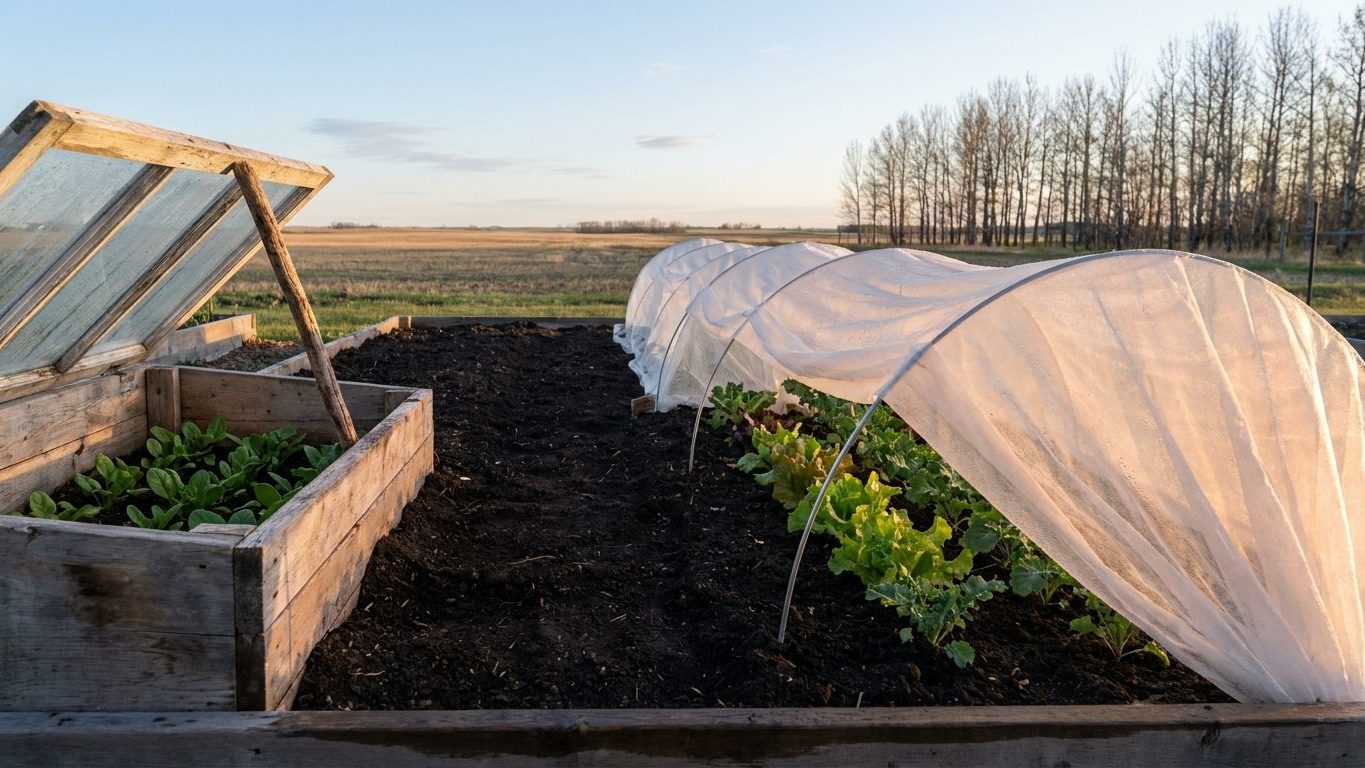

Floating row cover over hoops and a cold frame are the extenders that pay off in Pennsylvania gardens. A simple unheated hoop house is the step up for anyone who wants greens in winter. Heavy or expensive setups rarely earn their cost, because the shoulder seasons here are mild enough that a few degrees of protection do most of the work.
The short answer for Pennsylvania
Start with the frost dates, because they set how much protection you need. At the Philadelphia reference station, the last spring freeze (32°F) falls between March 29 and April 6, and the first fall freeze between November 5 and November 16. Those dates come from NOAA’s 1991-2020 climate normals and mark the 30 to 70 percent probability band: in a given year, a 32°F freeze has somewhere between a 30 and 70 percent chance of still arriving (spring) or having already arrived (fall) by those dates. A freeze can still show up outside the band, and a late one is the usual reason tomatoes get lost in April.
Winter matters too. The mean daily minimum of the coldest month at the same station is 26.0°F. That is cold enough to kill tender crops left bare, but mild enough that spinach, kale, mache and carrots can ride out most winters under a layer of fabric or plastic. Philadelphia is the mildest corner of the state, so treat these numbers as the generous end of the range.
For a broader look at how the pieces fit, see Extending the Growing Season in Pennsylvania. The comparison below covers the four extenders most gardeners end up using.
| Extender | Best job | Watch for |
|---|---|---|
| Lightweight row cover on hoops (low tunnel) | Starting spring crops early and holding fall crops past the first freeze | Heat buildup on sunny days; covers blown loose by wind |
| Cold frame | Hardening off seedlings, spring lettuce, winter greens | Overheating when the lid stays shut on a mild day |
| Unheated hoop house | Winter greens and an earlier start on warm crops | Snow load on the frame; ventilation in humid weather |
| Individual cloches or water-filled wraps | Getting a few tomato or pepper plants out early | Only protects one plant at a time; cold nights still get through if the plant outgrows it |
The low tunnel is the best value. Wire or PVC hoops, a roll of row cover and a few clips cost far less than a greenhouse, and the cover can be lifted for watering and weeding in a minute.
What will not work here
Clear plastic with no venting is the most common failure. A March day in southeastern Pennsylvania can turn sunny and warm, and an enclosed tunnel or cold frame can overheat in an hour or two. Seedlings that survive a 28°F night can cook at noon. Anything under plastic needs a way to open it, and a person who can open it before work and close it by evening.
Counting on an extender to grow summer crops through winter will also fail. At about 39.87 degrees north (the latitude of Philadelphia), midwinter days are short enough that growth nearly stops no matter how warm the tunnel is. Covers hold crops in place there, and they do not make new leaves in December and January. Sow your fall greens early enough that they reach harvest size before the days shorten. Planting them in late October and hoping the cover will push them along leads to a bed of tiny seedlings in February.
Light fabric alone does not carry tender crops through a hard freeze. A mean coldest-month minimum of 26.0°F means many nights fall below that, and a single layer of lightweight row cover adds only a few degrees. Tomatoes, peppers and basil need a dry night with a heavier cover or a second layer, or they need to stay in the house until the freeze risk has passed.
Humid summers cause a different problem. Leaving covers on past the end of the cold weather traps moisture around leaves and invites mildew and rot. On squash and cucumbers, a cover left on during bloom also keeps bees out. Take it off once nights stay reliably above freezing.
The northern tier and the Allegheny ridges add two more failures. Snow piles up on low hoops and bends them, and wind off open ridges tears loose covers that would stay put in a Philadelphia backyard. A frame built for the southeast corner will need more anchoring, closer hoop spacing and a snow-clearing routine farther north.
What changes across Pennsylvania
No single answer covers the whole state. The USDA Plant Hardiness Zone Map (2023 edition, built from 1991-2020 normals) runs from 5a to 7b across Pennsylvania. The map is based only on the average annual extreme minimum temperature, so it tells you whether a plant survives winter and says nothing about when to plant. Frost dates answer that question, and the two sets of numbers should be read together.
The Philadelphia dates above are the mild end. The northern tier and the Alleghenies run two to four weeks later in spring. That shortens the window on both ends, so the same extender buys more value in the north. A row cover that gives a southeastern gardener an extra week or two in April can mean the difference between planting and waiting for a gardener at altitude.
How should a northern or high-elevation gardener adjust?
Shift the whole calendar later in spring and treat fall as an earlier deadline. Plan on sturdier hoops and double layers of cover, and expect a cold frame to do more of the work for seedlings. Hardy greens that overwinter reliably near Philadelphia may need a tunnel inside a tunnel farther north. Latitude matters as well: 39.87 degrees is the reference city, and a garden near the New York border sits at a noticeably higher latitude with shorter winter days.
To find your own zone, look up your location on the USDA map itself, and do not assume it from a neighbor’s garden. Valleys, ridgetops and lakeshore sites can sit in different zones within a few miles of each other.
Where to check this for your own county
Penn State Extension is the place to confirm any of this for your own ground. Each county has an office with educators who know the local microclimates, and the extension site hosts the state’s gardening guidance. Two things are worth looking for there: the local planting calendar for your county and the vegetable varieties that have been trialled in conditions like yours. A variety bred for a short season may do well in the northern counties and bolt in the southeast, and county trial notes tell you which is which.
A county recommendation beats a state one. Your county office knows whether your area sits closer to those dates or three weeks behind them, and whether your soil drains well enough for a cold frame in March.
If you are not sure what to ask, bring two questions: when do local gardeners usually set out tomatoes without protection, and which cold-hardy crops overwinter in your area under cover? The answers give you a starting point that fits your county, and you can refine it with your own observations. For timing a cover on a particular night, see When to Cover Your Garden in Pennsylvania.
Checking this against your own garden
Your garden outranks every date in this article. Three signs show what is really happening at your spot, and none needs equipment.
First, feel the soil. Push your hand a few inches into the bed in the morning. If it feels cold and damp in the same way as the air, warm-season seeds will sit and rot. If it feels like a cool room, you can sow. Beds that warm sooner than the one next to them tell you where to put early crops, and a bed that stays cold long after its neighbors is where the cover goes first.
Second, watch for the first flush of male flowers on squash and cucumbers. They open before the female flowers, and when they appear in numbers the plants have had enough warmth to commit to the season. If they come late under a cover, the tunnel is cooler than you think, or the bed gets less sun than you assumed.
Third, look at the first true leaves on seedlings. The first pair of leaves are rounded seed leaves. The true leaves that follow take the shape of the adult plant. Seedlings under a cover that put on true leaves with good color are in a comfortable spot. If they stall or turn pale, the cover is holding in cold or too little light.
Write down the dates you see these signs for a few years, and you will have a calendar tuned to your own yard.
Common questions
What is the cheapest season extender to start with?
Lightweight row cover on simple hoops. It costs little, goes up in minutes, and gives a few degrees of frost protection in spring and fall. It works in every part of the state, and it can be lifted for weeding and watering.
Do I need a greenhouse to grow winter greens in Pennsylvania?
No. Cold-hardy greens such as spinach, kale and mache can overwinter in a cold frame or an unheated hoop house, especially in the milder southeast. In colder parts of the state, an extra layer of cover inside the structure helps. Growth is slow in midwinter, so plant early enough that the crop is nearly full-sized before the shortest days.
When can I plant tomatoes if I use a cover?
Cover buys a few degrees, not a different season. At the Philadelphia reference station the last spring freeze falls between March 29 and April 6 in the 30 to 70 percent probability band, and the northern tier and Alleghenies run two to four weeks later. Wait until the soil is warm to the touch and have a cover ready for any cold night.
Why do my plants die under plastic on sunny days?
Heat builds up fast in a closed space, even in early spring. Vent cold frames and tunnels on mild days, and close them again before the temperature drops in the evening. Row cover fabric breathes better than clear plastic and is safer if you cannot be home to open and close things.