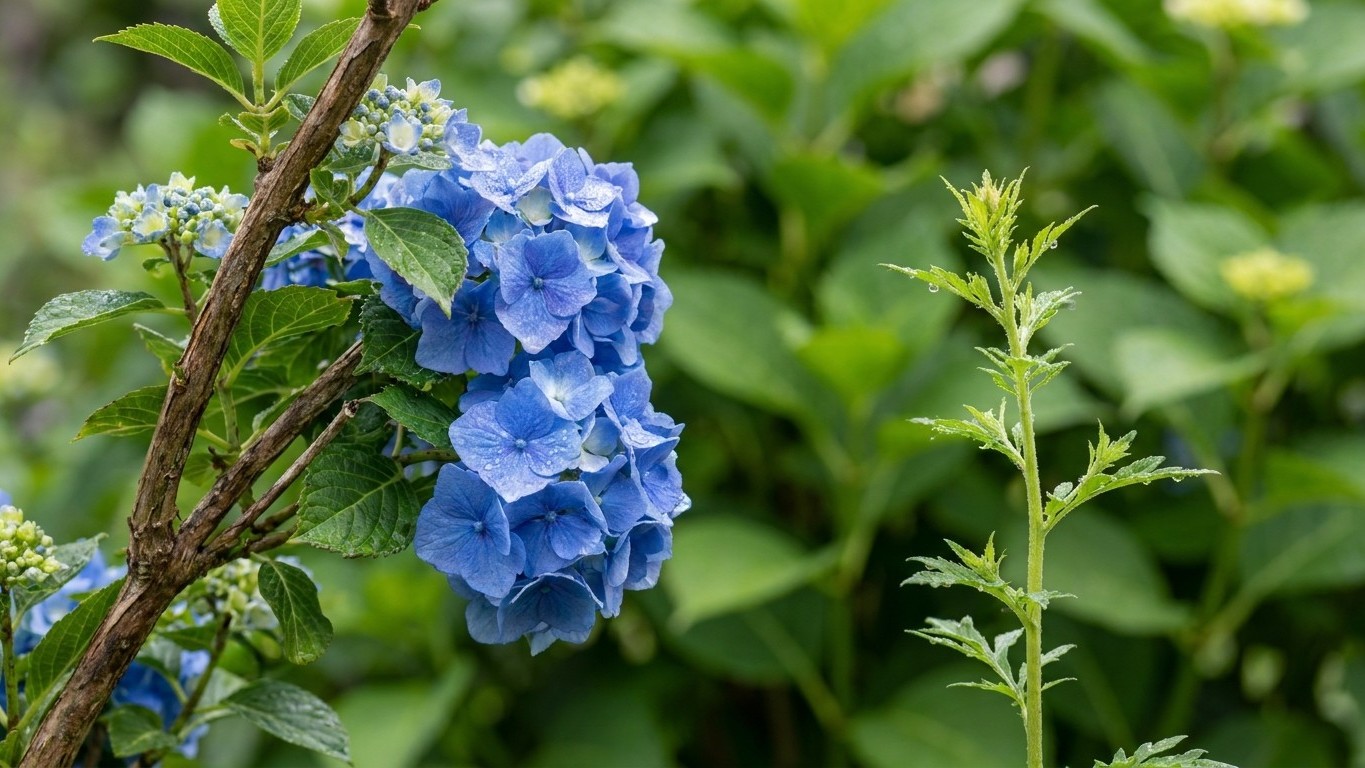

In New York City, container-grown hydrangeas go into the ground from late March through May, with a second window in early October. The city’s last spring frost falls between March 23 and April 3, so a plant bought in April is safe from freeze risk almost everywhere downstate. Upstate runs weeks later. The bigger decision is which type you plant, because bigleaf hydrangeas can lose a whole year of flowers to one cold snap while panicle and smooth types rarely do.
When to plant Hydrangeas in New York

The dates come from the NOAA NCEI U.S. Climate Normals for 1991-2020, which give the 30-70% band of 32°F freeze probabilities at Central Park. The last spring frost there falls between March 23 and April 3. The first fall frost falls between November 14 and November 27. Central Park is a dense urban site that holds heat. The Hudson Valley, the Finger Lakes, the North Country and anywhere in the Adirondacks or Catskills run later in spring and earlier in fall. Use the city window as the earliest possible date and add time as you move north or uphill.
Seed, cuttings or a nursery plant
Starting hydrangeas from seed is a poor bet. Seedlings take years to flower and rarely match the named cultivar they came from. The practical routes are a container shrub from a nursery or a cutting rooted from a plant you already have. Softwood cuttings taken in June usually root in four to six weeks under high humidity, then need their first winter in a pot, a cold frame or an unheated garage. Plan on one full year between cutting and garden bed.
Hardening off, with the dates worked out
A shrub that spent winter dormant in a field can go in the ground before the last frost, because bare wood tolerates cold. A greenhouse plant that is already leafed out is different. Soft new growth on bigleaf types burns in a single freeze. Those plants need hardening off, which means seven to ten days outdoors in gradually longer exposures: shade first, then morning sun, then full day, bringing them in on cold nights.
Here is the arithmetic for New York City. If you want the plant in the ground on April 3, the late edge of the frost window, start hardening off between March 24 and March 27. If you’d rather be in the ground on March 23, start between March 13 and March 16.
Planting out, and the fall option
Fall planting works well in the Northeast because warm soil and cool air favor root growth. A common rule of thumb is to have a shrub in the ground at least six weeks before the soil freezes. The frost dates above are not ground-freeze dates, but they are a fair proxy. Counting back six weeks from November 14 gives October 3, and from November 27 gives October 16. Today is October 11, so in New York City the fall window is closing and upstate it has probably shut. If you miss it, keep the plant watered in its pot and set it out in spring.
Soil and site preparation
Morning sun and afternoon shade is the classic exposure, and in New York’s humid summers it is hard to beat. Bigleaf and oakleaf types scorch and wilt in hot western sun. Panicle hydrangeas are the exception, since they bloom best with six or more hours of direct light. High, thin shade, such as an open oak canopy, suits bigleaf plants. A spot beneath a maple with shallow surface roots does not, because the tree will out-drink the shrub every August.
Drainage matters more than soil type. Hydrangeas want moisture but not standing water, so dig a hole about 12 inches deep, fill it with water, and fill it again once it drains. If water is still sitting there after several hours, raise the bed by 6 to 8 inches or choose another spot. Heavy clay is common across much of the state and can be worked with compost. Sandy soil, common on Long Island, drains fast and needs organic matter to hold moisture. The cheapest way to learn what you have is a soil test, covered in the last section.
Do the amending in the weeks before planting. Spread 2 to 3 inches of compost over the whole planting area, not just the hole, and fork it into the top 8 to 10 inches. Amending only the hole creates a bathtub in clay that holds water around the roots. Test the pH at this stage too, since it controls bigleaf flower color and is far easier to adjust before the shrub is in the ground.
Spacing depends on the mature size listed on the plant tag. Most hydrangeas want 3 to 6 feet between plants, and a large panicle may want more. Set the root ball so its top sits level with the soil surface or a little above it. Water the hole deeply, backfill, and mulch 2 to 3 inches thick, leaving a gap around the stems so the bark stays dry.
Varieties that suit New York
The trait that matters most in New York is whether a hydrangea blooms on old wood, new wood, or both. Old-wood bloomers set next summer’s flower buds the previous fall. A hard winter or a late-spring freeze can kill those buds, and you get a healthy green shrub with no flowers. New-wood bloomers form buds on the season’s growth, so the worst winter can’t take the flowers. Upstate and at higher elevations, that difference outweighs everything else on the plant tag.
| Type | Blooms on | Good for | Watch for |
|---|---|---|---|
| Panicle (Hydrangea paniculata) | New wood | Cold regions, full sun, big cone-shaped flowers | Floppy stems on heavy-headed types |
| Smooth (Hydrangea arborescens) | New wood | Reliable bloom after hard winters, part shade | Flop in rain unless a sturdy cultivar is chosen |
| Bigleaf (Hydrangea macrophylla) | Old wood, some on both | Blue or pink color, milder pockets near the coast | Bud kill from winter or spring freeze |
| Oakleaf (Hydrangea quercifolia) | Old wood | Fall color, dry shade tolerance | Bud damage in the coldest areas |
Among widely sold cultivars, ‘Limelight’ and ‘Quick Fire’ are panicles that perform in full sun, and ‘Little Lime’ keeps the same habit in a smaller form. ‘Annabelle’ is the best-known smooth hydrangea, but its stems bend under the weight after rain, so ‘Incrediball’ is often chosen when sturdier stems are wanted. For bigleaf types, the ‘Endless Summer’ line was bred to bloom on both old and new wood, which gives you a second chance if winter takes the first buds. Oakleaf ‘Snow Queen’ is a good pick for wooded edges, with leaves that turn burgundy in fall.
Disease resistance is the second trait to read for. Panicle and smooth types tend to hold up better against leaf spots and mildew than crowded bigleaf plantings do, though results vary by site and airflow. The state spans a wide range of USDA zones, so check your zone against the rating on the plant tag. For comparison with other climates, our guides to Growing Hydrangeas in Utah: Types, Colour and Winter and Growing Hydrangeas in Arkansas: Types, Colour and Winter show how the same species choices shift in dry alkaline and hot humid regions.
Color depends on soil chemistry
Bigleaf color is controlled by aluminum availability, which depends on soil pH. In acidic soil (generally below about 5.5), aluminum is available and flowers turn blue. In neutral to alkaline soil (above about 6.5), they turn pink. Between those values you get purple or a mix. White varieties don’t change. Shifting pH takes months, and it works better with plants in containers than in the ground. Soil sulfur or aluminum sulfate lowers pH and lime raises it, but follow the label on the product and retest before adding more.
What to plant alongside
The most useful neighbors share hydrangeas’ needs for moist, humus-rich, partly shaded soil. Hostas, ferns, astilbe, heuchera and Japanese forest grass fill the same bed with different leaf textures. Their dense foliage also shades the soil surface and cuts evaporation, which helps in July. Spring bulbs such as daffodils work well because they finish blooming before the hydrangea leafs out, and the shrub’s foliage covers their fading leaves.
Shrubs with different bloom times extend the season. Panicle hydrangeas flower from midsummer into fall, so earlier-blooming shrubs such as azaleas and rhododendrons carry the bed through spring. Boxwood or inkberry provide an evergreen backdrop, so the bed doesn’t look bare in winter once the hydrangeas drop their leaves.
Competition is where plantings go wrong. Large trees with shallow, fibrous roots, including maples and birches, take most of the water in the top foot of soil. If a hydrangea has to share space with one, plan for extra watering and keep the shrub outside the drip line when you can. Aggressive spreaders such as mint or bamboo will tangle with the root zone. Lawn grass up to the stems also steals water and nitrogen, so keep a mulched ring around the plant.
Watering, feeding and support
Hydrangea means “water vessel,” and the leaves show it. The goal is deep, infrequent watering rather than daily sprinkling: about an inch a week from rain and the hose combined, delivered slowly at the base so it soaks 6 to 8 inches down. In a hot, dry spell newly planted shrubs may need water every two or three days for the first season while the roots establish. Afternoon wilting on a hot day is normal, and the plant should recover by evening. If leaves are still limp the next morning, check the soil. Dry means water; wet means a root problem.
Mulch does the most for the least work. A 2 to 3 inch layer of shredded bark or leaf mold holds moisture, moderates soil temperature and suppresses weeds. Keep it a couple of inches off the stems, and refresh it each spring.
Feeding should be light. One application of a balanced, slow-release fertilizer in spring as growth begins is enough for most shrubs in decent soil. Too much nitrogen produces lush leaves and few flowers, and late feeding pushes soft growth that winter will kill. Stop fertilizing by midsummer. Compost applied in spring often does the job on its own.
Big-headed smooth hydrangeas like ‘Annabelle’ droop after heavy rain, and a ring of stakes with twine, or a peony-style grow-through cage set early in spring, holds them up. Panicles are generally sturdier but can bend in a thunderstorm when their cones are heavy.
Pruning follows bloom time, and getting this wrong is the most common reason for a flowerless shrub. Prune old-wood bloomers (bigleaf, oakleaf) right after they flower, by late summer at the latest, because cutting in fall or spring removes next year’s buds. Prune new-wood bloomers (panicle, smooth) in late winter or early spring, before growth starts. Cut out dead wood and thin about a third of the oldest stems each year to keep air moving.
Common problems

The most common complaint is a healthy shrub that doesn’t bloom. Work through the causes in order. Was it a bigleaf or oakleaf hydrangea pruned in fall or spring? Did a hard winter or late freeze kill the buds, which leaves the stems alive but flowerless? Is the plant in too much shade, or heavily fertilized with nitrogen? Pruning mistakes and bud kill account for most cases. The fix is a new-wood variety, burlap or leaf protection in winter, or simply waiting a year.
Wilting is the second. Midday wilt on a hot day that recovers by evening is the plant managing its water budget, and mulch and deeper watering reduce it. Wilting that persists with moist soil points to root problems from poor drainage or planting too deep. Wilting with dry soil is simply thirst.
Leaf spots show up as tan or purplish-brown blotches, often starting on lower leaves in humid weather. They are mostly cosmetic. Water at the base, thin the stems for airflow, and rake up fallen leaves in fall so spores don’t overwinter. Powdery mildew appears as a white coating on leaf surfaces, more often in crowded or shady spots with poor air movement. Thinning and spacing prevent more of it than spraying cures.
Brown, crisp flower edges mean heat scorch or dry roots, and the cure is more water and afternoon shade. Blooms that turn green or mauve in late summer are aging naturally, not sick. Yellow leaves with green veins point to iron chlorosis, which is more common in alkaline soil, and a soil test will confirm the pH.
Pests that actually show up in New York
The Cornell University CALS Insect Diagnostic Laboratory factsheets and its guide to managing home vegetable garden pests name ten insects for New York home gardens: apple maggot, Colorado potato beetle, striped cucumber beetle, squash vine borer, cabbage maggot, onion maggot, imported cabbageworm, asparagus beetles, fourlined plant bug and viburnum leaf beetle. Most are crop pests, and hydrangeas are not what they’re after. Pressure varies across the state. Only two matter in a shrub border.
Fourlined plant bug
What you see first is damage, not the insect: small, round, sunken spots on the leaves that start translucent and turn dark brown or black, sometimes with the center falling out. The bugs are yellow-green with four black stripes down the back, and they drop or run when you approach. Feeding starts in late spring and early summer on new growth. The damage is mostly cosmetic and the shrub recovers, so the one control worth using is knocking the insects into a bucket of soapy water in the morning, when they’re slower. Skip broad insecticides, which also kill pollinators.
Viburnum leaf beetle
This beetle attacks viburnums, not hydrangeas, but the two shrubs often share a bed. What you see first is leaves chewed to lace, with only the veins left, usually in late spring when the larvae feed and again in summer when adults take over. If your hydrangeas show similar damage and a viburnum stands nearby, look at the viburnum first. The control that works is pruning out and destroying the twig tips in winter, where females lay eggs in rows of small pits, before the larvae hatch in spring.
Apple maggot, a timing note
Apple maggot is a fruit pest and not a hydrangea pest, but its dates are the best documented in the Cornell source. Adults emerge from mid-June to early July, peak in mid-to-late July, and are present from June 15 through September. If an apple tree shares your yard, that is the window to watch. For anything you can’t identify, bring a sample to your county office rather than guessing.
Harvest and end of season
Hydrangeas are harvested as cut flowers. For fresh bouquets, cut in the cool of the morning when blooms are fully open, strip the lower leaves and put the stems straight into water. If a cut stem wilts, re-cut it and soak it in a bucket of water for an hour or two. For drying, wait until late summer or early fall, when petals feel papery and have shifted to their antique shades. Stand the stems in an inch of water and let them dry slowly, or hang them upside down in a dark, airy room.
The season’s last jobs matter most upstate and at elevation. Stop fertilizing by midsummer and cut back on watering in early fall so that growth slows on its own. Leave old blooms on the plant for winter interest and some bud protection, and don’t prune old-wood types now. Mulch after the ground cools, adding a few extra inches of shredded leaves over the crown of young plants.
The first fall frost in New York City comes between November 14 and November 27. Frost arrives weeks sooner in the Adirondacks and Catskills. Where winters are harsh, protect bigleaf hydrangeas with a cylinder of chicken wire stuffed with dry leaves, or wrap in burlap. Leave the wrap on until the worst freezes have passed, then remove it in spring. You can find more by type in our How to Grow Hydrangeas: The Complete Guide.
Local help
Dates and soil vary a lot across the state, so confirm yours locally. Cornell Cooperative Extension has an office in each county that can identify insects and diseases from a sample, explain soil testing, and give local planting dates. A pH test before you plant a bigleaf is worth the small fee. More local guidance is on our New York guides page.
Common questions
When is the best time to plant hydrangeas in New York?
Spring, after the last frost, and early fall are the two good windows. In New York City the last spring frost falls between March 23 and April 3, so April and May work well. Upstate, plant later in spring. For fall planting, count back about six weeks from the first fall frost (November 14 to 27 in the city), which puts the cutoff near early to mid-October.
Which hydrangeas are most reliable in cold parts of New York?
Panicle and smooth hydrangeas, because they bloom on new wood. Winter damage to the stems can’t take away that year’s flowers. Bigleaf and oakleaf types bloom mostly on old wood and may fail to flower after a hard winter or a late spring freeze.
Why won’t my hydrangea bloom?
The usual causes are pruning an old-wood type at the wrong time, buds killed by winter or a spring freeze, too much shade, or too much nitrogen fertilizer. Check how and when you pruned before changing anything else.
How do I change my hydrangea color to blue?
Bigleaf hydrangeas turn blue in acidic soil, generally below a pH of about 5.5, where aluminum is available to the plant. Test your pH first, then add soil sulfur or aluminum sulfate according to the label, and retest before applying more. White varieties won’t change color.
Which pests should I watch for?
Cornell’s list for New York home gardens includes the fourlined plant bug, which leaves dark, sunken leaf spots, and the viburnum leaf beetle, which skeletonizes nearby viburnums. Most of the other insects on the list are vegetable and fruit pests. Take a sample to your county Cooperative Extension office if you can’t identify what you’re seeing.