
Dig dahlias and gladiolus corms after the first frost blackens their leaves, and lift cannas too unless you garden in the milder south and can mulch them heavily. In Oklahoma City, the reference station, a first 32°F freeze arrives between October 29 and November 8 (NOAA NCEI U.S. Climate Normals 1991-2020), so most lifting happens in early November. Suburban and rural yards freeze sooner. The sections below cover how the decision shifts across the state, when to lift, how to store, and what fails.
Do you have to dig them up in Oklahoma?
Mostly, yes. Oklahoma falls in USDA zones 6a-8a (USDA Plant Hardiness Zone Map 2023), a system built on a single variable, the average annual extreme minimum temperature. Where the ground rarely freezes deep, dahlias, cannas and gladiolus can winter in place under mulch. Across most of Oklahoma it does freeze, and in the colder northern tier and the Panhandle there is no real debate. Plan to lift dahlias and gladiolus corms every year, and treat cannas as the only optional one, and only in the mildest southern pockets.
What the Oklahoma City numbers say
The coldest month at the Oklahoma City reference station has a mean daily minimum of 27.0°F (NOAA NCEI Climate Normals 1991-2020). That is an average night, not a record low. It tells you that January nights typically fall below freezing, and averages hide the arctic blasts that drop well past that for a few days. Oklahoma winters also swing hard. A run of 60-degree afternoons can wake up a tuber sitting in shallow soil, and then a cold front arrives and finishes it.
Zone numbers describe how cold the worst nights get, not how wet the soil stays. Much of the state sits on heavy clay, and cold, saturated clay can rot a tuber in a winter that never gets truly frigid. Cold and wet together is the combination that does the damage. That is why even gardeners in the milder south lose plants they thought were safe.
Which of the three has a chance
Dahlias form fleshy tuberous roots, and gladiolus grow from corms that are no tougher than that. Neither is a good bet to survive a typical Oklahoma winter in the ground. Cannas grow from rhizomes and are the hardiest of the three, so a thickly mulched clump in a well-drained bed in the warmer parts of the state is a reasonable gamble. The reference city figures do not give a precise line across the state. Where you fall depends on your own conditions: how many hard freezes you get, whether the soil stays soggy, and whether your bed drains.
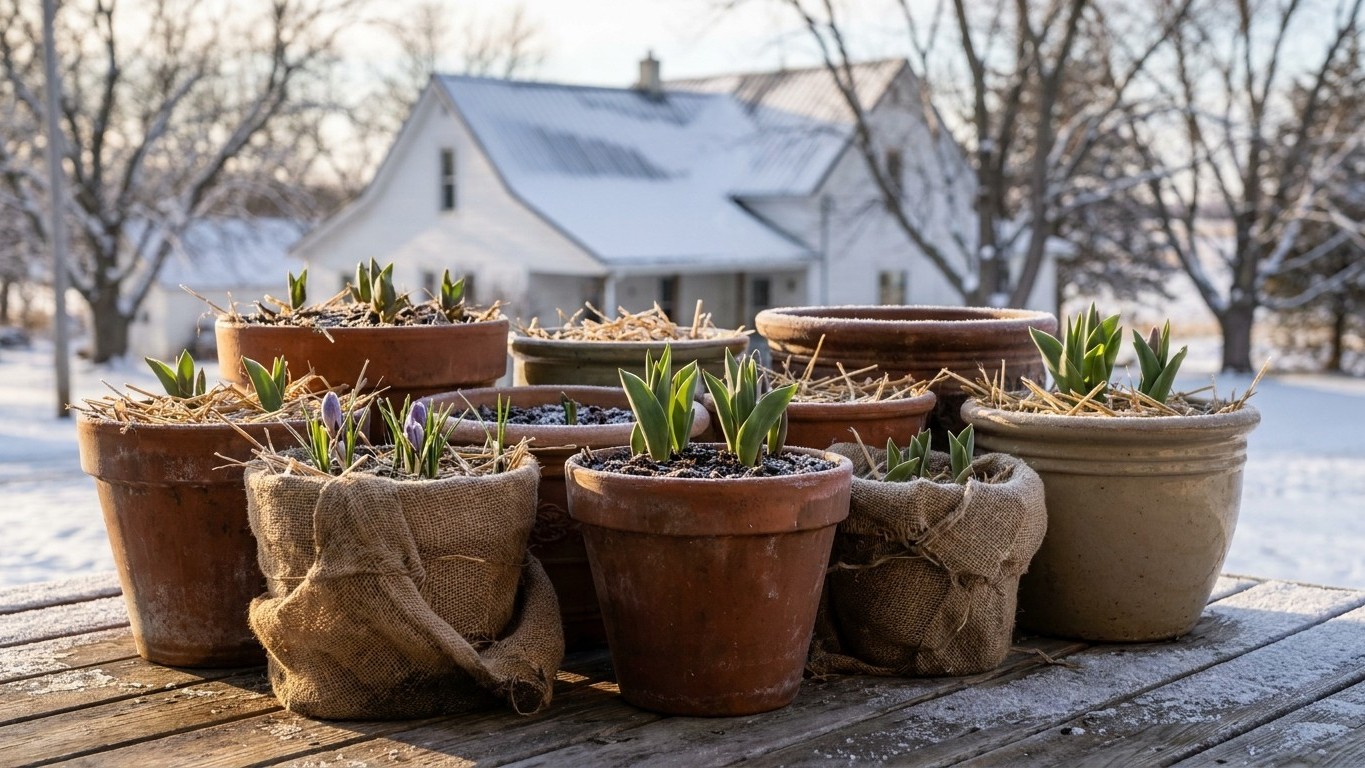
If you try it, mark the spot and dig one clump as insurance. Hardy bulbs such as tulips and daffodils are another matter and stay put. The Spring Bulbs section covers them, and Which Spring Bulbs Survive Your Winter sorts out what can stay in the ground and what has to come up.
When to lift them
The cue is a frost that blackens the foliage. Dahlia and canna leaves go limp and dark almost overnight, and that signals the plant has shut down and sent its energy underground. Lift in the days after the first frost that blackens the foliage, which at the Oklahoma City reference station falls between October 29 and November 8, putting most digging in early November.
Reading the frost range for your own yard
That range comes from NOAA’s 32°F freeze probabilities, the 30 to 70 percent band, so it covers the dates when a first freeze has become a coin-flip event. It describes the airport weather station. Suburban and rural gardens usually see the first fall frost earlier than the station does, often by one to two weeks, and more at elevation. In colder places, meaning farther north or higher up, the fall tasks come earlier. Lifting follows the frost in your yard, not the one at the airport.
Check your own county’s dates in First and Last Frost Dates in Oklahoma, then watch the leaves. Gladiolus often declare themselves sooner than the others, because their foliage yellows and browns after bloom. Dig corms once the leaves have gone brown, and do not wait around for a frost that may be weeks off.
Some falls run warm and the frost comes late. Let the plants keep growing. The only reason to dig before frost blackens the leaves is a forecast for a hard freeze, which is a deeper cold than a light first frost and can reach the crown.
Early is the expensive mistake
Digging in a hurry feels responsible, but a green plant is still feeding its tubers. Tubers lifted too early have thin skins and high water content, which is exactly what rots in storage. A frost-blackened plant has finished moving its stored reserves underground, and the skins have toughened. Waiting for that signal does the maturing for you.
Waiting too long costs you too. A hard freeze that reaches the crown can turn a dahlia tuber mushy, and a soaked November clay bed makes a clean dig nearly impossible. Aim for the window between the blackening frost and the first hard freeze or soaking rain.
On dig day, cut the dead stalks down to a short stub. Push a garden fork into the soil well away from the stem, pry up the clump gently, and never yank by the stalk. Dahlia necks snap easily, and a tuber broken from its crown will not sprout in spring. Tag each clump with a variety label before the dirt dries, because tubers all look alike by March.
Storing them over winter
The goal is storage that stays cool, dark and slightly moist, so tubers neither rot nor shrivel. Every step before the box goes in a cool place is about removing excess moisture without removing all of it. Check stored tubers once a month through the winter, and pull out anything soft before it spreads.
Cure, clean, pack
Let the lifted clumps cure in a dry, sheltered spot out of direct sun and out of the rain until the surface skin is dry and slightly papery. A covered porch, garage or shed works. Brush off loose soil rather than washing, since scrubbing tubers invites rot and leaves them wet. Trim away damaged pieces and bring the clumps inside before a freeze can reach them.
Then pack them in something that holds a trace of moisture but lets air move, such as dry peat, wood shavings or vermiculite, in a ventilated box or crate. Plastic bags without airholes are the classic way to produce a bag of mush. Store the boxes where temperatures stay cool and above freezing: a closet on an interior wall, an unheated spare room, or an insulated garage that does not drop below freezing during a cold snap.
How the three differ
The three plants share a basic method but differ in how much moisture each tolerates:
| Plant | What you store | Curing | Packing | Moisture |
|---|---|---|---|---|
| Dahlias | Tuberous roots with a piece of crown | Short, until skin is dry; do not over-dry | Boxes with barely damp peat, shavings or vermiculite | Slightly moist; they shrivel if too dry |
| Cannas | Rhizome clumps | Brief surface drying | Loosely packed in barely damp material | Slightly moist; tolerate a little more than dahlias |
| Gladiolus | Corms, with the old shriveled corm removed | Longest of the three, until husks are dry and the old corm pulls away | Mesh bags or open trays, single layer | Dry, with air moving |
Gladiolus corms are the outlier. They want to be dry and ventilated, like onions, and damp packing tends to bring on rot and mold. Dahlias and cannas need that trace of moisture in the packing material or they dry to wrinkled husks.
The monthly check
Open the boxes about once a month and look and smell. Healthy tubers feel firm. Remove any that are soft, discolored or sour-smelling, and cut away small spoiled patches from otherwise sound ones. If tubers feel light and wrinkled, mist the packing material lightly or move the box somewhere a little more humid. If you see condensation or mold, open the box to air for a day or so. This ten-minute chore is usually what separates a full box in April from a box of compost.
What goes wrong
Four mistakes account for most lost tubers, and each leaves a recognizable sign. Dig after the frost has blackened the foliage and before the soil turns to soup, and you avoid most of them.
Rot and shrivelling
Rot shows up as soft, dark spots, a sour smell, and sometimes fuzzy mold. Wet storage, plastic bags with no air, and tubers packed before the skin had dried cause it. Cure properly, use packing that is barely damp, and keep air moving. Shrivelling is the opposite problem, with tubers that feel light, wrinkled and hollow. Packing material that has dried out completely, or a spot that is too warm, does it. A light misting of the packing and a cooler location usually rescues them, provided they are caught in time. The monthly check is how you catch either problem.
Timing mistakes
Lifting too early gives tubers with thin skins that spoil in storage even when everything else is done right. The remedy is patience: wait for the frost to blacken the leaves, and for gladiolus the browned foliage. The other timing mistake is leaving plants in the ground in a colder part of the state. A gardener in the northern tier or the Panhandle who follows advice written for the warmer south will see tubers turn to mush by spring. In colder places, fall tasks move earlier, so those gardeners lift sooner than the airport dates suggest. When in doubt about your own location, dig. A lifted dahlia that did not need lifting costs you an afternoon.
A bed freed up this way is a good place for hardy bulbs; Planting Spring Bulbs in Oklahoma covers when and how to put them in.
Common questions
Can I leave dahlias in the ground in Oklahoma?
It is a gamble that mostly loses. Oklahoma City’s coldest month has a mean daily minimum of 27.0°F (NOAA NCEI Climate Normals 1991-2020), and wet clay soil adds to the risk. In the colder northern and Panhandle areas, lift them every year. More seasonal timing for the state sits in the Oklahoma guides.
Do I have to wait for frost to dig gladiolus?
No. Gladiolus foliage browns after bloom, and that is the cue for corms. Waiting for a frost that may be weeks away only risks a hard freeze or soggy soil. Dig once the leaves have yellowed and browned, and cure the corms longer than you would dahlias.
Can cannas stay in the ground?
In the mildest southern parts of the state, a clump in a well-drained bed under thick mulch has a fair chance. Farther north, lift them. Even in the milder areas, dig a spare clump as backup the first winter, because a wet, cold snap can kill what a dry one would not.
Where should I store them in an Oklahoma home?
Pick a dark, cool spot that stays above freezing, such as an interior closet, an unheated spare room, or an insulated garage. Detached garages and sheds can swing hard during arctic outbreaks, so move the boxes inside before a deep cold snap. Whichever spot you choose, keep gladiolus dry and ventilated.