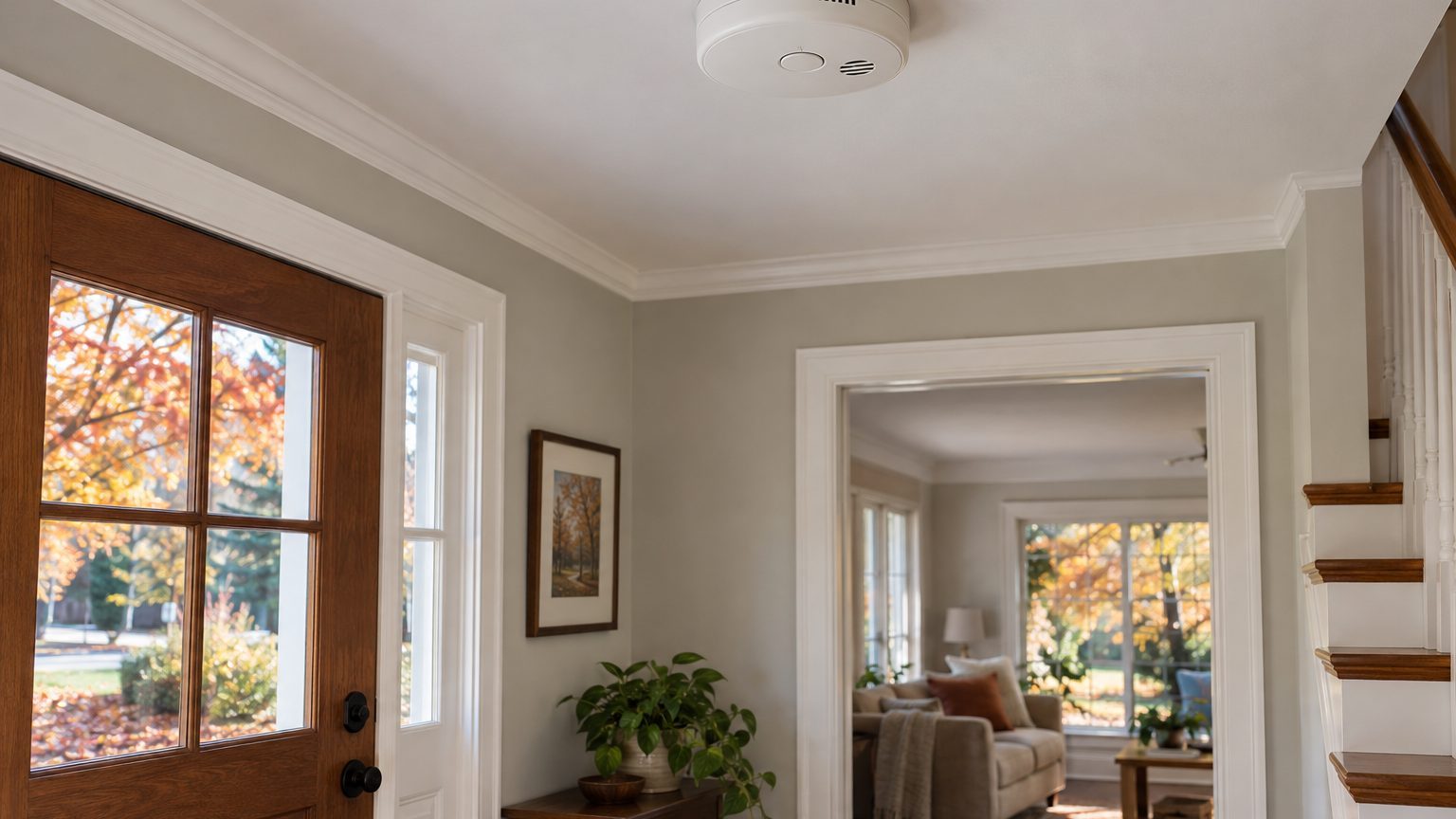

Pulling the battery to quiet a chirping smoke detector leaves you with a silent ceiling and no warning if a fire starts. The chirp usually means the alarm needs something from you, most often a fresh battery or a replacement because the unit has aged out. The exception is a carbon monoxide alarm, which means leaving the house. Before you touch anything, find the chirping alarm and read its label to see whether it is smoke, carbon monoxide, or both.
What the chirp means, and what to do first

If a carbon monoxide alarm is sounding, get out first. Kidde’s guidance for a sounding CO alarm is “Immediately move to fresh air, either outside or near an open door or window.” First Alert’s Canadian safety page adds the next step: “carbon monoxide has been detected in the area, you should move to fresh air and call 9-1-1.” Do not stop to hunt for the cause. Do not go back in to silence the unit.
The four-chirp pattern
First Alert describes the warning this way: an alarm that “chirps 4 times in a row and pauses, this means it has detected unsafe levels of carbon monoxide.” That is one manufacturer’s pattern. Other brands and other models can sound differently, so the manual for your own model is the authority on what each sound means. If you have lost it, the model number on the back of the unit is usually enough to find the manual on the maker’s website. If you hear groups of chirps and cannot confirm what they mean, treat it as carbon monoxide and get to fresh air.
A smoke alarm that chirps on its own
A smoke alarm that chirps by itself, with no smoke and no full alarm blast, is asking for attention. The usual causes are a battery running down or an alarm that has reached the end of its service life. If you see fire or smell smoke, that is not a chirp problem. Leave and call 9-1-1.
With no smoke, work through these steps:
- Read the label to learn whether you have a smoke alarm, a CO alarm or a combination unit.
- Listen for the pattern: one chirp at intervals, or chirps in groups.
- Stand under each alarm in turn.
- Look the pattern up in the manual for that model.
Homes with several alarms make this harder, because a chirp from the hall can seem to come from a bedroom. Take your time and check every unit before you decide the noise is a mystery.
Battery, dust or end of life
Most chirping traces back to one of three causes, and you can check them in order. Start with the cheapest fix, which is the battery, then look at dust, then check the age of the alarm.
The battery
The U.S. Fire Administration, part of FEMA, advises: “Test smoke alarms every month and replace 9-volt smoke alarm batteries at least once every year.” That sentence is about 9-volt batteries. Some alarms run on other battery types or sealed batteries, so your manual tells you what your unit uses and when to change it. Use the exact battery type the manual lists. Press the test button after the swap and listen for the full alarm sound before you close the cover.
Dust and debris
City of Portland Fire & Rescue gives a simple maintenance line in its carbon monoxide alarm FAQs: “Vacuum to keep alarm free of dust and debris.” That advice is written for CO alarms. Your manual will say whether it applies the same way to your smoke alarms and how to clean them.
End of life
An alarm does not last forever, and a chirp can be its way of saying so. The U.S. Fire Administration says: “Replace the entire smoke alarm every 10 years.” First Alert says its alarms should be “replaced at least every 10 years from the manufacture date on the back of the alarm.” The count starts at manufacture, not the day you installed it or bought it, so a unit that sat on a shelf has less life than you might expect.
Both sources are cited here for their own wording. Do not assume the same interval fits every brand and model, and check your manual for the figure that applies to yours. An alarm past its replacement age needs replacing, not another battery, because the battery was never the problem. Buy the new alarm, write the date on it or in your calendar, and mount it where the old one hung. If you are rethinking where alarms go, smoke alarm placement in the bedroom is worth a look before you drill new holes.
Carbon monoxide alarms are different
A CO alarm warns about a gas you cannot see or smell, so its chirp deserves more caution than a smoke alarm’s. It also has its own lifespan. First Alert’s guidance for its CO alarms is: “After 5 to 7 years, replace the CO alarm completely.” That figure comes from one manufacturer. Your manual rules for your model, and it may give a different number.
Why the age matters
Smoke alarms and CO alarms use different sensors, and a combination unit has both. Do not assume the replacement interval you read for a smoke alarm covers a CO alarm, or the other way around. If your unit does both jobs, the label and manual will tell you which date governs. Where the label is unclear, replace the unit at the earlier date to be safe.
If it chirps in fours
Four chirps in a row and a pause is First Alert’s pattern for unsafe carbon monoxide, as quoted in the first section. When you hear it, follow the same steps. Move to fresh air, call 9-1-1, and stay out until responders say the house is clear. Do not go back in to look for the source yourself. Only a professional with the right instruments can tell you the air is safe again.
Once the emergency is over, the source needs finding and fixing. Fuel-burning appliances are the usual suspects, and carbon monoxide and the furnace explains how a failing furnace can put the gas into your living space. A wood-burning fireplace or stove adds its own risks. Poor draft and a dirty flue are covered under chimney safety.
A CO alarm that chirps in some other pattern may be signaling a low battery or the end of its life, as smoke alarms do. Do not guess which. Your manual lists each sound for your model, and the maker’s support line can confirm it if the manual is vague.
Where to go from here
The furnace and the fireplace are what set alarms off when cold weather arrives, so test every alarm in the house before you light the first fire. Replace any battery that is due and note the age of each unit. Then check that every sleeping area has coverage, using the guidance on where a bedroom alarm should go. Make this a routine at the start of the heating season, so that a chirp in the middle of the night is a rare surprise and not a yearly one.
Common questions
Why is my smoke detector still chirping after I put in a new battery?
The battery may not be seated properly, or it may be the wrong type for your model. Check both, then press the test button. If it keeps chirping, look at the manufacture date on the back. An alarm past its replacement age needs replacing, and your manual will list any other chirp codes for your model.
Can I just take the battery out until I can buy a new one?
You can, but you should not leave it that way. An alarm with no battery protects nobody, and a fire does not wait for you to get to the store. If you cannot replace the battery right away, make that your first errand, and in the meantime be extra alert to smoke or burning smells.
Does the 10-year clock start when I install the alarm?
No. First Alert says to replace its alarms at least every 10 years from the manufacture date on the back, and the U.S. Fire Administration says to replace the entire alarm every 10 years. Twist the alarm off its mounting plate to read the date. If it is missing or unreadable, replace the unit, and check the manual for your own brand’s rule.
How do I know whether a chirp is the CO alarm or the smoke alarm?
Read the labels on each unit and compare the sound with the patterns in the manual. First Alert says four chirps in a row with a pause means unsafe carbon monoxide levels. If you cannot tell which alarm is sounding, or you are not sure what the pattern means, treat it as carbon monoxide and move to fresh air.
Alarm lifespans and chirp patterns change by manufacturer and model, so confirm current guidance with your manual, the maker and your local fire department before acting.