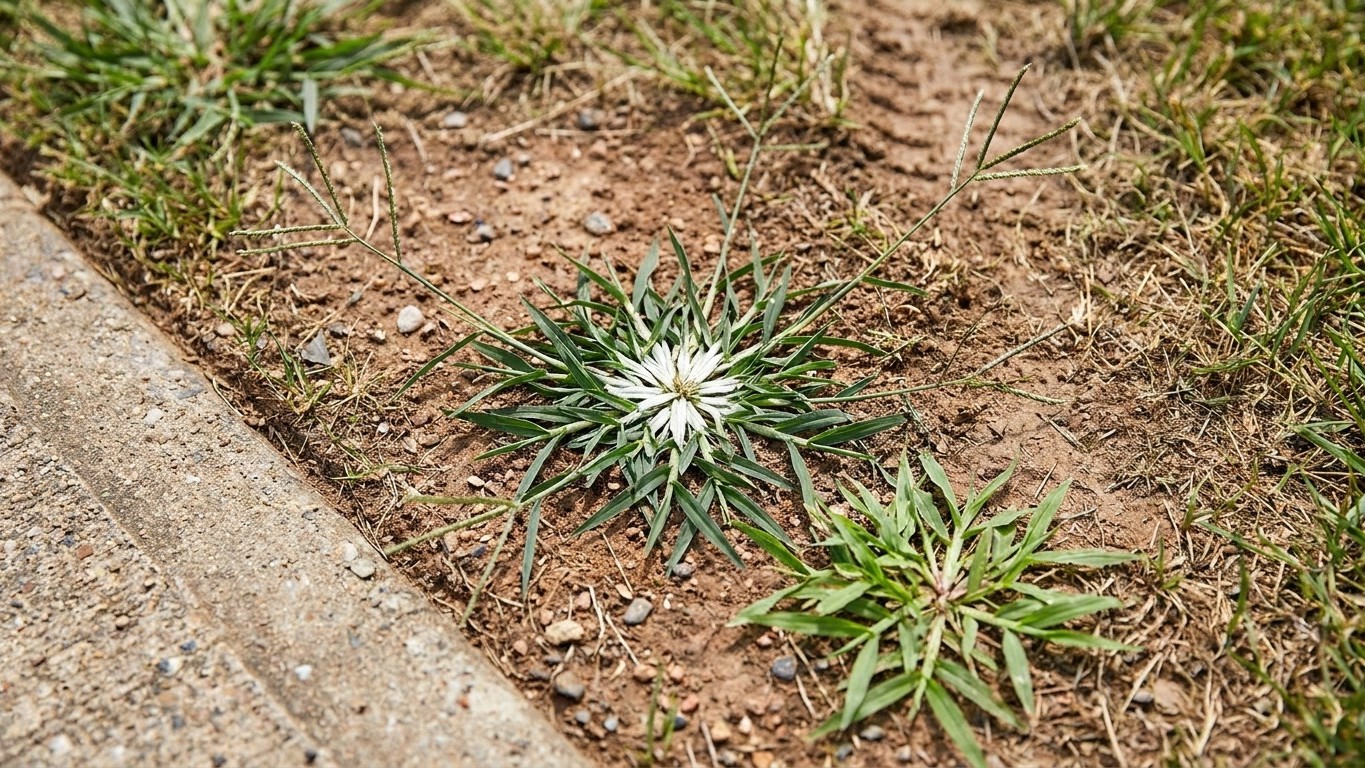

Most Mississippi lawns never need dethatching. Check first: if the thatch layer measures under 0.5 inch, leave it alone. If it has passed 0.75 inch, the best window is late spring into early summer, once your warm-season grass has fully greened up and is growing hard. Fall is the wrong season. The grass is heading into dormancy and can’t repair what the rake tears out.
Do you need to dethatch at all?
Cut a wedge out of the lawn with a spade, then lift it and look at the side. Between the green blades and the dark soil you’ll see a brown, spongy band of stems, stolons and roots that haven’t broken down yet. That band is thatch, and its thickness decides everything. Under 0.5 inch is healthy, and it even cushions foot traffic and insulates the soil. Above 0.75 inch, it’s time to act. Between those two numbers, keep watching and fix the habits that feed it.
What thatch is (and isn’t)
Grass clippings get blamed for thatch, and they rarely deserve it. Clippings are mostly water and break down fast in Mississippi’s warm, humid summers, when soil microbes are busy. Thatch is made of tougher material: runners, crowns and roots. That’s why the grass you grow matters. Bermudagrass and zoysiagrass knit dense mats of runners and are the usual suspects. St. Augustinegrass and seashore paspalum also spread aggressively. Bahiagrass, carpetgrass and centipedegrass are generally slower to build a heavy layer, though none is immune.
Habits add to it. Heavy nitrogen pushes fast, lush growth that outpaces decomposition, and frequent shallow watering keeps roots near the surface. Both are easy to correct without touching a rake.
Why the grass type changes the advice
Mississippi lawns are built on warm-season species: Bahiagrass, Bermudagrass, Carpetgrass, Centipedegrass, Seashore Paspalum, St. Augustinegrass and Zoysiagrass. A cool-season grass such as a fescue won’t hold up here. It slows down and thins in the long, hot, humid summers, and it struggles with the diseases that thrive in that weather. So advice written for cool-season lawns, which usually says to dethatch in early fall, doesn’t carry over. Our general guide to Dethatching a Lawn covers the method, while the calendar for the Deep South is what matters here.
The season to do it in Mississippi
Warm-season grass recovers fastest when it’s actively growing and has a long stretch of warm weather ahead. That points to late spring into early summer. Wait for full green-up, then mow the lawn a few times before you bring out any machine. A lawn that has just broken dormancy is still using stored energy, and stripping thatch off it asks for slow recovery and weeds.
Frost dates give you the outer edges of the calendar. In NOAA’s NCEI 1991-2020 Climate Normals, the reference airport station shows a last spring frost between March 6 and March 22. Its first fall frost falls between November 7 and November 22. Those are figures for one weather station, not a promise for the whole state. Suburban and rural yards typically get the last spring frost later and the first fall frost earlier than an airport does, often by one to two weeks, and more at elevation. A gardener near the Gulf and one near the Tennessee line won’t share a calendar. Your county office of Mississippi State University Extension can tell you what’s typical where you live.
The closing edge matters as much as the opening one. Dethatching in late summer or fall leaves too few weeks of warm growth before dormancy. The wounded turf sits open through winter, and winter weeds move in. If you missed the window, wait until next spring. A lawn can carry thatch through one more season without much harm.
Soil moisture counts too. Dethatch when the ground is slightly moist, not saturated and not baked hard. Wet soil lets the machine pull up whole plants, and dry soil during a dry spell leaves the grass stressed with no easy way to recover. Water the lawn a day or two ahead if the soil is parched.
Neighboring states run on their own calendars, and the differences are instructive. Compare this timing with When to Dethatch a Lawn in South Carolina, where warm-season turf is also the norm. When to Dethatch a Lawn in Virginia shows how the picture shifts once cool-season grasses enter the mix.
Rake, power rake, or core aeration
Match the tool to the thickness you measured, not to what the neighbor rented last weekend.
Hand thatch rake
For a small lawn or a few patches, a thatch rake (the kind with sharp, curved tines) does the job with sweat and patience. Pull it through the turf in one direction, then cross it the other way. Expect a surprising pile of brown debris. This suits thatch that has just crossed 0.75 inch and a lawn you can finish in a weekend.
Power rake (vertical mower)
Large yards with a real buildup call for a power rake, which spins vertical blades through the thatch layer. Equipment rental yards carry them. Set the blades to just reach into the thatch, not deep into the soil, because digging into soil damages runners and wastes grass. Mark sprinkler heads and shallow lines first. Go over the lawn once, check the result, and only make a second pass if the layer is still thick. Bermudagrass and zoysiagrass take this well. Bahiagrass and centipedegrass have thinner runner systems, so go gentler on them.
Core aeration
Core aeration pulls small plugs of soil out of the lawn. It doesn’t remove thatch directly, but the plugs break it up and bring soil microbes into the layer, which speeds decomposition. It also relieves compaction, so it’s the better pick when thatch sits in the 0.5 to 0.75 inch gray zone, or when the soil is hard and water runs off. Run it in the same late-spring window. Leave the plugs on the lawn to crumble.
Whichever tool you use, rake up the loosened debris afterward and haul it to the compost pile or yard waste bin. Left lying in clumps, it smothers the grass you just freed.
What the lawn needs afterwards
Recovery takes a few weeks, and the habits you keep during that stretch matter more than the machine work. Water deeply, a little at a time and less often, so roots go down instead of lying near the surface. Resume normal mowing as soon as the grass looks like it’s growing again, and don’t scalp it. Hold off on a heavy dose of nitrogen right away. A light feeding once new growth is visible is plenty, and too much would start the thatch cycle over.
Thin spots may need seed. Rates are in pounds per 1,000 square feet and apply to a new lawn. Overseeding an existing lawn uses half these amounts. More seed isn’t insurance, since crowded seedlings compete and thin themselves out.
| Grass | New-lawn rate per 1,000 sq ft |
|---|---|
| Bahiagrass | 5 to 10 lb |
| Bermudagrass | 1 to 4 lb |
| Carpetgrass | 1 lb |
| Centipedegrass | 0.25 to 1 lb |
| Zoysiagrass | 1 to 2 lb |
| Seashore Paspalum | Sod, sprigs or plugs only, not seed |
| St. Augustinegrass | Sod, sprigs or plugs only, not seed |
If you have St. Augustinegrass or seashore paspalum, skip the seed bag entirely. Patch bare spots with sod, sprigs or plugs. Spreading species like these and bermudagrass often fill small gaps on their own from runners if you give them water and time, so wait a few weeks before deciding a spot needs help.
Common questions
Can I dethatch my Mississippi lawn in the fall?
It’s a poor bet. At the reference weather station, the first fall frost arrives between November 7 and November 22, and many yards see it sooner. Warm-season grass slows well before then and won’t rebuild damaged turf. Wait until the following spring.
How do I know if my thatch is too thick?
Cut a spade-deep wedge and measure the brown, spongy layer between the green growth and the soil. Under 0.5 inch is healthy. Above 0.75 inch calls for action. If the layer is between the two, adjust your watering and feeding habits and measure again next season.
Does every lawn grass in Mississippi build thatch the same way?
No. Bermudagrass and zoysiagrass are known for dense runner mats, and St. Augustinegrass and seashore paspalum also spread aggressively. Bahiagrass, carpetgrass and centipedegrass tend to build less, which is another reason most lawns never need the job. Measure before you rent anything.
Do I need to reseed right after dethatching?
Only if bare patches appear, and only after you’ve given runners a few weeks to fill in. If you do seed, use half the new-lawn rates in the table above. Two of the grasses, St. Augustinegrass and seashore paspalum, can’t be seeded at all and need sod, sprigs or plugs.