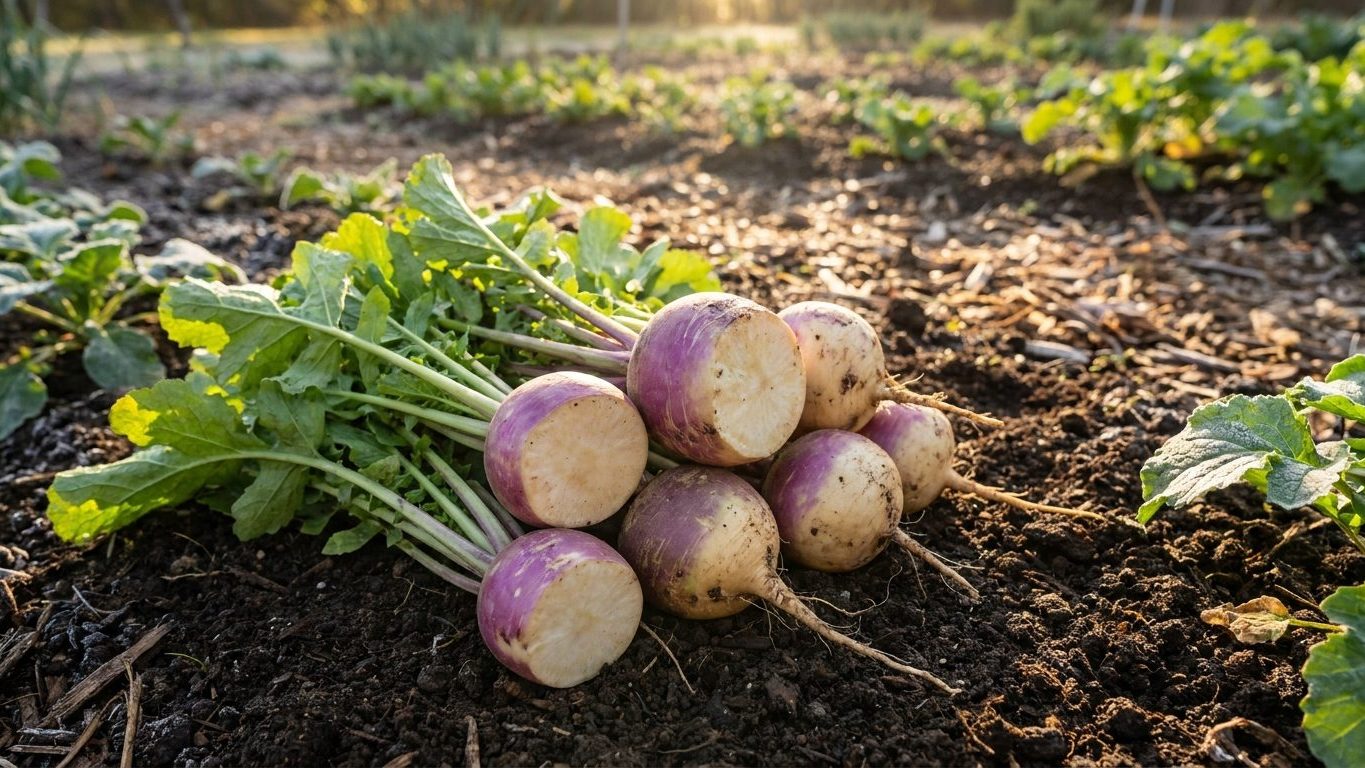

The short answer: get turnips or rutabaga into Missouri soil either right after the last spring frost passes for a quick spring crop, or in mid-to-late summer for the better fall crop, timed to finish as the first fall frost arrives sometime between October 18 and October 29. The fall planting is the one Missouri gardeners rely on.
When the soil is warm enough in Missouri
Around Kansas City, the National Weather Service station used for the region’s official climate normals (station USW00003947) puts the last spring frost somewhere between April 6 and April 20, based on 1991-2020 data from NOAA’s National Centers for Environmental Information. That’s a 30-to-70 percent probability band for a 32°F freeze, not a guarantee. Some years the last frost lands earlier, some years it sneaks in after April 20. Treat the date as a probability, not a promise, and plan your sowing around it accordingly.
That date matters less than what it signals: soil warming enough for turnip and rutabaga seed to germinate reliably. Frost risk fading is a proxy for soil temperature climbing, not the cause of it. Cold, wet soil in early April can sit stubbornly below the range these seeds want even after the frost threat has technically passed, so a week’s patience after the last-frost window often pays off more than rushing the calendar.
One geographic wrinkle worth knowing: the Kansas City International Airport station sits well north of the metro core, and the downtown station typically runs about five days earlier in spring. Gardeners in southern Missouri, closer to the Arkansas line, see milder springs still. If you’re in St. Louis, Springfield, or the Bootheel, nudge these dates earlier rather than treating the KC-area window as gospel for the whole state.
Skip the cultivar guesswork
Resist the urge to chase a specific variety name from a seed catalog or a gardening forum without checking it against Missouri conditions first. What performs well in Minnesota or Georgia isn’t automatically the right pick here. Your local University of Missouri Extension office runs its own variety trials and can point you toward types proven to handle this state’s swing between raw spring soil and humid summer air. That’s a better starting point than any name printed on a seed packet from out of state.
Both crops belong to the brassica family, alongside cabbage, kale, and mustard. That shared lineage means shared pests and diseases, cabbage maggot, flea beetles, clubroot, so rotation planning matters from the first sowing. If your turnip bed sat under cabbage or kale last season, you haven’t actually rotated anything, and the pest pressure will show it.
When you do lift roots for storage later in the season, inspect each one by hand. A soft patch, a weeping spot, or a moldy crown means that root gets discarded, not stored, no matter how sound the rest of it looks. Appearance alone isn’t a safety test.
How long the season lasts here
Stack the two frost windows against each other and Missouri’s frost-free stretch runs somewhere between 181 and 206 days, depending on which end of each range actually verifies in a given year. The shortest version pairs the latest possible spring frost (April 20) with the earliest possible fall frost (October 18). The longest pairs the earliest spring frost (April 6) with the latest fall frost (October 29). Either way, that’s a wide enough window to work with.
What that length allows is the real question. Turnips move fast from seed to harvestable root, faster than most root vegetables, so a season stretching past six months gives room for more than one sowing. A spring crop pulled in early summer can be followed by a second sowing timed for fall harvest, and in many Missouri seasons there’s room for a third if you’re organized about it. Rutabaga takes longer to mature than turnips do, so it fits more comfortably into a single fall-focused sowing than into a rapid succession plan.
A short window, by contrast, forces a choice. If your local frost dates land on the tighter end, one sowing becomes the only realistic option, and that changes how much effort makes sense to put into starting seedlings indoors versus direct-sowing outright. Direct-sown roots avoid the transplant shock that can distort root shape, an issue that matters more for turnips and rutabaga than for leafy crops, since a forked or split root isn’t just cosmetic, it complicates storage and inspection later.
For gardeners working the longer end of Missouri’s window, staggering sowings two to three weeks apart through summer keeps a steady supply coming rather than one large harvest all at once. The site’s succession sowing guide walks through spacing those plantings so the later rounds still have enough runway before frost to size up properly.
Heat and water in Missouri
Turnips and rutabaga are cool-season crops at heart, and in Missouri the numbers that actually govern them arrive later in the year than most gardeners expect. Summer heat matters less here than it does for a tomato or a pepper, because the sowing calendar for the crop that matters most, the fall crop, is built to sidestep the worst of it. Seed goes in during the tail end of summer, and the roots do their real growing as temperatures ease off, not while Missouri’s humid mid-summer stretch is at its peak.
The figures that decide how the season ends are cold ones. The mean daily minimum temperature during Missouri’s coldest month sits at 19.5°F, based on NOAA’s 1991-2020 Climate Normals for the Kansas City reference station. That number is what determines whether roots left in the ground under a thick mulch layer can survive the winter in place, or whether they need to be lifted and moved into storage before the ground locks up hard. At 19.5°F for a typical cold-month night, an unprotected root sitting at the soil surface is at real risk; a heavy mulch layer buys insulation, but it isn’t a guarantee against a harder cold snap.
That same winter cold does double duty. A stretch of near-freezing weather before the ground fully hardens is what converts starches in the root into sugars, the “frost sweetening” gardeners talk about with turnips and especially rutabaga. Missouri’s coldest-month minimum sitting near 19.5°F, well below freezing, means the crop generally gets that sweetening window before hard-freeze conditions shut the ground down for good. Gardeners further south in the state, where winters run milder, may see less of this effect and should time harvest a little earlier rather than banking on a long cold spell that may not arrive.
Missouri’s USDA Hardiness Zone rating spans 5b to 7b across the state, a range built on one measurement: average annual extreme minimum temperature. That spread means a gardener in the Ozarks and one near the Iowa border are working with meaningfully different winters, even though both technically live in “Missouri.” Use the Kansas City reference figures here as a starting point, not a fixed rule, and adjust toward earlier harvest and less reliance on in-ground storage the further south or the milder your particular corner of the state runs.
Which turnips and rutabaga suit Missouri
Rather than naming specific varieties, the more useful approach is thinking in types and letting Missouri’s own conditions narrow the field. A frost-free window running from roughly 181 to 206 days gives enough room that the earliest-maturing turnip types aren’t strictly necessary the way they’d be in a shorter-season state, but they still earn their place if you’re running a succession sowing plan and want quicker turnaround between rounds.
Missouri’s humid summers, even though they matter less directly for the fall crop’s core growing period, still shape disease pressure heading into that stretch. Types bred with stronger resistance to leaf spot and mildew hold up better through the muggy tail end of summer when seed for the fall crop goes into the ground. Airflow around the planting, wider spacing than the seed packet’s minimum suggests, and avoiding overhead watering late in the day both help more than variety selection alone.
For rutabaga specifically, given its longer maturation compared to turnips, types suited to a single well-timed fall planting make more sense in Missouri’s climate than ones bred for rapid multiple sowings. The frost-sweetening benefit described above rewards a rutabaga crop that’s still sizing up as the coldest month approaches, rather than one rushed to finish too early.
Where to get a real answer
None of this replaces a look at what’s actually been trialled in Missouri conditions. University of Missouri Extension maintains variety recommendations tested against the state’s specific mix of humid summers, variable winters, and that 5b-7b hardiness spread, and its guidance differs meaningfully depending on whether you’re gardening near St. Louis, in the Ozarks, or up near the Iowa line. A cultivar name printed on this page, without that local trial data behind it, would be a guess dressed up as advice. Checking with your county extension office first, before ordering seed, is the one step that turns a generic plan into one suited to your actual backyard.
Whatever type you settle on, plan your bed rotation before you plan your variety. A turnip or rutabaga bed that follows cabbage, kale, or mustard in the same soil hasn’t broken the disease and pest cycle those crops share as fellow brassicas, no matter how carefully the variety was chosen.