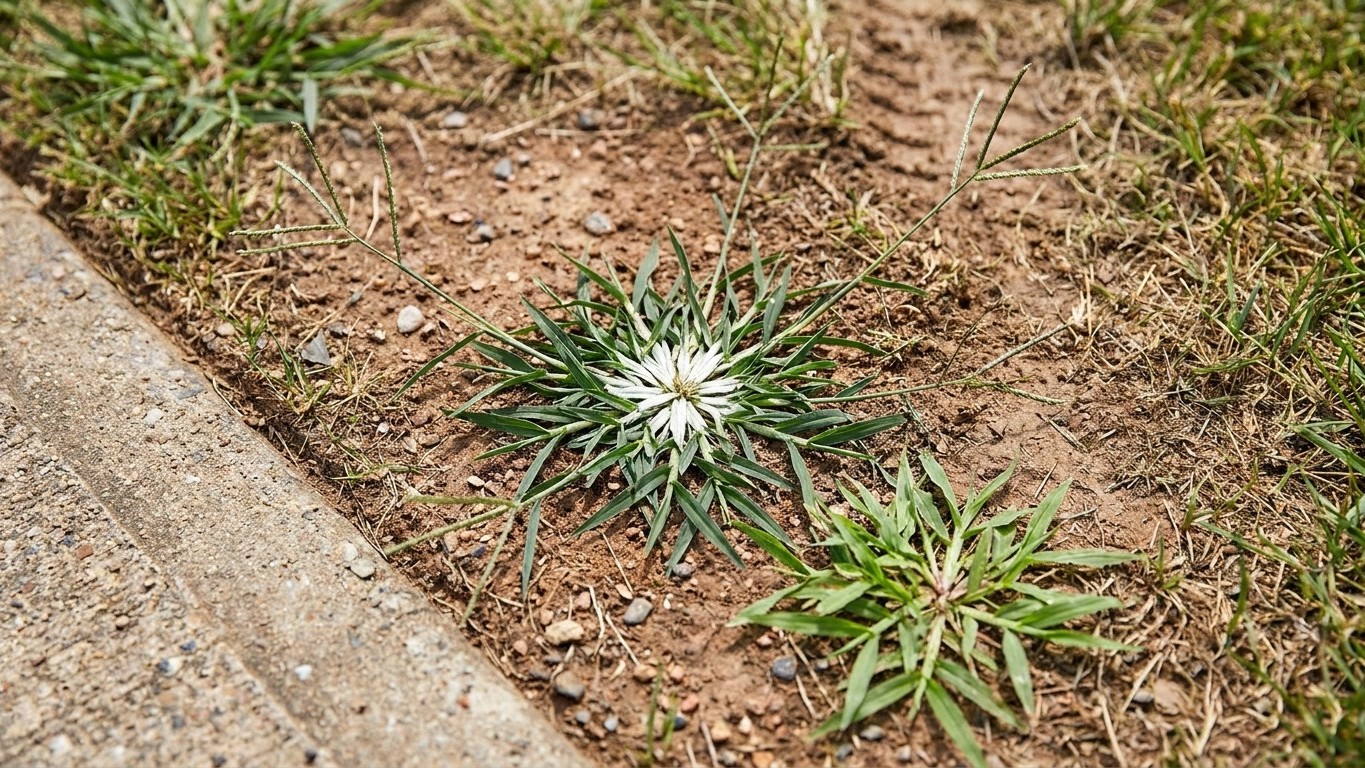

The right mowing height depends on the grass: tall fescue at 3 to 3.5 inches, Kentucky bluegrass at 2 to 3, perennial ryegrass at 1.5 to 2.5, and zoysiagrass or bermudagrass at 1 to 2. Identify the species first, then raise the deck as summer heat arrives. The climate figures below come from the Billings reference station, one of Montana’s milder valleys, so treat them as a starting point rather than a statewide rule.
The mowing height for Montana lawns
Grass blades are the plant’s solar panels. Cut them short and the plant has less leaf to feed itself, so it drains stored energy to regrow. Leave them taller and the lawn shades its own soil, crowds out weeds, and tolerates a dry spell better. Each species has a range where it holds that balance, and the ranges are far apart.
| Grass | Season type | Mowing height |
|---|---|---|
| Tall fescue | Cool-season | 3 to 3.5 inches |
| Kentucky bluegrass | Cool-season | 2 to 3 inches |
| Perennial ryegrass | Cool-season | 1.5 to 2.5 inches |
| Zoysiagrass | Warm-season | 1 to 2 inches |
| Bermudagrass | Warm-season | 1 to 2 inches |
Each figure sits within the ranges published by land-grant extension programs, including Clemson, NC State, Kansas State and the universities of Illinois, Missouri and Georgia. Mow tall fescue at 1 inch and you have scalped it. Leave zoysiagrass at 3.5 inches and it turns shaggy and hard to cut cleanly. Mixing up the two families loses the lawn either way.
The trade-off between cool-season and warm-season grass
No single grass wins here. A cool-season lawn (tall fescue, Kentucky bluegrass, perennial ryegrass) stays green through spring and fall but struggles in July. A warm-season lawn (zoysiagrass, bermudagrass) handles summer heat but sits brown from October to April. You pick which season you would rather look at a weak lawn.
If you inherited a lawn and do not know what it is, look at what happens in July and at what color it is in November. A lawn that sulks in midsummer and greens up early is almost certainly cool-season. The Montana State University Extension network can help with identification and with what holds up in your valley. For the basics of the mower itself (blade sharpness, patterns, clippings), see Mowing a Lawn.
Raising the deck when the heat comes
Summer is when the numbers in the table stop being fixed. In July and August, mow at the top of your species range: 3.5 inches for tall fescue, 3 for Kentucky bluegrass, 2.5 for perennial ryegrass, and 2 for zoysiagrass or bermudagrass. The extra leaf shades the soil, and shaded soil loses water more slowly.
What the Billings rainfall normals say
At the Billings reference station, June averages 2.22 inches of rain, July 1.22 and August 0.87. That is about 4.3 inches across the three months, out of 14.3 inches for the whole year. August is the driest summer month, and it arrives just when cool-season grass is already stressed. These are NOAA NCEI Monthly Climate Normals for 1991-2020. They describe what the region can usually expect, not a forecast, and not your yard.
The rainfall number never reads alone. Soil changes what an inch of rain does. On sand, rain drains through within the day, so even a wet summer can leave a sandy lawn needing water every second day. On clay, the same inch can hold for a week. Heat matters too: days at or above 90°F drive evaporation, and rain that falls as one summer thunderstorm mostly runs off instead of soaking in. A half inch in ten minutes is not the same as a half inch over a day.
A slope, a rain shadow or a city block can all shift these figures. A cheap rain gauge on your own plot settles the question better than any regional average. Check it before you decide the lawn needs water, and let it guide you instead of the calendar.
Warm-season grasses are less dependent on rainfall in midsummer, but they still do better at the top of their range when the weather turns dry. Zoysiagrass and bermudagrass look best when cut regularly rather than allowed to get ahead of the mower.
The one-third rule, and why it is not arbitrary
Never remove more than one third of the blade height in a single mowing. That is the standard extension advice, and it follows from the plant’s biology. The leaf is where the grass makes its food. Strip off half of it at once and the lawn spends days rebuilding leaf instead of growing roots.
What the rule means for each grass
Work it backward from your target height. A tall fescue lawn kept at 3.5 inches should be cut when it reaches about 5.25 inches. Kentucky bluegrass at 3 inches gets mowed at 4.5. Perennial ryegrass at 2.5 inches is due at 3.75, and zoysiagrass or bermudagrass at 2 inches at 3. If the lawn is taller than that when you get to it, you have waited too long for the height you set.
The rule bites hardest after a wet stretch. June is the wettest of the three summer months in Billings, and growth can outrun a weekly schedule. Skipping a week then leaves two bad choices: scalp the lawn or leave it long. A better route is to cut off a third at the higher setting, wait a few days, then take another pass at your target height.
The rule also explains why a calendar schedule fails. Mowing every Saturday regardless of growth works in May and breaks in August, when dry weather slows growth to a crawl. Measure the grass, not the week. A ruler or a tape measure held to the blades takes ten seconds.
The first and last cut of the year
For Billings, NOAA NCEI 1991-2020 Climate Normals put the last spring frost between April 29 and May 10, and the first fall frost between October 1 and October 14. Those dates come from the 30 to 70 percent band of 32°F freeze probabilities: they bracket the middle of the odds, not a guarantee. A frost can come earlier or later than the window.
The first cut
Let growth, not the calendar, call the first mow. Start when the grass has reached about a third above your target height, which is the same trigger as in summer. A cool-season lawn wakes first, so expect to cut it earlier in spring. A warm-season lawn that has been brown since October will green up later, and mowing a dormant lawn only scalps it. Make the first cut at your species height, not lower, however shaggy the yard looks.
The last cut
In the fall, keep mowing as long as the grass grows, and stay inside your species range. The final cut is not a license to scalp. Mid-October sits at the tail of the Billings first-frost window, so the season’s last passes are near for that valley. Warm-season lawns go dormant on their own schedule and need no final mow once they stop growing.
Billings is one of the milder valleys, and mountain valleys elsewhere in Montana can frost in any month. Their windows do not match this one, so the Billings dates are a reference, not a rule for the state. Readers who want to compare notes with other states can look at How High to Mow a Lawn in Oregon and How High to Mow a Lawn in West Virginia.
Common questions
Can I mow a Montana lawn at 1 inch?
Only if it is zoysiagrass or bermudagrass, which run 1 to 2 inches. Tall fescue, Kentucky bluegrass and perennial ryegrass all have ranges that start higher (3, 2 and 1.5 inches). At 1 inch, a cool-season lawn is scalped.
Which grass is best for Montana?
None wins outright. A cool-season lawn suffers in July, while a warm-season lawn is brown from October to April. Choose based on which season matters more to you, and ask your local Extension office what has held up near you.
How often should I mow in August?
As often as the grass needs it, not on a fixed day. August is the driest summer month in Billings at 0.87 inches, so growth often slows. Use the one-third rule: if the lawn has not grown a third above target height, leave it.
When does the mowing season end?
When growth stops, usually after the first fall frost. In Billings that window runs October 1 to October 14, but a mountain valley can frost in any month, so watch your own lawn and a thermometer rather than a date.