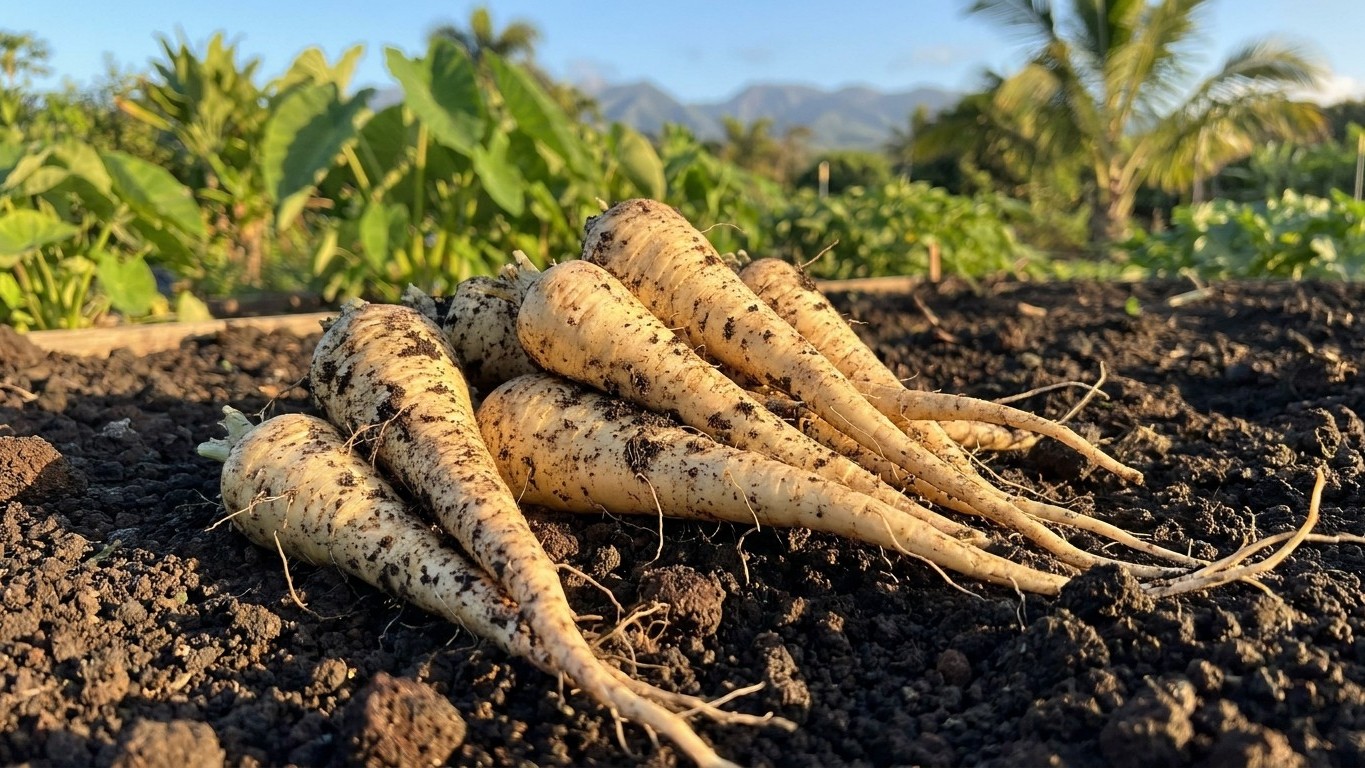

Lift parsnips in New Hampshire after the roots have sat through several frosty weeks. For a garden near Manchester, that means mid-November at the earliest, and often later. Spring-sown roots reach full size by midsummer, but they are not worth eating yet. Stored well, they keep four to six months. Stored next to a bowl of apples, they turn bitter.
The short answer
Does New Hampshire deliver several frosty weeks? It does, by a wide margin. At the Manchester reference station, the mean daily minimum of the coldest month is 17.1°F (NOAA NCEI Climate Normals). That is nearly 15 degrees below freezing on a typical night, not a stray cold snap. A parsnip grown here will sweeten, not merely grow.
Frost does the sweetening, not the zone
Parsnips need 100 to 120 days from seeding, and they taste best after several weeks of cool, frosty weather, which converts stored starch to sugar (Utah State University Extension). The trigger is exposure to frost. A hardiness zone number says whether a plant survives winter, which a parsnip does easily. It says nothing about how many cold weeks the roots actually sit through. A mild-winter territory grows a perfectly good parsnip that never gets sweet. New Hampshire is not that territory, and Will Parsnips Sweeten in New Hampshire? walks through the mechanism in more detail.
The first fall frost at the Manchester airport station falls between October 13 and October 26 (NOAA NCEI U.S. Climate Normals, 32°F freeze probabilities, station data). Add several weeks and you land in mid-November. Airport figures flatter most gardens, though. Suburban and rural plots typically see the last spring frost later and the first fall frost earlier, often by one to two weeks, and more at elevation. Check your own county’s dates. If frost reaches you in early October, your lift moves earlier too.
The source gives no exact count of weeks, so “several” is the whole instruction. Use the calendar and the ground together. Lift before the soil freezes hard enough to fight your fork.
How long they keep once lifted
USDA Agricultural Handbook 66 says parsnip roots can be stored 4 to 6 months at 32 to 34°F with 98 percent relative humidity (the handbook). That is a long keeper by any standard. The figure assumes those conditions are held steady, and almost no house does that. Expect less from a basement, a garage or a refrigerator drawer. The handbook gives no home figure, so I won’t invent one.
Cold is not the danger. Parsnips are not chilling sensitive. The danger is ethylene, the ripening gas that apples and other fruit give off. Parsnips make very little of it themselves, but exposure to low levels in cold storage causes bitterness, likely from a buildup of a compound called xanthotoxin. Even at the right temperature, a parsnip stored near apples or any ripening fruit turns bitter. Keep them well away from the fruit bowl and the fruit drawer. Top the roots after harvest, but do not trim into the crown.
Does the season fit?
Parsnips are sown in place, and the 100 to 120 days run from seeding. Germination alone takes 14 to 21 days, so the clock is already ticking while the row still looks bare. Here is the arithmetic using the Manchester reference dates, which a rural garden should shift later by up to a week or two.
- Start with the last spring frost. At the reference station it falls between April 16 and April 27.
- Count back two to three weeks for sowing. Three weeks before April 16 is March 26. Two weeks before April 27 is April 13. So the sowing window runs from late March to mid-April, though in practice it opens whenever the soil can actually be worked.
- Leave the germination alone. Those 14 to 21 days are already inside the 100 to 120, so do not add them again and do not re-sow bare ground.
- Add 100 to 120 days. A March 26 sowing reaches size between July 4 and July 24. An April 13 sowing gets there between July 22 and August 11. Roots are full size from early July to mid-August.
- Compare with the first fall frost. It arrives between October 13 and October 26. From August 11 to October 13 is 63 days, or nine weeks. From July 4 to October 26 is 114 days, over sixteen weeks.
Reading the result
The season fits comfortably. Roots finish at least nine weeks before the first fall frost and sometimes more than sixteen, so the frost has time to do its work. Even a sowing that slips to May 15 reaches size between August 23 and September 12, still ahead of the earliest frost date. A garden where fall frost comes one or two weeks sooner than the airport’s loses some of that cushion but not all of it. The real risk is sowing so late that the roots are still small when the cold arrives. For the wider growing picture, see Growing Parsnips in New Hampshire.
What goes wrong here
Most failures come from the ground, the calendar or the kitchen, not from the cold. Each one below has its own cause and its own fix.
- Forked roots from heavy or stony ground. A root that hits a stone or a clay layer splits around it. Utah State University Extension calls for deep sandy soil and says heavy soil must be double dug. Dig a spade-deep test hole before you sow. Pull out stones and loosen the bed well below where the root will reach. A state soil map is a starting point, not a diagnosis of your plot.
- Forked roots from overwatering. This is a separate cause, and it can happen in loose ground. Soggy soil upsets root growth even where nothing blocks the way. Water when the top inch or two has dried out, not on a fixed schedule, and skip the watering after a soaking rain.
- Digging up bare soil. Seed can take 14 to 21 days to come up. Gardeners who see nothing at ten days often rake and re-sow, which creates two ages of plants in one row. Mark the row and wait the full three weeks before you decide anything.
- A season that runs out. This only happens with a very late sowing. Count 100 to 120 days from seeding, not from the day the seedlings show. If the count would push maturity past the first fall frost for your county, sow earlier next year.
- Lifting too early, which wastes the winter. New Hampshire’s winter is not too mild to sweeten, with a coldest-month mean minimum of 17.1°F. The way to miss the sweetness here is to dig before several frosty weeks have passed. Wait for them, then lift.
- Bitterness in storage. Ethylene from apples or ripening fruit is the cause. Keep parsnips in their own container away from all fruit, top them, and leave the crown uncut.
Pests are a different problem again. What Eats Parsnip in New Hampshire, and When covers what chews on the foliage and roots, and the timing of each.
Common questions
How many frosty weeks do parsnips need?
The source says “several weeks” of cool, frosty weather and gives no precise count. In New Hampshire, with first frost between October 13 and October 26 at the reference station, waiting into mid-November gives that window. A garden that frosts earlier can lift earlier.
Can I leave parsnips in the ground all winter?
The sources here set no rule on this. The practical limit is whether you can dig the soil. Frozen ground fights a fork, so plan to lift what you need before it locks up. A deep layer of mulch is the usual workaround, but it is a gardener’s habit rather than something this page’s sources test.
Why did my stored parsnips turn bitter?
Check what sits next to them. Parsnips are not chilling sensitive, but low levels of ethylene in cold storage cause bitterness. Apples and any ripening fruit give off that gas. Move the roots to their own space and keep fruit well away.
Are the Manchester frost dates mine?
Probably not. They come from one airport station: last spring frost April 16 to April 27, first fall frost October 13 to October 26. Rural and suburban gardens usually frost later in spring and earlier in fall, often by one to two weeks, and more at elevation. Look up your own county before you set a sowing date.