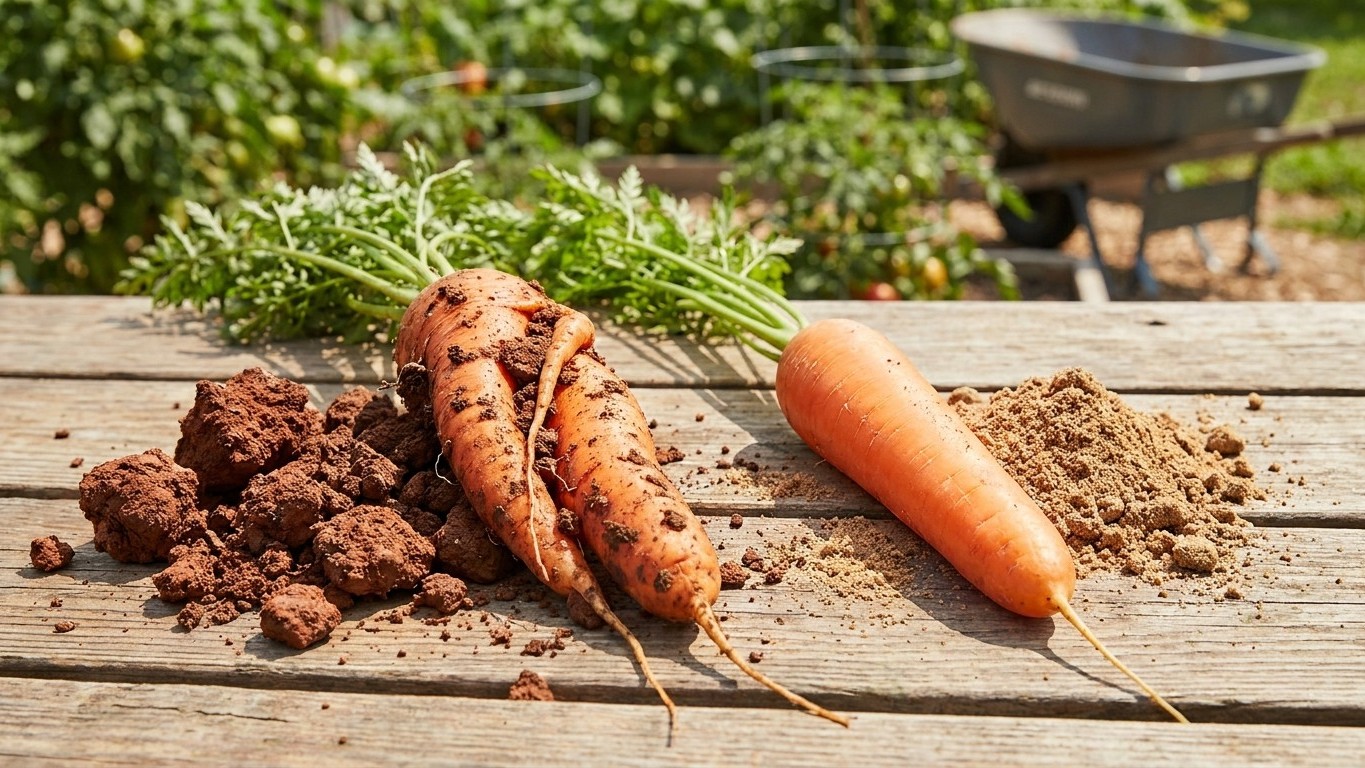

Pull carrots about 70 to 100 days after the seed goes in. Count from sowing, because carrots are never transplanted. Clemson Cooperative Extension puts harvest at about 65 to 75 days after planting, so the packet date is a window, not a deadline. Keeping them comes down to two moves: cut the tops off as soon as the roots are out of the ground, and hold them at 33 °F with high humidity. Tops on, they last 10 to 14 days. Trimmed, they last months.
The short answer
New Hampshire’s state soil is the Marlow series, a Spodosol: sandy, acid, strongly leached ground that typically forms under conifers. USDA NRCS Soil Data Access (the Soil Survey Geographic Database) lists the representative surface values as 57 percent sand, 5 percent clay and 38 percent silt, a texture it classes as loam to silt, with a well-drained rating. The surface pH is about 3.5, strongly acid. Those figures average 215 mapped components of the series.
Read them with care. A state spans hundreds of soil series, and this is a starting point, not a diagnosis. River bottoms, hill country and any lot a builder scraped or filled will differ completely. The organic matter figure, about 85.0 percent, describes a natural layer of forest litter on the mapped surface, which a worked garden bed will not have. The pH belongs to the mapped series, not to your yard.
Will a carrot fork in it? On the numbers, probably not because of clay. Utah State University Extension says carrots want deep, sandy, well-drained soil rich in organic matter, and that heavy or rocky soil makes the root fork. Five percent clay and good drainage sit on the right side of that line. Forking in a New Hampshire garden usually comes from where your ground departs from the series: compaction, stones, a pocket of clay, or fill. The fix is compost and double digging, or a raised bed where the ground is heavy or drains poorly. A different variety is not the answer. For the full picture of that question, see Will Carrots Fork in New Hampshire Soil?
Counting days, then keeping the crop
The clock starts at seeding. Carrots are sown in place, so there is no transplant date to count from. The range is 70 to 100 days, and Clemson’s 65 to 75 sits at the short end of it. Frost dates for your town are not published here, so check them separately and plan your sowing and pulling around them. For the wider growing calendar, see Growing Carrots in New Hampshire.
Clemson’s storage advice is blunt: store carrots at 33 °F and high humidity to prevent wilting. That is just above freezing, not a cellar temperature. A reader who stores them at 50 °F loses them to sprouting and softening in a fraction of the time. The tops are the catch. The leaves keep drawing moisture out of the root, which is why bunched carrots (tops on) keep about 10 to 14 days while trimmed ones keep months. Cut the tops first, then store.
The test that settles it in your own garden
The state soil is an average on a map. Your bed is a specific place, and a spade tells you more than any survey. Do this before you sow, or before you decide to rebuild a bed.
- Dig a hole where the row will go, deep enough to see how the soil changes as you go down. Carrots are roots, so what lies beneath the surface matters as much as the top few inches.
- Look at the wall of the hole. Note where the dark topsoil ends and where the color or texture changes. A hard, pale or packed layer is where a growing root meets resistance.
- Count the stones. Sift a few handfuls through your fingers. Rocks and large lumps in the root zone are what Utah State University Extension links to forked roots, and neither the state soil figures nor any other source here gives a stone count. Your own sifting is the only measure you have.
- Feel the texture. Take a moist handful and rub it between your fingers. Gritty means sand. Smooth and floury means silt. Sticky, and it forms a long ribbon when pressed, means clay. Heavy clay is the case where Extension calls for plenty of compost and double digging.
- Watch the water. Fill the hole, let it drain, then fill it again and watch. Water that vanishes fast points to a well-drained soil like the state series. Water that sits there for a long time points to a raised bed.
- Send a sample for a soil test. Texture and drainage you can judge by hand. Acidity you cannot, and the Marlow pH is not your pH. The test gives your own number, and any decision about adding lime should wait for it.
If the hole passes, with loose soil to depth, few stones and water that drains, sow in place and add compost. If it fails on stones or compaction, loosen the bed deeply or build it up. And if you suspect a pest rather than the soil is wrecking your roots, What Eats Carrot in New Hampshire, and When covers the damage that gets mistaken for a soil problem.
What goes wrong here
The soil and the weather each have their own ways of spoiling a carrot crop in New Hampshire. Here are the common ones, with the remedy for each.
- Forking in heavy or stony ground. The root meets a stone, a clump or a compacted layer and splits into legs. Extension’s advice applies directly: work in plenty of compost and double dig, or switch to a raised bed filled with loose, deep soil. Pick out the stones before you sow, since a variety will not talk a root around one.
- Poor germination in a hot spell. Carrot seed is slow, and a crusted or dried seedbed stops it. Keep the surface evenly moist until the seedlings are up, and consider laying a board or burlap over the row until the first sprouts appear (lift it daily to check). Compost helps here too, because it holds moisture in a sandy soil that would otherwise shed it. Seed that fails can be resown, and since the clock runs from seeding, count again from the new date.
- Splitting from uneven water. A dry stretch followed by a heavy soaking makes the root swell faster than its skin can stretch, and it cracks. The cure is steady watering, with mulch over the row to even out the swings. A well-drained soil like the Marlow series dries quickly, so a sandy bed needs the closest watching.
- Pulling late or too hastily. The count is 70 to 100 days from seeding, and Clemson’s 65 to 75 days is the early end. Pull one root to check size before you lift the row. Waiting on one test carrot costs you nothing.
- Soft, sprouting or wilted roots in storage. Tops left on pull moisture from the root. Warm storage, such as 50 °F, speeds sprouting and softening. Trim the tops first, then hold the roots at 33 °F in high humidity.
Common questions
How many days until I can pull carrots?
Plan on 70 to 100 days counted from seeding. Clemson Cooperative Extension says to harvest about 65 to 75 days after planting. Because carrots are sown in place, there is no transplant date, so the count always starts on the day the seed goes in.
How long will carrots keep after I pull them?
With the tops on, about 10 to 14 days at 33 °F and high humidity, per Clemson. With the tops cut off, they keep for months under those same conditions.
Why do I have to cut the tops before storing?
The leaves keep pulling moisture out of the root, so the carrot shrivels while it sits. Cutting the tops stops that drain. This is the main reason a trimmed carrot outlasts a bunched one.
Is New Hampshire’s soil too acid for carrots?
The state series has a mapped surface pH of about 3.5, but that is a representative value for the series, not a reading of your garden. The Utah State University Extension source gives no pH target for carrots, so no number is offered here. A soil test gives your own figure and tells you whether lime is worth adding.