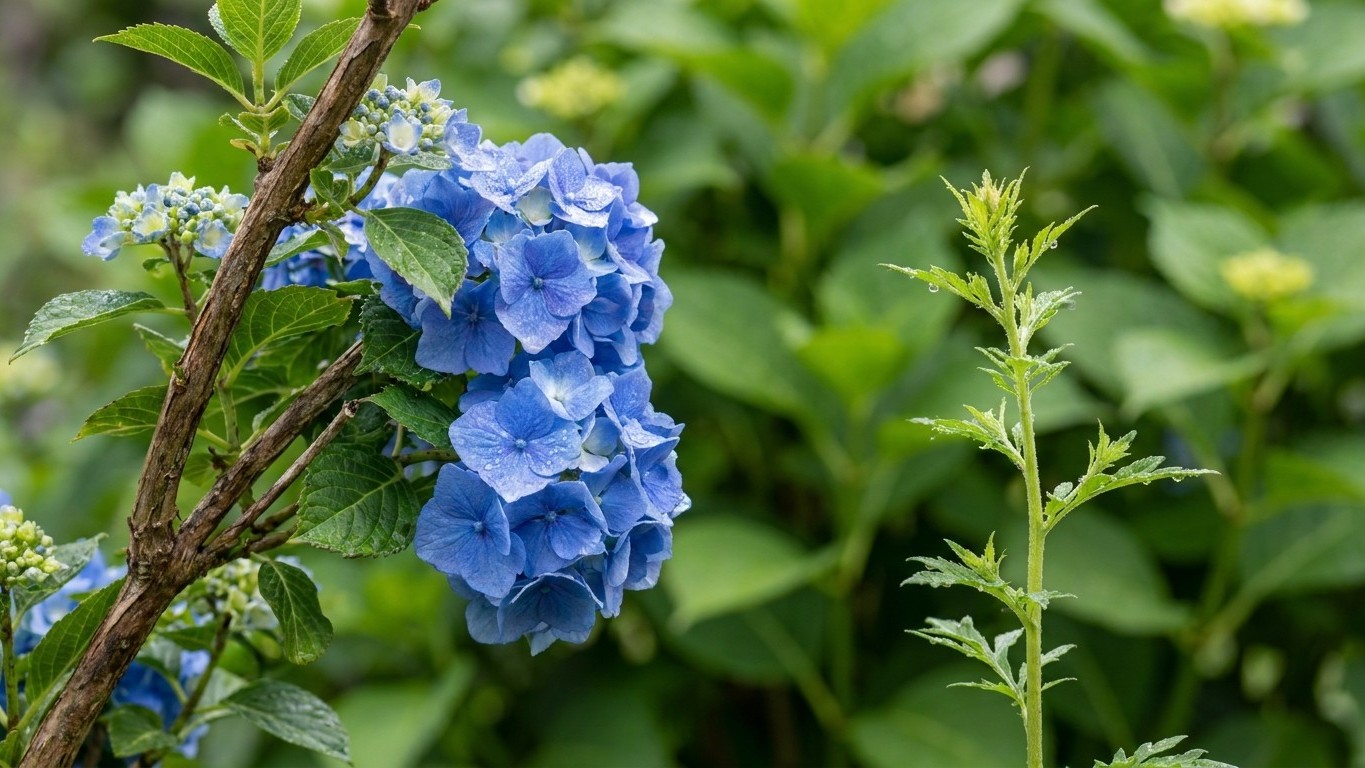

Hydrangeas can do well in Oklahoma, but only when you match the type to the place. Oklahoma City’s average last 32°F freeze falls between March 28 and April 10, so spring planting starts in mid-April and fall planting wraps up before late October. Alkaline soil and scorching July afternoons decide the rest. Pick heat-tolerant panicle or smooth types, or tuck bigleafs into morning sun, and the shrubs reward you.
When to plant Hydrangeas in Oklahoma
Start with the reference numbers. At the Oklahoma City airport station, the NOAA NCEI U.S. Climate Normals for 1991-2020 put the last spring 32°F freeze between March 28 and April 10 (that is the 30-70% probability band). The first fall freeze lands between October 29 and November 8. Those are airport figures. Suburban and rural gardens usually see the last spring frost one to two weeks later and the first fall frost one to two weeks earlier, and the panhandle, the northern tier and higher ground run later still. Your county extension office can tell you how far your own yard drifts from the city numbers.
Most home gardeners buy hydrangeas as container shrubs, and that changes the “seed starting” question. Hydrangeas are almost never grown from seed. Seedlings vary wildly from the parent, take years to bloom, and the named cultivars you want are propagated from cuttings. If you want to start your own plants, take softwood cuttings in early summer and root them in a damp, well-drained mix under bright shade. Expect to overwinter the rooted cuttings in pots (in a garage or protected spot) and plant them out the following spring.
Spring planting and hardening off
Here is the count-back arithmetic. Garden-center plants that spent weeks in a greenhouse or under shade cloth need roughly 7 to 10 days of hardening off: an hour or two of morning sun at first, working up to a full day outside, with the pots pulled in on nights when a freeze is forecast. Work backward from the planting date. If you want the shrub in the ground by April 10, the top of the city’s last-frost band, begin hardening off on March 31. If you are gardening a week or two later than the airport, as most of us are, shift everything accordingly and begin around April 10 for a target of April 20.
Bigleaf hydrangeas break dormancy early, and the soft new leaves and flower buds are the first thing a late freeze burns. Keep a bedsheet and a few stakes handy through mid-April. Panicle and smooth hydrangeas leaf out later and shrug off most of that risk.
Fall planting is often the better call
Container shrubs go in fine from September through October, and the roots keep growing in warm soil after the leaves quit. Given the first-freeze band of October 29 to November 8 (earlier in the country), aim to be done by mid-October. Water new plants in deeply and mulch them. Summer planting is the one to avoid, because a new root ball dries out fast in 100°F weather.
Soil and site preparation
Sun placement matters more in Oklahoma than almost anywhere else in the hydrangea belt. Bigleaf, oakleaf and smooth hydrangeas want morning sun and shade from the hot afternoon sun, meaning a spot on the east side of a house or under high tree canopy. Panicle hydrangeas tolerate far more sun, and farther west, with its wind and dry air, even they appreciate a break in the afternoon. A bed that bakes from noon to 6 p.m. will scorch leaves no matter how much you water.
Soil varies a lot across the state, from heavy clay in many central and eastern yards to sandier and more alkaline ground in the west. The thing every Oklahoma hydrangea gardener should do is test. A basic soil test through your county extension office tells you the pH and nutrient levels, and pH is the number that controls two things at once: the color of bigleaf blooms, and whether the leaves go yellow with green veins from iron lockout. Blue flowers need acidic soil, and pink or red come naturally where the soil runs neutral to alkaline. I would not fight alkaline soil on a large scale. Choose white-flowered types or accept pink.
Drainage is the other make-or-break factor. Clay holds water, and hydrangeas hate soggy roots. Dig a hole, fill it with water, and see how long it takes to drain. If it is still standing after a few hours, plant on a raised mound 6 to 8 inches high or pick another spot.
Amend in the weeks before planting, not on the day. Work 2 to 3 inches of compost into a bed at least a few feet wide, not just the planting hole, because roots that hit a sharp boundary between amended and native soil tend to circle. Dig the hole twice as wide as the root ball and no deeper, so the top of the ball sits level with or slightly above the surrounding soil. Spacing depends on type: roughly 3 to 4 feet for bigleaf and smooth types, and 4 to 6 feet for panicles, which get big. Crowd them and you invite mildew.
Varieties that suit Oklahoma
Three traits narrow the choices. First, bloom timing: whether the plant sets flower buds on old wood (last year’s stems) or new wood (this year’s growth). It matters in a state where late-March warm spells are followed by April freezes. Old-wood bloomers can lose an entire year’s flowers to one cold night. New-wood bloomers just regrow and bloom on schedule.
Second, heat and sun tolerance. Third, disease resistance, mainly to powdery mildew and leaf spots, which climb in humid stretches in the eastern half of the state.
Widely sold varieties that carry those traits include:
- Panicle types such as Limelight, Little Lime, Quick Fire and Bobo. They bloom on new wood, handle sun and heat better than any other hydrangea group, and are the lowest-risk pick for most of the state.
- Smooth hydrangeas such as Annabelle and Incrediball. Also new-wood bloomers and cold-reliable. Incrediball was bred for stiffer stems than Annabelle, which tends to flop after rain.
- Reblooming bigleafs such as the Endless Summer series. They flower on both old and new wood, so a freeze-damaged spring is not a total loss. They still need afternoon shade here.
- Oakleaf hydrangeas such as Snow Queen and Alice. They tolerate dry spells better than bigleafs once established, and the fall leaf color is a bonus. They bloom on old wood.
If you only have room for one shrub and you live west of I-35, a panicle is the safest choice. In the eastern half, where the climate is more humid and the soil often more acidic, bigleaf and oakleaf hydrangeas have a better chance. Whatever you buy, check the plant tag for sun and bloom-wood information.
What to plant alongside
The best companions for hydrangeas solve a real problem: they cover the soil, they tolerate the same shade, and they don’t ask for different water. Hostas, ferns, heuchera and sweet woodruff all fit that description. They shade the ground around the hydrangea’s shallow roots, keep the soil cooler through August, and crowd out weeds. Pair them in the eastern half of the state where there is more moisture. In drier, brighter beds farther west, switch to tougher ground covers like liriope or inland sea oats, which handle dry shade once settled.
Some neighbors are trouble. Large shallow-rooted trees such as silver maple take every drop of water and nutrient in the top foot of soil, so a hydrangea planted at their base will struggle. Turf is a competitor too: a lawn butted up to the shrub drinks the water and takes the fertilizer. Keep a mulched ring at least 2 to 3 feet wide around each plant. Also, avoid planting right against mildew-prone neighbors in tight, airless beds, because powdery mildew spreads easily in crowded plantings.
Watering, feeding and support
Hydrangea means “water vessel,” and the name is earned. The goal in Oklahoma is deep, infrequent watering, not daily sprinkles. A new shrub needs a slow soak two or three times a week for the first month or so, then once a week through its first summer. Established plants generally need about an inch of water a week, either rain or you, and more in a stretch of triple-digit weather. Water at the base, early in the morning, and keep leaves dry. Wet foliage overnight invites leaf spot and mildew.
Afternoon wilting in July is normal for bigleafs. Check the soil with a finger before you reach for the hose: if it is damp 2 inches down and the leaves perk up by evening, leave it alone. If the leaves are still limp at dawn, the plant is thirsty.
Mulch is the cheapest insurance you can buy. Spread 2 to 3 inches of shredded bark or pine straw over the root zone and keep it a few inches off the stems. It cuts evaporation, holds the roots cooler, and breaks down into organic matter. Refresh it in spring and again going into winter.
Feeding should be light. Apply a slow-release balanced fertilizer once in spring when new growth is a few inches long, and perhaps once more in early summer for heavy bloomers. Stop by late summer, because late nitrogen pushes soft growth that the first freeze will burn. Over-fertilizing gets you big leaves and few flowers.
Pruning is where the old-wood versus new-wood split pays off. Prune bigleaf and oakleaf types right after they finish blooming, and never later than midsummer, or you cut off next year’s buds. Panicle and smooth types can be cut back in late winter, before growth starts, to shape them or to keep them smaller. When in doubt, take out dead wood and leave the rest alone.
Common problems
Most hydrangea troubles show up in the leaves or in the flowers that never appear. Reading the symptom saves guesswork.
No flowers. The most common cause in Oklahoma is a spring freeze that killed the buds on an old-wood bloomer, or pruning at the wrong time. The shrub looks healthy and simply doesn’t bloom. Too much shade and too much nitrogen are the next suspects. A reblooming bigleaf or a panicle is the practical fix for next year.
Afternoon wilting. If leaves droop at 3 p.m. and recover by evening, that is heat. If they stay limp in the morning, the cause is either dry soil or, less obviously, waterlogged roots that can’t take up water. Check the soil before you act.
Brown, crispy leaf edges. This points to sun scorch, wind or dry spells, and sometimes fertilizer burn. Add mulch, check the water schedule, and think about whether the plant is getting too much afternoon sun. Moving it is sometimes the only cure.
Yellow leaves with green veins. Iron chlorosis from high pH is common on alkaline Oklahoma soils. A soil test confirms it. Chelated iron gives a temporary green-up, and an acidifying amendment such as elemental sulfur works slowly over a season or more. Choose varieties tolerant of your pH where possible.
Gray-white powder on leaves. Powdery mildew, common on crowded plants in humid weather. Improve airflow by thinning, water at the base, and clear fallen leaves in autumn. A sulfur- or potassium-bicarbonate-based fungicide can help if applied at first sight.
Pests that actually show up in Oklahoma
Here is a caveat before the list. Oklahoma State University Extension’s pest publication, EPP-7313, is written for home vegetable gardens, not ornamentals, and it names squash bug, corn earworm, Colorado potato beetle, cucumber beetles and harlequin bug among the state’s top garden pests. Those feed on vegetables, and I would not worry about them on hydrangeas. The list also covers green peach aphid, spider mites, grasshoppers, blister beetles, and stink bugs and leaffooted bugs. It is not exhaustive and pressure varies across the state. Of those, four commonly bother hydrangeas. See the OSU Extension fact sheet for the full vegetable-garden list, and your county office can identify anything unusual.
- Green peach aphid. You see clusters of small soft insects on the tips of new growth, curled or distorted young leaves, and sticky honeydew that attracts sooty mold. They show up in spring when growth is tender. A hard spray of water knocks them off, and insecticidal soap handles stubborn colonies.
- Spider mites. The first sign is leaves that look dusty or stippled with pale dots, then fine webbing on the undersides. Hot, dry weather in summer favors them, and a dusty, water-stressed shrub is the usual target. Spray the undersides of leaves with water every few days, and use soap or horticultural oil if needed.
- Grasshoppers. The evidence is ragged, notched leaf edges, sometimes with the insects themselves hopping away as you approach. They are heaviest in dry stretches of summer, and they move in from weedy edges. Keep weeds mowed back and drape lightweight netting over young shrubs.
- Blister beetles. Slender beetles gathering on flowers and chewing petals and leaves. Wear gloves, since they can raise blisters on skin, and knock them into a bucket of soapy water rather than crushing them.
Harvest and end of season
Hydrangeas are a cut-flower crop as much as a landscape plant, and the timing rule is simple: cut when the flower head feels papery and has deepened to its late-season color. For fresh arrangements, cut in the cool of the morning, strip the lower leaves and plunge the stems straight into water. Fresh-cut blooms that wilt can often be revived by recutting the stem and dunking the whole head in water for an hour.
For drying, let the flowers age on the plant until the petals feel like parchment, usually late summer into fall for panicles and mopheads, then cut and hang them upside down in a dry, shaded place for two to three weeks. Stored away from humidity and bright sun, dried heads hold their color for a year or more.
Frost prep begins when the first freeze nears. For Oklahoma City, the 30-70% band runs October 29 to November 8, and your yard may see it earlier. Stop fertilizing by late summer so the plant can harden off. Water deeply before the ground freezes, since a dry shrub suffers more in a cold snap. After a few frosts, spread 3 to 4 inches of mulch or pine straw over the root zone. Bigleaf hydrangeas that bloom on old wood benefit from a chicken-wire cage packed with leaves around the stems, or a frost cloth thrown over them on nights in the low 20s. Leave the old flower heads on until spring if you can, as they offer a little protection to the buds below. For regional comparisons, Growing Hydrangeas in North Carolina: Types, Colour and Winter and Growing Hydrangeas in Georgia: Types, Colour and Winter show how a milder winter shifts the advice.
Local help
Oklahoma’s climate and soil change a lot from the panhandle to the southeast corner, so check dates and soil numbers close to home. Oklahoma State University Extension runs county offices that offer soil testing, pest identification and local planting advice. For the rest of the state’s coverage, browse the Oklahoma guides, and for the basics that apply everywhere, see How to Grow Hydrangeas: The Complete Guide.
Common questions
Can hydrangeas survive an Oklahoma summer?
Yes, with the right type and placement. Panicle and smooth hydrangeas handle heat best, and bigleafs need afternoon shade plus a consistent deep-watering habit and a layer of mulch. Afternoon droop that recovers by evening is normal.
What is the best time to plant hydrangeas in Oklahoma?
Mid-April after the last freeze risk has passed, or September through mid-October. The Oklahoma City airport’s last spring freeze band is March 28 to April 10, and the first fall band is October 29 to November 8, but expect later and earlier dates, respectively, in most suburban and rural yards. Avoid midsummer planting.
Why are my hydrangea leaves turning yellow?
Yellow leaves with green veins usually point to iron chlorosis caused by alkaline soil. Overwatering and poorly drained clay can also cause yellowing. A soil test through your county extension office separates the two.
Can I change my hydrangea’s color in Oklahoma?
Only for bigleaf and mountain types, and it is an uphill battle in alkaline soil. Blue needs acidic soil, and pink is the natural result where the soil is neutral to alkaline. White-flowered types like panicle and smooth hydrangeas do not change color with pH.
Should I cut back hydrangeas in the fall?
Generally not. Bigleaf and oakleaf hydrangeas carry next year’s buds on old stems, so pruning in fall removes flowers. Panicle and smooth types can be cut back in late winter. In fall, remove only dead wood and leave the rest alone.