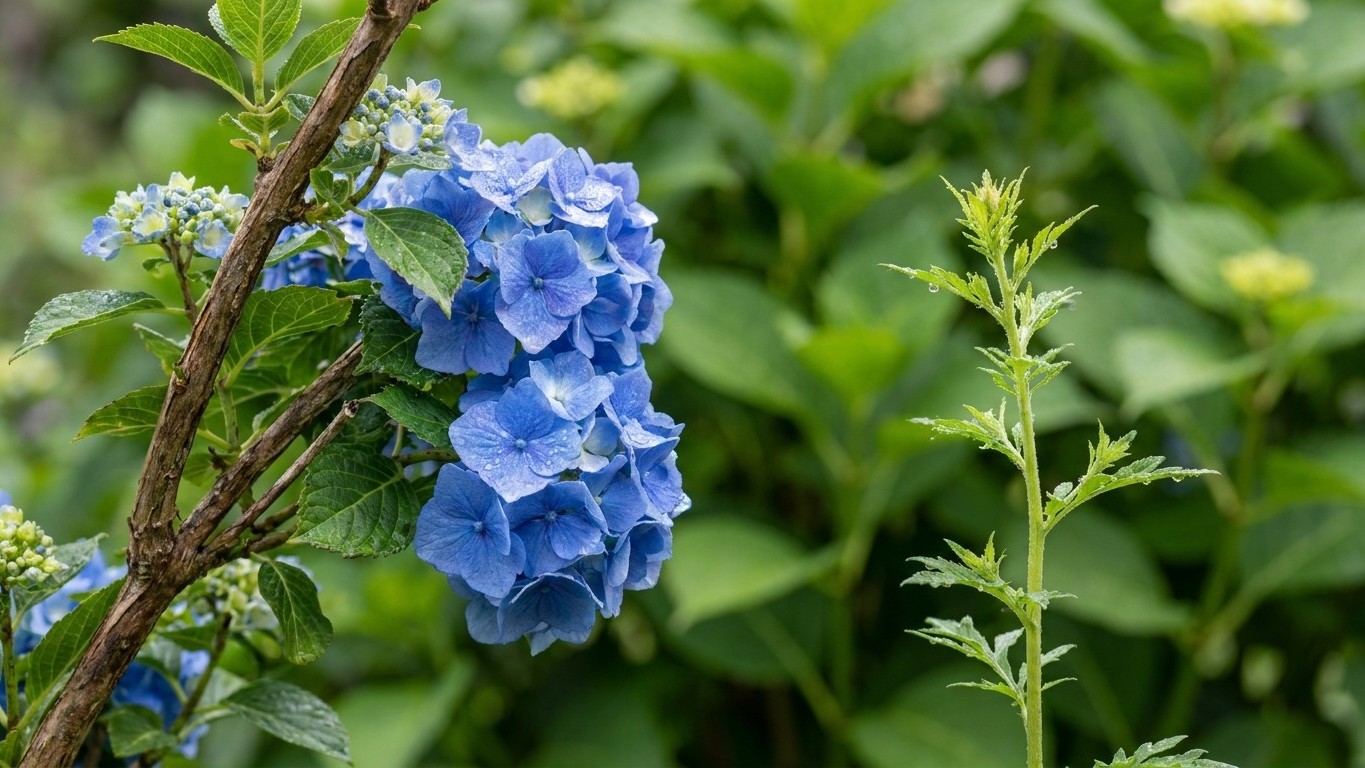

For most Ontario yards, the safest hydrangeas are the ones that bloom on new wood: panicle and smooth types. Set nursery plants out in mid-May, about two weeks after Toronto’s average last frost of April 30, or plant in early fall while the soil is still warm. Bigleaf types will grow, but their flower buds can freeze out over winter. Toronto’s average first fall frost is October 16, two days from today, so this month is about finishing the season.
When to plant Hydrangeas in Ontario

The reference point here is Toronto Pearson airport. Environment and Climate Change Canada’s Canadian Climate Normals for 1981-2010 put the average last spring frost there at April 30, the average first fall frost at October 16, and the frost-free stretch between them at 168 days. Those are mean dates, not guarantees. In one year out of two, the last frost comes later than April 30. Treat it as the middle of a window, not a safe date.
A province is not one climate, either. Northern Ontario and higher ground in the interior run weeks behind Toronto, and lakeshore districts can run a little ahead. One more wrinkle for readers who compare notes with US gardening sites: the Canadian normals cover 1981-2010, while US figures cover 1991-2020. The two sets are not measured on the same years.
Spring planting from nursery pots
Most people buy a potted shrub, and the arithmetic is simple. Take your district’s average last frost, add about two weeks as a cushion, and plant then. In the Toronto area that points to mid-May. Hydrangeas leaf out early, and a late frost blackens tender new growth and can take the flower buds on bigleaf types along with it. Keep an old bedsheet handy for the odd cold night in May.
Starting indoors, and hardening off
Hydrangeas can be grown from seed, but seedlings don’t come true to a named variety and usually take two to three years to bloom. Most home gardeners skip that route. If you want to try it anyway, count back from the plant-out date. Say mid-May. Hardening off takes 7 to 10 days, so it starts around May 5. Seedlings need roughly 8 to 10 weeks of indoor growth before that, which means sowing in early March. Those lead times are planning assumptions, not measured figures.
Cuttings are faster. Softwood cuttings taken from new growth in June usually root within several weeks, and the rooted plants can overwinter in pots and go out the next spring. Hardening off works the same for rooted cuttings, greenhouse-forced plants and anything that has lived indoors. Start in open shade for a couple of hours, then lengthen the exposure each day over a week or more until the plant can stay out through a full night.
Fall planting
Early fall is the best window. Roots keep growing in warm soil long after the leaves stop, and the plant gets a head start on its first summer. Count back from the date your ground freezes and allow about six weeks of root growth. The freeze-up date varies a lot across the province, so check it against your own district.
Soil and site preparation
Light decides more than people expect. Bigleaf and oakleaf types do best with morning sun and afternoon shade. Panicle hydrangeas tolerate full sun if the soil holds moisture. Smooth hydrangeas fall in between. Scorched leaf edges in July usually mean the plant is getting too much afternoon sun for the water it has.
Soil should be loose, rich and well drained, yet able to hold moisture. Check drainage before you buy anything. Dig a hole about 12 inches deep, fill it with water, let it drain, then fill it again. If the second fill is still standing the next morning, the spot suits a different plant, or you need a raised bed. Hydrangeas sulk in wet clay but also dry out fast in sand.
Start the work weeks ahead. If the site is lawn, smother the sod with flattened cardboard and a few inches of compost in early fall for spring planting. Work 2 to 3 inches of compost into the top 8 inches of soil a few weeks before planting day, not on it, so the bed can settle. Send a soil sample to a lab at the same time. Parts of southern Ontario sit on limestone-rich glacial material, and soil can run alkaline in places. That matters for bigleaf color (more on that below), and only a test tells you what you have.
On planting day, dig a hole twice as wide as the root ball and no deeper. Keep the crown level with the surrounding soil, loosen circling roots, backfill, and water in slowly. Spacing depends on the type:
- Panicle types: 4 to 6 feet apart
- Smooth types: 3 to 4 feet
- Bigleaf and oakleaf types: 3 to 5 feet, with oakleaf at the wider end
Give yourself a windbreak if the spot is open. Winter wind dries out buds as surely as cold does.
Varieties that suit Ontario
The key trait in a hydrangea is whether the plant blooms on new wood (this year’s stems) or old wood (stems grown last year). New-wood bloomers recover from winter dieback and still flower. Old-wood bloomers lose their flowers if buds are killed over winter. In a province with hard winters and late frosts, that single trait does more than any other to decide whether you get flowers.
| Type | Blooms on | Widely available examples | Good for |
|---|---|---|---|
| Panicle (H. paniculata) | New wood | ‘Limelight’, ‘Little Lime’, ‘Bobo’, ‘Quick Fire’ | Reliable bloom, full sun, cold hardiness, hedges |
| Smooth (H. arborescens) | New wood | ‘Annabelle’, ‘Incrediball’ | Part shade, big white blooms, bounce-back after hard winters |
| Reblooming bigleaf (H. macrophylla) | Old and new wood | Endless Summer series | Blue or pink color, some bloom even after winter damage |
| Oakleaf (H. quercifolia) | Old wood | ‘Snow Queen’ | Fall leaf color, shaded sites with shelter |
Panicle and smooth types are the dependable choice. Panicles handle sun and city soils and shrug off most winters. ‘Annabelle’ is a classic with one weakness: its heavy blooms flop after rain, which ‘Incrediball’ was bred to fix. Pick based on the tag’s hardiness zone against your district’s, and be a notch more cautious in the north.
Reblooming bigleafs are worth trying in sheltered southern gardens. Their old-wood buds may still die in a bad winter, but the new-wood flush gives you a second chance later in summer. Plain old-wood bigleafs are a gamble in much of Ontario. Disease resistance varies by type, too. Bigleafs tend to attract powdery mildew and leaf spots more than panicles do, so air circulation and spacing matter more with them. I’m not citing any institution’s recommendation here. These are traits to compare on the plant tag and at the nursery.
What to plant alongside
Good neighbors share your hydrangea’s tastes: moist, humus-rich soil and light shade. Hostas, ferns, astilbe and heuchera fit well. Their foliage covers the bare soil around the base, which keeps roots cooler and slows evaporation. Spring bulbs such as daffodils fill the gap before the shrubs leaf out, and the bulb foliage is gone by the time hydrangeas want the space.
Pollinator draw is real but uneven. Lacecap and many panicle and smooth types carry small fertile flowers that bees visit. Big mophead types are mostly showy sterile sepals and give insects little. If pollinators matter to you, pair a mophead with a nectar plant nearby.
Competitors are worth keeping away. Shallow-rooted trees such as maples take most of the moisture in the top foot of soil, so a hydrangea planted tight against the trunk will struggle, with or without extra water. Roses are another poor match. Japanese beetle is on the extension lists for neighboring states (more on that below), and planting roses beside hydrangeas gives it a buffet. Emerald ash borer is also on those lists. It doesn’t attack hydrangeas, but ash trees dying overhead can change your light and drop limbs on the bed, so watch what’s above before you plant under one.
Be skeptical of one popular claim. Marigolds and other strong-smelling plants are often said to “confuse” pests in ornamental beds, but the evidence is thin. French marigolds do suppress certain soil nematodes, which is a different problem. Don’t count on them to protect a hydrangea.
Watering, feeding and support
The name comes from the Greek for “water vessel,” and the plants live up to it. Aim for about an inch of water a week, delivered deeply and slowly at the base rather than in daily sprinkles. Shallow watering trains roots to stay near the surface. Midday wilting on a hot day is normal if the leaves perk up by evening. If they’re still limp the next morning, check the soil. Dry means water. Soggy means you have a drainage problem.
Mulch 2 to 3 inches deep with shredded bark or leaf mold, pulled back a few inches from the stems. It cuts watering needs and moderates soil temperature, and it breaks down into the humus hydrangeas like.
For feeding, less is more. A slow-release balanced fertilizer in spring as growth starts is plenty, and compost can do the job alone in decent soil. Stop feeding by midsummer. Late nitrogen pushes soft growth that won’t toughen up before frost, and soft stems are the ones that die back.
Pruning follows the bloom wood. Panicle and smooth types can be cut back in late winter or early spring, since they bloom on the new growth that follows. Bigleaf and oakleaf types should get only dead wood removed once buds swell in spring. Prune them hard and you remove the flowers. Hydrangeas rarely sucker, though tree-form panicles will throw shoots from the base that should be cut off.
Support is mostly a smooth-hydrangea issue. Heavy-headed ‘Annabelle’ benefits from a ring support set early in spring, before growth fills in. Stakes tied after the stems flop never look right.
Common problems

The first symptom most people ask about is no flowers. The usual causes are winter-killed buds on old-wood types, pruning at the wrong time, too much shade, or too much nitrogen producing leaves instead of blooms. Look at the stems in spring. If the canes are alive and leafing out but have no flower buds, cold or pruning is the likely culprit.
Wilting has two causes that look alike. A dry root zone responds to a deep soak within hours. A waterlogged one doesn’t, and wilting continues because roots are failing. Brown, crispy leaf edges usually signal sun scorch or a dry spell. Curling leaves often point to drought stress, but also look underneath for twospotted spider mites, which show up as fine stippling and webbing in hot, dry weather. Herbicide drift from a neighboring lawn can curl leaves too.
Dark, spotted leaves in humid weather are typically fungal leaf spot. White powdery patches are powdery mildew. Water at the base, give plants room, and clear fallen leaves in autumn. Both rarely kill a shrub, but they spoil the look.
On pests, a caution: no Canadian province publishes a home-garden pest list like the ones US extension services produce. The best documented lists come from neighboring US states, namely Cornell University, Michigan State University Extension, Ohio State University Extension and University of Minnesota Extension. The biology crosses the border, but the calendar doesn’t always. From those lists, the ones that matter for hydrangeas are these:
- Aphids cluster on new growth and are usually knocked off with a hose.
- Japanese beetle skeletonizes leaves in summer, and handpicking into soapy water works for small plantings.
- Slugs chew ragged holes in damp, shady beds.
- Fourlined plant bug leaves small dark spots on leaves.
- European earwig and Asiatic garden beetle chew leaves at night.
I’m not saying any of these dominates in Ontario, and none is proven absent. Take a leaf or the insect itself to your provincial agriculture office for identification before spraying anything.
Will Hydrangeas Have Time to Establish Before Frost?
The question is whether the plant has time to grow, set buds and toughen its wood before winter. The same arithmetic applies. Toronto Pearson averages 168 frost-free days. If you plant out in mid-May, two weeks after the April 30 mean last frost, the stretch from May 15 to October 16 is about 154 days. Those 154 days are what a new plant has to root in, leaf out, bloom and harden off.
For new-wood types such as panicle and smooth hydrangeas, that’s enough. They flower on the current season’s stems, typically in midsummer, with a long runway to spare. For old-wood bigleaf and oakleaf types, the picture changes. The buds that will bloom next year form on this year’s stems, and those buds must survive the winter. A first-year plant that spends the whole season rooting in may not have much bloom to show for it, and that is normal.
Several things buy extra weeks. A larger container plant skips the early growth stage. A south-facing wall or a windbreak warms the site by a few degrees. Mulch holds soil warmth into fall. Frost cover on cold nights in late September and October protects tender growth.
To redo this for your own district, find the average last and first frost dates (your provincial agriculture office or local climate normals will have them), add a two-week cushion to the spring date, and count the days between. If you’re far north of Toronto, that number shrinks quickly, and the case for panicle and smooth types gets stronger.
Cut Flowers and End-of-Season Care
Cut flowers for fresh arrangements in the morning, once most of the florets on a head have opened. Choose stems with firm, full blooms and re-cut them under water. For dried hydrangeas, wait until the blooms turn papery and take on a slightly aged color in late summer or early fall, then hang them upside down or stand them in a vase with an inch of water that evaporates. Dried heads stored out of direct sun keep their shape for months.
The average first fall frost at Toronto Pearson is October 16. That is a midpoint, so in half of years the frost arrives later and in half it comes earlier. If a frost warning is posted, cover tender new growth and any container plants, and bring potted ones into an unheated garage if a hard freeze is forecast.
For winter, keep watering until the ground freezes. Dry roots going into winter make dieback worse. Mulch deeply after the soil has cooled, not before. For marginal bigleafs, build a cage of chicken wire around the plant and fill it with dry leaves, or wrap it loosely in burlap. Leave faded flower heads on through winter, since they insulate buds. Cut back dead wood in spring once you can see which stems leaf out.
Local help
Planting dates, soil testing and pest identification depend on your district, and Ontario’s agriculture and food office is the place to go. The provincial agriculture and food page points to provincial services. For more, see the other Ontario guides.
Common questions
Can I grow hydrangeas in Ontario if I’m north of Toronto?
Yes, but choose panicle or smooth types. Both bloom on new wood and recover from winter dieback. Count your own frost dates, because northern districts run weeks behind Toronto.
Why won’t my hydrangea bloom?
Winter-killed buds on an old-wood type are the most common cause. Spring pruning of a bigleaf, too much shade and too much nitrogen come next. Check the stems for live buds in spring.
How do I get blue or pink flowers?
Only bigleaf types change color with soil chemistry. Acidic soil with available aluminum favors blue, and neutral to alkaline soil favors pink. Get a soil test first, and expect any change to take months. White varieties don’t change.
Is it too late to plant now?
Early October can still work for a potted plant if the ground isn’t frozen, but you’ll need to mulch and water well. Compare your date with the ground-freeze date for your district. For comparison with colder and warmer climates, see Growing Hydrangeas in Maine: Types, Colour and Winter and Growing Hydrangeas in Hawaii: Types, Colour and Winter.
Where can I learn the basics beyond Ontario?
The parent guide, How to Grow Hydrangeas: The Complete Guide, covers the fundamentals that apply everywhere.