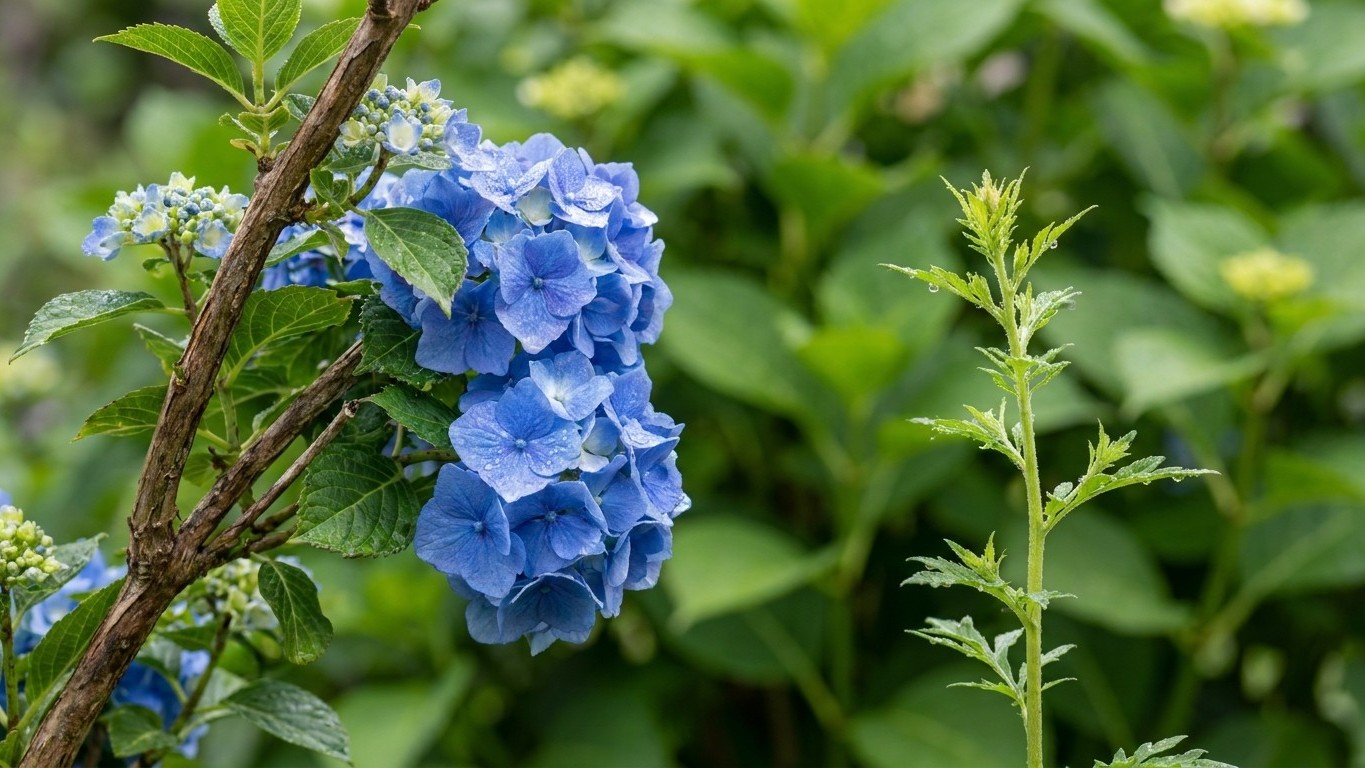

Hydrangeas can absolutely grow in Hawaii, but the state’s lack of frost changes everything about how you plan the season. Instead of watching a calendar for a last freeze date, you’re working around rainfall patterns, elevation, and whether your yard sits on the windward or leeward side of an island. Get that right and hydrangeas thrive here for most of the year.
When to plant Hydrangeas in Hawaii
Start with the number that changes the whole conversation: according to NOAA’s 1991-2020 Climate Normals for station USW00022521 in Honolulu, every freeze percentile at 32°F and 36°F comes back “not-computable,” and the station logs zero days per year at or below 32°F. There is no frost season to plan around in lowland Hawaii. Frost only touches the summits of Mauna Kea, Mauna Loa, and Haleakala, thousands of feet above where anyone keeps a garden. If you moved here from a mainland state and you’re used to counting weeks before or after a last frost date, that habit doesn’t apply here.
What replaces it is rainfall and elevation. Hawaii runs on a wet season roughly from November through March and a drier season from April through October, and that split matters more to a hydrangea’s roots than any temperature reading. Gardeners on higher ground, places like Volcano on the Big Island or Kula on Maui, sitting well above 3,000 feet, also deal with noticeably cooler nights than someone gardening near sea level in Honolulu or Kona. Those elevation belts are where hydrangeas tend to look their best, because the plant’s flower buds set more reliably with some night-time cooling, something lowland heat doesn’t offer.
Rooted cuttings, not seed packets
Here’s a detail that trips up gardeners coming from a vegetable-growing mindset: hydrangeas aren’t started from seed indoors the way tomatoes or peppers are. Seed-grown hydrangeas rarely reproduce the parent plant’s color or flower form, so nearly everyone works from rooted cuttings or potted nursery starts instead. If you’re rooting your own cuttings, take them from healthy stems and expect roots to develop over roughly six to eight weeks in a shaded spot with consistently damp (not soggy) potting mix.
Count backward from the start of the wet season if you want the plant established before summer’s drier stretch. Say you’re aiming to set cuttings or young potted plants into the ground in early November, right as the rains pick up: that means starting the rooting process in early September, then hardening off the young plants over about two weeks, moving them gradually from full shade into filtered morning sun before they go into open ground. That two-week hardening window matters more in Hawaii’s intense midday sun than it would in a milder mainland climate, since a plant moved too fast from shade to open exposure can scorch within days.
Planting at the front edge of the wet season gives roots several months of natural moisture before the drier season tests them. It’s not a rigid rule, though, and gardeners on consistently damp windward slopes have more flexibility than those on the dry leeward coast, where irrigation becomes non-negotiable no matter the month.
Soil and site preparation
Sun exposure needs to match your elevation and coastline. In hot lowland spots, hydrangeas do best with morning sun and afternoon shade, since direct tropical sun past noon will stress the leaves and flowers alike. Up in the cooler highlands, plants can handle considerably more direct sun without wilting, simply because the ambient temperature isn’t punishing them the same way.
Soil across the islands is wildly inconsistent, and that’s not a knock on any one region, it’s just volcanic geology at work. Some yards sit on fast-draining cinder or ash, others on dense red clay, particularly common on parts of Oahu. Hydrangeas want soil that holds moisture without staying waterlogged, so heavy clay benefits from raised beds or mounded planting areas that lift the root zone above standing water after heavy rain. Fast-draining volcanic soils, on the other hand, often need extra organic matter worked in just to hold enough moisture between waterings.
Work compost or aged organic matter into the planting area two to three weeks before you actually put a plant in the ground. This gives the amendment time to integrate rather than sitting as an isolated pocket the roots eventually hit and stall against. Dig the amended zone wider than you think necessary, at least two feet across for a single shrub, since hydrangea roots spread laterally more than they dig deep.
Spacing depends on the variety and its mature size, but a reasonable default is three to six feet between plants, with the wider end of that range reserved for the larger-growing bigleaf types. Crowding hydrangeas cuts down on air movement between plants, and in a climate this humid, poor air circulation is practically an invitation for fungal leaf disease. Leave room, even if the bed looks sparse for the first year or two.
Varieties that suit Hawaii
The trait that matters most here isn’t cold hardiness, since that’s a non-issue statewide. It’s heat tolerance, humidity resistance, and how well a variety handles both heavy rain on windward slopes and dry stretches on leeward ones.
Bigleaf hydrangea (Hydrangea macrophylla), the classic mophead and lacecap type most people picture when they hear the word, does well in the cooler highland pockets like Volcano and Kula, where night temperatures give the plant a break from tropical heat. Its flower color shifts with soil chemistry, aluminum availability tied to soil pH turns blooms blue in acidic soil and pink in more alkaline conditions, and Hawaii’s naturally acidic volcanic soils often lean toward blue without any help at all.
Panicle hydrangea (Hydrangea paniculata) tolerates more direct sun and heat than the bigleaf types, which makes it a better fit for warmer, lower-elevation yards that still get afternoon shade for part of the day. It also shows more resistance to the fungal leaf spots that plague humid gardens, since its foliage tends to dry faster after rain.
Smooth hydrangea (Hydrangea arborescens) is the most forgiving of the common types, adapting to a wider range of soil moisture and light conditions, which makes it a reasonable starting point for a gardener still figuring out their yard’s particular quirks.
Oakleaf hydrangea wants sharper drainage than the others and struggles on consistently soggy windward sites, so it fits better on drier leeward ground where the soil actually gets a chance to dry between rains.
Reblooming cultivars, ones bred to flower on both old and new wood, are worth seeking out specifically because Hawaii’s long growing season rewards a plant that can push out more than one flush of blooms in a year rather than setting buds once and calling it done.
What to plant alongside
Shade-loving neighbors genuinely help hydrangeas by keeping the surrounding soil cooler and reducing moisture loss. Ti plants and other broad-leafed shade tolerant foliage work well as a living mulch of sorts around the base of taller hydrangeas, shading the root zone without competing hard for water. Low ground covers that spread rather than mound also help by shading soil and reducing splash-up of soil-borne fungal spores onto lower hydrangea leaves during heavy rain.
Camellias and azaleas make sensible bed-mates because they share the same preference for acidic, well-drained, organically rich soil, so you’re not fighting two different soil chemistries in one bed.
On the competition side, avoid planting hydrangeas near aggressive, shallow-rooted spreaders like running bamboo, which will out-compete a hydrangea’s root zone for both water and nutrients within a season or two. Roses share several of the same fungal leaf diseases that hit hydrangeas in humid climates, so keeping them at a distance reduces the chance of one infected planting bridging disease to the other.
One claim worth pushing back on: the idea that certain flowers planted nearby will “confuse” pests away from hydrangeas specifically. That’s garden folklore repeated across plant blogs with no real evidence behind it for this crop. Pollinator-friendly flowers nearby genuinely help by drawing bees and other visitors into the bed, which benefits the whole planting, but treat pest-confusion claims as unproven rather than a strategy to rely on.
Watering, feeding and support
Consistent moisture is the single habit that separates a thriving hydrangea from a struggling one in Hawaii, and the rhythm shifts with the season. During the wetter months, natural rainfall often covers most of the plant’s needs, and the bigger risk becomes standing water rather than drought. Once the drier season sets in, particularly on leeward coasts, plan on deep watering, roughly an inch or two delivered slowly so it soaks past the surface, once or twice a week depending on how fast your particular soil drains.
Mulch is doing real work here beyond tidiness. A two- to three-inch layer of wood chips or composted mulch keeps soil temperature more even and slows evaporation during dry stretches, which matters more in Hawaii’s intense sun than it would in a cooler mainland climate. Keep the mulch pulled back an inch or two from the stem itself to avoid trapping moisture against the bark, which invites rot.
Feed with a slow-release fertilizer formulated for acid-loving shrubs in early spring, then again lightly midseason if the plant is pushing a second bloom flush. If you’re deliberately managing flower color on bigleaf types, aluminum sulfate worked into the soil nudges blooms bluer, while garden lime shifts them toward pink, though most Hawaii volcanic soils are acidic enough already that many gardeners never need to intervene at all.
Staking is rarely necessary for hydrangeas under normal conditions, but windward-facing yards exposed to steady trade winds are a different story. Heavy rain-soaked blooms combined with wind can flop or snap stems, so a simple stake or a loose ring of support placed early in the season, before the plant needs it, saves a lot of frustration later. Pruning timing depends on the type: bigleaf and oakleaf hydrangeas set next year’s buds on old wood, so prune them right after flowering rather than in late winter, while panicle and smooth hydrangeas bloom on new growth and tolerate a harder late-winter cutback without sacrificing next season’s flowers.
Common problems
The pest list that matters most for Hawaii home gardens comes straight from the University of Hawaii’s own extension service, and several of these show up on hydrangeas along with nearly everything else in the yard. Aphids cluster on new growth and tender stems, and beyond the direct feeding damage, they’re a major vector for plant viruses, so an aphid problem left unchecked can spread more than just weakened leaves. Thrips, including melon thrips and western flower thrips, rasp at flower buds and leaves, leaving a stippled, silvery scarring that’s easy to mistake for sun scorch at first glance. Whiteflies (the silverleaf, greenhouse, spiraling and anthurium types are all named by the extension service) cluster on leaf undersides and leave behind sticky honeydew that turns into sooty mold. Mites cause a fine stippling and can trigger the kind of leaf curl that looks alarming before you realize it’s a pest issue rather than a disease.
Slugs and snails, including the giant African snail, chew ragged holes in leaves overnight and leave slime trails as the giveaway. The Chinese rose beetle is a nighttime feeder that skeletonizes leaves on a long list of garden plants, and while the extension service names it for hosts like rose, grapes, beans, eggplant, corn, cucumber and ginger, it’s an opportunistic feeder in Hawaii gardens generally, so don’t be surprised to find its distinctive lacy leaf damage on ornamentals nearby. The little fire ant and red imported fire ant aren’t feeding on hydrangeas directly, but their presence in a bed makes routine maintenance like pruning and deadheading genuinely painful, and they’re worth reporting to your county office if you spot them, since both are treated as serious statewide concerns.
Beyond insects, humidity itself is the recurring headache. Fungal leaf spot and powdery mildew show up as dark blotches or a pale dusty coating on leaves during extended wet stretches, especially in crowded plantings with poor air circulation, which is exactly why spacing matters as much as it does. Wilting despite damp soil often points to root rot from waterlogged, poorly draining ground rather than underwatering, a common misdiagnosis that leads people to water an already-drowning plant even more. Scorched, browning leaf edges usually trace back to too much direct afternoon sun combined with wind, particularly on exposed lowland sites, and the fix is more shade cloth or a better-placed companion planting, not more fertilizer.
Harvest and end of season
Hydrangeas aren’t harvested for food, but cutting blooms for arrangements follows its own timing. Wait until the petal-like sepals have taken on a slightly papery, less glossy texture before cutting, since flowers snipped too early while still soft tend to wilt fast in a vase, while ones cut at that papery stage often dry beautifully if hung upside down out of direct sun.
Deadheading spent blooms through the season encourages reblooming types to keep pushing new flushes rather than putting energy into seed production. Because there’s no frost cutoff here, that flowering window can stretch across most of the year in the cooler highland gardens, tapering more with the dry season’s stress than with any calendar date.
Since there’s no first fall frost to prepare for in Hawaii, the usual mainland ritual of Protecting plants ahead of a freeze simply doesn’t apply. What replaces it is preparing for the dry season instead: refresh mulch heavily as rainfall tapers off, check that irrigation is reliable before the driest months hit, and resist any late-season fertilizing that would push tender new growth right as water becomes scarcer. That shift in mindset, from frost prep to drought prep, is really the core adjustment for anyone gardening hydrangeas in Hawaii after growing them somewhere with a real winter.
Local help
Soil conditions and rainfall patterns shift dramatically between islands and even between neighborhoods on the same island, so county-level advice beats any general guide. The University of Hawaii’s CTAHR Extension office offers soil testing and localized planting guidance through its extension service directory, and it’s worth a call before committing to a variety or a planting date for your specific address.
Common questions
Can hydrangeas survive Hawaii’s heat year-round?
Lowland heat stresses hydrangeas more than cold ever will here, since the state has no frost season to worry about. Morning sun with afternoon shade, along with consistent moisture, gets most varieties through the hottest stretches without serious damage.
Why do hydrangea flowers turn a different color in my yard than the tag showed?
Bigleaf hydrangea color depends on aluminum availability in the soil, which tracks with soil pH. Hawaii’s naturally acidic volcanic soils often produce bluer blooms than the same variety would show in more alkaline mainland soil, with no intervention needed.
Do I need to worry about frost damage at higher elevations like Volcano or Kula?
No. NOAA’s climate data for the state shows zero measurable freeze days in inhabited areas; frost is confined to the summits of Mauna Kea, Mauna Loa and Haleakala, well above any garden.
What’s eating holes in my hydrangea leaves overnight?
Nighttime leaf skeletonizing is a classic sign of the Chinese rose beetle, a pest the state extension service flags as active across many garden plants after dark. Slugs and snails leave a similar chewed pattern but with visible slime trails as the giveaway.
Should I plant hydrangeas on the windward or leeward side of my property?
Windward sites get more consistent natural rainfall but need better air circulation and occasional wind support for top-heavy blooms. Leeward sites need reliable irrigation during the dry season but generally dry out faster after rain, which helps against fungal leaf disease.