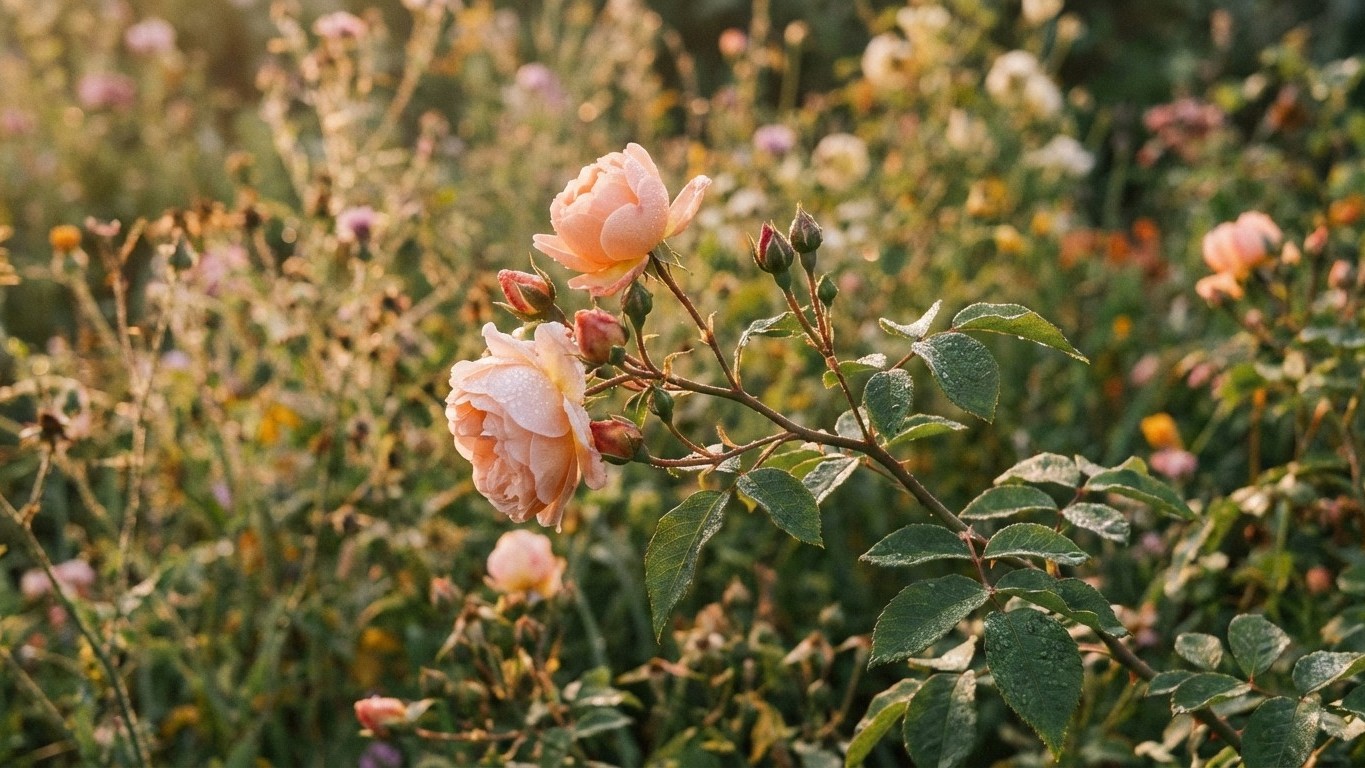

Plant bare-root roses in Wisconsin in April, as soon as the soil can be worked, and set container roses out in early to mid-May. The last spring freeze at Milwaukee falls between April 16 and April 29. Choose cold-hardy, disease-resistant shrub roses unless you’re willing to protect tender types every winter. The pests to watch are aphids, thrips and tarnished plant bugs. The sections below cover timing, site, varieties and care, and the full How to Grow Roses: The Complete Guide covers the basics.
When to plant Roses in Wisconsin

The reference point here is Milwaukee. NOAA NCEI 1991-2020 Climate Normals for the Milwaukee station put the last spring 32°F freeze between April 16 and April 29 (that’s the 30-70% probability band, so a freeze after April 29 is possible). The first fall freeze lands between October 17 and October 29. Those dates describe the lakeshore. Lake Michigan delays the first fall freeze there, inland southern Wisconsin typically freezes in early October, and the north freezes far earlier and thaws later. Northern and higher-elevation gardens should plan on later spring planting.
Bare-root and container roses
Bare-root roses are dormant, which makes them forgiving of cold. Soak the roots in a bucket of water for several hours, then plant them in April once the soil is thawed and no longer soggy. A handful of cold nights won’t hurt dormant canes, but leaves that have already pushed out are another matter. Container roses from a garden center are often already leafing out in a greenhouse. Wait until the last-freeze window has passed, which at Milwaukee means setting them out in the first half of May. Anywhere colder, add a week or two.
Harden off any greenhouse-grown rose first. Set the pot outside in a sheltered spot for a couple of hours, add an hour or two each day, and give it a full week to ten days before planting. Skip this and tender new foliage scorches in the first strong sun.
Starting from seed: the count-back
Most gardeners should buy plants. Seed-grown roses vary from their parents and take longer to flower, but species roses and some shrub types are fun to try. The schedule works backward from your set-out date. Say you plan to transplant on May 6, a week after the late end of the freeze window. Assume about 8 weeks of cold stratification in the refrigerator, 2 to 4 weeks to germinate, and 8 weeks of growing on under lights. That adds up to roughly 18 to 20 weeks, so stratification starts between December 17 and December 31. Begin hardening off around April 26. These durations are planning assumptions, not guarantees, since rose seed germination is erratic and often takes longer than expected.
Fall planting is a gamble in Wisconsin. Roots need time to settle before the ground freezes, and the freeze comes early in the north. Spring is the safer window almost everywhere in the state.
Soil and site preparation
Give roses at least six hours of direct sun, and morning sun is best because it dries dew off the leaves quickly. Dew that lingers is an invitation to black spot. Avoid planting against a solid wall or fence with no air movement, and keep roses away from the root zones of large trees and shrubs, which will outcompete them for water every summer.
Drainage matters more than soil type. Roses tolerate loam, clay-loam and sandy ground if water doesn’t pool. To check, dig a hole about a foot deep, fill it with water, let it drain, then fill it again. If water is still standing after several hours the second time, build a raised bed or plant on a gentle mound. Heavy clay is common in parts of Wisconsin, but no soil survey numbers are given here, because conditions change from one lot to the next. A soil test is the only way to know your own pH and nutrient levels.
Do the prep work in the weeks before planting. As soon as the ground is workable in April, test the soil through your county extension office. If it needs lime or sulfur, work it in early so it has time to react. Loosen the bed to a depth of 12 to 18 inches and blend in a couple of inches of finished compost. Don’t pile on fresh manure close to planting time, since it can burn new roots.
On planting day, dig a hole wider than the root mass, about 18 inches across for most shrub roses. Keep the graft union, the knobby swelling near the base of grafted plants, an inch or two below the soil line in Wisconsin’s cold climate, because it gives the bud union some insulation. Own-root roses simply go in at the depth they grew in the pot. Space compact shrub roses about 3 feet apart, hybrid teas about 3 feet, and large shrubs or climbers 5 to 6 feet. Crowding is a common mistake, and it traps humidity. Water thoroughly after planting and mulch.
Varieties that suit Wisconsin
Wisconsin’s growing season, about 24 weeks between the late end of the spring window and the early end of the fall window at Milwaukee, is long enough for roses to bloom well. Winter is the real test. Look first for cold tolerance, then disease resistance (black spot and powdery mildew top the list), then repeat bloom. Own-root plants are worth seeking out because if the canes die back to the ground, what regrows is the variety you bought. On a grafted rose, regrowth below the union may be the rootstock, usually a different, less attractive rose. Check the tag for these traits. If you’re comparing notes with colder places, our guides to Growing Roses in Montana: Planting Dates, Varieties and Local Pests and Growing Roses in New Hampshire: Planting Dates, Varieties and Local Pests cover similar winter challenges.
| Type | Examples (widely sold) | Good for |
|---|---|---|
| Knock Out series shrubs | Knock Out and its relatives | Repeat bloom with little spraying, mass plantings. Resistance to leaf diseases is strong, but not immunity to rose rosette |
| Canadian Explorer and Parkland roses | ‘William Baffin’, ‘Morden Blush’ | Bred for cold climates, so a sensible pick in colder areas. ‘William Baffin’ is a vigorous climber |
| Rugosa roses | ‘Hansa’, ‘Therese Bugnet’ | Very hardy, tough foliage, good hips, and salt tolerance for roadside beds |
| Buck roses | ‘Carefree Beauty’ | Bred for Midwestern winters, with repeat bloom and a relaxed shrub habit |
| Groundcover roses | Drift series | Compact, low borders, small spaces and slopes |
| Hybrid teas and grandifloras | ‘Peace’ and similar | Classic cut flowers, but they need winter protection and more attention to disease |
Nothing here is an official endorsement, only a list of well-known roses that carry the traits that matter in this climate. Availability varies by nursery, so ask your local garden center what overwinters successfully nearby. A rose that thrives in Madison may struggle in Hurley. Hybrid teas are worth growing if you love them, but treat them as a commitment, with mounding in late fall, spring pruning and regular disease watch. For a first rose bed, start with shrub roses.
What to plant alongside
The companions that earn their place do something concrete. Low perennials like hardy geranium or catmint shade the soil around the base, cut weeds and draw pollinators. Catmint also blooms through much of the summer, filling gaps between rose flushes. Clematis is a classic partner on a trellis or fence with climbers, with the roots shaded by the rose and the vine threaded through the canes. Plant clematis 12 to 18 inches away from the rose base so the two don’t fight over water.
Chives, garlic and other alliums are often recommended to repel aphids. The evidence is thin. Gardeners swear by it, but rigorous trials are scarce, so treat alliums as a pretty edge plant with a possible side benefit and not a pest-control plan. The same applies to marigolds, which have some research behind them against certain soil nematodes but little for aphids on roses.
Plan around airflow and water. Dense perennials planted right against the canes hold moisture and shade the lower leaves, which encourages black spot. Lavender looks lovely beside roses but wants lean, dry soil, while roses want richer, moister ground, so one of the two usually suffers. Keep large shrubs and trees away, since their roots take water and nutrients. Don’t plant a new rose where an old one died of disease, because pathogens and replant problems can linger in the soil. If you must reuse the spot, replace the soil in a hole about 2 feet across or choose a new site.
One more caution connects to the pest list later. Spotted cucumber beetles feed on flowers as well as on cucurbit crops, so a rose bed beside a squash or cucumber patch may see more of them. That’s worth knowing before you plan a mixed garden.
Watering, feeding and support
Newly planted roses need steady moisture. Water deeply, about an inch a week including rain, applied slowly at the base so it soaks 12 inches down. A deep soak once or twice a week beats a daily sprinkle, because shallow watering keeps roots near the surface and makes plants more vulnerable in dry spells. Use a soaker hose or hand-water at the soil line. Wet foliage invites black spot, so water in the morning if the leaves must get wet.
Mulch with 2 to 3 inches of shredded bark or compost, pulled back a few inches from the canes. It holds moisture, moderates soil temperature and suppresses weeds. Refresh it each spring.
For feeding, start when new growth begins in spring, using a balanced rose or slow-release fertilizer according to the label, and a soil test result if you have one. A second feeding after the first flush of bloom supports repeat bloomers. Then stop. Late feeding pushes soft new growth that winter will kill, so end fertilizer applications by about mid-summer in colder parts of the state. Compost worked into the top inch each spring is gentler and adds organic matter.
Pruning in Wisconsin starts with winter damage. In spring, when buds begin to swell, cut out dead or black canes back to green, white-centered wood. Brown, hollow or shriveled canes are dead. Hybrid teas often die back hard and can be cut to a few buds. Shrub roses need only a light shaping, and some, like many Canadian and rugosa types, bloom on older wood, so prune them after flowering. Remove suckers, the shoots growing from below the graft union that often look different from the rest of the plant, by tearing or cutting them at the base where they emerge. Climbers need tying to a trellis or fence so canes grow horizontally, which encourages more flowering shoots. Deadhead repeat bloomers through summer by cutting to a leaf with five leaflets facing outward.
Common problems

Black spot shows as round black spots with fringed edges on leaves, which then yellow and drop. It spreads in wet weather. Pick up fallen leaves, water at the base, give plants room and remove affected foliage. A fungicide labeled for roses protects new growth if applied early, but resistant varieties are the lasting fix. Powdery mildew looks like white dust on new leaves and buds, and it thrives in warm days, cool nights and poor airflow. Same remedies, with sunlight as the main preventive.
Yellow leaves with green veins usually point to iron chlorosis, often tied to high soil pH, so test the soil before adding anything. Pale, stunted growth in spring can mean cold-damaged roots or poor drainage. If a bud forms but won’t open and turns brown, the cause is “balling,” usually from cool, wet weather. Remove the affected blooms and the next ones will often open normally. Blind shoots, stems that grow but never produce a flower, tend to follow cold damage or insufficient light. Prune them back to a healthy leaf with an outward-facing bud.
Winter dieback and cankers are the most typical Wisconsin disappointment. Canes turn brown or black, sometimes with sunken or discolored patches. Cut them back to healthy tissue in spring, and consider mounding soil or mulch about 10 to 12 inches high over the base of tender roses after the ground begins to freeze.
Rose rosette disease deserves a warning because there’s no cure. Look for abnormal red, overly thorny shoots, distorted growth and clusters of tiny leaves called witches’ broom. A mite spreads the disease. If you suspect it, have your county extension office confirm the diagnosis, then remove the whole plant, roots included, and discard it, not into your compost pile. Wild multiflora roses can host it as well.
Leaf notching, stippled foliage and chewed buds point to insects, and the next section covers the ones Wisconsin extension highlights.
Pests that actually show up in Wisconsin
The University of Wisconsin-Madison Division of Extension publication A2088 Managing Insects in the Home Vegetable Garden is written for vegetable gardens, not rose beds, and its list reflects what extension highlights for home gardens. It is not exhaustive, and pressure varies within the state. From that list, the following do real damage to roses. Pest activity runs from April through September in the source, so you’ll be watching all season.
Aphids are the first thing most people see: clusters of soft green or pink insects on new shoots and flower buds in late spring, along with sticky residue and curled tips. A strong blast of water from the hose knocks them off. Repeat every few days until natural enemies arrive, and use insecticidal soap if numbers persist.
Thrips are slender and tiny. You’ll notice damage before the insect: petals streaked brown at the edges, buds that open deformed, and light-colored blooms most affected. Shake a flower over white paper and tiny moving slivers fall out. Remove damaged blooms and clear weeds and debris nearby; broad spraying rarely helps because thrips hide inside buds.
Tarnished plant bugs are small, mottled bugs that feed on buds and shoot tips. The result is blackened, distorted buds and tips that die back. Keep weeds down around the bed, since the bugs breed in them, and hand-remove or cut away damaged tips.
White grubs work from below. The first sign is a rose that wilts in July heat despite adequate water, and the canes tug loose. Dig into the soil and look for fat, C-shaped, cream-colored grubs. Beds cut from turf are most at risk, so check beneath the sod before planting, and remove grubs by hand when you find them.
Spotted cucumber beetles, the yellow-green beetles with black spots, feed on blossoms in summer. They’re mostly a nuisance on roses, but they vector bacterial wilt in cucurbits, so they matter if squash or cucumbers grow nearby. Pick them off early in the morning when they’re sluggish. For identification of anything unfamiliar, send a photo or sample to your county office.
Harvest and end of season
Cut roses for the vase in the morning, when stems are full of water. Use sharp pruners, cut above a five-leaflet leaf and choose buds just beginning to open, since most garden roses won’t open much once cut tight. Strip the lower leaves, put stems straight into clean water and keep them in a cool room. Roses don’t ripen off the plant like fruit, so cut when the bud is showing color and loosening.
Rose hips, the fruits of rugosa and other species roses, are the real harvest. Pick them when they’re fully colored and slightly soft, and many gardeners wait until after a frost. Remove the seeds and hairs, then use the hips fresh or dry them for tea. Leave some on the bush for birds. Stop deadheading by late summer if you want hips to develop, and it also signals plants to slow down before winter.
As fall approaches, remember that Milwaukee’s first 32°F freeze falls between October 17 and October 29, but inland southern Wisconsin typically freezes in early October and the north far earlier. Check your own area. Hold off on fertilizer, keep watering until the ground freezes, and clean up fallen leaves to reduce disease carryover. Mound soil or mulch over tender roses after the ground begins to freeze, and leave major pruning until spring.
Local help
Dates, soil conditions and pest pressure change from county to county. The University of Wisconsin-Madison Division of Extension runs county offices that offer soil testing, plant and insect identification and local advice. See our other Wisconsin guides for more regional gardening information.
Common questions
When is the last frost in Wisconsin for roses?
At Milwaukee, the last spring 32°F freeze falls between April 16 and April 29, based on NOAA NCEI 1991-2020 normals. Northern and higher-elevation areas run later, so ask your county extension office for local dates.
Can I plant roses in fall in Wisconsin?
It’s risky. Roots need time to establish before the ground freezes, and the freeze comes early in the north. Spring planting, with bare-root roses in April and container roses in May, is the safer approach.
Do roses need winter protection in Wisconsin?
Hardy shrub, rugosa and Canadian types often need little. Hybrid teas and other grafted tender roses benefit from soil or mulch mounded over the base once the ground begins to freeze. Remove it gradually in spring.
What roses are easiest for beginners?
Disease-resistant, cold-hardy shrub roses such as the Knock Out series, rugosas and Canadian Explorer types are the easiest starting points. They tolerate winter better and need less spraying than hybrid teas.
Why are my rose buds brown and deformed?
Two common causes are thrips and balling from cool, wet weather. Shake a bloom over white paper to check for thrips, remove damaged flowers and see whether the next ones open normally. If the problem persists, take a sample to your county extension office.