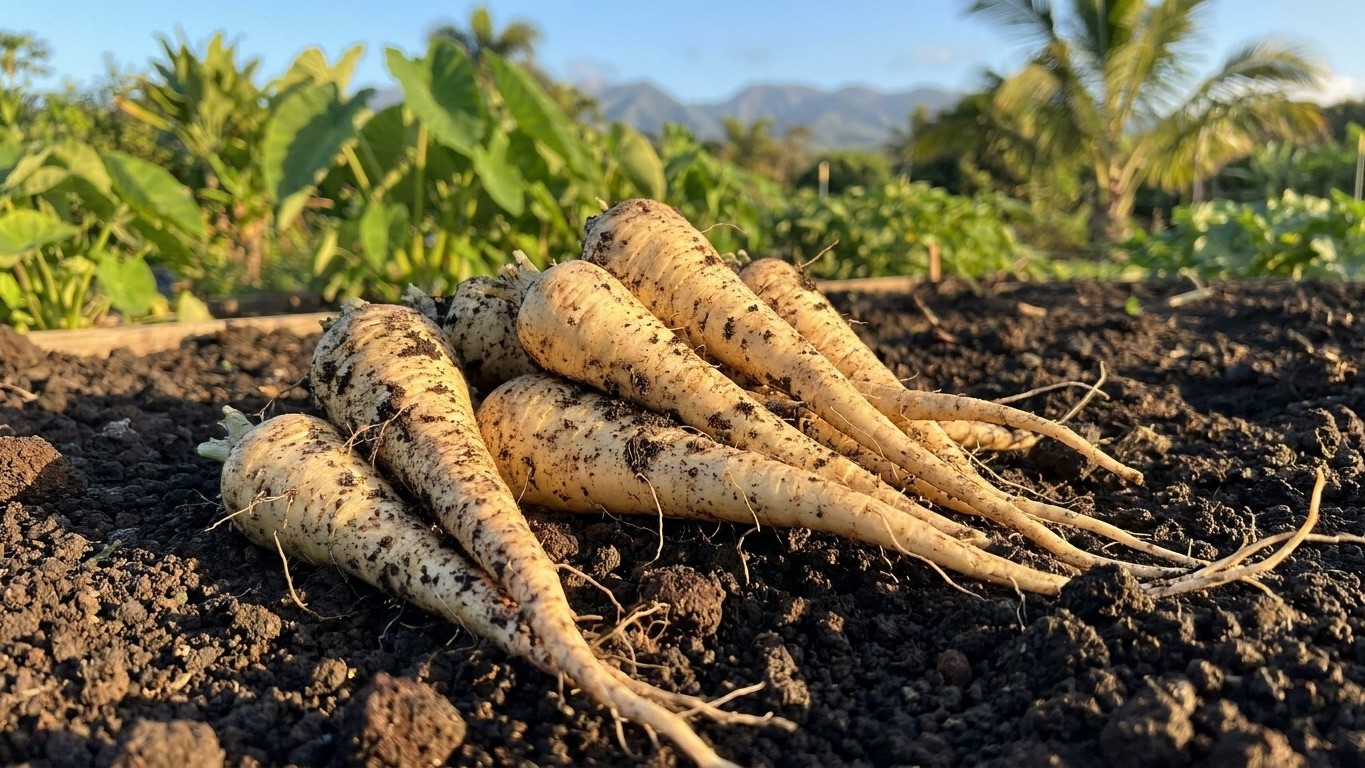

Lift parsnips in Saskatchewan after several weeks of frost, which in most years means from about the second week of October, not the first cold morning in September. The wait matters because frost turns the root’s stored starch into sugar. Once out of the ground, a parsnip can keep four to six months, but only in near-freezing, very humid storage and well away from ripening fruit.
The short answer
Does this territory deliver several frosty weeks? Comfortably. At the Saskatoon reference station, the mean daily minimum of the coldest month is -20.7 °C, according to Environment and Climate Change Canada’s 30-year normals. The first fall frost arrives on average on September 18. Between that date and the depths of winter there is no shortage of cold, so a parsnip grown here will sweeten, not merely grow. That comes from exposure to frost, not from a hardiness zone number. A comfortable zone is not the same thing as weeks of frost on the root, and the page on Will Parsnips Sweeten in Saskatchewan? goes into the chemistry.
Frost sets the lifting date
Utah State University Extension says parsnips taste best after several weeks of cool, frosty weather. Count those weeks from the frost your own garden actually gets, not from the calendar. September 18 is a mean date, the midpoint of a window. In about half of years the first frost lands later, so a patch might not see its first hard frost until the first days of October. Three to four weeks after that puts the sweet digging in mid to late October, ahead of the ground locking up solid.
One caution on the numbers. They come from a single station in Saskatoon, and a province is not one climate. Northern and upland districts run weeks behind it. Canadian normals also use an earlier 30-year window than the US figures elsewhere on this site, so don’t line the two sets up date for date.
Storage: four to six months, with one catch
USDA Agricultural Handbook 66 puts parsnip storage life at 4 to 6 months at 0 to 1 °C (32 to 34 °F) and 98% relative humidity. That is a long keeper by any standard, but the figure assumes those conditions held steady, which almost no house does. Expect less from a warm basement or a dry cupboard.
Parsnips are not chilling sensitive, so cold is not the danger. The danger is ethylene. A parsnip makes very little of its own, yet the Handbook says low levels in cold storage cause bitterness, likely from a compound called xanthotoxin building up. A bin of parsnips sitting beside apples or any ripening fruit can turn bitter even at the right temperature. Keep them apart. And when you top them, cut the leaves off but do not trim into the crown. The full text is in the USDA Handbook 66 PDF.
Does the season fit?
Parsnips are sown in place, and the clock of 100 to 120 days runs from seeding, not from transplanting. The usual advice is to sow two to three weeks before the last spring frost. Here is how that plays out against the Saskatoon frost window, with the rest of the crop’s needs in the Growing Parsnips in Saskatchewan guide.
- The last spring frost falls on average on May 18. Two to three weeks earlier is April 27 to May 4, so that is the target sowing window. It is a mean date, and in one year out of two the last frost comes later, so treat it as a midpoint, never a safe date.
- Count 100 to 120 days from seeding. A sowing on April 27 reaches maturity between August 5 and August 25. A sowing on May 4 gets there between August 12 and September 1.
- Set that against the mean first fall frost of September 18. The gap runs from about two and a half weeks, for the slowest roots from the later sowing, to just over six weeks for the fastest from the earlier one. That is a comfortable fit.
- Now try a late start. Seed on May 18 itself and the same 100 to 120 days land between August 26 and September 15, just ahead of the mean frost date. That is a tight fit, and a cool summer could push it past.
- Remember germination, which takes 14 to 21 days. Bare soil for the first two or three weeks is normal, not failure, so do not dig it up and re-sow.
The whole frost-free stretch between those two mean dates is 123 days, just over the top of the crop’s range. A parsnip does not have to finish before frost the way a tomato does, because the frost is what sweetens it. Even so, a root that reaches size by early September has weeks of cold ahead to do the work.
What goes wrong here
Most disappointments trace back to a handful of causes. Pest damage is its own subject, covered in What Eats Parsnip in Saskatchewan, and When. The rest are below.
- Forked roots in heavy or stony ground: a root that hits clay or a stone splits and branches. Utah State recommends deep sandy soil, and says heavy soil must be double dug. Soils vary widely from one Saskatchewan garden to the next, so dig a test hole a spade deep before sowing and pull the stones out.
- Forked roots from overwatering: this is a separate cause, and deeper digging will not cure it. Wet, soggy soil can fork a root in ground that is otherwise fine. Ease off the watering and keep the soil evenly moist, not saturated.
- A season that runs out: a cold spring that delays sowing, or a late start, leaves roots small when the frost arrives. Seed in the April 27 to May 4 window when the soil allows, and wait out the 14 to 21 days of germination before judging the row.
- Lifting too early: the usual problem here is not a winter too mild to sweeten, since -20.7 °C is a cold coldest month. It is impatience. A root dug in September is perfectly edible but starchy and plain. Wait for the frost weeks.
- Bitterness in storage: ethylene from apples, pears or any ripening fruit nearby. Store parsnips alone, or in a separate cold space.
- Rot from a damaged crown: trimming into the crown when topping opens the root up. Cut the leaves above it and leave the crown intact.
Common questions
Can I dig parsnips in September?
You can, and they will be edible. They just won’t have had the cool, frosty weeks that convert starch to sugar. With a mean first frost of September 18, waiting until at least the second week of October gives the root its chance to sweeten.
My row looks empty two weeks after sowing. Should I re-sow?
Not yet. Parsnip seed takes 14 to 21 days to germinate, so an empty row at two weeks is normal. Re-sow only if the soil is still bare after three weeks.
Where in the house can I keep them?
The target is 0 to 1 °C (32 to 34 °F) at 98% humidity, and few homes can hold that steadily. A cold, humid spot such as a root cellar comes closest, and a bagged crisper drawer is a fair second. Expect less than four to six months in anything warmer or drier. Keep them away from apples and other ripening fruit.
Do northern districts get the same results?
Frost arrives earlier in the north, so the sweetening is not in doubt. The planting side is another matter. The dates in this article come from the Saskatoon station, and northern or upland gardens run weeks behind it. Spring may come later there, which shortens the season before frost, so check the 100 to 120 days against your own local dates.