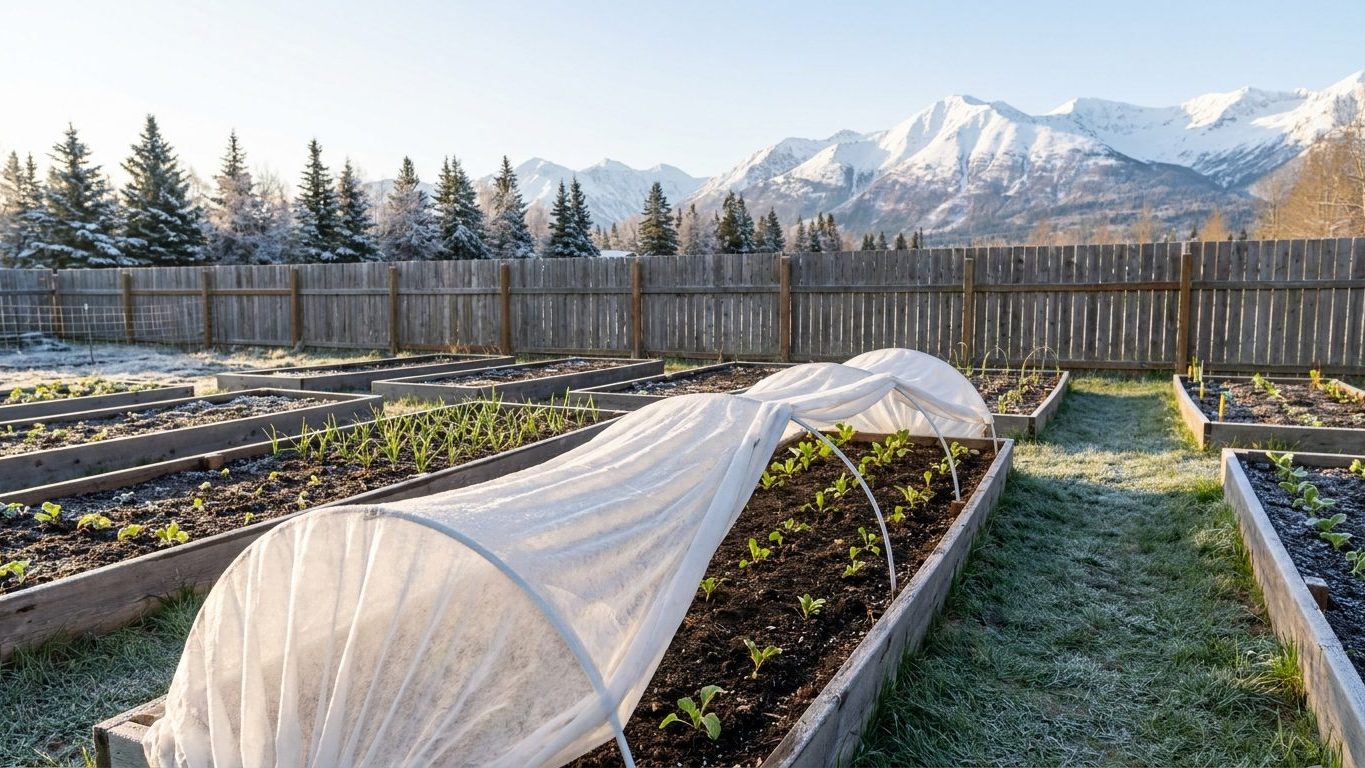

In Indiana, cover the garden on any night the forecast low heads toward 32°F, and expect that to happen at both ends of the growing season. Spring calls for covers kept on standby into late April. Fall calls for them again by late October. The dates below belong to Indianapolis, so gardeners in the north and south of the state should shift them.
The short answer for Indiana
Start watching nightly lows on April 9 and keep covers ready until at least April 21, then watch again from October 21 through October 30. Those are the windows from NOAA’s 1991-2020 Climate Normals for the Indianapolis station, and they are probabilities of a 32°F freeze, not calendar guarantees.
What the dates actually measure
Each range marks the stretch where the chance of a 32°F freeze sits between 30 and 70 percent. In spring, April 9 is roughly where a freeze goes from likely to a coin flip, and April 21 is where it tips toward unlikely. In fall, the same logic runs in reverse between October 21 and October 30. Inside those bands, a cold night is more than a possibility. It is a normal event.
| Season | Indianapolis window | What it represents | What to do |
|---|---|---|---|
| Last spring frost | April 9 to April 21 | 32°F freeze probability between 30% and 70% | Keep covers ready for anything tender already planted |
| First fall frost | October 21 to October 30 | 32°F freeze probability between 30% and 70% | Cover the last tomatoes, peppers and beans, or pick them |
The tail that catches people
Purdue adds a caution worth taping to the shed door: there remains roughly a 10% chance of a 32°F event after the published spring date. One year in ten, a tender transplant set out on April 22 meets a freeze anyway. That is why the useful habit is checking the forecast, not trusting the date. If you plant tomatoes or peppers near the early edge of the range, you accept that you will be covering them at least once.
The broader strategy of stretching the season at both ends is laid out in Extending the Growing Season in Indiana. This page covers only the timing question: when the cover goes on.
What will not work here
Using the 50-50 date as a safe date will not work. The spring window is April 9 to April 21, and a gardener who waits for the band’s far end and then assumes the risk is gone is still exposed to that roughly 10% tail. Plant on April 22 with no cover in the truck bed, and a bad year takes the whole bed.
Covering a warm-season crop in November will not work either. The first fall frost band ends October 30 at Indianapolis, and the coldest month there averages a daily minimum of 20.9°F. That figure is the mean daily minimum of the coldest month, not a record low. A light cover buys a few degrees on a marginal night, which is enough to carry a pepper plant past a 31°F surprise in late October. It cannot hold a tomato vine through weeks of nights in the twenties. Past the first hard freeze, cover only crops built for cold, such as kale, spinach and carrots.
Copying Indianapolis dates onto a garden hundreds of miles away is a quieter failure. Southern Indiana runs earlier in spring and later in autumn than the north by a fortnight or more. A gardener in the northern counties who follows the Indianapolis spring band may uncover and plant two weeks before it is wise. One in the south who follows the fall band may haul out covers too early and miss several weeks of harvest. Which cover to pick for which crop is a separate question, covered in Which Season Extenders Work in Indiana.
Leaving covers on through the day is the mistake that does the most damage, because it feels like caution. A sealed bed under plastic can overheat on a sunny April afternoon after a frosty dawn, and plants that survived the freeze get cooked by noon. Squash and other crops that need pollinators also set no fruit while buried. Put covers on in the evening, before the air cools, and take them off the next morning once temperatures rise.
Finally, a cover touching foliage conducts cold to the leaves, so a bedsheet draped directly over tomato plants can leave the tips frost-burned where it rests. Hoops or stakes that hold the fabric off the plants prevent this.
What changes across Indiana
No single answer covers the whole state. Under the USDA Plant Hardiness Zone Map 2023, which uses 1991-2020 normals, Indiana runs from zone 5b to 7a. That spread is large enough that two Hoosier gardeners can be growing different crops and facing different winters.
The zone system is built on one variable, the average annual extreme minimum temperature. It tells you whether a perennial survives winter. It does not tell you when the last spring freeze arrives, and it was never meant to. A garden in a milder zone can still take a hard freeze on May 1, so the zone helps with what to plant and does little for when to cover.
The dates in this article are anchored to Indianapolis, at 39.71 degrees north. A gardener near Lake Michigan or along the Ohio River sits several degrees of latitude away from that figure, and should check their own latitude rather than assume the city’s. Latitude matters for more than frost. Day length, not warmth, tells an onion to stop making leaves and start making a bulb, so northern and southern gardeners see different timing for bulb crops even when the weather looks the same.
The practical shift is straightforward. A reader in the north should assume a later spring window and an earlier fall one, by the fortnight or more mentioned above, and should have covers on hand sooner in autumn. A reader in the south gets more room at both ends, but that extra room is a reason to plant earlier, not to relax about frost. To find where you sit, look up your location on the USDA Plant Hardiness Zone Map. I will not guess your zone for you, and no article can.
Where to check this for your own county
Your state extension service is the best next stop. Purdue Extension maintains county offices across Indiana, and their staff know local frost pockets, soils and which crops have performed in your part of the state.
Two things are worth looking for there. The first is the local planting calendar for your county, which will give frost-based dates more specific than a single station can. The second is the list of varieties trialled in your county or nearest region, because a variety that thrives in one corner of Indiana can sulk in another. If you are covering crops early or late, pick types that have already proved they cope with cool nights.
A county recommendation beats a state one, and this page is the state one. It rests on a single reference station, Indianapolis, and it has no county-level frost figures for anywhere else. It also cites no Indiana-specific planting calendar by name. Extension agencies publish calendars per crop or per lawn species rather than one master schedule for everything, so find the calendar that matches what you actually grow.
If your county office offers a phone line or an in-person garden help desk, a five-minute question about your average last frost beats an hour of searching. Ask which direction the local frost surprises have come from, since late freezes in April and early freezes in October affect gardens differently.
Checking this against your own garden
Your own observations outrank every date on this page. Three signs are worth watching, and none needs equipment.
Soil warmth by feel. Push a bare hand into the bed in the morning. Soil that still feels cold and damp is not ready for tomatoes or peppers, whatever the calendar says. If one bed warms noticeably sooner than another, the early one likely has better sun or drainage, and it is where you can plant first.
The first flush of male flowers. On squash and cucumbers, male blooms open ahead of female ones. When they appear, you know the plants have settled in and are growing normally. If they come weeks later in one corner, that spot runs cooler, perhaps because cold air pools there.
The first true leaves. Seedlings first show seed leaves, then the true leaves with the plant’s characteristic shape. Seedlings that reach true leaves quickly under a cover tell you the cover is working. Seedlings that stall suggest the spot stays too cold, or that the cover is trapping too little heat.
Keep notes for a season or two on when each sign appears and on which nights you covered. Those notes become a microclimate record more precise than any station can offer.
Common questions
Should I cover if the forecast low is 34°F?
Often yes, especially on a clear, still night. Forecasts are for general areas, and low spots and open ground can run colder than the number given. Covering a tender crop costs a few minutes. Losing it costs the season.
Is April 21 the date after which I can stop worrying?
No. April 21 is the far end of a probability band for Indianapolis, and Purdue notes roughly a 10% chance of a 32°F event after the published spring date. Your own location may sit a fortnight or more earlier or later.
Do I need to cover cold-hardy crops in October?
Usually not for a first light freeze. Crops like kale, spinach and carrots tolerate cold, and a cover is more useful later, when you want to extend harvest into deeper cold. Tender crops are the ones to cover or pick before October 21 to 30.
Does my hardiness zone tell me when to cover?
No. The USDA zone rests on the average annual extreme minimum temperature, which speaks to winter survival and not to the timing of the last spring or first fall freeze. Use frost probabilities and your local forecast for covering decisions.