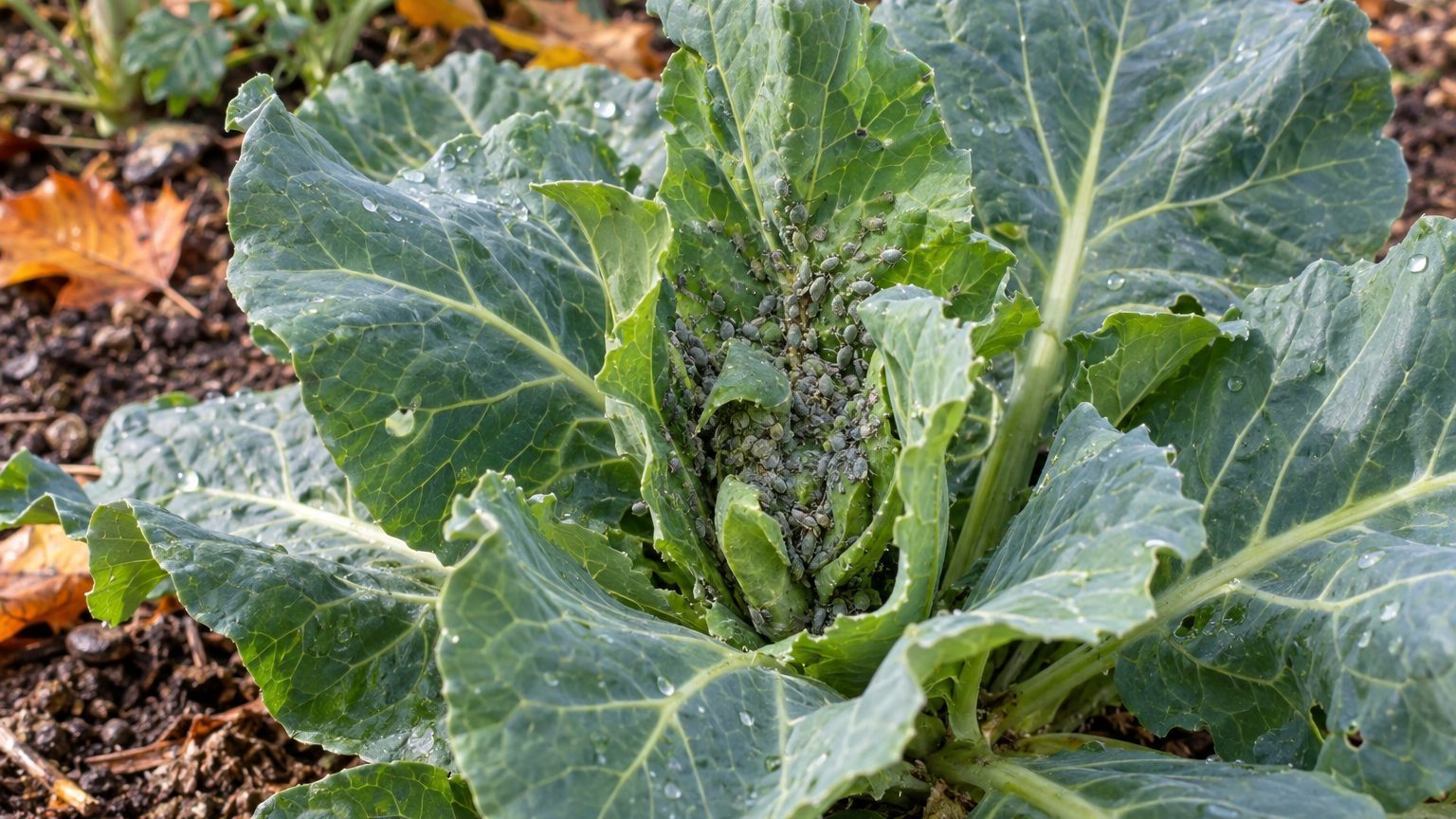

The gray-green, powdery-looking insects crowded into the center of a collard plant are almost certainly cabbage aphids (Brevicoryne brassicae). The fix is mechanical first: a hard spray of water, trimming the worst leaves, and a soap spray that actually touches the insects. Most of the damage comes from letting a colony sit in the crown for weeks, so catching it early matters more than which product you use.
This page covers one pest on one crop. For the whole picture of planting, feeding and harvesting, start with Growing Collards: One Planting, Months of Harvest. What follows is specific to the aphids that settle into the growing point, and how to get them out without ruining the leaves you plan to eat.
Confirming what you’re looking at
Cabbage aphids are small, about 1/10 inch long, and wear a waxy, dusty coating that gives them a grayish or bluish-green look. They don’t wander. Colonies stay packed shoulder to shoulder, often in layers, with the older wingless females in the middle and nymphs around the edges. Pull back the tiny folded leaves at the crown and you may find a solid mat of them.
Two close relatives show up on southern greens too. The turnip aphid is paler and more yellow-green, with a lighter dusting of wax, and the green peach aphid is smooth and shiny with no powdery coat at all. The three often share a plant. For the home gardener the difference rarely changes the response, since the same water, soap and trimming approach works on all of them.
A few clues separate aphid trouble from other collard problems:
- Sticky, shiny residue on lower leaves is honeydew, the sugary waste aphids excrete. It can turn black with sooty mold.
- White, shed skins stuck to the leaf underside are cast-off aphid skins, a sign the colony is growing fast.
- Ants marching up the stem often mean aphids above. Ants protect aphid colonies in exchange for honeydew.
- Tan, papery, bloated aphids are “mummies.” A tiny parasitic wasp (Diaeretiella rapae) laid an egg inside each one, which is good news.
Round holes are a different story. Those tiny pits in young leaves point to a beetle, not an aphid, and Shot Holes in Young Collard Leaves walks through that diagnosis. Aphids don’t chew. They pierce the leaf and drink sap, so the symptoms are curling, crinkling, yellow patches and stalled growth, not holes.
Why the heart of the plant becomes aphid housing
Collards don’t form a tight head like cabbage, but they do build a rosette of young leaves at the center. That is where the plant sends its sugars and nitrogen, so the sap is richest there. Folded new leaves also shield aphids from rain, wind and most predators. For an insect that spends its whole life attached to one spot, it is a perfect address.
Their reproduction explains how a few insects become a mat. Through much of the growing season, female aphids don’t need a mate. They give birth to live, already-pregnant nymphs, and in mild weather a new generation can mature in roughly a week. Starting from one aphid on a transplant, you can have thousands in a month. When a colony gets crowded, some nymphs develop wings and fly to the next plant, which is why an infestation tends to jump down a row.
Timing is why this pest matters so much in the South. Cabbage aphids favor cool weather, and collards grown from fall through winter and again in early spring give them months of ideal conditions. In colder states such as Kentucky or Virginia, a hard freeze can wipe out active colonies, though eggs may survive on plant debris. Along the Gulf Coast and in the Deep South, mild stretches in January and February let populations keep building. Gardeners in Georgia, Alabama and the Carolinas often see a spring surge as temperatures climb and before the beneficial insects catch up.
A good rule: a few colonies on an outer leaf aren’t an emergency, because lady beetle larvae, lacewings and syrphid fly larvae will often handle them. Colonies in the crown are different. Predators have a hard time reaching folded leaves, and every day of feeding there stunts the new growth you’ll be picking next.
What the damage looks like if you wait
Young leaves emerge twisted and cupped. Colonies on the leaf underside cause yellow blotches, and heavy feeding can slow the whole plant. Honeydew drips down onto lower leaves, and the sooty mold that grows on it doesn’t hurt the plant directly but makes the leaves unappealing to pick. The worst outcome for a kitchen gardener is contamination. Aphids lodged in the curls of a leaf can survive a casual rinse and end up in the pot.
Getting them out of the crown
Start with water. A firm stream from the hose, aimed into the center and under the leaves, knocks a large share of aphids loose. Aphids that fall off rarely climb back, and many are eaten by ground beetles or die from the fall. Do it in the morning so the foliage dries by evening, and repeat every two or three days for a week. It costs nothing and can’t hurt the plants.
For a heavy colony, trim first. Pinch off the most distorted young leaves or the infested outer leaf, drop it in a sealed bag or bucket of soapy water, and keep it out of the compost where the insects could crawl back. Collards recover from this well. Removing a few leaves is a smaller loss than letting the crown fill up.
Then use contact sprays where needed. Insecticidal soap and horticultural oil both work by smothering or disrupting the insects, which means they only work on what they touch. That is a real problem with cabbage aphids, since the waxy coating beads liquid and the colonies hide in folds. Spray slowly, with the nozzle pointed into the heart and up at the leaf undersides, until the colony is wet. Follow the label on temperature limits (soaps and oils can burn leaves in the heat, and labels commonly caution against spraying in the high 80s and above), and avoid spraying in direct midday sun. Expect to repeat in five to seven days, because newly hatched nymphs and any missed adults will rebuild.
A word on broad-spectrum insecticides, such as pyrethroid products sold for general garden use. They kill aphids but also the lady beetles and parasitic wasps that keep aphids in check, and aphid numbers can rebound faster than the predators do. Any product you use on an edible crop needs a label that lists collards or leafy brassicas, and you should follow its waiting period before harvest. When in doubt, wash, trim and use soap.
Cleaning the harvest
Even a well-managed bed can send a few aphids to the kitchen. Pick leaves from the outside of the plant, since the crown stays infested longest. Submerge the leaves in a sink of cold water, swish them, and look at the folds and the base of the stems. Drain, then rinse again under running water. Collards destined for long cooking are forgiving, because simmering kills any stragglers, but sautéed young leaves and raw collard wraps deserve a closer look. Wipe or rinse the underside of each leaf you plan to serve raw.
Keeping numbers down for the rest of the season
Check the plants weekly, and check the right places. Pull back the center leaves, flip a couple of lower leaves, and look at the stem junctions. Young transplants matter most. A seedling brought home from the garden center can carry a hidden founder colony, so inspect new plants before setting them next to established ones. A light row cover over young plants, secured at the edges, keeps winged aphids from landing in the first place. Remove it when plants outgrow it, or if aphids are already inside.
Feeding matters more than most people expect. Heavy nitrogen produces soft, sap-rich growth that aphids prefer, so a steady, moderate feeding schedule beats a big dose of fast-release fertilizer. This is one of the habits that shows up in The Five Ways a Collard Bed Disappoints, where overfeeding and poor monitoring cause more trouble than any single insect.
Attract the help that’s free. Small-flowered plants such as alyssum, dill, cilantro left to bloom, and yarrow feed adult syrphid flies and parasitic wasps, whose offspring do the aphid hunting. Planting a few of these at the end of the collard row gives predators a base close to the crop. A handful of flowers won’t solve a heavy infestation, but they shorten the lag between an aphid outbreak and the arrival of its enemies.
Other habits that help:
- Control ants near the bed, since they farm aphids and drive off predators.
- Clear plant debris after the season, especially in colder states, to remove overwintering eggs.
- Rotate brassicas, including kale, cabbage, broccoli and mustard, to a different part of the garden each year.
- Pull spent plants in late spring before heat and aphids turn them into a nursery for the next crop.
One last detail that surprises people: a collard plant weakened by aphids is more attractive to the next pest, not less. Stressed leaves with honeydew draw other insects, and damaged tissue is slow to heal in cold weather. Keeping the crown clean in October and November, when plants are still establishing, pays off in February when the cold has sweetened the leaves and you are cutting a mess of greens for dinner.