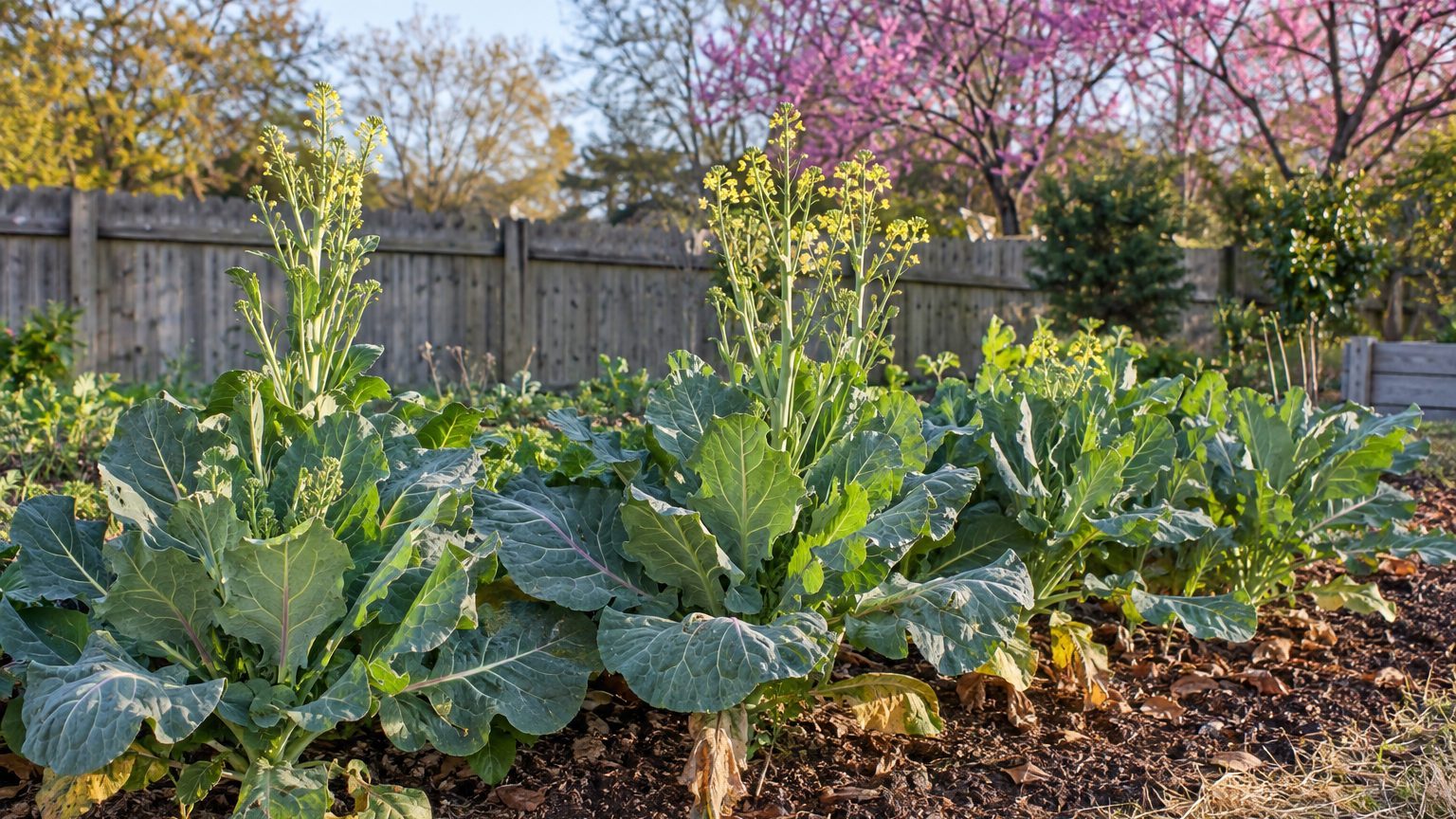

Collards bolt because they are biennials. A plant that sat through a cold winter “remembers” the chill, and when days lengthen and temperatures climb in spring, it stops making leaves and sends up a flower stalk. You can postpone that moment by a few weeks. You can’t cancel it. What you can do is harvest hard before it happens, then decide what to do with the stalk.
What sets off the flower stalk
Collards (Brassica oleracea, the same species as cabbage, kale and broccoli) are built to live two years. Year one is for leaves and roots. Year two is for flowers and seed. The switch between them needs a cold period, which botanists call vernalization. Plants that have gone through several weeks of temperatures in the 40s and below, and that have grown past the seedling stage, are primed. Warming weather and longer days then do the rest.
That explains the pattern across the South. In Georgia, the Carolinas, Alabama and east Texas, gardeners seed collards from late summer into fall, pick through winter, and watch the plants shoot up somewhere between March and May. A planting that went in during September has typically had a full winter’s worth of chill by then. Gulf Coast and Florida gardeners, with milder winters, often get a few extra weeks before the stalks show.
Cold is not the only trigger. Heat and drought can force a first-year plant to bolt too, though collards are far tougher about it than lettuce or spinach. A spring transplant that gets hit with a week of 90°F weather after a cool start may run to flower in June, even though it never saw a real winter. Stress from root crowding, a plant left in a nursery pot too long, or soil that swings between bone dry and soaked can all nudge the plant the same way.
Size matters for cold-triggered bolting. Brassicas generally have to reach a certain maturity before cold registers, often described as a stem about as thick as a pencil. Very small seedlings that get a cold snap usually just sit there. Large transplants that go outside too early in northern states are the ones that bolt prematurely, which is why Minnesota or Michigan gardeners who set out oversized starts in cold April soil sometimes find flower buds by June.
How do you know it’s coming? The center of the plant elongates. The tight cluster of young leaves at the crown loosens, the stem stretches, and small green buds that look like miniature broccoli appear at the top. Within a week or two, the stalk can be knee-high or taller, and yellow four-petaled flowers open along it.
What happens to the leaves, and what you can still eat
Once the plant commits to flowering, it redirects sugars and nitrogen toward the stalk. Leaves on the lower stem keep their quality for a while. Newer growth gets smaller, tougher and sharper in flavor, and the leaves that develop on the flowering stalk itself are often thin and bitter. Heat intensifies the bitterness, so a late-April bolter in Mississippi will taste harsher than the same plant in January.
Not everything turns bad at once. The big lower leaves, already full size when the stalk started, are usually still good for a couple of weeks. Strip them and cook them longer than you would in winter: braising for 45 minutes to an hour, with smoked meat or a splash of vinegar, handles the extra toughness better than a quick sauté.
The flower buds are the surprise. Pinch them off while they are still tight and green, and you have something close to broccoli raab. Sauté them in olive oil with garlic for three or four minutes. Open yellow flowers are edible as well, and make a peppery garnish for salads. Take the top 4 to 6 inches of the stalk with the buds and you will often get side shoots that keep producing small buds for another couple of weeks.
Bolted plants also draw insects. Flowering brassicas pull in bees, hoverflies and native wasps, and they also pull in cabbage whites, flea beetles and aphids, which cluster on the tender stalks. If you plan to keep eating from the plant, check the underside of the leaves regularly. The guide to green caterpillars in collard leaves covers how to spot and handle the usual culprits before they turn a good harvest into lace.
Slowing it down: planting dates, varieties and care
You can’t override biology, but the calendar is your best tool. The goal is to have plants reach harvest size well before the stalk is likely to rise, and to avoid giving them the wrong signals along the way.
Timing comes first. In the Deep South, fall planting is the standard for a reason: seedlings grow through cool weather, get sweeter after frost, and are ready for steady picking from about November onward. Collards tolerate light frost and typically survive temperatures down to the low 20s without protection, and sometimes well below that with a row cover. If you want leaves in late spring and early summer, a very early February or March planting in zones 7 and 8 gives you a few weeks of good harvest before heat arrives, though plants in that window are racing the calendar.
In northern states, treat collards as a spring and fall crop. Set out transplants two to four weeks before your last frost date, choose smaller, younger starts rather than leggy ones, and harden them off so they aren’t shocked. A late-summer planting, about 8 to 10 weeks before your first fall frost, often outperforms the spring crop because the plants mature as temperatures drop instead of rise. Staggered plantings help here too, and the same logic behind succession sowing greens for a continuous supply applies: when one block starts to stretch, the next is just reaching picking size.
Variety choice has some effect. Seed catalogs frequently flag certain collards as slow to bolt, and open-pollinated types such as Champion and Vates are often described that way, though the claim is relative rather than absolute. Georgia-type selections are bred for Southern conditions, while Morris Heading forms a loose head and has been a regional favorite for generations. Read the catalog description for bolting notes and check what local extension services recommend for your state, since performance varies with climate.
Care matters more than most people expect. A few habits that help:
- Water consistently, aiming for about 1 to 1.5 inches per week, and mulch with 2 to 3 inches of straw or shredded leaves to keep soil temperature and moisture even.
- Feed with a nitrogen-rich fertilizer or compost every 3 to 4 weeks during active growth, since well-fed plants hold leafy growth longer.
- Use 30 to 40 percent shade cloth once afternoons regularly pass the mid-80s.
- Harvest steadily from the bottom, taking the oldest leaves first and leaving the growing tip alone.
Pinching or cutting the flower stalk the moment it appears can buy a short extension in some plants, as they send out side shoots from the leaf axils. Expect a few extra weeks at most. Once the plant has decided, it will keep trying.
Pull it, eat it, or let it go to seed
After the leaves turn tough and the stalk is clearly taking over, you have three reasonable choices, and none is wrong.
Pulling the plant is the practical one if you need the space. Bolted brassicas are heavy feeders that have used up a lot of the soil’s nutrients, and a plant left standing through summer in a hot bed becomes a refuge for aphids and caterpillars. Chop the stalk, add it to the compost pile (it breaks down faster if cut into short pieces), and plant something that likes warm weather, such as beans, cucumbers or sweet potatoes, in the cleared spot. Rotating out of brassicas also reduces clubroot and other soilborne problems.
Leaving a few plants as pollinator food is a good compromise. Collard flowers bloom for several weeks in spring, often when few other crops are offering nectar. A plant or two at the edge of the garden can feed a surprising number of native bees without costing you anything but a little ground.
Saving collard seed
If you like your collards and want to grow them again next year, seed saving is realistic, but it requires some care. Collards will cross with every other Brassica oleracea in range, which includes kale, cabbage, broccoli, cauliflower and Brussels sprouts. If a neighbor’s flowering kale is within a quarter mile or so, your seed may come true only in part. Many seed savers grow just one oleracea type to flower in a given year, or use isolation cages with hand pollination.
Genetic diversity matters too. Collards are largely self-incompatible, which means single plants produce poor seed. Save from at least five or six healthy plants, and preferably more, picking the ones that stayed leafy longest and tolerated your local weather. Let the seed pods (long, narrow, and green at first) turn tan and dry on the plant, which can take several weeks after flowering. Cut the stalks when most pods have dried, finish drying them indoors on paper for another week or two, then crush the pods by hand and winnow away the chaff.
Stored in a cool, dry place in a sealed jar or envelope, brassica seed generally stays viable for about four to five years, so one good year of flowering can supply several seasons of planting. For the bigger picture of how a collard bed fits into the year, from starting seed to picking through winter, the main guide on growing collards for months of harvest lays out the full cycle.