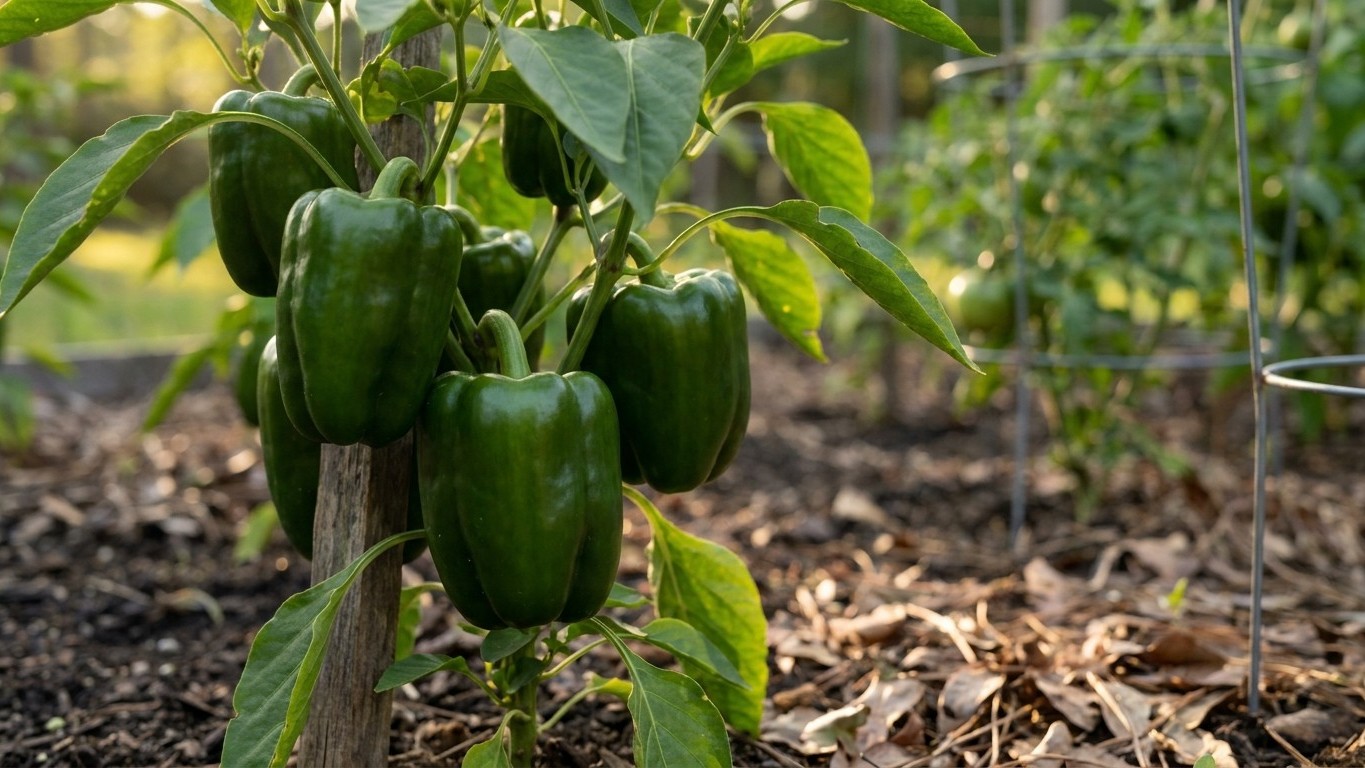

Pick a pepper when it has reached full size and feels firm and glossy. For transplants, that usually lands about 70 to 85 days after they go into the ground, according to Clemson Cooperative Extension. Then keep the fruit out of the refrigerator. Peppers store best at 45 to 50 °F, and a home fridge runs colder than that, so the crisper drawer invites pitting and softening. Nevada adds its own complication: a long hot season that decides whether fruit sets at all.
The short answer
The reference station for Nevada, Las Vegas, logs a mean of 131.3 days a year reaching 90 F or more (NOAA NCEI Climate Normals). That is more than a third of the calendar. Utah State University Extension is blunt about what that means for peppers: fruit set fails when days climb above 90 F. A flower that opens in a run of hot afternoons tends to drop without ever making a pepper. The number measures summer heat load, not the average summer temperature, and it comes from one station. A garden in the high desert or the mountains counts its hot days differently, so look up the figure for your own area before you plan around it.
The cool end of the range
The same Utah State source says fruit set also fails when nights fall below 55 F. Heat is only half the story. This site does not carry summer night minima, so there is no number here to tell you how many nights your garden dips under that line, and guessing from latitude or elevation would be just that, a guess. Put a min/max thermometer near the plants and read it every morning through late spring and again as fall approaches. A reading under 55 F while the plants are flowering is your warning. If your plants are blooming but not producing, the longer breakdown in Why Peppers Fail to Set Fruit in Nevada walks through the usual suspects.
When to pick, and where the fridge goes wrong
Count from transplanting, not from sowing. Clemson puts readiness at about 70 to 85 days after transplanting, so the count starts the day the seedling goes into the garden. A green pepper picked at full size is edible. If you leave it on the plant, it will ripen to its mature color, but that takes longer and keeps the plant carrying fruit through more hot weeks. Cut the pepper with a short piece of stem instead of yanking it, because pulling can snap the branch.
Storage is where nearly everyone slips. Clemson’s guidance is exact: “The optimal conditions for storage are temperatures of 45 to 50 °F and 80- to 90-percent relative humidity for two to three weeks.” That range is warmer than a domestic refrigerator. Below about 45 °F, peppers suffer chilling injury, which shows up as pitted, soft, watery patches. Two to three weeks is a ceiling under ideal conditions, not a promise, so plan on using fruit sooner. A cool, humid spot out of direct sun, such as a basement or a cellar-like pantry, is the closest most homes get. Otherwise, leave whole peppers on the counter for a few days and eat them first. Once a pepper is cut, the fridge is fine, since you are no longer storing a living fruit.
The full growing picture, from site choice to soil, sits in Growing Peppers in Nevada.
When to start seed here
The seed-starting date is not a calendar date you look up. It is the end of a subtraction. Utah State Extension says transplants need 8 to 10 weeks indoors, and that they go out when the soil reaches 60 F, after frost. Work backward from there and you can redo the math for any county.
- Find your county’s last spring frost. Nevada’s range is enormous. At the Las Vegas airport, NOAA NCEI’s normals put the 32 F freeze probability band (30 to 70 percent) between January 7 and February 1. That is a desert, urban heat island extreme and not a Nevada planting window. Reno, Carson City and any garden at elevation freeze months later in spring and months earlier in fall. Your county extension office can give you the date that fits your location.
- Check the soil, not just the calendar. A pepper needs soil at 60 F, and that usually arrives after the last frost, not on the same day. Push a soil thermometer into the bed at planting depth in the morning, when the ground is at its coolest, and wait until it holds that reading.
- Pick the later of the two dates. If the frost has passed but the soil is still cold, the soil date wins. That is your transplant date.
- Subtract 8 to 10 weeks. Take a made-up example, not a Nevada recommendation: soil reaches 60 F on May 20. Eight weeks earlier is March 25 and ten weeks earlier is March 11, so seed would go in between those two dates. Swap in your own transplant date and the window moves with it.
- Count forward to check the harvest. Add 70 to 85 days to your transplant date to see when the first fruit should be ready. Then lay that stretch against your area’s hot spell. Flowers that open during weeks of 90 F afternoons are the ones most likely to drop.
Starting too early backfires. Seedlings kept indoors past the 10-week mark get leggy and root-bound, and sitting them outside before the soil warms stalls them anyway. If your math lands in the middle of a hot stretch, plant earlier so the first flush of flowers sets before the heat arrives, or accept a later crop that will flower as fall cools. Pests also keep a calendar of their own, and What Eats Pepper in Nevada, and When is worth reading before you commit to a date.
What goes wrong here
Nevada’s sun, heat and dry air produce a short, predictable list of pepper failures. Most of them are easier to prevent than to repair.
- Blossom drop in a hot spell or on a cool night. The flowers fall off and no fruit forms. Utah State Extension ties this to days above 90 F and nights below 55 F. In hot weather, a 30 to 40 percent shade cloth over the plants during the worst afternoons can help (shade cloth sold by density, so check the label). For cool nights, lay row cover over the plants at dusk and take it off in the morning. Either way, the fix is to watch your own thermometer, because this site cannot tell you your night lows. New flowers keep coming, so drop is a setback and not a failure of the whole plant.
- Sunscald. Fruit left exposed to strong sun develops pale, papery, sunken patches on the side facing the sky, and mold often moves in after. Healthy leaf cover is the main defense, so don’t strip foliage to “let the fruit ripen,” and keep plants well watered so the canopy stays full. Afternoon shade cloth helps in the strongest sun. Scalded patches can look like feeding damage, so rule out sun before blaming insects.
- Blossom-end rot. A dark, leathery, sunken spot appears on the bottom of the fruit, where the flower used to be. It reflects how the plant moves calcium, and swings between dry soil and soaking are the usual trigger, more often than a calcium shortage in the ground. Water deeply and on a steady schedule, and mulch to hold moisture through the hot weeks. Pick off affected fruit so the plant puts its energy into the next ones. Adding calcium to soil that is already adequate rarely helps.
All three problems share a theme: this climate swings between extremes, and peppers dislike swings. Steadier moisture, a bit of shade at the right hours and a thermometer you actually read do more than any product on a garden-center shelf.
Common questions
How can I tell a pepper is ready to pick?
Look for full size, firm walls and a glossy surface. Count from transplanting day: Clemson says about 70 to 85 days. Fruit can be picked green or left to ripen to its mature color, which takes longer. Cut it with a short stem attached.
Can peppers ever go in the refrigerator?
Whole, uncut peppers do poorly there. The best storage range is 45 to 50 °F with 80- to 90-percent relative humidity, and below about 45 °F peppers pit and soften from chilling injury. A cut or cooked pepper is a different matter, since it is no longer a living fruit, and the fridge is fine for a few days.
How long will a pepper keep?
Clemson says two to three weeks in optimal conditions, which means that range is the best case. Fruit that sits on the counter or in a less-than-ideal spot will not last as long, so use the oldest peppers first and check them every few days.
Do the 70 to 85 days start from sowing?
No. They start at transplanting. The 8 to 10 weeks the seedling spends indoors come before that count, so total time from seed to first pepper is longer than most seed packets suggest. A packet that says “days to maturity” may count from either end, so read the fine print before you plan.