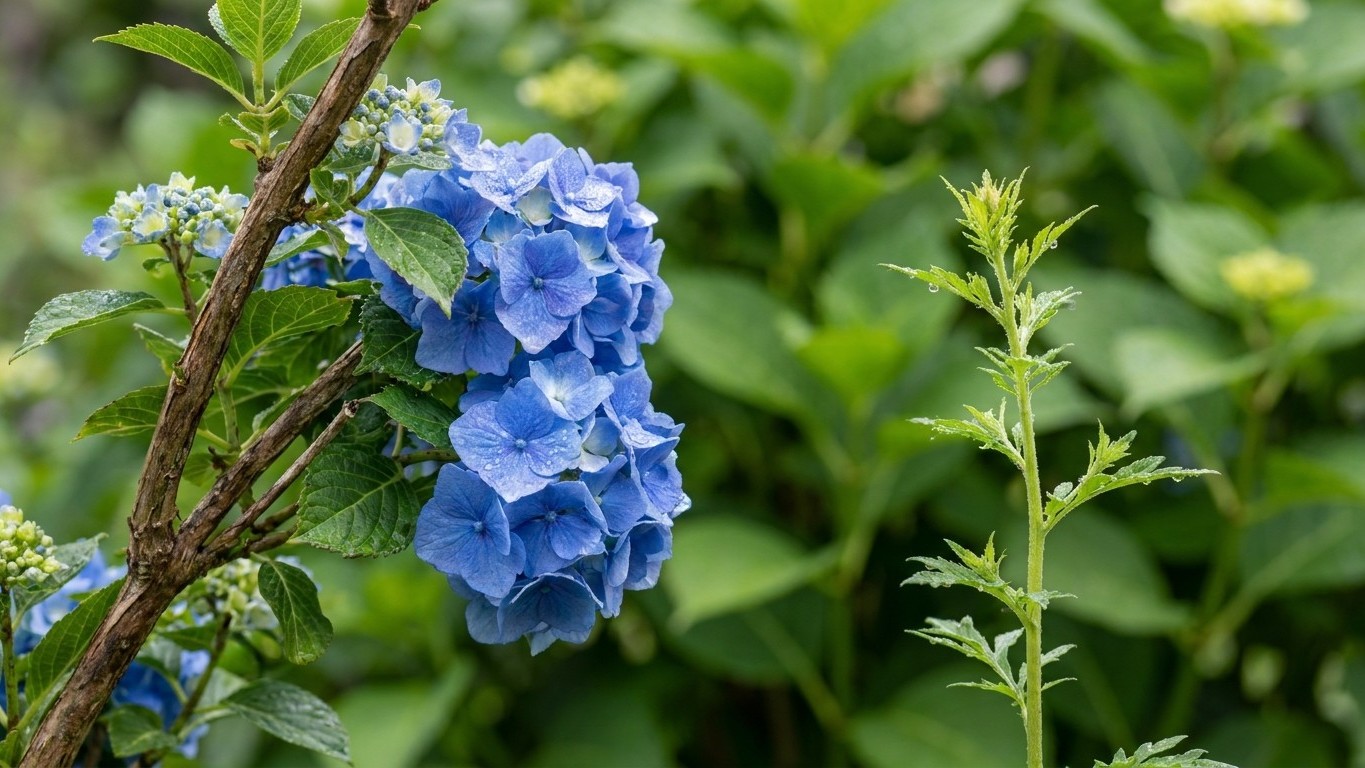

Panicle and smooth hydrangeas are the dependable choice for Prince Edward Island, because both flower on wood grown in the current season and shrug off hard winters. Plant container shrubs from mid-to-late May, or in early September, and give bigleaf types a windbreak and a leaf-filled cage. The average last spring frost at Charlottetown falls on May 16, and the first fall frost on October 17. Gardeners in colder districts should expect both dates to shift.
When to plant Hydrangeas in Prince Edward Island

The reference point is Charlottetown. At the Charlottetown A weather station, Environment and Climate Change Canada’s 1981-2010 normals put the average last spring frost on May 16, the average first fall frost on October 17, and the frost-free stretch at 153 days. Treat May 16 as the middle of a window, not a safe date. In one year out of two, frost arrives later. Those normals also predate the last decade and a half of weather, so recent springs may not match them exactly. Northern and higher-elevation districts, and anywhere cold air pools, run weeks behind Charlottetown, and a spot right on the Gulf shore can warm up slowly in spring.
Seeds, cuttings and nursery plants
Starting hydrangeas from seed is rarely worth it. Seedlings from named cultivars do not come true to the parent, and they take several years to reach flowering size. Nearly everyone buys a container plant or roots a softwood cutting from a friend’s shrub in early summer. Cuttings take a few weeks to root and need a full season indoors or in a sheltered frame before they are tough enough to face a first Island winter.
The count-back arithmetic
Work backward from the date you actually want the shrub in the ground. A sensible target is about a week after the average last frost, so May 23. Nursery plants that spent spring in a greenhouse have soft, tender leaves, and they need 7 to 10 days of hardening off: an hour or two outside in shade at first, then longer days, then full sun exposure, and finally a night or two outdoors. Counting back 10 days from May 23 puts day one on May 13. Rooted cuttings follow the same schedule, but keep them in pots through their first summer.
Planting earlier is possible. A dormant or barely leafed shrub tolerates cold, and frost cloth thrown over new leaves in a cold snap saves the buds. Fall is the other good window. Aim to have the shrub in the ground at least six weeks before the soil freezes. Counting back six weeks from October 17 lands on about September 5, and since the ground usually freezes later than the first frost, that gives a comfortable margin. Roots keep growing in cool soil, so a fall-planted shrub often outperforms a spring one the next summer.
Soil and site preparation
Morning sun and afternoon relief suit most hydrangeas. Panicle types such as ‘Limelight’ tolerate full sun if the soil holds moisture, while bigleaf and oakleaf types scorch and wilt in all-day exposure. On the Island, wind matters as much as light. Shelter from the prevailing winter wind (a fence, a building corner, a row of evergreens) cuts dieback on buds and stems more than almost any other step. Close to the coast, salt spray burns leaf edges, and panicle hydrangeas handle it better than bigleafs.
Soil should be loose, rich in organic matter and able to drain. Hydrangeas want steady moisture but rot in standing water. Test drainage the month before planting by digging a hole about a foot deep, filling it with water, and watching it go down. If water is still there after several hours, plant on a low mound or pick another spot. Heavy clay benefits from compost worked into the whole bed, not only the planting hole, since a pocket of amended soil in clay acts like a flowerpot with no drain.
Start in the weeks before planting. Get a soil test through your provincial agriculture office or a private lab, then use the pH result to decide on amendments. Spread 2 to 3 inches of compost or well-rotted manure over the bed in early spring (or in September for fall planting) and fork it in 8 to 10 inches deep. Space panicle and smooth types 4 to 6 feet apart, and bigleaf types 3 to 5 feet. Dig the hole twice as wide as the root ball and no deeper, set the crown level with the soil, and water in slowly.
Varieties that suit Prince Edward Island
With a 153-day average frost-free season and cold winters, the trait that matters most is where the flower buds form. Hydrangeas that bloom on new wood (panicle and smooth types) form buds in spring on stems that grew that year, so a winter that kills stems to the ground still leaves a flowering shrub by August. Old-wood bloomers (most bigleaf and oakleaf types) set buds the previous summer, and a hard winter or a late frost can erase the whole year’s flowers. Cold tolerance of the stems, disease resistance, and bloom timing come next.
| Type | Blooms on | Winter reliability | Good for |
|---|---|---|---|
| Panicle (‘Limelight’, ‘Little Lime’, ‘Bobo’, ‘Quick Fire’) | New wood | High | Sun, wind, hedges; ‘Quick Fire’ opens earlier than most, ‘Bobo’ stays compact |
| Smooth (‘Annabelle’, ‘Incrediball’) | New wood | High | Shade, cut flowers; ‘Incrediball’ has stronger stems than ‘Annabelle’ |
| Reblooming bigleaf (Endless Summer series) | Old and new wood | Moderate | Blue or pink color, containers, sheltered beds |
| Climbing (Hydrangea petiolaris) | Old wood | High once established | Shady walls and fences; slow to start |
Flower color is a separate question. White panicle and smooth types stay white (many age to pink or green), while bigleaf flowers turn blue in acidic soil and pink in near-neutral to alkaline soil, as aluminum becomes more available at low pH. A soil test tells you which way a bed leans. Shifting pH takes sustained effort, so plant a white variety if the soil fights your color goal.
For a first Island hydrangea, a panicle or smooth type is the safe pick. A reblooming bigleaf is a fair gamble in a protected spot, since even if the old-wood buds die, new-wood blooms can still arrive late in summer. Garden centers on the Island and across the Maritimes stock all of these; neighbors in Growing Hydrangeas in New Brunswick: Types, Colour and Winter face a similar choice.
What to plant alongside
Good neighbors share the shrub’s preference for moist, humus-rich soil and partial shade, and they cover the ground. Hostas, ferns, astilbe, heuchera, and hellebores all do this. Their leaves shade the soil, hold moisture, and fill the space under a hydrangea that is bare in spring. Early bulbs such as daffodils, crocuses, and snowdrops flower and finish before hydrangeas leaf out, so there is no competition, and their yellowing foliage gets hidden as the shrub grows.
Pollinator draw is real. Panicle hydrangeas with fertile flowers attract bees, though mophead types with mostly sterile flowers offer little. A few nearby plants with simple, open flowers (bee balm or coneflower in sunnier edges) keep insects visiting the border. Rhododendrons and other acid-loving shrubs are compatible too, with similar soil and moisture needs.
Competition is what to watch for. Shallow-rooted trees such as birch and maple drink the soil dry, and a hydrangea under them wilts every afternoon. Lawn grass growing up to the stem competes hard with young shrubs, so keep a mulched ring at least 2 feet wide. Anything that needs full sun and lean, dry soil, lavender for example, is a poor match.
Several folk pairings have little evidence behind them. Garlic or chives planted around the base as a pest repellent has no solid support for hydrangeas, and coffee grounds do not reliably turn flowers blue. Aluminum sulfate applied by the label does, but it needs care.
Watering, feeding and support
Water deeply, not often. A newly planted shrub needs roughly an inch of water a week for the first season, delivered slowly at the base so it soaks 8 to 10 inches down. Frequent shallow sprinkling keeps roots near the surface and makes the shrub wilt at the first dry spell. Check by pushing a finger 2 inches into the soil: if it is dry, water. Established shrubs still want a deep soak every week or so in dry weather, especially bigleaf and smooth types with their large leaves.
Mulch is the cheapest insurance. Two to three inches of shredded bark, chopped leaves, or compost keeps roots cool, holds moisture, and suppresses weeds, though it must stay a couple of inches back from the stems to avoid rot. Many Island gardeners have access to seaweed; rinse it first to remove salt, and use it as mulch or in compost.
Feeding is easy to overdo. Apply a balanced slow-release fertilizer once in spring as growth starts, and perhaps a second light dose in early summer. Stop by midsummer. Late nitrogen pushes soft growth that will not harden before the first frost, and that is the growth that dies back. Heavy nitrogen also gives leafy plants with few flowers.
Pruning depends on the type. Panicle and smooth types bloom on new wood, so cut them back in late winter or early spring, either lightly to shape or hard to about 12 to 18 inches for a smooth type like ‘Annabelle’. Bigleaf and oakleaf types bloom on old wood: remove only dead stems after leaf-out, and take spent blooms off in summer, not fall. Suckers that sprout from the base are normal and fill the shrub out; dig them up for new plants or thin them to keep the shape open.
Support is mostly for heavy-headed varieties. ‘Annabelle’ flops after rain, and a ring of stakes or a peony hoop set early in spring holds it up. Sturdier selections such as ‘Incrediball’ or most panicle types seldom need help.
Common problems

Few or no flowers on a healthy shrub is the commonest complaint, and the cause is usually the bud. Bigleafs that bloomed on old wood lose it to a hard winter, a late frost, or fall pruning. Too much shade or heavy nitrogen also cut blooms. If a bigleaf produces leaves but no flowers year after year, move it to a sheltered spot or replace it with a panicle type.
Wilting has two faces. Large leaves drooping at 3 p.m. on a hot day and perking up by evening is normal and needs no action. Leaves that stay limp in the morning mean the soil is either bone dry or waterlogged. Dig down to check, and if roots are brown and soft, the problem is drainage, not thirst.
Leaf spots show as small brown or purplish circles, often after wet weather, and powdery mildew leaves a white film on leaves in humid, still conditions. Both are mostly cosmetic. Water at the soil level, thin crowded stems for airflow, and rake away fallen leaves in autumn. Yellow leaves with green veins point to iron chlorosis, which appears when soil pH is too high for the plant to take up iron. Brown, crisped leaf edges on the windward side often come from salt or wind, not disease.
For pests, the most useful list comes from University of Maine Cooperative Extension, since provinces do not publish an equivalent home-garden list and the insect biology crosses the border, although the calendar may not line up. Two entries are relevant to shrubs: winter moth and browntail moth. Their caterpillars feed on the leaves of many deciduous trees and shrubs, and browntail caterpillar hairs can cause a rash, so avoid handling them. Neither is confirmed here as the dominant hydrangea pest, and nothing should be read as saying a pest is absent. Aphids and spider mites also show up on stressed plants, and deer will browse the buds. Take a sample or a clear photo to your provincial agriculture office for identification before spraying anything.
Ripening before the frost comes back
Hydrangeas are not harvested like fruit, so the question is whether the shrub has time to bloom and harden its wood before cold arrives. Here is the arithmetic. The frost-free stretch at Charlottetown averages 153 days. A shrub planted on May 23 has about 147 days before the average first frost on October 17 (8 days left in May, then 30, 31, 31, and 30 through September, plus 17 in October). That is plenty for panicle and smooth types to leaf out, flower in July or August, and ripen their stems.
Now run it for your own district. Say your last frost typically lands June 1 and your first frost October 1. That leaves roughly 120 days. Panicles still bloom, but late varieties may open only a few weeks before frost, so pick earlier bloomers there. Bigleaf types are the ones at risk. They need late summer for bud formation and a long, gradual fall to harden, so a short season means more winter damage.
Several things buy extra weeks. Larger container plants arrive with more mass, and a sheltered south or east wall warms earlier and holds heat into fall. Frost cloth over new growth extends spring, and a bucket or burlap tent protects against a surprise cold night in September. Skip fertilizer after midsummer so the shrub stops growing and starts hardening.
Harvest and end of season
Cut flowers for the vase when the blooms are nearly fully open, in the morning, and put stems straight into water. For drying, wait until late summer or early fall, when the petals feel papery and turn antique shades of green, rose, or burgundy. Cut with a foot of stem, strip the leaves, and hang upside down in a dry, dark spot for two to three weeks. Early cuts wilt and shrivel instead of drying well.
As fall frost approaches, shift from growing to protecting. Keep watering until the ground freezes, since dry roots go into winter stressed. Leave spent flower heads on panicles and smooth types (they trap snow and protect buds), then cut back in spring. Add 4 to 6 inches of mulch over the crown after the first hard frost, not before.
Bigleaf and oakleaf types in exposed spots need more. Build a cage of chicken wire or stakes around the shrub, fill it with dry leaves, and wrap the outside in burlap as a windbreak, leaving the top open until temperatures stay cold so moisture does not collect and cause rot. Remove the wrap gradually in spring once hard frosts pass. The smaller shrub gets the same treatment, with a pot moved against a wall. Climate differs across the continent: the same plant gets very different treatment in Growing Hydrangeas in Indiana: Types, Colour and Winter, and the broader principles are in How to Grow Hydrangeas: The Complete Guide.
Local help
Planting dates and winter survival shift from one district to the next, so lean on local knowledge. Contact the Prince Edward Island agriculture office for district-level advice, soil testing, and help identifying pests, and browse the other Prince Edward Island guides for more on gardening in the province.
Common questions
When is the safest time to plant a hydrangea on the Island?
Late May to early June in spring, about a week after the May 16 average last frost at Charlottetown, or early September for fall planting. Colder districts should add a week or two. Keep frost cloth handy for the first weeks either way.
Which hydrangea is easiest for a first-timer?
A panicle type such as ‘Limelight’ or ‘Little Lime’, or a smooth type such as ‘Annabelle’. Both bloom on new wood, so winter dieback does not cancel the year’s flowers, and both tolerate wind and cold better than bigleafs.
Why did my bigleaf hydrangea leaf out but not bloom?
Most likely the flower buds, formed the previous summer, were killed by cold or a late frost, or the stems were pruned in fall or early spring. Shelter it, prune only dead wood, or try a reblooming variety.
Can I change flower color?
Only on bigleaf types. Acidic soil gives blue flowers and near-neutral to alkaline soil gives pink. White varieties stay white. Test the soil first, change pH gradually, and expect results over a season or more.
How should I protect hydrangeas for winter?
Water until the ground freezes, mulch the crown 4 to 6 inches deep after the first hard frost, and cage and burlap bigleaf types in exposed spots. Panicle and smooth types usually need only mulch.