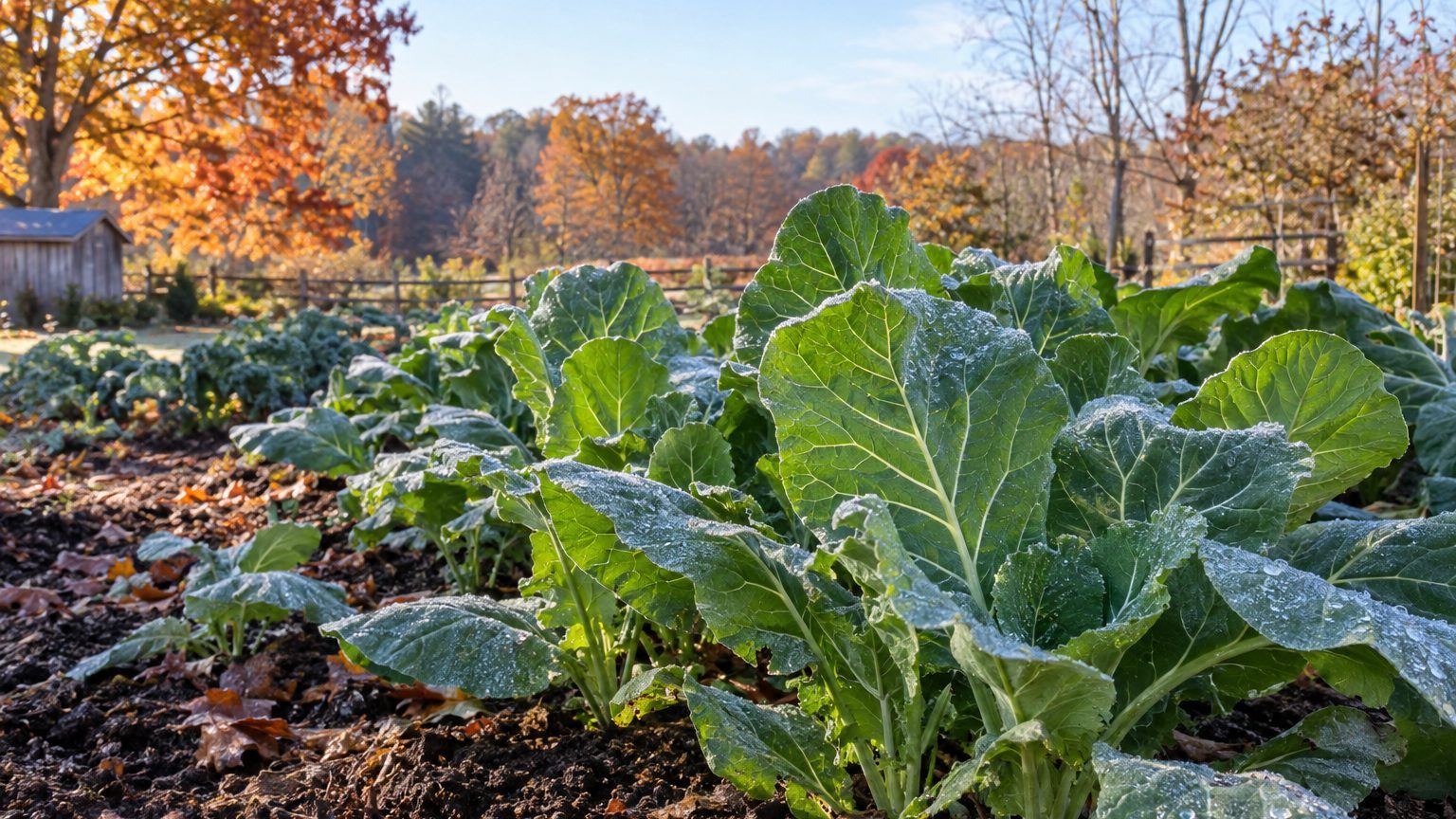

Sow collards in late summer for the main fall and winter crop, and again in late winter for a spring crop that has to finish before the heat. Near Jackson, the last 32°F freeze of spring falls between March 6 and March 22, and the first of fall between November 7 and November 22. Collards tolerate light frost, so those dates frame the planting windows rather than forbid anything. Fall is the better bet.
The short answer for Mississippi
Plan on two sowings. The first goes in during late summer, from about August into early September, and gives you greens from the first cool snap through winter. The second goes in during late winter, a few weeks ahead of the spring frost band, and has to size up before summer heat turns the leaves tough. A fall crop matures as nights cool, and cold turns some of the starch in the leaves to sugar. A spring crop races the thermometer the whole way.
What the frost dates actually say
The frost numbers come from the NOAA 1991-2020 Climate Normals for the Jackson airport station. They are probabilities of a 32°F freeze, taken from the 30 to 70 percent band. Between March 6 and March 22, a late freeze is still a live possibility, closer to a coin flip than a sure thing. Between November 7 and November 22, the first freeze of fall is similarly in play. Neither range is a guarantee, and a frost can still show up outside it in an unusual year.
The numbers also describe an airport in a city. Suburban and rural gardens typically see the last spring frost later and the first fall frost earlier, often by one to two weeks, and more at elevation. If you garden outside a town, move both dates toward the middle of the year.
| Crop season | When to sow or transplant | Frost anchor (Jackson reference) |
|---|---|---|
| Fall and winter | August to early September, giving plants time to establish | First freeze band: November 7 to November 22 |
| Spring | Late winter, a few weeks before the last-freeze band | Last freeze band: March 6 to March 22 |
Why winter is not the problem
The mean daily minimum of the coldest month at the Jackson reference station is 36.6°F. That is the figure that decides whether a plant survives winter at all, and for a hardy brassica it is comfortable. Collards planted in fall usually stay standing and harvestable through the cold months, and a hard freeze on a given night sweetens them more than it hurts them. The risk sits at the edges of the season, in the hot weeks at the start and the warm weeks at the end.
What will not work here
Sowing in the middle of summer and watering once a week. Seedlings put into August soil dry out within a day or two, and a weekly soaking leaves them wilting in between. Seeds that sprout in hot ground need shade cloth or a shaded bed and a daily look at the soil surface until the roots take hold. Gardeners who sow on a weekend schedule and water on the same schedule lose most of the row.
Sowing fall collards too late
The first freeze band of November 7 to November 22 sounds distant from the first of October, but it is closer than it feels. Seedlings started that late have only a few weeks of warm growing weather left, and fall days shorten and cool fast. They stall at seedling size and sit there through winter, producing a few small leaves by spring when the plants want to flower. Add the one to two weeks earlier that rural and higher gardens typically lose, and the cutoff moves earlier still. Get fall plants in the ground with a comfortable margin, not at the last minute.
Spring crops that meet the heat
A spring sowing in April may look fine in May, but humid Southern summers arrive early. Warm nights push collards toward bolting, sending up a flower stalk and leaving leaves that turn bitter and tough. The same warmth brings cabbage worms and aphids, which build up quickly in a crop that is stressed and slowing down. Late winter is the time to sow, and there is little reason to wait for the last freeze to pass, since the plants can take light frost.
Humidity is the other trap. Warm, damp air and frequent rain encourage leaf spots and other fungal trouble, especially when plants are crowded and the foliage stays wet. Planting them shoulder to shoulder to get more out of a bed works against you here. Give each plant room, water at the soil rather than overhead, and water in the morning so leaves dry by evening. For variety choices that handle heat and humidity better, see The Best Collards and Greens for Mississippi.
What changes across Mississippi
The state spans USDA hardiness zones 7b to 9a, based on the 2023 map built from 1991-2020 normals. That is a wide spread, and it means there is no single answer for the whole state. The USDA system is built on one variable, the average annual extreme minimum temperature, so it tells you how cold the worst nights get, not when the last frost will arrive. A Gulf Coast garden and a hill-country garden near the Tennessee line are working with different seasons.
Shifting for the north and higher ground
Gardeners in the northern counties and on higher ground should lean toward the cold end of the spread. The Jackson dates are the reference, and the further north or higher you go, the later spring frost tends to linger and the earlier fall frost tends to arrive. Move the spring sowing later by a week or so, and bring fall sowing earlier, so plants are well established before the cold settles in. Frost pockets in low spots can add to that, since cold air drains downhill and settles there on clear nights.
Shifting toward the Gulf
The southern end of the state runs the other way. A longer warm season stretches the fall planting window and lets a winter crop keep growing when northern beds have slowed to a crawl. The trade is a longer, hotter, wetter summer, which makes the late-winter sowing even more urgent. Plants that start in warmer ground go to flower sooner once heat arrives.
Do not take a zone from a neighbor or a seed catalog. Look up your own location on the USDA Plant Hardiness Zone Map by ZIP code and read the result for your own yard, then use it as a rough guide to how far to shift the Jackson dates. You can read more on the broader picture in Growing Collards in Mississippi.
Where to check this for your own county
The county extension office has local knowledge no statewide calendar can match. Mississippi State University Extension runs the state’s land-grant extension service, with offices that serve each county and agents who hear every season what has worked and what has failed locally. Start with the site, find your county’s contact, and ask for the vegetable planting calendar that applies to your area.
What to look for
Two things matter most. The first is the local planting calendar for fall and spring greens, with dates tied to your county’s frost record instead of an airport’s. The second is the list of varieties that have been trialled or are recommended in your county, since a collard that thrives in one part of the state can sulk in another. Ask also about pest pressure in your area, such as when cabbage worms usually appear, because that tells you when to start checking the undersides of leaves.
A state date is a starting point
A recommendation written for your county will always beat one written for the whole state. Statewide dates are averages drawn from one reference city and blur the differences between the coast, the central hills and the northern counties. Treat them as a way to plan your season and buy seed, and let your county agent correct the details. Extension offices also answer questions on soil testing, which helps if your collards come up pale or slow.
Checking this against your own garden
Your own beds will tell you more than any date range. Collards respond to local conditions in ways you can see without any equipment, and a few weeks of paying attention gives you a calendar tuned to your yard.
Three things to watch
- Soil warmth by feel. Push your hand into the bed in the morning. Soil that feels cold and heavy is not ready for seed, while soil that feels warm even at dawn is already too hot for tender seedlings in late summer. A bed that warms early in spring tells you your garden is a sunny, sheltered spot where you can sow sooner.
- The first true leaves. The first two seed leaves are rounded and plain. The true leaves that follow look like small collard leaves. If true leaves appear quickly, conditions are good. If seedlings sit for weeks without them, the soil is too hot, too dry, or too cold.
- The first frost on the grass. Look at your lawn and car windshield on clear, still mornings in autumn and late winter. White frost on one side of the yard and bare grass on the other marks a cold pocket, where collards will be slower in spring and need protection sooner in fall.
Keep a note of the dates you see these things for a year or two, even on the back of a seed packet. Your notes will start to show patterns, and they tend to be more reliable than any published calendar for your own patch of ground.
Some gardeners also time this by the Moon: when to plant collard greens by the moon, as almanac tradition rather than fact.
Common questions
Can collards be planted in summer in Mississippi?
Late summer, yes. Midsummer sowing is possible with shade and frequent watering, but seedlings struggle in the hottest weeks. Wait for August in most of the state, and give seedlings daily attention until established.
Do collards survive winter in the ground?
Usually. The mean daily minimum of the coldest month at the Jackson reference station is 36.6°F, and collards handle that easily. Hard freezes can brown leaf edges, but established plants typically recover and keep producing, particularly in the southern part of the state.
Is spring or fall better for collards?
Fall. Plants mature as temperatures drop, which improves flavor and cuts pest pressure. Spring crops work, but they are racing the arrival of heat, so sow early and expect a shorter harvest.
How late can I sow in fall?
Early enough that plants are established well before the first freeze band of November 7 to November 22 at Jackson. Rural and higher gardens often see frost one to two weeks earlier, so count back from the date for your county, not the airport. A plant that is still tiny by then will mostly sit through winter and flower in spring.