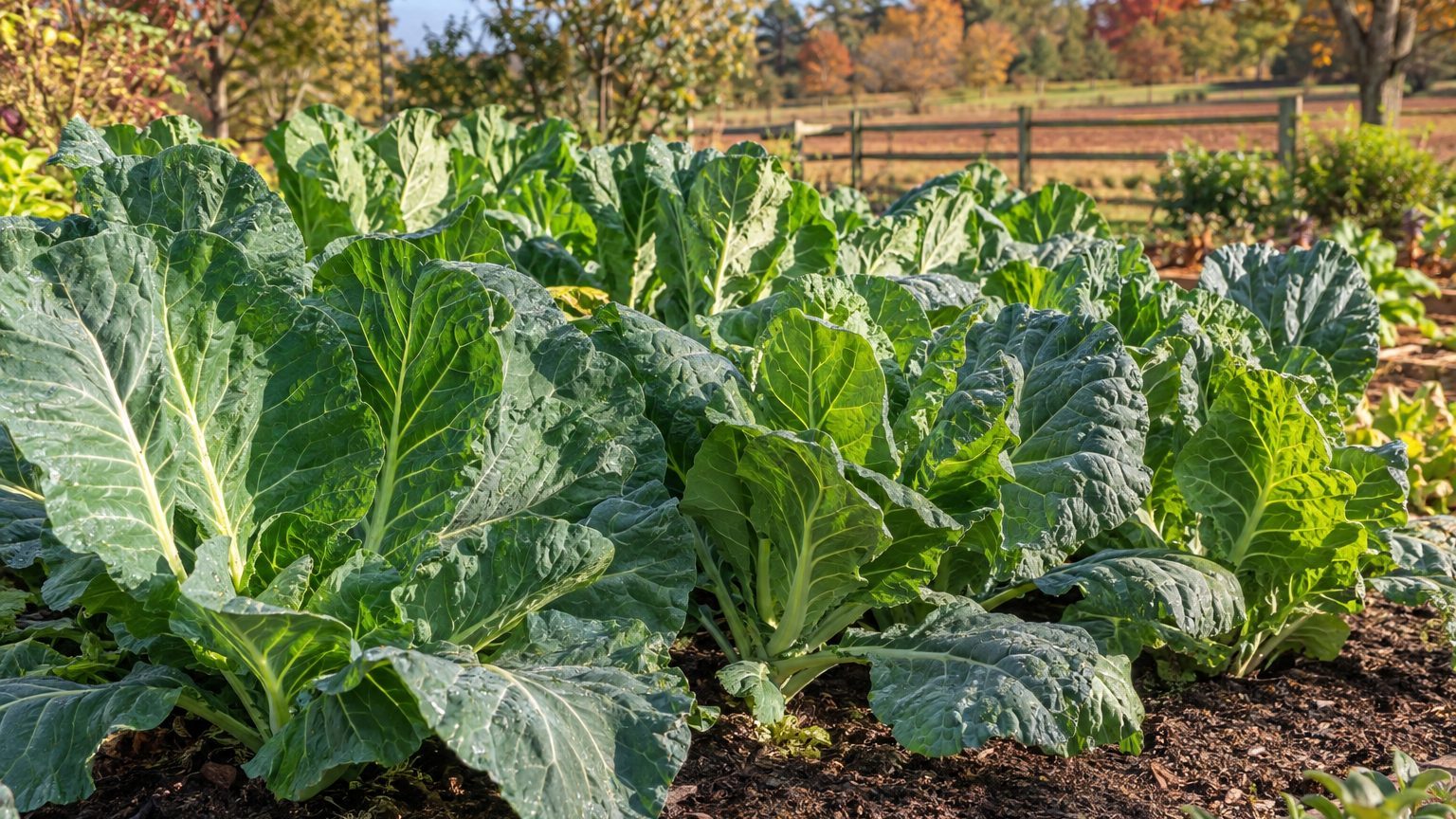

For Missouri, plant open-leaf, non-heading collards for the main crop and sow them twice: in early spring, and again in midsummer for fall. Fall is the better season. Heading types and hybrids bred for speed come second, useful when a short window or a hot July is in play. Everything else is timing, and the timing here is tight at both ends.
The short answer for Missouri
Choose by type, not by catalog name. A standard open-leaf Southern collard, the kind that grows a tall stalk of large, flat leaves, suits Missouri’s long, hot, humid summers and cold-snap falls better than anything else. It tolerates heat, shrugs off light freezes, and keeps producing leaves for months. A heading, cabbage-like collard forms a loose rosette and is worth trying if you want something compact and tender, but it needs cooler conditions to do well.
The frost dates explain why. At Kansas City’s reference station, the last spring freeze falls between April 6 and April 20, and the first fall freeze between October 18 and October 29. Those are the 30-70% probability band for a 32F freeze, meaning that on those dates the odds of another freeze (spring) or a first one (fall) run between three in ten and seven in ten. They are not guarantees. The reference station sits well north of the city, so downtown runs about five days earlier in spring, and southern Missouri is milder still.
Between the two bands lies about six months of frost-free growing weather, which is generous for collards and short for the slowest strains. Winter is the other number that matters. The mean daily minimum of the coldest month is 19.5F, so ordinary January nights sit in the teens and low twenties. Collards survive that on many nights, but not reliably without protection, and a hard freeze with no mulch or cover can end a planting.
| Type | Best use in Missouri | Main strength | Main limit |
|---|---|---|---|
| Open-leaf Southern collards | Spring and fall main crop | Heat and frost tolerance | Slower to first harvest |
| Heading (cabbage-type) collards | Fall crop, small beds | Compact, tender leaves | Struggles in summer heat |
| Faster, bolt-resistant selections | Late starts and summer sowings | Quicker to usable leaves | Less cold hardy in some strains |
Named selections such as Georgia Southern and Vates fall into the first category, and they are easy to find in seed catalogs. For sowing dates tied to these frost windows, see When to Plant Collards in Missouri. For the broader picture of the crop here, start with Growing Collards in Missouri.
What will not work here
Sowing seed outdoors in March and expecting a spring crop to sail through is the most common failure. The last freeze can land as late as April 20 at the reference station, and March transplants set out with no cover will be hit more than once. Collards handle light frost, but a seedling with only a few true leaves is far more vulnerable than a mature plant, and a hard freeze can kill it outright.
Slow strains planted late
Fall sowing has its own deadline. With the first freeze arriving between October 18 and October 29, a collard sown too late has little time to build the big leaves that make it worth growing. Plants that stay small going into winter give a thin harvest, and they also overwinter poorly. Any strain that needs a very long season, or any selection marketed for the Deep South where winters barely bite, is risky in a state where the coldest month averages a minimum of 19.5F.
Summer heat, humidity, and close spacing
A spring crop that goes in late runs into July and August, when heat and humidity combine to stress the plants. Leaves turn tough and bitter, aphids and cabbage worms build up, and the plant may bolt, sending up a flower stalk. Heading types are especially prone to this. Close spacing makes it worse. In humid weather, crowded leaves stay wet, and fungal leaf spots and rot spread faster. Give open-leaf collards room, and thin seedlings early so air can move between plants.
Watering once a week, especially in light sandy soil or a raised bed, does not carry collards through a Missouri dry spell. They need steady moisture, and a mulch layer helps keep the soil cool and even.
Finally, expecting one planting to give you collards from May to February does not work. A single spring sowing crowds into summer stress, and a plant left through winter without protection will be damaged on the coldest nights. Two timed sowings, a spring crop and a fall crop, are more reliable than one long season.
What changes across Missouri
Missouri does not have one answer. The USDA Plant Hardiness Zone Map (2023, based on 1991-2020 normals) places the state in zones 5b to 7b. That is five half-zone steps between the cold north and the milder south. The zone is built on a single variable, the average annual extreme minimum temperature, so it says how cold the worst night usually gets, not how long the growing season is or how hot the summer runs.
The 19.5F figure and the frost dates above come from Kansas City, a reference point in the northwestern part of the state. Readers in northern Missouri should expect an earlier fall freeze and a later last spring freeze than the dates given, which shortens the season at both ends. Favor fast open-leaf selections for the fall crop, sow a little earlier in midsummer, and protect plants with straw mulch or row cover as soon as nights drop.
Southern Missouri, milder still, gets a longer fall harvest, and plants carried into winter have a better chance of surviving. Spring can start earlier, but the freeze risk does not vanish; a warm March is no guarantee. The Ozarks add elevation and hollows to the mix, and a low spot where cold air pools can behave like a zone colder than the ridge above it.
To find your own zone, use the USDA map and look up your location directly. Don’t assume the one for the nearest big city applies to your yard.
Where to check this for your own county
A county recommendation beats a state one, and this article gives the state version. Missouri covers a lot of ground, and the dates and selections that suit Platte County will not be quite right for Pemiscot or Greene. University of Missouri Extension runs a local office in nearly every county, staffed by agents and Master Gardener volunteers who know the local soil, rainfall, and pests.
Look for two things. First, the local planting calendar: spring and fall sowing windows for collards and other cool-season greens, which will be calibrated to your county’s frost dates rather than a Kansas City station’s. Second, the varieties trialed in your county or region. Trial results tell you which collards actually held up to local heat, humidity, and disease, which no catalog description can.
If you call or visit, ask about fall frost timing for your area, which diseases have been a problem lately, and whether the office recommends row cover for overwintering. The state’s frost bands come from NOAA’s 1991-2020 climate normals (station data), and they are a useful starting point. A local office can tell you how your county departs from them.
Checking this against your own garden
Dates are averages and your garden is not average. Three simple observations will tell you more than any calendar.
- Soil warmth by feel. Push your hand a few inches into the bed in the morning. If the soil feels cold and clammy, seeds will sit and sulk. If it feels cool but workable and crumbles rather than clumps, collards will germinate. A bed that warms earlier than your neighbor’s is a warmer microclimate.
- The first true leaves. After the seed leaves, the first true leaves signal that a seedling is established and can handle some chill. Note how many days that takes in spring versus midsummer. Slow emergence in summer points to heat or dry soil.
- Where frost settles. On a clear, calm morning near the first fall freeze, check where white frost shows on the lawn. Low spots and open ground freeze first, while ground beside a south-facing wall may stay clear for days. That tells you where fall collards will last longest.
Keep a few notes from year to year, and the pattern will beat any printed date.
Common questions
What is the best collard variety for Missouri?
There is no single best selection, but open-leaf Southern types such as Georgia Southern and Vates are dependable choices because they tolerate heat and frost. Pick the type first, then check local trials through your county extension office.
Can collards survive a Missouri winter?
Often in the south and with protection, less reliably in the north. With a coldest-month mean daily minimum of 19.5F at the Kansas City reference station, many nights reach the teens. Mulch or row cover improves the odds, but a hard freeze can still kill plants.
Are collards better planted in spring or fall?
Fall is generally better. Cool weather sweetens the leaves and pests ease off. Spring sowing works too, but plants have to finish before summer heat arrives.
How do I know which hardiness zone applies to me?
Look up your location on the USDA Plant Hardiness Zone Map. Missouri spans zones 5b to 7b, so a neighbor in another part of the state may be in a different zone from you.