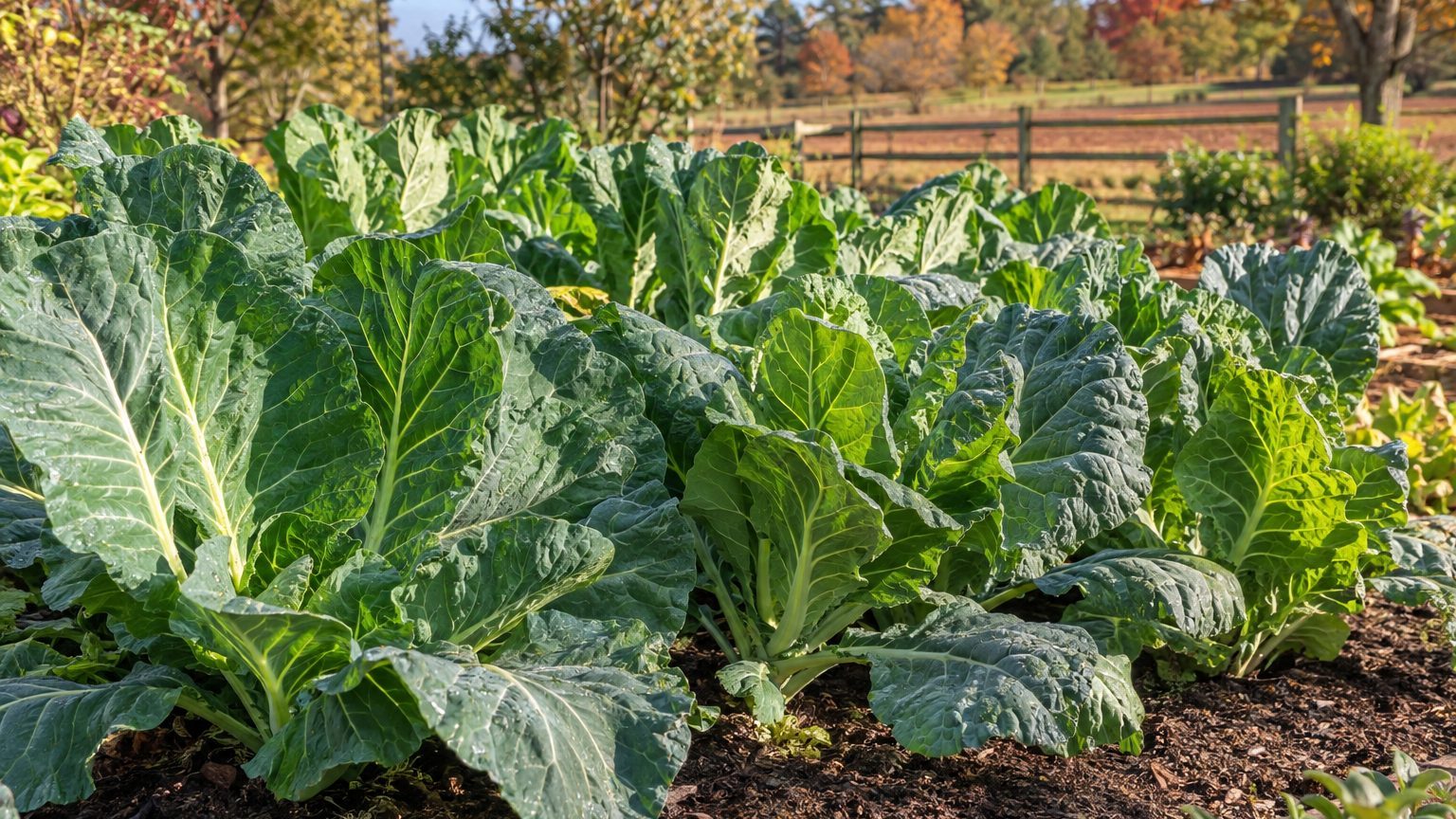

For most Ohio gardens, the best collards are fast, open-leaf types that shrug off cold, with Vates-type and Georgia-type plants leading the list. Set transplants out in early spring for a first picking, then plant a second round in midsummer for a fall and early-winter harvest. Frost sweetens the leaves, which is why the fall crop is the one worth planning around.
The short answer for Ohio
Choose by type, not by catalog hype: a quick open-leaf collard such as a Vates-type for the spring crop, and either that or a slower Georgia-type for fall. Heading or “cabbage” collards are a gamble in a season this short, and kale, mustard and turnip greens make better companions than a second collard variety.
Why season length decides the type
In zone 6a, the last spring frost typically falls between May 5 and May 15, and the first fall frost between October 5 and October 15. That is roughly five months between frosts. These dates are averages, so a frost after the last date, or before the first, still turns up in some years. Collards tolerate light frost, so transplants can go in a few weeks before the spring date. The plant also keeps growing after the fall date, though slowly as days shorten.
That head start matters because collards are slow compared with lettuce or spinach. A slow type set out after the last spring frost has time to size up before summer. The same type planted in late summer will be small when growth stalls in the cold.
Winter adds another limit. At the Columbus reference station, the mean daily minimum of the coldest month is 22.0°F. Collards often come through nights in the 20s, but the USDA zone range of 5b to 6b is built on the average annual extreme minimum, and the extremes are what kill. Treat collards as a spring-to-early-winter crop here, and count any plants that survive to spring as a bonus.
| Type | Pace | Fit for Ohio |
|---|---|---|
| Vates-type open-leaf | Faster, compact plants | Reliable for both spring and fall plantings |
| Georgia-type open-leaf | Slower, taller plants | Good for a midsummer start; needs a full fall to pay off |
| Cabbage (heading) collards | Slowest to size up | Risky; best where the fall stays mild |
| Kale, mustard, turnip greens | Faster than any collard | Fill gaps and extend the picking |
Greens that pair well
Kale is the nearest relative that handles the same cold. Mustard and turnip greens grow quickly enough to harvest while collards are still building leaf. Swiss chard stands up to summer heat better than any of them, so it covers the gap between a spring collard crop and a fall one. For timing detail, see When to Plant Collards in Ohio, and for the full crop overview, Growing Collards in Ohio.
What will not work here
A late start fails first. Collards sown or transplanted in late summer have a few weeks before the first fall frost window, and growth slows sharply once nights stay cold. The result is a bed of knee-high plants in December and a few small leaves to pick, not the heavy harvest the seed packet suggests.
Southern calendars fail for the same reason. Advice written for the Deep South, where collards are sown in September and picked all winter, assumes a mild coldest month. Here the coldest month averages a nightly low of 22.0°F, with colder snaps in most winters. Following a Gulf Coast schedule leaves plants stuck at seedling size when the ground freezes.
Slow types and heading types
The slowest varieties are the ones that fail in a short season. A tall Georgia-type needs a long stretch to reach full size, and a heading collard needs even longer to form its tight head. Planted in late spring, both spend the hottest weeks of summer just getting established. Faster open-leaf types make usable leaves sooner and are the safer default.
Humidity, spacing and summer pests
Ohio summers are warm and humid, and that punishes crowded plantings. Collards set close together look productive in June, but the canopy stays wet after rain and dew, and fungal and bacterial leaf problems spread faster. Wider spacing keeps air moving through the leaves. Planting collards in the same bed as last year’s cabbage or broccoli also invites disease that overwinters in the soil.
Heat alone is rarely the problem for collards, since they take summer better than most brassicas. The trouble is the caterpillars. Imported cabbageworms and similar pests peak in summer, and a midsummer transplant left uncovered can be shredded before fall. Floating row cover on the new transplants, or a regular check under the leaves, prevents most of the damage. Watering deeply in a dry stretch is usually enough, but a shallow, frequent sprinkle that wets the foliage is not.
What changes across Ohio
Ohio is not one garden. The USDA Plant Hardiness Zone Map (2023 edition, built on 1991-2020 normals) places the state in zones 5b through 6b, a spread of about two half-zones in the average annual extreme minimum temperature. There is no single answer for the whole state, and the frost dates of May 5 to 15 and October 5 to 15 describe zone 6a specifically.
Gardeners in the colder parts of the state, such as the higher ground in the northeast and the interior north, should expect a later last frost and an earlier first one. Shift toward the faster types, set transplants a bit later in spring, and start the fall crop earlier in summer so plants reach size before growth slows. Cold nights arrive sooner there, so fall plantings put on less late-season growth.
Gardeners in the warmer southern counties along the Ohio River have a longer window. They can lean on Georgia-type plants for fall and have a better chance of plants carrying through a milder winter. Sites near Lake Erie often behave differently again, because the lake slows spring warming and softens early fall cold.
To find out which zone applies to your own address, use the USDA map and search by ZIP code. A town ten miles away, or a garden at the bottom of a slope, can sit in a different half-zone from a neighbor’s, so rely on the map rather than a guess from the state average.
Where to check this for your own county
Your local Ohio State University Extension office is the best next stop. Start at Ohio State University Extension and find your county office, then look for two things: the local vegetable planting calendar, and any varieties trialled in your county or a similar one.
The calendar tells you when your county’s frost dates and soil conditions support spring and fall plantings. The variety lists show which collards, kale and mustards actually performed in nearby gardens, including which held up to disease in a wet summer. Extension offices and their Master Gardener volunteers can also answer pest questions, such as when cabbageworm moths show up in your area.
A county recommendation beats a state one. The state figures here are an average over a wide range of soils, elevations and lake influence, and they work as a starting point, not a final schedule. If the county advice and the state dates disagree, go with the county.
Checking this against your own garden
Your own observations outrank any date on a chart. Three are easy to make without equipment.
- Soil by feel. Squeeze a handful in early spring. If it crumbles and no longer feels cold and sticky, it is ready for transplants. A bed that stays clumpy and cold longer than a neighbor’s tells you it is a late spot, and collards there should wait.
- Forsythia in bloom. When the shrubs in your neighborhood flower, cool-season greens can go out. Late bloom means a late spring in your microclimate; early bloom means you can move ahead of the averages.
- Morning frost patterns. In October, notice which parts of the yard still hold frost on the grass after sunrise. Low corners and open lawn freeze first, while spots near a south-facing wall stay milder. That shows where fall collards will last longest.
Keep notes for a season or two. A few lines on when you planted, when the first hard frost arrived and how the plants fared give you a calendar tuned to your own yard.
Common questions
What is the best collard variety for Ohio?
A fast, open-leaf Vates-type is the safest choice for most gardens, and a Georgia-type works for a midsummer fall planting where the fall is long. Heading collards are the least reliable here.
Can collards survive an Ohio winter?
Sometimes. They often handle nights in the 20s, but the coldest month averages a nightly low of 22.0°F at the Columbus reference station, and colder snaps kill many plants. Mulch helps, but plan on a fall harvest rather than spring regrowth.
Do I need to plant collards in both spring and fall?
Not required, but the fall crop is usually better, since frost sweetens the leaves and cabbageworm pressure fades. A spring planting gives an earlier picking and a chance to learn how your garden behaves.
Which other greens grow well alongside collards?
Kale, mustard and turnip greens take similar cold and mature faster. Swiss chard handles summer heat and fills the gap between spring and fall collard crops.