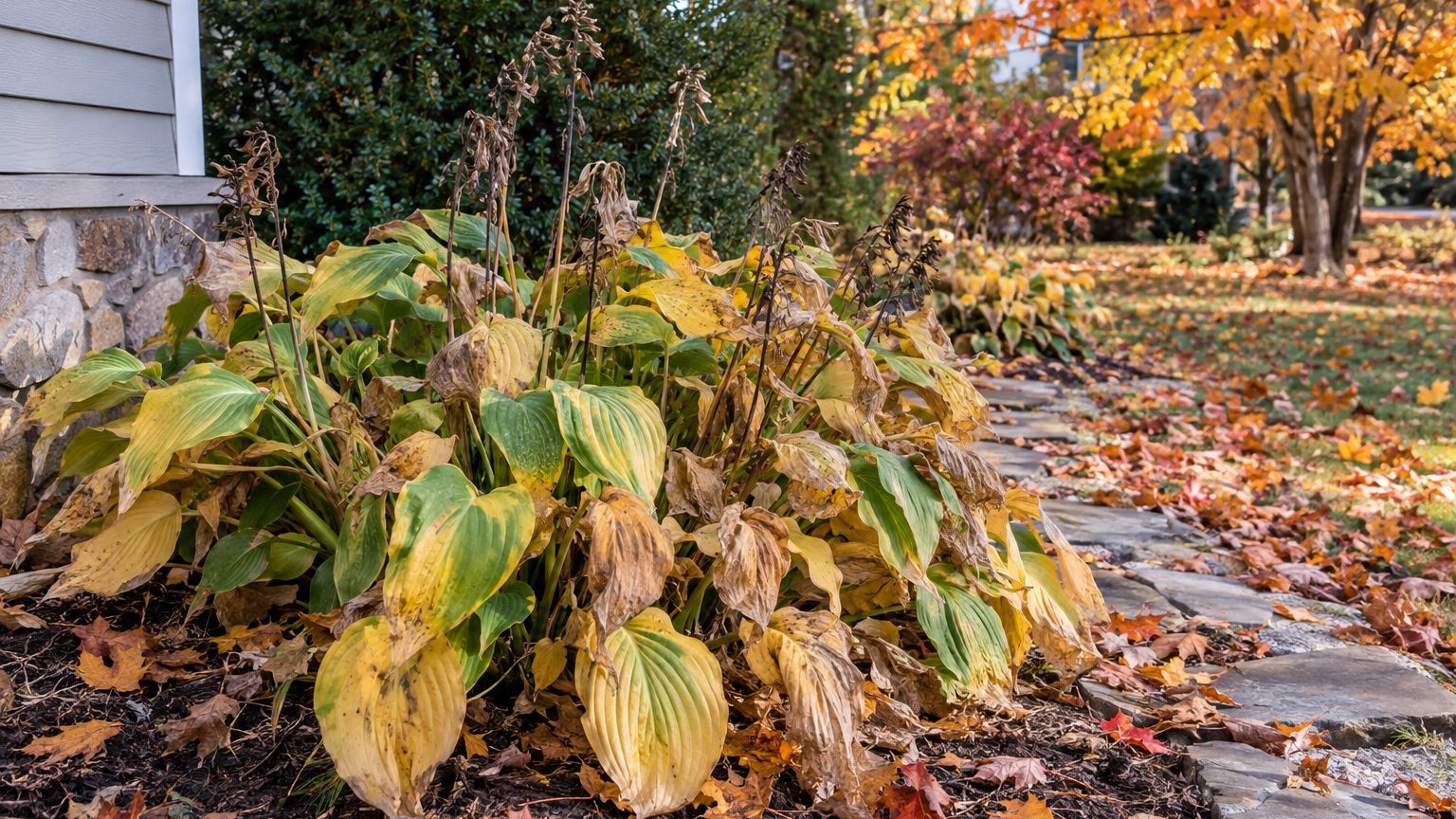

Hosta foliage can come off once a hard freeze has flattened it, but leaving it until spring is usually the better choice. The exception is a clump that had disease, slugs or other pest trouble this summer, which is better cleaned up in fall. Before you pick up the pruners, walk the bed and note which plants looked sick or chewed. Those are the ones that need cutting before winter.
After the frost turns them, or in spring

Iowa State University Extension and Outreach says perennials can be cut back in fall after the foliage is destroyed by a hard freeze, but it is often beneficial to wait until spring. The reasoning is protection. Iowa State says leaving the plant material provides an extra layer of protection for the perennial’s crown and root system. Hostas are perennials that die back to the ground each year, so that advice applies to them directly.
What counts as the right moment in fall
The trigger in Iowa State’s wording is a freeze that destroys the foliage, not the first cool night. A light frost may only nip the edges of the leaves, and the plant is still working. Once the leaves collapse into a limp, translucent heap, the plant has finished for the year and cutting is a matter of tidiness or sanitation, not timing. Your own yard sets that moment, so check your local weather and see the first frost dates by state for a rough guide to when the killing frost usually arrives where you live.
If you are in Canada, look at your provincial or regional extension guidance as well. Winter conditions across Canada vary a great deal, so provincial or regional guidance is worth checking.
The exception that matters
Iowa State draws a clear line for plants that had trouble. It says removing plant material in the fall after it naturally dies back should be done for perennials that had disease or insect pest issues during the summer. In practice, the decision about each clump is made months earlier, when you see leaf damage, ragged holes or spotting. Winter wipes that memory clean, because a frozen hosta looks the same whether it was healthy or not.
So the working rule is simple. A clump that grew cleanly all summer can stand through winter and be cleaned up in spring. A clump that had a problem gets cut in fall, and the debris leaves the bed. The next section covers what Illinois Extension adds to that picture, because its emphasis differs from Iowa State’s.
When cutting in fall helps
University of Illinois Extension writes specifically about hostas going into winter, and it leans more toward fall cleanup than Iowa State’s general perennial advice does. The two sources do not contradict each other. Iowa State says waiting is often beneficial and makes an exception for problem plants. Illinois lists the situations where cutting back pays off. In its hosta guidance, Illinois gives three reasons:
- Slugs: Illinois says cutting back the foliage reduces future slug populations.
- Nematodes: Illinois says that if hosta nematodes are present, they can be removed before settling back in the crown, plant debris, or soil.
- Disease: Illinois says that if a disease is present, you should dispose of the discarded spent foliage so that it does not spread the following spring.
Reading the three reasons
Each reason is conditional. The slug point is the broadest one, since slugs are the pest most hosta growers already know, and Illinois frames the benefit as fewer slugs in future seasons. If your hostas were shredded last year, that argues for clearing the bed this fall, even if your Iowa State reading says waiting is fine for healthy plants.
The nematode and disease points are about what the debris carries. Illinois gives no method for confirming nematodes, so a leaf sample is the way to identify them. If you suspect them or an unfamiliar disease, take a leaf sample to your county extension office and let them identify it before you decide what to do.
The disposal point deserves attention. Cutting the foliage helps only if the cuttings go somewhere they cannot reinfect the bed. Leaving a pile at the edge of the garden or working it back in as mulch defeats the purpose of cutting. Bag it and remove it, and check your local rules for yard waste before you pick a method.
New and moved hostas
A hosta that has only recently gone into the ground is a different case from an established clump, because its roots have not spread. Illinois Extension says that if hostas are newly transplanted, a layer of mulch may be added after the ground has frozen. The timing matters. Mulch applied after the soil has frozen keeps it frozen, instead of insulating warm soil and tempting the crown into early growth.
Straw and pine needles
Iowa State gives a specific material and timing for the same situation. It says an application of several inches of clean, weed-free straw or pine needles in mid to late November will help to protect late summer or early fall planted hostas over winter. That November window is Iowa’s, so treat it as a reference point and not a calendar for your own yard. A gardener farther north will reach frozen ground sooner, and one farther south may not reach it for much longer.
Notice the word “clean.” Straw that carries weed seed gives you a spring weeding job, and any mulch laid over diseased debris can carry the problem along with it. Pine needles have the advantage of staying loose, so they do not mat down over the crown.
For the mechanics of choosing and laying a protective layer, see our page on mulching. If you garden somewhere with harsh winters, the page on winter protection covers the wider question of what else a young planting may need.
Both sources point the same way. Newly planted hostas get a covering, and established ones generally do not need extra help beyond the natural cover of their own foliage, which is the reason Iowa State leans toward leaving it in place.
Dividing hostas
Cutting back and dividing often get done on the same afternoon, so the timing is worth getting straight. Clemson Cooperative Extension says to plant, transplant and divide hostas either in the early fall or in spring before leaves unfold. Both windows fit neatly around the cutting decision. In spring, you divide before the new leaves open, which means any old foliage you left standing gets cleared first so you can see the buds. In early fall, you are working while the leaves are still present.
A hosta divided in early fall becomes a new planting, and the mulch advice from the section above applies to it. For the technique itself, see our guide to dividing perennials. If you want to compare hostas with other garden plants on fall cutting, see when to cut back perennials in fall, since not every perennial responds the way hostas do.
Common questions
Should I cut hostas back before the first frost?
No. Cut after the foliage has been destroyed by a hard freeze or has died back naturally. Iowa State’s wording ties the fall cut to that point. Green leaves are still part of a working plant, so wait for them to collapse.
Can I put hosta leaves in the compost?
Only if the plant was healthy. Illinois Extension says that where a disease is present you should dispose of the spent foliage so it does not spread the following spring. Healthy leaves are a local call, and your county extension office can tell you what your composting setup can handle.
My hosta leaves look ragged in summer. Should I cut them then?
If ragged leaves are slug damage, note which plants are affected, since Illinois ties fall cleanup to reducing future slug populations. For a specific summer problem, check with your county extension office.
Do established hostas need mulch for winter?
The sources here recommend mulch for new plantings. Illinois mentions newly transplanted hostas, and Iowa State mentions those planted in late summer or early fall. For established clumps, Iowa State says leaving the plant material in place already gives the crown and roots an extra layer of protection.
Recommendations from extension services can be updated, and conditions differ by state and province, so confirm current guidance with your local county extension office before you act.