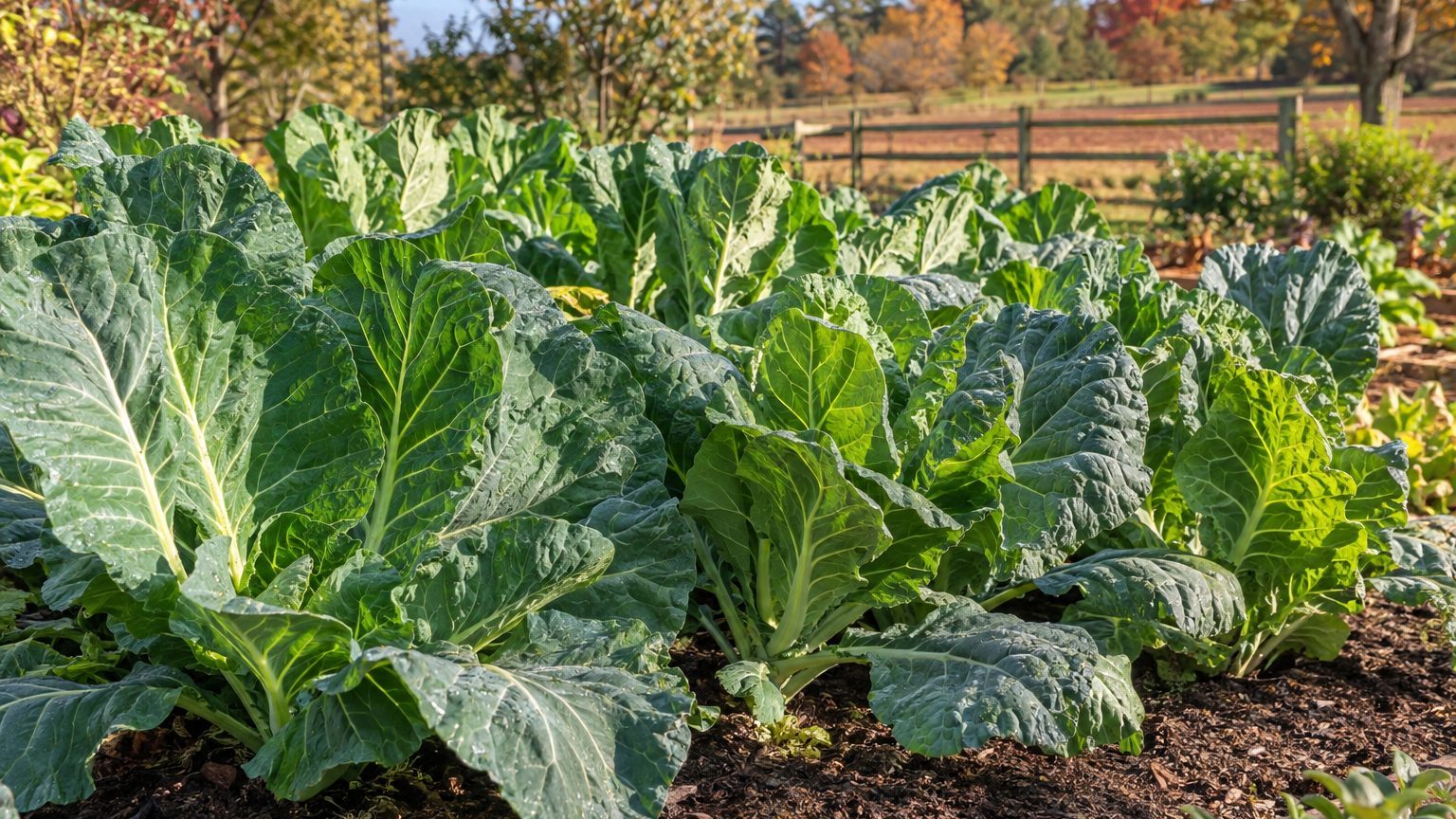

For most Oregon gardens west of the Cascades, a standard collard such as Vates is the safe pick. A Georgia-type heirloom makes a good second row if you want the big, traditional leaf. Add kale and a mustard or turnip green for the cool months. East of the Cascades, shorten the list to quick, cold-tolerant types and start transplants early.
The short answer for Oregon
Collards are a cool-season crop that sweetens after frost. Portland, the reference station for western Oregon, has a mean daily minimum of 36.2°F in its coldest month, so winter nights there average above freezing. A collard planted in late summer will usually stand through the winter and give harvests from fall into spring. The limits in western Oregon are slow growth in cool spring weather and the dry stretch of summer, not winter cold.
The frost dates show how wide the window is. At the Portland reference station, the 30 to 70 percent probability band for a 32°F freeze runs from March 6 to March 21 in spring and from November 11 to November 27 in fall (NOAA NCEI U.S. Climate Normals 1991-2020). Each date is the point where the chance of a freeze at or below 32°F falls to, or rises to, a coin flip. That is a long season, roughly eight months, and it favors big, slow, productive plants. For exact sowing and transplanting dates, see When to Plant Collards in Oregon.
Which collard type suits western Oregon?
The long, mild season suits any standard collard. A compact, cold-tolerant, open-pollinated type like Vates is a dependable first choice because it handles cool springs and wet winters without fuss. A Georgia-type heirloom (sold as Georgia or Georgia Southern) grows tall with large, flat leaves and takes longer to size up. It rewards you when planted early enough to use the whole season. Cabbage collards, which form a loose head, are a good pick for anyone who likes a milder, tender leaf.
What should gardeners east of the Cascades grow?
High desert gardens have a far shorter season, so the quick types matter more there. Choose collards sold for early maturity and set out transplants rather than sowing seed in place. Where nights stay cold well into spring, kale is the better bet, since it is quicker and shrugs off hard cold.
| Type | Best fit | Why |
|---|---|---|
| Compact open-pollinated collard (Vates) | Western Oregon, cooler or shorter-season sites | Moderate size, cold tolerant, steady in cool weather |
| Georgia-type heirloom | Western Oregon valleys with a full season | Large leaf, slow to mature, needs an early start |
| Cabbage collard | Western Oregon, gardeners who want tender leaves | Loose heading habit, milder flavor |
| Kale (Lacinato, Red Russian, Siberian) | Everywhere, especially east of the Cascades | Faster and hardier than most collards |
| Mustard and turnip greens | Spring and fall gaps statewide | Ready in weeks, finish before the slow crops |
What will not work here
The first failure is putting a slow heirloom in a short season. Central and eastern Oregon sit in high desert with a far shorter frost-free stretch than Portland. A Georgia-type collard sown in place in May there may not have enough warm, growing weeks to fill out before the first hard freeze. The plant survives the cold, but you get a small, thin harvest. The fix is to start earlier indoors or switch to a quicker type.
Why does early spring planting go wrong in western Oregon?
Setting out transplants on the first warm day in early March is a gamble. The March 6 to March 21 window marks the point where a freeze at 32°F or below is still a 30 to 70 percent chance. A hardened-off collard can take a light frost, but a freshly planted, unhardened seedling often can’t, and a wet, cold week stalls its roots. Wait for the soil to warm, and keep a floating row cover handy for the first few weeks.
Why does weekly watering fail in a dry Oregon summer?
Summers west of the Cascades run dry, and a collard that gets one soaking a week will swing between wet and bone dry. The result is tough, bitter leaves and more trouble with aphids. Shallow, frequent watering keeps roots near the surface, where they dry out fastest. Mulch the bed with a few inches of straw or shredded leaves and water deeply when the top inch of soil is dry. Consistent moisture keeps the leaves tender.
Why does close spacing backfire in a wet winter?
Western Oregon winters are long, gray and wet. Plants set shoulder to shoulder hold moisture in the canopy for days, which invites mildew, rot at the base and a slug population that moves in for the season. A spacing of 18 to 24 inches between plants lets air move through the leaves and lets you see what is feeding on them. Crowding also reduces yield, because each plant has to compete for the same light.
Heat is a smaller worry than gardeners from the South expect. Oregon’s cool springs slow the big heirlooms, and a plant that sat through a cold April will be smaller than the same variety grown where summers are hot and humid. Plan on a later first harvest, and expect the best flavor in fall and winter.
What changes across Oregon
Oregon is not one garden. The USDA Plant Hardiness Zone Map (2023, built on 1991-2020 normals) places the state anywhere from zone 4a to 9b. That spread covers cold mountain valleys and mild coastal lowlands, so there is no single zone for the state and no single answer on varieties. The zone rests on the average annual extreme minimum temperature, which says how cold the worst winter night gets. It says little about how long the growing season lasts. Collards are hardy, so season length and frost dates often matter more to them than the zone number.
The Portland figures apply to the Willamette Valley and the lowlands near it. They do not apply to the high desert, the Blue Mountains or higher elevations in the Cascades. Gardeners in the north, at altitude or east of the mountains should shift in three ways. Start transplants indoors several weeks before the last frost, and use a quick-maturing type so the plant finishes before cold sets in. Protect fall crops with row cover, and plan to harvest steadily rather than waiting for one big picking. Where winters are bitter, a collard left in the ground may die back, so treat it as an annual and grow it for one season.
Gardeners in milder spots, including the Willamette Valley and the southern coast, can lean the other way. A late-summer planting there can stand through the winter and keep producing into spring, until it bolts in its second year. Check the USDA map for your ZIP code to see which range your garden falls in. The general guide to Growing Collards in Oregon covers site, soil and care once you have picked your type.
Where to check this for your own county
Your state extension service is the best next stop. Oregon State University Extension publishes gardening guides and runs county offices staffed by trained Master Gardeners, who answer questions from local growers. Oregon’s microclimates change over a few miles, and the extension network knows them better than any statewide summary does.
Look for two things there. The first is a local planting calendar for your county, which gives sowing and transplanting windows built on local frost data instead of a single reference station. The second is a list of varieties trialled in your county, which tells you what has been grown and compared in your own conditions. If a county office recommends a different variety or date than this article does, follow the county. A county recommendation beats a state one because it comes from closer to your soil and weather, and the advice here is the state view.
Call or visit your county office if the website lacks what you need. Ask what the average last frost is for your area, which brassica pests are active in your region and when they appear, and whether a fall or spring crop tends to do better. Those three answers will save you a season of guessing.
Checking this against your own garden
Your own observation outranks every date in a guide. Three things are worth watching, and none of them needs a gadget.
- Soil warmth by feel. Push your hand into the bed a few inches deep. If the soil feels cold and clammy, wait. If it feels cool but loose and crumbly, transplants will root. Beds in sun and shelter warm earlier than shaded or low-lying ones, which tells you where to plant first.
- The first true leaves. Seedlings first show two rounded seed leaves, then the first true leaves with their ruffled collard shape. A seedling with a few true leaves is ready to harden off. If yours reach that stage faster or slower than the packet suggests, your indoor light and warmth are different from the average.
- Flower stalks on overwintered brassicas and weeds. When overwintered kale or collards, or weeds in the mustard family, start sending up flower stalks, spring is moving fast in your spot. Note the date each year. It shows how early or late your garden runs compared with the county.
Write those dates down for a couple of seasons. They will tell you more about your microclimate than a map can.
Common questions
What is the best collard variety for Oregon?
For most gardens west of the Cascades, a compact, cold-tolerant open-pollinated collard like Vates is the dependable choice. A Georgia-type heirloom works if you plant early enough to use the full season. East of the Cascades, pick a quick-maturing collard or switch to kale.
Can collards survive an Oregon winter?
West of the Cascades, yes in most years. The coldest month at the Portland reference station has a mean daily minimum of 36.2°F, so plants usually stand through winter. In the high desert and at higher elevations, hard cold can kill them, so treat them as a one-season crop.
When do the last and first frosts fall in western Oregon?
At the Portland reference station, the 30 to 70 percent band for a 32°F freeze runs from March 6 to March 21 in spring and from November 11 to November 27 in fall. These dates apply to western Oregon lowlands, not to central or eastern Oregon.
What greens grow well alongside collards?
Kale is the closest partner and handles cold even better. Mustard and turnip greens fill gaps in spring and fall because they mature in weeks. Lacinato, Red Russian and Siberian kale all do well across the state, with Siberian the hardiest of the three.