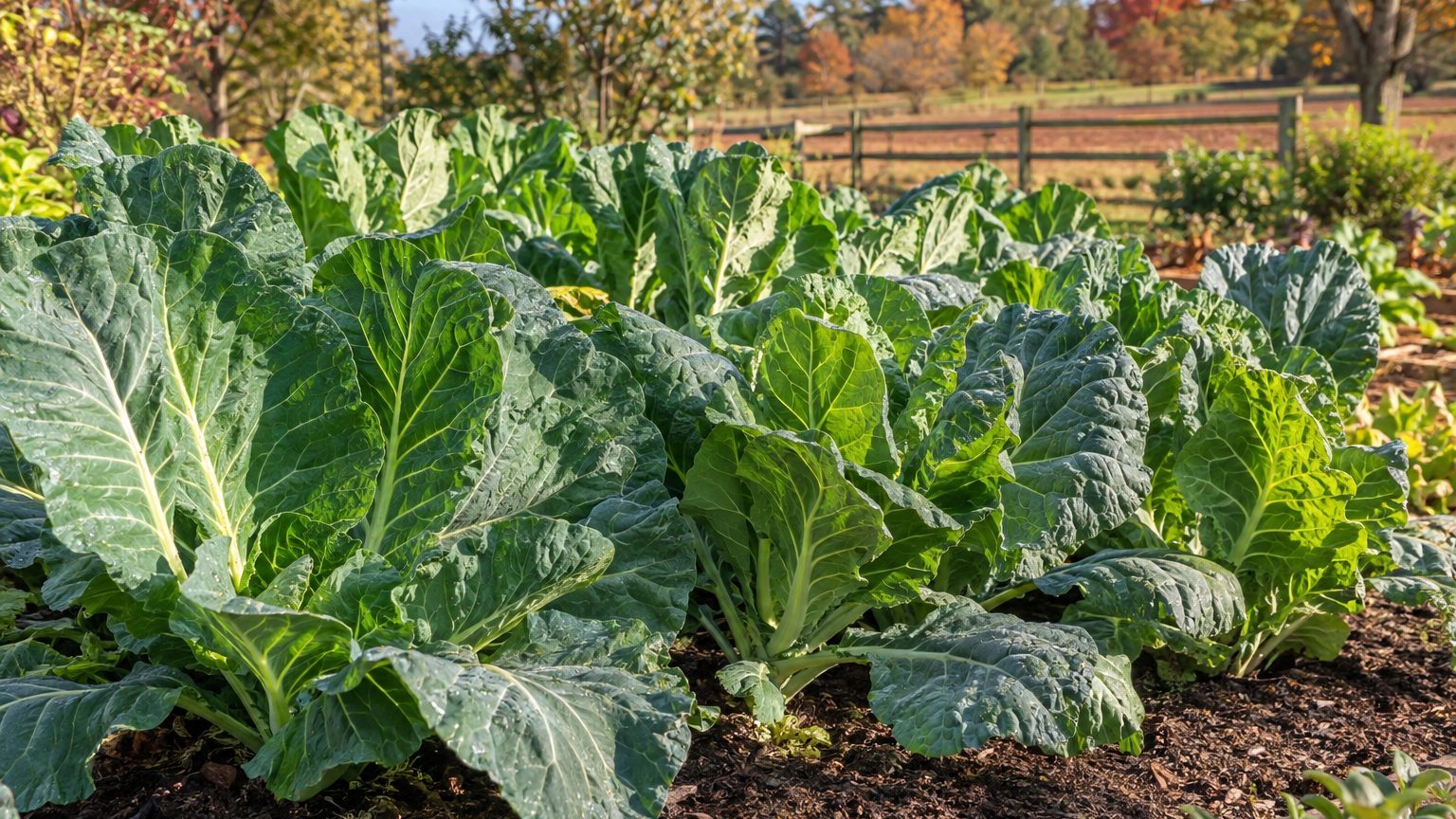

For most Pennsylvania gardens, the best collard is a cold-tolerant, medium-season open-pollinated type such as Vates or Champion, set out as transplants and harvested through fall. The big, slow Georgia-style types do well only where the season runs long. Kale and mustard make good companions, since they mature faster and share the same cold tolerance.
The short answer for Pennsylvania
At the Philadelphia reference station, the last spring freeze falls between March 29 and April 6, and the first fall freeze between November 5 and November 16. Those dates mark the band where the chance of a 32°F reading runs between 30 and 70 percent. A freeze can still land after the early date in spring or before the late date in fall. Philadelphia is the mildest corner of the state. The northern tier and the Alleghenies run two to four weeks later in spring.
That long window favors collards, which are a cool-weather crop anyway. They take light frost without damage, and the leaves turn sweeter after a few cold nights. The practical decision is about plant type and speed. Pick for cold tolerance first, then for how long the variety needs to reach full size.
| Type | Examples | Fit for Pennsylvania |
|---|---|---|
| Compact, cold-hardy, open-pollinated | Vates | Best all-round choice; reliable across most of the state |
| Standard medium-season | Champion | Good for spring or fall planting where summers run warm and humid |
| Large, old-style Southern | Georgia Southern | Southeast only, and planted early; needs the longest season |
| Loosely heading | Morris Heading | Worth trying as a fall crop in the south and center |
| Other greens | Kale, mustard, turnip greens | Faster backups when a collard planting runs behind |
Our full guide to Growing Collards in Pennsylvania covers soil, feeding and harvest. Timing for each season is laid out in When to Plant Collards in Pennsylvania.
What will not work here
Planting a slow, large-framed collard late is the most common failure. These varieties want a long stretch of steady growth to fill out. Set them out in June in the northern tier, where spring runs two to four weeks late, and the plants are still small when hard frosts arrive. You get a few picked leaves instead of a full crop.
Counting on winter survival is the second. The mean daily minimum of the coldest month at the Philadelphia reference station is 26.0°F. That is an average, so many January nights fall well below it. A mulched collard in the southeast corner may come through a mild winter with tattered leaves, but a crop planned around that is a gamble. Across the colder zones of the state, treat collards as a crop that ends with the hard freezes of December and January.
Why does close spacing fail in humid summers?
Pennsylvania summers are humid, and wet leaves stay wet. Crowd collards into a tight block and air barely moves through the canopy. That invites leaf spots and black rot, which show up as yellow wedges and dark blotches on the leaf edges. Give each plant about 18 inches in the row. Water at the base in the morning so foliage dries by afternoon.
Heat is the other half of the summer problem. A spring planting that matures into July slows down in the warm spell, turns tougher and gets more bug pressure from cabbageworms and aphids. Fall plantings avoid most of that, because the leaves fill out as nights cool and the pests fade.
Early transplanting without protection also backfires. Because freezes remain possible after the early April dates, a March transplant set out bare can take repeated hits. Collards tolerate light frost, but young plants taken through a hard freeze often stall or bolt later. A row cover is cheap insurance for early plantings.
What changes across Pennsylvania
Pennsylvania spans USDA hardiness zones 5a to 7b. The USDA system is built on one variable, the average annual extreme minimum temperature. So there is no single answer for the state. The coldest northern and high-elevation spots sit at one end of that spread, and the Philadelphia area and the southeast sit near the other.
The dates in the previous sections are anchored to Philadelphia, the mildest corner. Other parts of the state differ, and the shift is mostly later spring dates. A gardener in the northern tier or up in the Alleghenies should push spring plantings back by two to four weeks. Start seed indoors on a later schedule, favor the fastest cold-hardy varieties, and keep row cover on hand for late spring freezes.
Fall matters more as you move north or uphill. A collard planted in midsummer gets cool nights in time to fill out. In the colder zones, count on it for the main crop and treat the spring planting as a bonus. In the southeast, both seasons work, and a mulched fall planting may survive part of the winter. The USDA Plant Hardiness Zone Map lets you look up your own location by ZIP code, so check it instead of guessing.
Where to check this for your own county
Penn State Extension is the place to confirm everything above for your own ground. Look for two things there. The first is the local vegetable planting calendar, which gives sowing and transplanting windows built for the area around your county. The second is the vegetable variety trial results, which show which collards and other brassicas actually performed in nearby fields.
Most counties have an extension office with staff or Master Gardeners who answer questions about frost dates, soil and pests. A call or email is worth the effort when you are deciding between two varieties or planning an early planting.
A county recommendation beats a state one. Pennsylvania has cold mountain valleys, river-bottom frost pockets and warm southeastern suburbs, and a statewide article has to average across all of them. The dates and variety advice here are the state-level view. When your county office gives different dates, go with theirs.
Checking this against your own garden
Your own observations outrank every date in print. Three things are worth watching, and none needs equipment beyond your hands and eyes.
- Soil warmth by feel. Push your hand into the bed in early spring. Cold, clammy soil that chills your fingers means seedlings will sit and wait. A bed that feels cool but crumbly and dries quickly is ready. South-facing slopes and raised beds warm first, which tells you where to plant earliest.
- First true leaves. Watch the seedlings for the pair of leaves that follows the seed leaves before you move them outdoors. Tall, floppy seedlings mean too little light or too much warmth indoors. Short, sturdy ones with thick leaves are on track.
- Frost on the grass. On clear fall mornings, see where frost shows first. Low spots and open fields frost earlier than ground near a house or under tree cover. That pattern shows how much extra time a fall planting gets in each spot.
Keep a simple notebook for a season or two. Write down when the soil felt workable, when transplants took off and when the first frost hit. After a couple of years, your own dates will be sharper than any published range.
Common questions
Can collards survive a Pennsylvania winter?
Sometimes, in the southeast, with mulch and a mild winter. The mean daily minimum of the coldest month at Philadelphia is 26.0°F, so cold nights are routine. In the northern tier and at elevation, plan on the plants ending with the hard freezes.
Which collard variety is the safest pick?
A compact, cold-tolerant open-pollinated type such as Vates is the safest all-round choice across the state. Champion is another solid option. Reserve large Georgia-style varieties for the southeast, planted early.
Do collards really taste better after frost?
Yes. Cold nights sweeten the leaf and soften bitterness. A light frost improves flavor, and a hard freeze can start to damage the leaves.
What greens can I grow if my collards run late?
Kale, mustard and turnip greens mature faster and handle the same cool weather. They work well as a second planting in midsummer for a fall harvest, or as a quicker spring crop in the north.