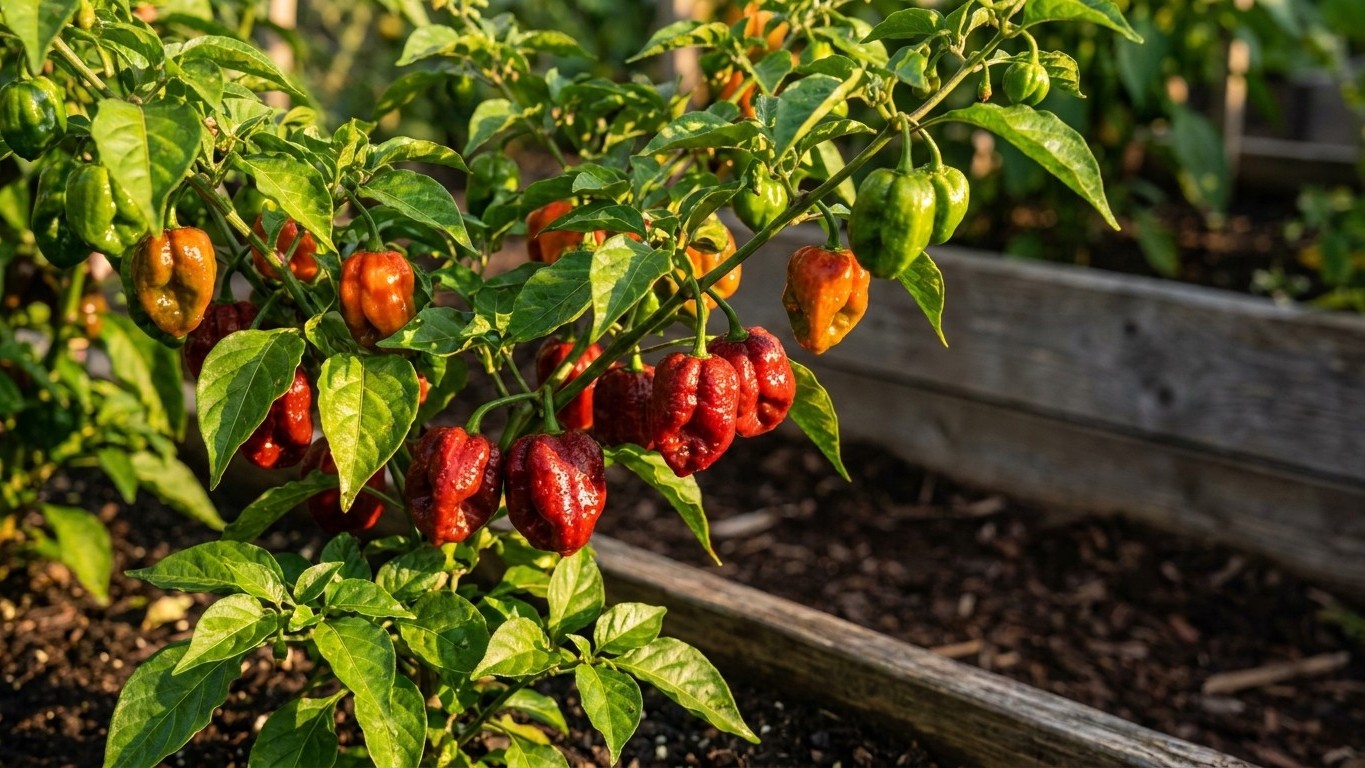

Vermont peppers get eaten at four stages: as seedlings, as fresh transplants, as leafy plants in midsummer, and as fruit near harvest. The damage follows the plant’s stage more than the month on the calendar. Burlington’s mean last spring frost falls between April 30 and May 10, and the hills and the Northeast Kingdom run substantially later. For the full crop plan, start with Growing Peppers in Vermont.
Which pests attack pepper in Vermont
The species that matter differ from one Vermont garden to the next, so the most useful sort is by how the damage happens. Some pests cut seedlings at the soil line. Others chew holes in leaves, drain sap from the undersides, or scar the fruit. University of Vermont Extension is the service that names which species are active in the state, and its county-level advice carries more weight than any national list.
Plenty of pests on national lists have no business in a Vermont pepper bed. Orchard and shade-tree insects feed on wood and foliage of other plants, and peppers are not their host. Pests of long, hot southern seasons need far more summer heat than Vermont provides. Burlington, the mildest corner of the state, averages only 5.4 days a year at 90°F or higher, and the hill towns see fewer.
That leaves a short working list of feeding types, which is easier to use than a long list of Latin names.
- Soil-line cutters that sever young stems overnight.
- Leaf chewers that leave ragged holes.
- Sap-feeders that cluster under leaves and on new growth.
- Fruit feeders that scar or tunnel into peppers.
Knowing the type is enough to choose a response. The exact species only matters if you decide to treat, and at that point a local identification is worth far more than a guess from a photo.
Garden pests are not the only things that eat pepper. Larger animals such as deer, rabbits and woodchucks browse young plants in many Vermont yards. The damage is easy to tell apart, because whole stems and leaves vanish at a uniform height instead of showing small holes or stippling.
When each one shows up, and what it does first
The calendar starts with the transplant date, which depends on your frost date. Peppers need 8 to 10 weeks indoors, and they go out when the soil reaches 60°F, after frost. At Burlington that usually means after the last spring frost. Higher ground runs later still. Pest timing is easiest to read from that moment.
Indoors and in the first days after transplanting
Indoors, the first sign is usually sticky leaves or crinkled new growth, which points to sap-feeders that came in on purchased plants or on the soil. Right after transplanting, the first sign is a seedling lying flat with the stem cut cleanly at ground level, with no wilting beforehand. Cutters work at night, so the plant looks fine at dusk and is gone by morning. Larger animals strike in the same window, because tender new transplants are the easiest meal in the garden.
Through flowering and fruit set
Once plants are established, leaf chewers and sap-feeders build up slowly. You will first notice a few holes with ragged edges, or leaves that turn pale and speckled, with the cause hiding on the undersides. Flowers appear after that. Weekly checks of leaf undersides and growing tips catch most trouble while it is still small, and they cost nothing.
Fruit and harvest
Peppers are ready about 70 to 85 days after transplanting, according to Clemson Cooperative Extension. In a short Vermont season, that puts the first harvest late in the summer, and fruit damage tends to appear then: scarred skin, small entry holes, or soft spots that start at a puncture. Fruit that sits on the ground gets more attention from slugs and other crawling pests, so staking or caging helps. Cool, wet weather late in the season can also leave peppers exposed to rot after minor feeding damage.
Varieties that ripen in fewer days spend less time exposed at the end, which is one reason to read Pepper Varieties That Ripen in a Vermont Season before ordering seed.
Telling the damage apart from everything else
Many pepper problems look like insect damage and aren’t. A plant dropping flowers or yellowing leaves can have a bug on it and a different problem underneath. The table sorts common symptoms by likely cause and by the check that settles it. None of it replaces a look at your own plants by an extension educator, who can tell you what is actually in your garden.
| What you see | Possible causes | What settles it |
|---|---|---|
| Seedling cut off at the soil line | Soil-line cutter, or a stem rotting from damp soil | A clean cut with the top part lying nearby points to a cutter. A pinched, thin, wet stem points to rot. |
| Ragged holes in leaves | Leaf chewer, wind, hail | Chewers leave droppings or slime and the damage keeps spreading. Weather damage appears all at once and stops. |
| Speckled, pale or sticky leaves | Sap-feeder, water stress, nutrient shortage | Check the undersides with a hand lens. Nutrient problems show a pattern on older or newer leaves, not tiny moving pests. |
| Wilting at midday that recovers by evening | Heat or dry soil | Push a finger into the soil. If plants stay limp after evening, the roots or stem may be the issue. |
| Flowers drop, no bite marks | Fruit set failure from temperature | Fruit set fails when nights fall below 55°F or days rise above 90°F. Watch your own night lows, since cool nights vary a lot from one Vermont valley to the next. |
| Sunken or soft spots on fruit | Insect puncture, disease, uneven watering | Look for an entry hole or tunnel. A smooth, leathery spot at the blossom end usually points to a water issue. |
If flowers keep dropping and no insect is visible, Why Peppers Fail to Set Fruit in Vermont covers that problem in detail. Bring a sample to the extension office when the cause is still unclear. A leaf with the damage on it, in a sealed bag, tells them more than a description does.
What actually works here, and what is a waste of time
On a short season, a barrier at the right moment does more than any treatment. Transplant only when the soil reaches 60°F, after frost. Peppers set into cold soil stall, and a stalled plant is the one pests find first. Hardened-off transplants that go in at the right time grow past the vulnerable stage faster.
A few other measures hold up well:
- A collar around each transplant stem keeps soil-line cutters from reaching it.
- Floating row cover over new transplants blocks many crawling and flying pests, though it must come off when flowers open or the weather turns hot, since heat under cover can pass the 90°F line that harms fruit set.
- Weekly checks of leaf undersides and growing tips catch trouble while it is small.
- Hand-picking works fine on a home-scale bed.
- Clearing plant debris in fall and rotating the bed each year cuts down pests that overwinter nearby.
For fencing against deer, rabbits and woodchucks, a physical barrier is the only thing that holds up. Repellent sprays wash off and need constant reapplication.
Several common habits waste time. Spraying on a schedule without knowing what you are treating tends to miss the target and can harm beneficial insects. Homemade sprays from the kitchen cabinet vary so much in strength that they sometimes burn leaves and rarely do the job. Planting early to get a jump on the season usually backfires, because frost and cold soil cost more plants than any insect does. If a treatment is warranted, University of Vermont Extension knows what is currently registered in the state, so ask before buying anything.
Where to check this for your own county
University of Vermont Extension has offices around the state, and the one nearest your garden knows what is moving through your area this season. Pest pressure varies inside Vermont, and a species common in the Champlain Valley may be rare in the Northeast Kingdom. Burlington’s frost dates also run well ahead of the Green Mountains and the Northeast Kingdom, so your calendar may start weeks later.
Statewide information tells you what is possible in Vermont. It does not tell you what is in your rows. A pest documented across the state can be absent from your yard, and the reverse also happens.
When you call or visit, bring the plant stage (days since transplanting), a clear photo or a sealed sample of the damage, and a note on where in the bed it appears. Those three details narrow the cause quickly. Your next step is to write down your transplant date this season, then check leaf undersides every week from that day forward.
Common questions
When should I start watching for pests after transplanting?
From the first night outside. Soil-line cutters and browsing animals go for fresh transplants right away, and sap-feeders and chewers build up as the plants grow. A weekly look at leaf undersides until harvest is enough for most gardens.
Why are my pepper flowers dropping if nothing is eating them?
Temperature is the usual cause. Fruit set fails when nights drop below 55°F or days climb above 90°F. Burlington averages 5.4 days a year at 90°F or higher, so cool nights are the more likely problem in much of Vermont. Track your own night lows, since they differ between valleys and hillsides.
How should I store peppers I have picked?
Clemson Cooperative Extension gives the best conditions as 45 to 50°F with 80 to 90 percent relative humidity, for two to three weeks at most. A household refrigerator is colder than that, and below about 45°F peppers pit and soften from chilling injury. A cool pantry or basement is a better spot, and fruit with insect damage keeps poorly in any case.
Who can tell me which pest I have?
University of Vermont Extension. Bring a sample or clear photos, plus the date you transplanted and where in the bed the damage began. Identification comes first, and any treatment decision should follow it.