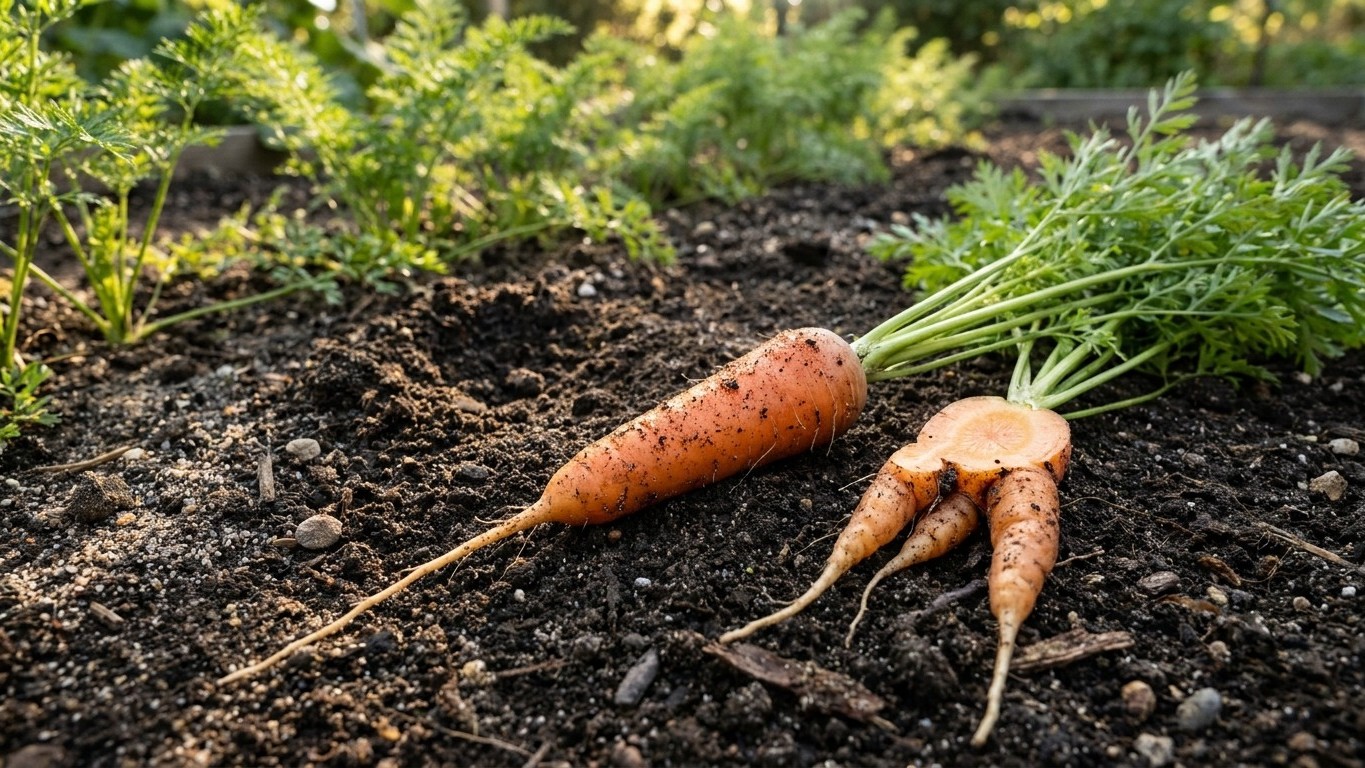

Pull carrots about 65 to 75 days after planting, according to Clemson Cooperative Extension, then get them cold fast. Seed packets run longer, usually 70 to 100 days, and both counts start the day the seed goes into the ground. Carrots are sown in place and never transplanted. Once the roots are out, a different clock starts. With the tops on, carrots keep about 10 to 14 days. With the tops cut off and the roots held just above freezing in damp air, they last far longer.
Keeping them, and for how long
Clemson Cooperative Extension’s Home & Garden Information Center gives the storage target in one line: store carrots at 33 °F and high humidity to prevent wilting. That is a single degree above freezing. It is far colder than a cellar, a pantry or a kitchen cabinet. A reader who stores carrots at 50 °F will lose them to sprouting and softening in a fraction of the time.
The humidity matters as much as the temperature. A carrot is mostly water, and dry air pulls that water out through the skin. The root goes limp and rubbery long before it spoils. Air that stays damp keeps the root crisp. A perforated plastic bag, or a bag with a damp paper towel inside, gives the roots that damp air without letting water pool around them.
Why do you cut the tops off carrots before storing them?
The leaves keep working after the carrot is out of the ground. They keep drawing moisture out of the root, which is why Clemson says bunched carrots, meaning plants with the tops still on, store for only about 10 to 14 days. Cut the tops off the same day you pull the roots, leaving a short stub at the crown. The greens go to the compost pile or the chickens, and the roots stop losing water through them.
How long do trimmed carrots keep?
Trimmed carrots keep much longer than bunched ones, and in the best case that means months. Treat that as a ceiling reached only when everything goes right: the temperature stays just above freezing, the air stays damp, and the skins are unbroken. Every warm week, every dry spell and every nick from a fork or a pest shortens the time.
Roots that were chewed on in the garden are the first to go soft. If you saw tunnels or scarring at harvest, eat those carrots first. What Eats Carrot in South Carolina, and When explains which pests leave which marks.
Check the bag every week or so. A soft carrot gives off moisture and spreads mold to the roots touching it, so pull it out the moment you find one. Anything firm that snaps cleanly when bent is still good, even if it is a little dull on the outside.
Where in the house that actually is
The refrigerator crisper drawer comes closest. A domestic fridge runs colder than some crops tolerate. Tomatoes, basil and sweet potatoes suffer chill damage in there, but carrots are happy at fridge temperatures. The fridge also holds the humidity best, especially in a drawer with a vent you can close. For most households it is the only room in the house that reaches the temperature carrots need.
Every other spot misses in one direction or the other. A pantry, a kitchen cabinet or a mudroom in a heated house sits far above 33 °F, and the carrots sprout and soften in days or a few weeks. A garage swings with the weather. In a Deep South summer it can run hot by afternoon, and in a cold snap it can drop below freezing overnight. A frozen carrot turns mushy when it thaws. Basements are uncommon near the coast, where the ground stays wet, and where one exists it is usually still warmer than the roots want.
Fridges also vary from one model and one shelf to the next. The area near the back wall or a cold-air vent can sit at freezing while the front of the same shelf is several degrees warmer. Leave a thermometer in the crisper drawer for a full day before harvest day, set in a glass of water so it reads the temperature of the contents and not the air that rushes in when you open the door. If you skip the check and the drawer runs at 32 °F or below, you will find out when the carrots go translucent and limp.
If the reading is near 33 °F, you are set. If it runs warmer, turn the dial colder or move the roots to a shelf closer to the cold source, then check again the next day. Keep the carrots away from apples and pears, which give off ethylene gas and can turn carrots bitter.
Common questions
How do I know carrots are ready to pull?
Count from seeding, then check the roots. Clemson puts harvest at about 65 to 75 days after planting, while packet dates run 70 to 100 days from the day the seed goes in. Brush the soil back from one shoulder. If the top of the root has reached the width the packet describes and the color is deep, pull a few and taste them. Small carrots are sweet and tender, so there is no harm in harvesting early. For a closer read on timing and the rest of the crop, see Growing Carrots in South Carolina.
Can carrots stay in the ground instead of going in the fridge?
For a while, yes, as long as the soil stays cool and drains. A root in the ground is still sealed in damp soil, which is a kind of storage. The risks are heat, standing water and whatever lives in the bed. Pests keep working on roots you leave behind, and heavy rain can split a root that has been sitting. Pull what you will eat in the next week or two and take up the rest once the weather turns warm or wet.
Will forked carrots keep as well as straight ones?
They keep as long as the skin is whole, but they are harder to clean and peel, so use them first. Forking comes from the ground. Utah State University Extension says carrots want deep, sandy, well-drained soil rich in organic matter, and that heavy or rocky soil makes the root fork. South Carolina’s representative state soil, the Bohicket series, is a heavy clay and silt (35 percent clay, 48 percent silt, 17 percent sand) that is very poorly drained. That is a poor match for carrots. Your own bed may be different, so test it. Fill a straight-sided jar a third full with soil, add water, shake, and let it settle. Sand drops in about a minute, silt in a few hours and clay over a day or more. If clay is the thickest layer, build a raised bed or double dig with plenty of compost. Will Carrots Fork in South Carolina Soil? goes through the options.
Should I wash carrots before storing them?
Brush off the loose soil and leave the rest. A hard scrub can scrape the skin, and bagging wet roots invites mold. If the carrots are caked in mud, rinse them and let them dry completely on a towel before they go into a perforated bag. Dry roots with an intact skin keep longest, and a quick rinse just before cooking does the real cleaning.