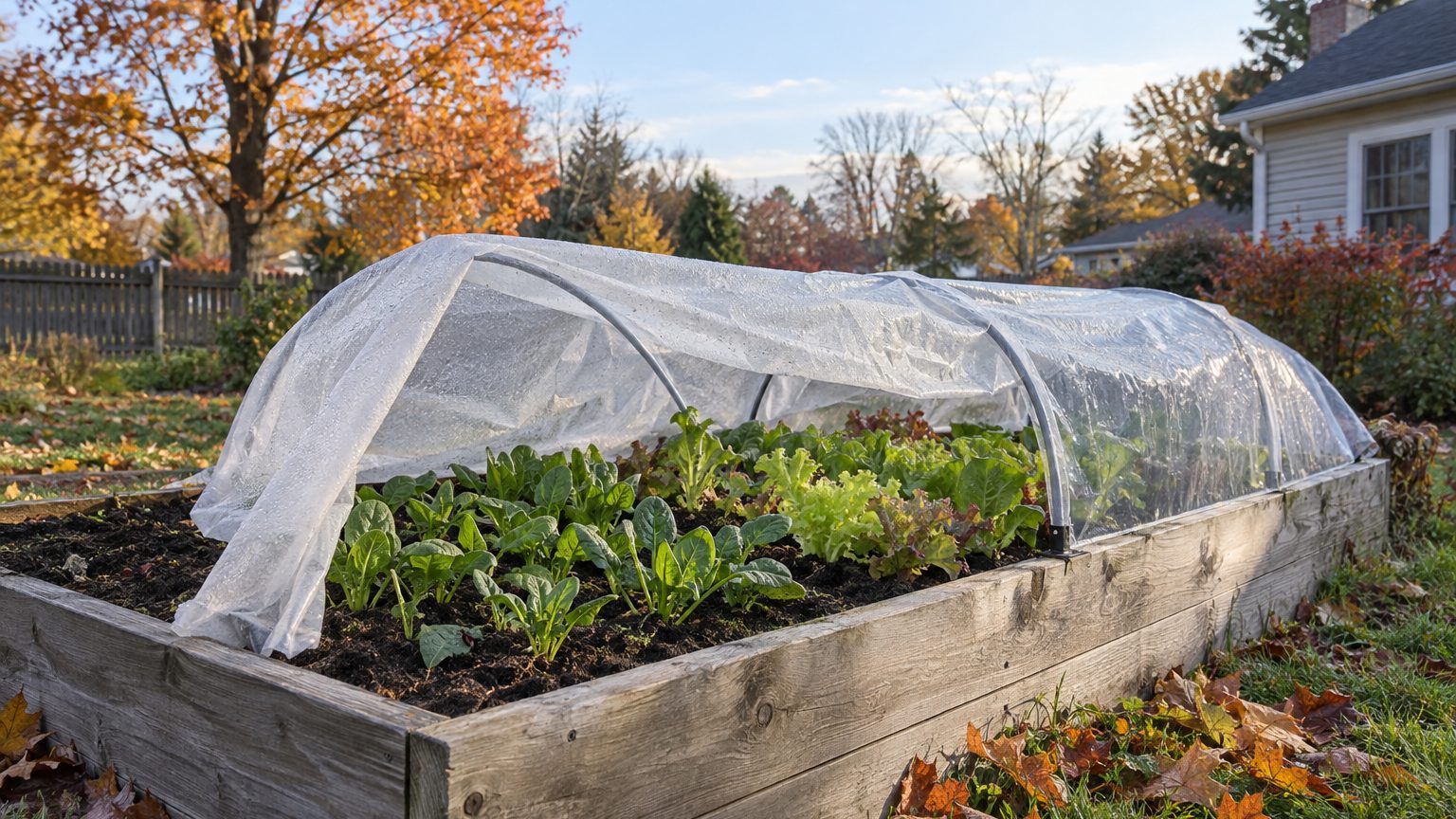

In Moncton, the mean last spring frost falls on May 23 and the mean first fall frost on October 2. Covers can stretch both ends of that window a little, but they cannot erase the frost or the short days that follow it. Season extension in New Brunswick works best when you plant by soil temperature, add a second layer for fall, and give every closed cover plenty of air.
When the soil is warm enough in New Brunswick
When does the last spring frost fall?
At the Moncton station (Environment and Climate Change Canada, 1981-2010 normals), the last spring frost comes on average on May 23. That is a mean date. In about one year out of two, the last frost lands later. Treat May 23 as the middle of a window that runs well into late May and sometimes beyond, and plan your tender crops for the far side of it. The Moncton figure also speaks for the southeast. Northern and upland districts of the province run weeks behind it.
Why does soil temperature matter more than the frost date?
Frost date tells you when freezing air stops threatening leaves. It says little about the ground, and seeds and roots respond to the ground. Soil warms after the frost risk ends, because spring sun has to heat a mass of wet, cold earth that took all winter to chill. In the Maritimes, where spring tends to arrive slowly and damp, that lag can stretch for weeks.
A soil thermometer settles the question. Push it 2 to 4 inches down in the morning, when the reading is at its lowest. Peas, spinach, and lettuce will germinate in soil in the low 40s °F (about 5 °C), though slowly. Beans, squash, and tomato transplants want soil closer to 60 °F (about 16 °C). Planting them into cold, wet ground gives you stalled seedlings and rotted seed, whatever the calendar says.
What does a cover actually do in spring?
A cover works by trapping heat. Soil soaks up sun all day and gives that warmth back after dark. Fabric or plastic over the bed slows the loss and holds still air against the plants. The gain is real, but it varies with the material, the night, the wind, and how warm the ground was at sunset. A clear, calm night gives the smallest gain, because heat leaves fastest under open sky.
A cover moves the frost limit a little. It does not make a crop frost-proof, and a hard freeze can still take a bed that was “protected.” Keep everything passive: sun, soil, and trapped air do the work. Never put a heater, lamp, or flame inside a covered structure. The fire and carbon monoxide risks are real.
The same cover can warm the soil before you plant. Lay clear plastic or fabric over the bed one to two weeks ahead and check the thermometer under it. A closed cold frame needs venting on any sunny spring day, even a cool one. Shut in full sun, it can cook its contents within an hour. Prop the lid open in the morning, and close it again before the evening chill.
How long the season lasts here
The Moncton station has a mean last spring frost on May 23 and a mean first fall frost on October 2, but in one year out of two the frost falls later than these dates. Because both dates are means, half of all years run shorter at one end or the other. A cool spring and an early fall frost can take weeks off the figure.
What does a window that length allow?
It allows one full crop of nearly everything, and a second sowing of the quick ones. Lettuce, radishes, spinach, and bush beans go in more than once, because they mature in a matter of weeks. Sow a short row every two to three weeks and you harvest steadily instead of all at once. The succession sowing guide on this site gives the spacing between sowings and the last safe date for each crop.
Long-season crops are a different matter. Winter squash, melons, peppers, and late sweet corn need most of the window just to finish, and a cold June eats into the margin. These are the crops where a cover earns its keep, by letting you set plants out earlier and hold them later.
Is transplanting worth it with a window this short?
For tomatoes, peppers, and eggplant, yes. They need so many weeks from transplant to ripe fruit that starting from seed in the garden would use up the whole window. Start them indoors, harden them off, and set them out once the soil has warmed.
For root crops it is a poor bargain. Carrots, beets, parsnips, and radishes sulk when their taproot is disturbed. Sow them in place under a light cover and let the fabric do the early work. The packet’s days to maturity count from sowing for these crops. For transplanted crops, the count starts when the plant goes into the bed.
A short window also makes the fall end worth guarding. A cover thrown over beds on a frosty night in late September can carry greens and brassicas past October 2 and often well beyond. Our guide Extending the Season: What a Cover Buys, and What It Cannot covers the limits in more detail. Another Maritime province, Extending the Growing Season in Prince Edward Island, deals with a similar damp, coastal climate, and Extending the Growing Season in Yukon shows what happens when the window shrinks much further.
Heat and water in New Brunswick
Is heat a problem in a New Brunswick garden?
Rarely. Moncton sits near the coast of a northern, maritime province, and summer heat is not what limits a bed here. A scorching stretch can still matter inside a closed tunnel or frame, where the air heats far past the outdoor reading. The usual summer problem is the opposite: cool, damp weather. Cool nights and humid air bring powdery and downy mildew, late blight on tomatoes and potatoes, and gray mold on anything crowded. Fruit ripens slowly, and tomatoes can sit green into September.
Water works differently under a cover. Rain passes through most fabric but not through plastic, so a low tunnel can be dry underneath even in a wet week. Check the soil by hand and water in the morning, so leaves dry before evening. Wet foliage in cool, still air is how most of the diseases above get started.
How does latitude change what a cover can do?
Moncton sits at 46.11 degrees north (Moncton A station). That latitude sets the date when daylight drops below the length plants need to grow. It happens as the days shorten in fall, when daylight is clearly dropping. After that point a cover holds a crop alive instead of growing it. Spinach, lettuce, and kale under a frame in December are being stored in place, and you harvest what you grew in October. Gardeners well north or south of Moncton should check their own latitude, because the date moves with it.
The coldest month sets the second limit. In Moncton the mean daily minimum of the coldest month is -13.9 °C (6.9 °F). That is the average low, and individual nights run colder. A light floating fabric handles the frosty nights of spring and fall, but not a night like that in January. For winter holding you need a framed structure, ideally with a second layer inside it, and the hardy crops only: spinach, mâche, kale, and similar greens. Even then a severe cold snap can reach inside.
Moncton falls in Canadian hardiness zone 5a (Natural Resources Canada, 1991-2020 normals). That is the Canadian system, built on several climate variables, and it does not convert to a USDA zone. Use it to judge which perennials survive the winter. Season extension depends on frost dates, daylight, and the cold of the coldest month.
Which season extension suit New Brunswick
What type of cover fits a short season?
The simplest types lead, because every week counts and every layer you add costs time. Floating fabric laid straight over the bed goes on in a few minutes and gives the soil a head start in spring. Low tunnels and cold frames go further for early greens and hardening off. Taller framed tunnels suit the gardener who wants to hold crops into December. The table sets out how they differ.
| Type | Best use in New Brunswick | Main watch-out |
|---|---|---|
| Floating fabric on the bed | Late spring and early fall frosts, protection from insects | Little help in a hard freeze or in deep winter |
| Low tunnel (hoops with fabric or plastic) | Warming soil early, early direct sowing, extending fall greens | Needs venting on sunny days; rain does not reach plastic |
| Cold frame | Hardening off, early lettuce, winter greens | Closed lid overheats fast; vent daily |
| Framed tunnel with inner layer | Holding hardy crops through the winter | Humidity and disease; holds crops, does not grow them |
How do humidity and airflow change the choice?
In a cool, damp climate, disease pressure should drive the decision more than any other factor. Pick structures you can open widely, and keep plants spaced so air moves between them. A tight, closed cover in a humid week breeds mildew and gray mold faster than it gains warmth. When you choose crops and varieties to put under cover, put disease resistance first on the list. In New Brunswick the heat risk comes mainly from a sealed structure on a sunny day, so airflow and venting solve both problems at once. Open every closed structure in the morning and close it in the evening, and treat that as a daily chore.
Which varieties should you grow under cover?
No variety recommendation belongs here, and the reason is practical. New Brunswick is not one climate. The Moncton station sits in the southeast, and districts in the north and uplands run weeks behind it, as do exposed spots and frost pockets in a single yard. The only recommendation that means much comes from varieties tried locally, over several seasons, in conditions like yours. Ask the provincial department of agriculture, or start with Agriculture and Agri-Food Canada, which points to regional growers and trial results. Local garden clubs and farmers at your market know which ones survived last year’s damp July.
Common questions
When can I plant tender crops outside in New Brunswick?
Wait until the soil, not just the air, has warmed. The mean last spring frost at Moncton is May 23, and half of all years run later, so tender plants like tomatoes and squash usually wait until the very end of May or into June. Put a thermometer 2 to 4 inches into the soil, and plant beans, squash, and tomatoes once the morning reading has reached about 60 °F (16 °C). Covers can help you plant a little earlier, but they cannot protect a tender crop from a hard freeze.
Can a cover make a crop frost-proof?
No. A cover traps heat the soil released overnight and holds still air against the plants, which shifts the damage limit a little. On a clear, still night with a hard freeze the bed can still be lost. Keep spare fabric on hand and add a second layer when the forecast turns cold. Never add a heater, lamp, or flame inside a covered structure.
Can I grow vegetables through a New Brunswick winter?
Hardy greens, yes, in a framed structure with an inner layer. The mean daily minimum of the coldest month at Moncton is -13.9 °C (6.9 °F), too cold for a light fabric alone. Once daylight is clearly dropping in fall, plants stop growing and the cover holds them alive. Vent the structure on sunny days, even in winter.
Why do my covered crops get mildew?
Cool, damp weather plus still air under a cover is the usual cause. Powdery and downy mildew, gray mold, and blight all spread when leaves stay wet. Open the cover on mild days, space plants so air moves between them, and water in the morning so foliage dries before dark.