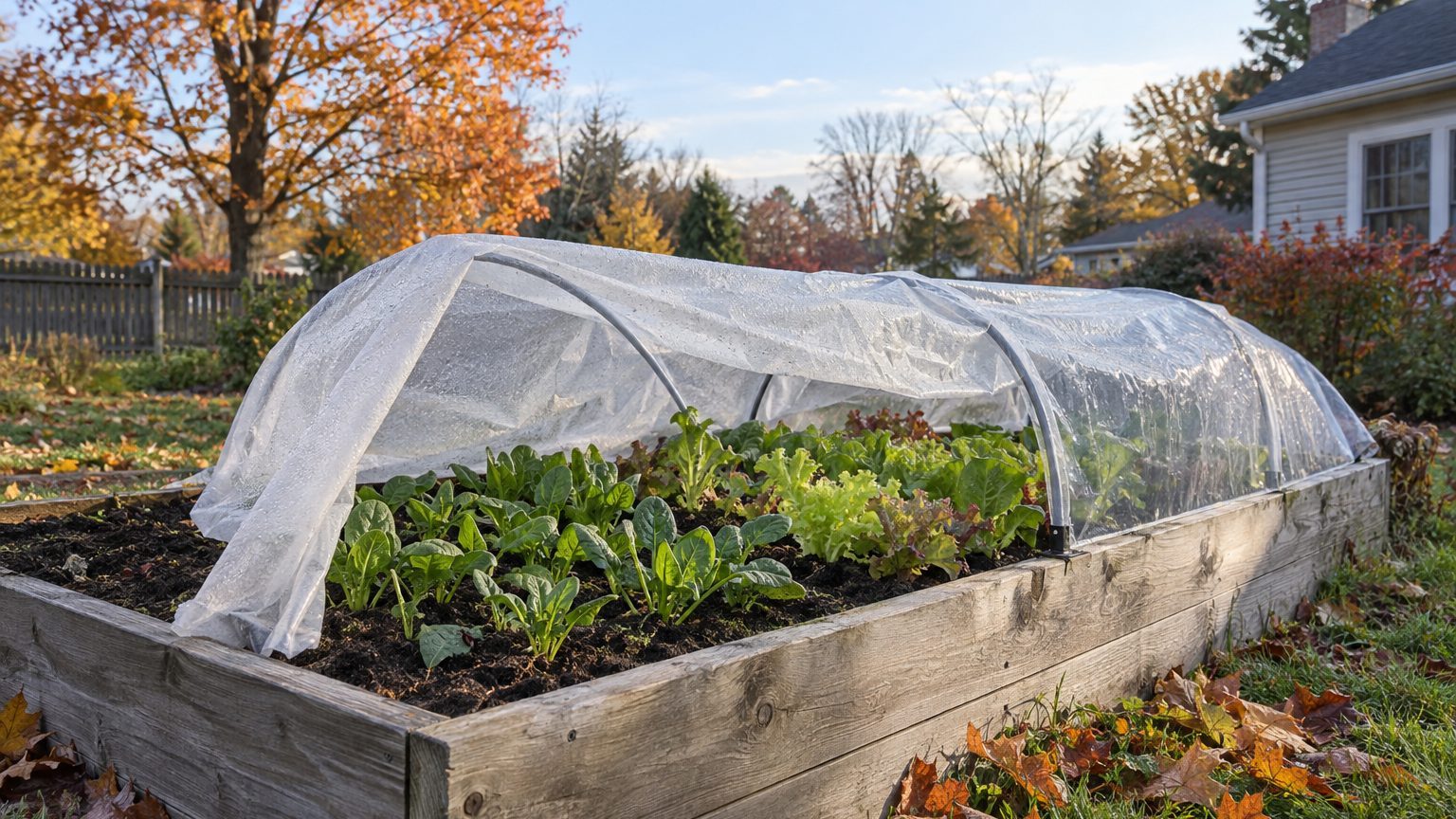

In North Dakota, covers let you sow earlier in spring and keep harvesting past the first fall freeze. The limits are cold and short days, not heat. At the Fargo airport weather station, the last spring freeze falls between May 4 and May 15, and the first fall freeze between September 25 and October 5. The soil, not the calendar, tells you when to plant.
When the soil is warm enough in North Dakota
The last spring freeze at the Fargo airport station falls between May 4 and May 15, according to the NOAA NCEI U.S. Climate Normals 1991-2020. That band marks where the odds of one more 32 F freeze sit between 30 and 70 percent, so any single spring can break early or late. Gardens in the suburbs and the countryside usually see the last spring frost one to two weeks later than the airport, and more at elevation. Check your own county before you write a date on the calendar.
A frost date describes the air. Seeds and roots respond to the ground, and the soil warms after the freeze risk ends, usually by a good margin. Cold, wet soil holds seeds in place and stalls transplants even on a pleasant afternoon. The practical test is a soil thermometer at planting depth, read in the morning. Compare the reading with the minimum soil temperature on the seed packet. Without a thermometer, wait until the bed crumbles in your hand instead of forming a sticky ball.
How does a cover warm the ground before planting?
Covers work passively. Sun heats the soil by day, and at night the soil gives that heat back. A cover traps part of it and keeps the air around the plants still, and a second layer, such as fabric over hoops inside a frame, adds another pocket of still air. The gain is real but variable. It depends on the material, the night, the wind and whether the ground was warm to begin with. Setting a cover over a bed a week or two before sowing gives the soil a head start.
A cover moves the frost limit a little. A hard freeze on a clear, calm night can still kill everything under it, so keep a spare layer of fabric handy through the whole frost window. For the general rules on what a cover buys, read Extending the Season: What a Cover Buys, and What It Cannot.
Ventilation is part of keeping the crop alive. A closed cold frame or tunnel in spring sun can cook its contents within an hour, even when the air outside is cool. Open it on sunny mornings and close it in late afternoon. Everything described here is passive. No heaters, lamps or candles belong inside any covered structure, because fire and carbon monoxide are real risks.
How long the season lasts here
The reference station has a mean last spring freeze of May 4 to May 15 and a mean first fall freeze of September 25 to October 5. Gardens away from the airport often lose a week or two at each end. Tomatoes, peppers, melons and other long-season crops get one run at that window, and a cover mostly helps them at the edges.
Is a second sowing realistic in North Dakota?
For fast crops, yes. Radishes, lettuce, spinach and similar cool-season crops can go in again in midsummer for a fall harvest. Count back from the first fall freeze using the days to maturity on the packet. Add extra time, because growth slows as the days shorten. A low tunnel or row cover then holds the crop past the first freeze. The succession sowing guide on this site shows how to space those sowings crop by crop.
The short window also changes whether transplanting pays. Seedlings set into cold ground sit still, and the weeks they lose can cost more than the head start gained. Crops that resent root disturbance, such as cucumbers, squash and beans, usually do better sown directly into warmed soil under a cover. Their packet days count from sowing. Tomatoes and peppers are different. Their days count from transplanting, so a late planting takes a bite out of a window that is already short.
Heat and water in North Dakota
Summers here are short and mild, and hot spells are brief. A count of days above 90 F is taken at a reference station such as the Fargo airport, and it describes that spot, not every corner of the state. For a northern garden, heat is a minor concern. Shade cloth and root cooling matter far less than they would in the South. What matters is light and cold together.
Do hot days or rain matter for covered crops?
Less than humidity does. In a cool, damp summer the trouble is mildew, slow ripening and leaf disease, and a covered bed makes each of them worse by holding moisture around the foliage. Leave the sides of a tunnel open on mild days. Space plants so air moves between them. Water at the base of the plant, early in the day, so leaves dry before evening. Cool spells that arrive with wet weather are the ones to watch.
What do short days and deep cold do to winter growing?
Latitude sets the date. The Fargo station sits at 46.93 degrees north, and farther north, near the Canadian border, daylight shrinks sooner. Each year there comes a point in fall when daylight drops below what leaf crops need to keep growing. After that, a cover holds a crop alive and stores it in the ground. It does not grow it. Growth picks up again once the days lengthen.
The cold decides what kind of cover is needed. The mean daily minimum of the coldest month at Fargo is 0.2 F. A light fabric alone will not carry anything through that, and only a framed structure that sheds snow and resists wind has a chance with hardy crops. The USDA Plant Hardiness Zone Map (2023) puts North Dakota in zones 3a to 4b. That system rests on one variable, the average annual extreme minimum, so zones differ across the state.
Gardeners in other regions face different limits. The page on Extending the Growing Season in Washington covers a mild, wet climate, and the one on Extending the Growing Season in California deals with heat and long seasons.
Which season extension suit North Dakota
Choose by type of cover and type of crop. The table sets four common structures side by side.
| Type | Best use | Main limit |
|---|---|---|
| Floating row cover | Frost margin in spring and fall | Light fabric alone will not carry crops through deep cold, and it needs anchoring against wind |
| Low tunnel | Warming soil before planting, hardy greens into late fall | Must be vented on sunny days and cleared of snow |
| Cold frame | Hardening off seedlings, early greens | A closed lid overheats quickly in sun |
| Framed high tunnel | Winter harvest of hardy crops | Must shed snow and resist wind, and light is still the limit in deep winter |
What matters most when picking crops and varieties?
A short season favors the earliest types, meaning quick-maturing and cold-tolerant crops that finish inside the window. Where summers are cool and damp, disease resistance comes first. A covered bed holds humidity, and a variety that shrugs off mildew saves you more than a few extra days of earliness. Where a hot spell does arrive, airflow and shade at the root keep a crop from stalling.
Local trials are the only recommendation that means anything, because a variety that performs in one part of the state can fail in another. North Dakota State University Extension and your county office know which ones have held up in your soil and your frost dates. Ask them what they have trialed, and plan your covers around their answer.
Common questions
When can I plant outside in North Dakota?
Wait until the soil at planting depth meets the minimum on the seed packet. At the Fargo airport the last freeze falls between May 4 and May 15, and the ground warms after that. Rural gardens often run one to two weeks later. A cover laid over the bed beforehand speeds up the warming.
Will a row cover protect plants from a frost?
It moves the limit a little. How much depends on the fabric, the wind, the night and how warm the soil was. A hard freeze on a clear night can still kill the crop underneath, so keep a second layer ready.
Can I grow vegetables through a North Dakota winter?
Hardy crops can be held alive in a framed structure that sheds snow and resists wind. In deep winter, daylight is too short for growth, so the structure preserves what you already grew. Fabric alone will not do it when the coldest month averages a daily minimum of 0.2 F at Fargo.
Do I need to open a cold frame on cool days?
Yes, whenever the sun is out. A closed frame can overheat in an hour, even if the outside air is cool. Open it in the morning, close it in late afternoon, and never add a heater or lamp inside.