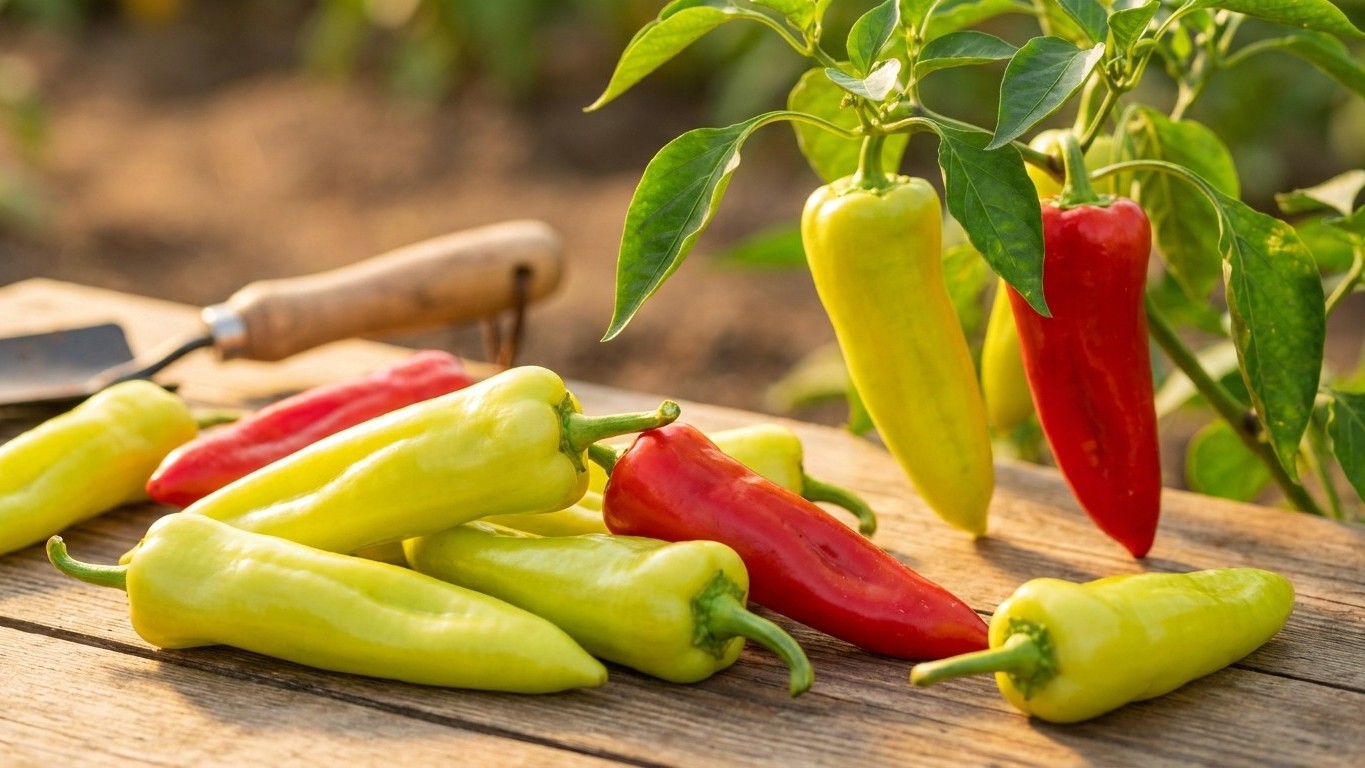

Pick peppers once the fruit reaches full size and feels firm, which usually happens 70 to 85 days after transplanting. Then keep them out of the refrigerator. Whole peppers store best at 45 to 50 °F, and a home fridge runs colder than that. The cold pits the skin and softens the flesh. A cool room with a thermometer in it beats the crisper drawer.
Keeping them, and for how long
Clemson Cooperative Extension’s Home & Garden Information Center puts it this way: “The optimal conditions for storage are temperatures of 45 to 50 °F and 80- to 90-percent relative humidity for two to three weeks.” The number to write down is 45 to 50 °F. You can read the full guidance in the Clemson pepper fact sheet.
Two to three weeks is a ceiling. It describes sound fruit held at the right temperature and humidity. A pepper that was bruised, sunburned or left on the plant too long will give up sooner. Plan on the shorter end, and eat the oldest ones first.
Why does the refrigerator damage peppers?
Peppers are a warm-season crop, and cold hurts them. Below about 45 °F they develop chilling injury. The skin pits, the flesh goes soft, and rot sets in at the damaged spots. A home refrigerator runs colder than the 45 to 50 °F range, so a whole pepper left in the crisper is sitting in the zone that causes the damage.
The trap is that nothing looks wrong at first. The pepper comes out of the fridge glossy and firm. A day or two later, once it warms up, small sunken dimples appear. Those are the cells that were hurt in the cold. Most people blame the pepper or the garden. The fridge did it.
How much humidity do stored peppers need?
The 80 to 90 percent range is humid air, damper than most indoor spaces. Peppers lose water through their skin, and dry air turns them wrinkled and limp well before they spoil. A loosely closed container or a perforated bag slows that loss while still letting air move. A sealed bag traps moisture and invites mold, so leave it open somewhere.
Cut or cooked peppers are a different case. Once the skin is broken, the fridge is the right place, and the pieces should be used within a few days.
Where in the house that actually is
Few homes have a spot that sits at 45 to 50 °F. The refrigerator is too cold for whole peppers. A heated kitchen or living room is too warm, and the fruit ripens, softens and shrivels quickly there. A garage swings with the weather, warm on a sunny afternoon and cold on a clear night, and the swings wear the fruit out.
Which room comes closest?
Usually a cool, unheated interior space. Think of a pantry on an outside wall, a basement or cellar, or a mudroom that gets little heat. In central and eastern Oregon, where nights turn cold early, a garage can drop to freezing, and frozen peppers collapse into mush. Keep them inside the house envelope there.
Avoid putting peppers beside the stove, on top of the refrigerator, or in a sunny window. Those spots add warmth and speed the decline.
What should you check with a thermometer?
Guessing by feel does not work, because a room that feels cool to a person can still be 55 or 60 °F. Set a thermometer where the peppers will sit and read it for a few days before you trust the spot. A min-max model is ideal, since it shows how low the room gets overnight and how high it climbs by afternoon. If the low stays at or above 45 °F and the high stays near 50 °F, you have a good storage spot.
If the room runs a little warm, expect a shorter shelf life and check the fruit every couple of days. If it dips below 45 °F, move the peppers to a warmer corner. Skipping the check is how people end up repeating the fridge mistake in a different room.
When are peppers ready to pick in Oregon?
Count from the day the transplant goes into the ground. Clemson Extension puts peppers at about 70 to 85 days after transplanting. Utah State University Extension says transplants need 8 to 10 weeks indoors first, and should go out when the soil reaches 60 F, after frost. A plant set out in early June would give first ripe fruit from mid to late August, as a rough guide.
The Portland reference station shows a mean last spring frost between March 6 and March 21, according to the NOAA NCEI U.S. Climate Normals for 1991-2020 (the 32F freeze probabilities, 30 to 70 percent band). Soil that cold is nowhere near 60 F, so frost-free is not the same as pepper-ready. Portland sits west of the Cascades. Central and eastern Oregon are high desert with a far shorter season, so do not apply the Portland window there. Your county extension office can give you local dates.
Heat matters too. Pepper fruit set fails at both ends: nights below 55 F or days above 90 F. Portland averages 11.9 days a year at 90 F or more, per NOAA NCEI Climate Normals for 1991-2020. That is a modest number, but a hot spell during bloom can still drop flowers. Summer night lows vary from one yard to the next, so watch your own thermometer on cool nights. Our guide to why peppers fail to set fruit in Oregon covers what to do when flowers fall.
Pick green peppers when they reach full size and feel firm. If you want red, yellow or orange fruit, leave them longer, since color comes late in ripening. Cut the stem with pruners instead of yanking, because branches snap easily. Harvest before the first hard frost, and pick any damaged fruit early, since pests that feed on pepper do more harm to fruit left hanging. For the full season from seed to harvest, see Growing Peppers in Oregon.
Common questions
Can I put peppers in the refrigerator at all?
Whole fresh peppers do better at 45 to 50 °F than in a home fridge, which runs colder and causes pitting and softening. If no cool room is available, the fridge is acceptable for a few days, as long as you accept some quality loss. Cut or cooked peppers belong in the fridge.
Should I pick peppers green or wait for color?
Both are fine. Green peppers are picked at full size while still firm. Colored fruit takes longer on the plant and needs more warm weather. If frost threatens, pick what you have and use the green ones.
How many days after transplanting until the first pepper?
Clemson Extension says about 70 to 85 days after transplanting. That count starts at the transplant date, not at sowing. Cool nights below 55 F or days above 90 F during bloom can delay fruit set and push harvest later.
How long will peppers keep in a cool room?
Clemson Extension gives two to three weeks at 45 to 50 °F and 80 to 90 percent humidity. That is the best case for sound fruit. Peppers with blemishes or bruises will not last as long, so check them every few days.