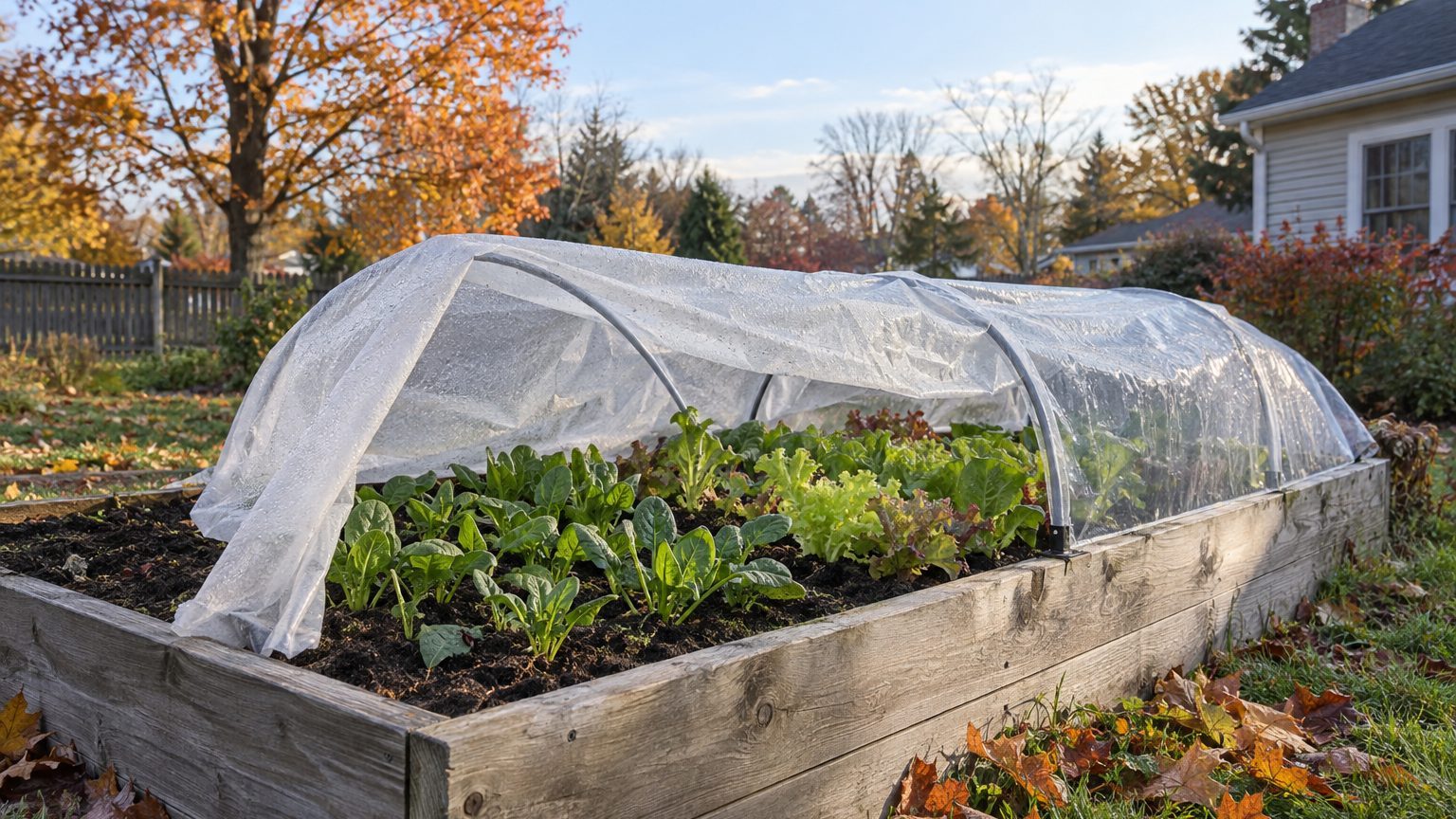

Season extension in Oklahoma pays off at both ends of the year: a few weeks in spring, a few more in fall, and hardy greens through winter. Summer is the reverse job, where covers mean shade and airflow. At the Oklahoma City reference station, the mean last spring frost falls between March 28 and April 10, and the first fall frost between October 29 and November 8.
When the soil is warm enough in Oklahoma
The date most gardeners ask about is the last spring frost. NOAA’s U.S. Climate Normals for 1991-2020 put it between March 28 and April 10 at the Oklahoma City airport station. That is the band where the chance of a 32 F freeze sits between 30 and 70 percent, so a freeze after April 10 can still happen. The numbers describe the airport. Suburban and rural gardens typically see the last spring frost one to two weeks later, and more at higher elevation.
Frost dates tell you when freezing air stops. Roots care about the soil, and soil lags behind the air. After winter it takes weeks of longer, sunnier days to bring a bed back up to working temperature. Warm-season seeds sown into cold ground sit and rot, and transplants set into it stall. The date that matters for season extension is therefore the day the soil is warm, and it arrives after the frost risk ends.
How does a cover warm the soil early?
Soil soaks up sunlight all day and gives that heat back after dark. A cover over hoops or a frame traps part of what the soil radiates and keeps the air around the plants still, so the heat does not blow away. Laying clear plastic or fabric over a bed a couple of weeks before planting also gives the ground a head start.
A calm, clear night is the kind that brings frost and also the kind where a cover helps most. A windy night lets heat leak out at every edge. A cover shifts the limit and leaves it in place, so a hard freeze can still get through to the plants beneath. Put covers on before sundown, while the soil still holds the day’s warmth, and anchor the edges so wind cannot lift them.
How do you tell the soil is ready to plant?
Push a soil thermometer in at planting depth first thing in the morning, when the ground is at its coldest, and do it over several mornings. One sunny afternoon proves nothing. Cool-season crops such as peas, spinach, lettuce and radishes can go in as soon as the bed is workable, with a cover on standby. Tomatoes, peppers, beans, squash and okra should wait until nights are mild and the soil has stayed warm for about a week. Crop-by-crop temperature targets are in the guidance from Oklahoma State University Extension.
Any closed structure needs ventilation, and that is a matter of keeping the crop alive. A shut cold frame or tunnel in spring sun can cook its contents, even on a chilly day. Prop the lid or pull back the sides every sunny morning. Keep everything passive: no heaters, lamps or candles inside a covered bed, because fire and carbon monoxide are real risks. For the wider picture of what covers can and cannot do, read Extending the Season: What a Cover Buys, and What It Cannot.
How long the season lasts here
The reference station’s mean last spring frost and mean first fall frost mark the frost-free window, and your own county can differ. That is a long window by national standards, and it changes how you plan.
| Event | Oklahoma City reference station | Suburban and rural gardens |
|---|---|---|
| Last spring frost | March 28 to April 10 | Often one to two weeks later |
| First fall frost | October 29 to November 8 | Often one to two weeks earlier |
A window this long allows more than one sowing of the same crop. Lettuce, radishes and spinach can go in early spring under a light cover, and a second sowing can follow in late summer for fall harvest. Beans, cucumbers and squash can follow the spring crops in the same bed. The succession sowing guide in this series covers spacing the sowings so harvests do not arrive all at once.
For fall crops, work backward from the first frost. Packet days to maturity for direct-sown crops count from sowing, so a crop that needs a long season has to be in the ground well before the first frost window opens. Subtract another week or two if your garden sits outside the city, where fall frost comes earlier. Transplanted crops count their days from transplanting. A cover at the end of the season does not make the crop grow faster, but it can hold lettuce, spinach and hardy brassicas in good condition for weeks past the first frost.
Heat and water in Oklahoma
Oklahoma summers are hot, and a cover that saves a crop in March can ruin it in July. Rain comes in bursts. Spring storms can drop a lot of water in an hour, and then long dry spells follow in summer. A bed under a cover gets none of it, so watering is by hand or drip, and a layer of mulch holds the moisture the soil does get.
How hot is too hot for a cover in Oklahoma?
Any closed cover turns into a trap once the sun is strong. Row cover fabric and plastic tunnels should come off in late spring for warm-season crops, except as shade. In summer, lighter shade cloth over a frame cools the plants and the soil at the root, and open sides let air move through. Tomatoes and peppers can drop their blossoms in extreme heat, and shade in the afternoon helps them hold fruit. Mulch keeps roots cooler. Water deeply and less often, because shallow watering brings roots to the surface where the heat is.
Does a cover work in an Oklahoma winter?
Winter is where light and cold both matter. Oklahoma City sits at 35.39 degrees north. At that latitude the days in midwinter are short enough that most crops stop growing. A cover at that point holds a crop alive rather than growing it. Spinach, kale, carrots and other hardy crops stay in good shape under cover and can be harvested through the winter, but they do not put on much new growth until the days lengthen again. Gardeners in the far north of the state or in the panhandle should check their own latitude, because they sit at a different point on the curve.
The coldest month decides how heavy that cover needs to be. At Oklahoma City, the mean daily minimum of the coldest month is 27.0 F, so a typical night in midwinter drops below freezing. A light fabric is usually enough for hardy greens on an ordinary night. The cold snaps that come with clear skies and wind call for more: a framed structure with a second layer inside it, and a cover sealed at the edges. Even then, the structure cannot make a crop frost-proof.
The USDA Plant Hardiness Zone Map (2023, built on 1991-2020 data) shows zones 6a to 8a across the state. The map uses a single variable, the average annual extreme minimum temperature, so it tells you whether perennial plants survive the winter, not how a fall lettuce bed will do. Use the reference city for planning and the zone for your own county as a check on it.
Which season extension suit Oklahoma
Choose by type first. Oklahoma has a long season, so you are not squeezing a crop in before the first freeze. You are making early and late sowings work, and then getting plants through heat and sometimes damp springs. Each type of structure does one job:
- Lightweight row cover: for the edges of the season, over spring seedlings and fall greens, on nights with a mild frost.
- Low tunnels with a second layer: for hardy crops in winter, where the heat trapped from the soil is spread over a small volume of still air.
- Cold frames: for starting seedlings and holding greens through winter, always vented on sunny days.
- Shade cloth over hoops: for summer, to cool the root zone and let air through.
The same reasoning applies to the plants. In a hot summer, pick types that tolerate heat and hold up under shade and airflow. Tomatoes and peppers that set fruit in high temperatures do better than those that drop blossoms. In a damp spring, such as the eastern part of the state often has, disease resistance becomes the first criterion for tomatoes, squash and cucumbers. For onions, the day-length type that matches your latitude is the main choice.
Cultivar names are the one piece of advice that would not hold. A variety that does well in one county can fail two counties away, because of soil, rainfall and disease pressure. The varieties that mean something are those trialed locally, and the best source is Oklahoma State University Extension and the county office near you.
Common questions
When is it safe to plant tomatoes outside in Oklahoma?
After the frost window closes and the soil has stayed warm. At the Oklahoma City reference station, the band for the last spring frost runs from March 28 to April 10, and gardens outside the city typically run one to two weeks later. Check the soil with a thermometer for several mornings, and keep a cover ready for a late cold night.
Can I leave a cold frame closed on a sunny day?
No. A closed frame in spring sun can overheat and cook what is inside, even when the air outside feels cool. Prop the lid open or pull the sides back on every sunny morning, and close it again in the late afternoon to hold the day’s heat.
Will a row cover carry crops through an Oklahoma winter?
For hardy crops such as spinach and kale, a cover can keep them alive through most of the winter, but it does not make them grow, and it does not make them frost-proof. A typical January night at Oklahoma City falls below freezing, with a mean daily minimum of 27.0 F in the coldest month, so a framed structure with a second layer gives a better margin on hard nights. Do not add heaters, lamps or candles inside any covered bed.
How do I find my own frost dates?
Start with the reference-city range, then add one to two weeks to the last spring frost and subtract one to two weeks from the first fall frost if you garden outside the city or at higher elevation. Your county office at Oklahoma State University Extension can give you a closer estimate, and your own records from a few seasons will refine it further.