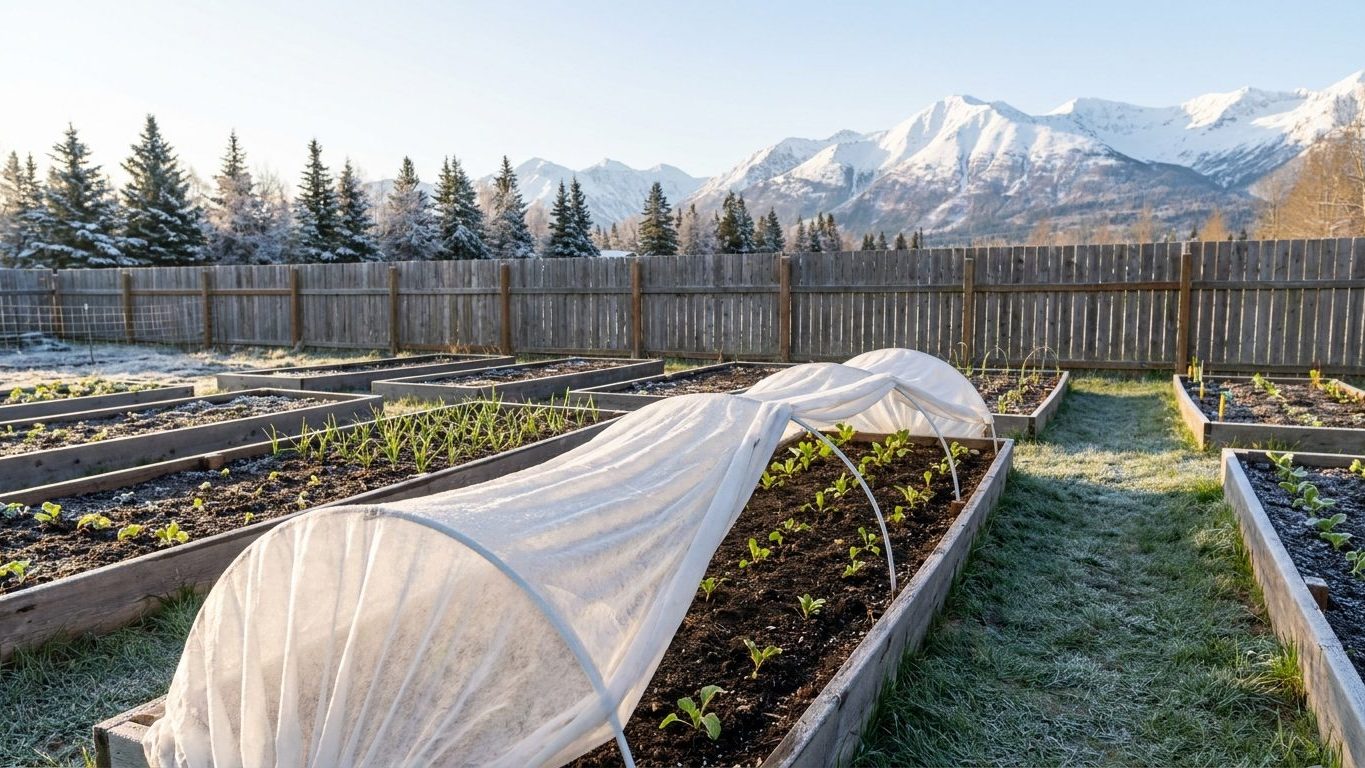

In Nova Scotia, put covers on in spring about two weeks before you transplant, so the soil warms, and keep them on through the frost-risk window that runs well past the mean last frost of May 7. In fall, have covers ready by early October and on the bed the evening the forecast drops toward freezing. The mean first frost is October 18, and in half of all years it arrives sooner.
The short answer for Nova Scotia
The reference dates come from the Halifax Stanfield International Airport station, using Environment and Climate Change Canada normals for 1981-2010. The mean last spring frost there is May 7. The mean first fall frost is October 18. Both are midpoints. In one spring out of two, frost comes after May 7, and in one fall out of two, it arrives before October 18. The station has about 164 frost-free days between those dates, and a cold year gives you fewer.
A cover is what lets you stretch those days at both ends. Read the dates as the middle of a window, though. Covers belong on the bed from the start of that window to the end of it, and the average day is no guide to when you can relax.
When do you put covers on in spring?
Lay a cover over the bed one to two weeks before planting. Soil under fabric or plastic warms faster than open ground, and cold roots do little even when the air feels mild. Hardy crops such as spinach, lettuce, peas and radishes can go in under cover well before May 7. Tender transplants such as tomatoes and peppers should wait until nights settle, and even then they do best under a cover for the first weeks.
The ocean matters here. Halifax sits on the Atlantic, and the cold water holds spring back, so the air can feel raw long after the calendar says May. A frost in the third week of May is not unusual in a cool year. Keep a cover within reach until the end of the month, and a bit longer for tomatoes and other tender crops.
When do you put covers on in fall?
Cover on the evening a frost is forecast, and aim to have hoops and fabric in place by early October. Waiting for the first frost to hit does not help, because a frozen leaf stays damaged after the cover goes on. Light row fabric typically buys a few degrees of protection, which is enough for a first light frost on beans, tomatoes and basil. A low tunnel over fabric buys more.
After the first frost, the weather often turns mild again for a stretch. Covered beds can keep producing well into late October and sometimes later. At about 44.88 degrees north (the latitude of Halifax), days shorten fast in fall, so growth slows even when the cover holds the cold off. That slowdown limits how much extra harvest you will get. The Extending the Growing Season in Nova Scotia guide covers the full approach, and the choice of materials is in Which Season Extenders Work in Nova Scotia.
What will not work here
Planting heat-lovers on the mean last-frost date and trusting a cover to do the rest will not work. May 7 is the midpoint, so half of years bring a frost after it. Even without frost, cool nights and a cool Atlantic influence keep the soil slow. Melons, sweet potatoes and long-season peppers need warm ground for weeks, and fabric laid in mid-May does not supply it. Black plastic mulch plus a low tunnel is the minimum for those crops, and many gardeners here do better with starts raised indoors or a greenhouse.
Relying on the first-frost average to time fall covers also fails. A bed covered on October 18 may already have lost its basil and cucumbers to a frost on October 5. Check the forecast every evening from late September. The mean date is only a reminder to get the hoops ready.
Winter is a harder limit. The mean daily minimum of the coldest month at Halifax is -10.4 °C. That is an average, so individual nights run colder. Plain row fabric will not carry tender plants through those nights, and a single layer will not keep lettuce growing in January. Hardy crops such as kale, leeks, carrots and spinach can sit under a well-anchored tunnel through winter, but they hold rather than grow once days are short.
Covers left sealed in warm or humid weather also cause trouble. A closed plastic tunnel on a sunny day in October or April can heat well above what plants tolerate, so it needs venting by midmorning. Damp, foggy weather is common near the coast, and fabric that stays wet while the air stays still encourages fungal disease and slugs. Lift the edges on mild days so air moves through.
Finally, light structures do not survive wet snow or Atlantic wind. A hoop frame that carries fabric nicely in October can bend under a heavy March snow, and loose edges tear in a gale. Weigh the edges down with soil or boards, and brush wet snow off tunnels rather than letting it pile up. A cover cannot extend your season if it ends up in the neighbor’s yard.
What changes across Nova Scotia
Halifax is one point in a province with varied ground. The Canadian hardiness zone for Halifax is 6b, based on 1991-2020 normals from Natural Resources Canada. That is the Canadian system, which draws on seven climate variables, and it does not convert to a USDA zone. Natural Resources Canada states that there are no simple conversions between the two systems, and Canadian zone 4a overlaps nine USDA zones, from 3a to 7a. If you read US advice written for a USDA zone, do not assume it lines up with a Canadian number.
The province does not share one zone, so there is no single answer to when to cover. The Halifax frost dates describe coastal conditions around the airport. Northern districts and upland areas run weeks behind them in spring, and their first frost comes earlier in fall. If you garden in those places, push your spring cover date later and your fall cover date earlier, and give more weight to your own frost observations than to the Halifax averages.
Latitude varies as well. The 44.88 degrees north figure belongs to Halifax. A gardener near the far north of the province or on Cape Breton has a different day length and should look up their own latitude. Short days in late fall slow plants regardless of the cover, so a northern bed will produce less under the same fabric.
To find your own zone, use the lookup on Canada’s Plant Hardiness Site and search for your municipality. The result is the zone for your town, and then local features adjust it: a hillside, a low pocket where cold air settles, a wall that holds heat, or a spot sheltered from the north wind.
Where to check this for your own county
The Nova Scotia Department of Agriculture is the provincial source to start with. Look there for the planting calendars published for your part of the province and for any variety trials run in your county. Trials are valuable because they list which cultivars ripened in local conditions, which tells you more about cover timing than a general frost date does.
A county-level recommendation beats a provincial one, and guidance written for the whole province is an average across very different ground. If the local office gives an earliest safe planting week for your area, trust it over the Halifax dates. Ask local growers too. A neighbor who has grown tomatoes in your valley or on your hill for twenty years knows when the last frost really comes.
When you call or read, ask three things. What is the typical last frost range for my area, rather than a single date? Which varieties ripen reliably here? And how late have they seen frost arrive in spring? The answers let you place your own cover dates inside the window with more confidence.
Checking this against your own garden
Your own observations outrank any date. Three are worth watching, and none needs a tool.
- Soil warmth by feel. Push your hand a few inches into the bed in the morning. If it feels distinctly cold, seeds will sit and transplants will stall. Compare a covered patch with an uncovered one to see how much the cover helps your soil.
- The first true leaves. On seedlings sown under cover, the first true leaves, the ones after the round seed leaves, show that roots have settled. Quick true leaves mean a warm, sheltered spot. Slow ones mean your bed is cold or shaded.
- The first male flowers. On squash and cucumbers, male blossoms open before female ones. When they appear, lift or remove the cover so bees can reach the flowers. Their timing also shows how warm your bed has been compared with your neighbors’.
Add a note each year of the dates of your last spring frost and first fall frost. After three or four seasons you will have a record that beats any station average, because it reflects your slope, your soil and your distance from the water.
Common questions
Can I cover plants after a frost has already hit?
Covering afterward will not repair frost-damaged leaves, though it can protect tissue that is still healthy from the next frost. Tender plants like basil and squash usually do not recover once frozen. Hardy greens and roots often do.
How long should covers stay on in spring?
Keep a cover on tender crops until nights are reliably mild and the plants are growing. Hardy crops can lose the cover sooner. Vent on warm days, and remove it once the flowers need pollinating.
Does the May 7 frost date mean I can plant then?
No. It is the mean last frost date at the Halifax airport station, so frost falls after it in about half of years. Treat it as the middle of a window, and keep a cover handy for tender transplants for a couple of weeks beyond it.
Do covers work through a Nova Scotia winter?
Hardy crops such as kale, leeks and spinach can hold under a tunnel through winter, but they grow very little once days are short. With a coldest-month mean minimum of -10.4 °C at Halifax, tender crops do not survive under a simple cover.