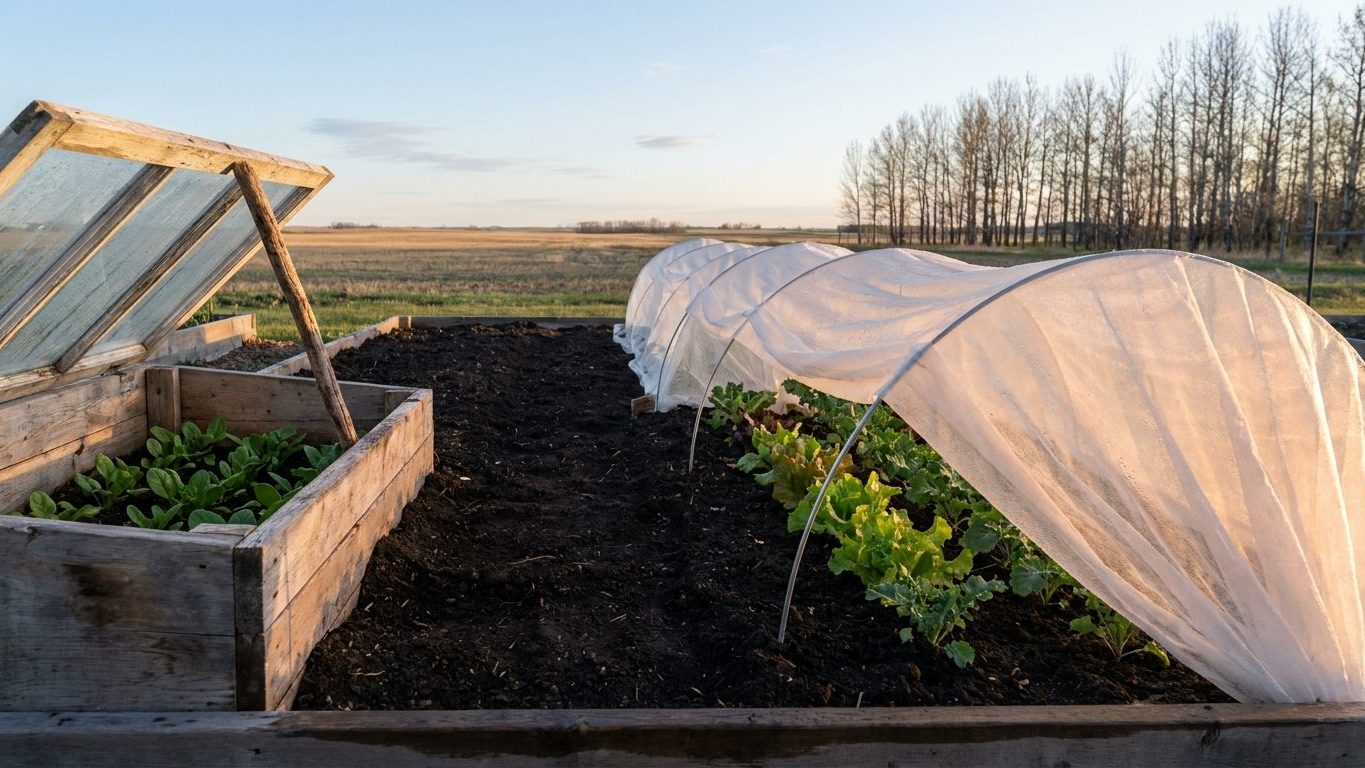

Lightweight row cover, low tunnels and cold frames do most of the work in Ohio, and a high tunnel goes further for winter greens. Around Columbus, in zone 6a, the average last spring frost falls between May 5 and May 15. The average first fall frost falls between October 5 and October 15. Covers buy extra time on both ends of that window.
The short answer for Ohio
Start with floating row cover over hoops. It costs little, goes over a bed in minutes, and handles the frosts that Ohio springs and autumns throw at tender crops. Those two frost date ranges are averages. In some years frost arrives after the May range and before the October range, which is exactly when a cover earns its keep. The Extending the Growing Season in Ohio guide covers the full picture and sorts out which tool suits which job.
Which season extender should an Ohio gardener buy first?
Row cover. Draped over wire or PVC hoops, it shields seedlings from light frost and wind, and it keeps flea beetles and cabbageworm moths off brassicas. Lettuce, spinach, kale, peas, radishes and onion sets can go under it weeks before open-ground planting makes sense. In fall, the same cover over the same hoops keeps greens going after the first frost has blackened the tomato vines.
How do the main options compare?
| Extender | Best use in Ohio | Main limit |
|---|---|---|
| Floating row cover | Early spring greens, fall brassicas, frost nights | Light fabric will not carry a crop through a hard freeze alone |
| Low tunnel (hoops with plastic) | Early lettuce, spinach, carrots, fall and winter greens | Needs venting on sunny days or plants overheat |
| Cold frame | Hardening off, winter spinach and mâche, early seedlings | Small footprint, lid needs daily attention |
| High tunnel | Early tomatoes, winter greens, long-season warm crops | Cost, snow load, and spring wind |
| Individual cloches or water-filled wraps | Single tomato or pepper transplants set out early | Labor per plant, and removal once it warms |
The winter math is simple. The mean daily minimum in the coldest month at the Columbus station is 22.0°F, which is well under freezing every night. Hardy greens survive that under a tunnel or in a frame, but they sit mostly idle through the darkest weeks. Think of winter covers as refrigerators that keep spinach and kale alive for picking, since they will not grow much until days lengthen. The calendar for when to put covers on is in When to Cover Your Garden in Ohio.
What will not work here
Planting tomatoes, peppers or squash in March under a single layer of fabric will not work. Nights stay below freezing for weeks after that, and the soil is far too cold for warm-season roots. With the average last frost running May 5 to May 15 in zone 6a, those crops still need to wait for settled weather, with a cover as insurance. A cover lets you plant a week or two ahead of the frost dates. It does not let you jump the season by two months.
Why do covers fail in an Ohio spring?
Spring wind is the usual culprit. Loose plastic and fabric tear free from hoops on open ground, and a bed with unanchored edges can end up in the neighbor’s yard. Bury the edges in soil or pin them down with boards, sandbags or landscape staples. Clay soil is the second problem. Much of the state has heavy ground that stays cold and soggy in March and April, so a cold frame set in a low spot fills with water and rots seedlings instead of warming them.
Sun is a third trap. Clear plastic with no venting turns a low tunnel into an oven on a bright April afternoon, even when the night before dipped below freezing. Anyone who works all day away from home will cook the crop. Fabric row cover is more forgiving for that schedule, and a cold frame with an automatic vent opener removes the guessing.
What about summer and snow?
Summers in the Ohio Valley and across the state run humid. Covers left on through June trap moisture, which invites fungal disease on crowded plants, and they raise heat stress on lettuce and spinach that would have bolted anyway. Take spring covers off once warm nights arrive and swap to shade cloth for fall seedlings started in August.
Snow is the winter test. Lake-effect snow in the northeast and wet, heavy snow elsewhere can flatten low hoops and collapse a high tunnel with a flat roof or thin frame. Space hoops closer together, brush snow off after storms, and choose a steeply pitched high tunnel if you are buying one. Also, if you grow in zone 5b territory, skipping tender perennials in a cold frame is wise, because the frame protects them only some of the winter.
What changes across Ohio
Ohio does not have one hardiness zone. The USDA Plant Hardiness Zone Map (2023, built on 1991-2020 normals) places it in zones 5b to 6b. That is a spread of three half-zones across the territory, so check your own location against the USDA Plant Hardiness Zone Map. Hardiness zones track the average annual extreme minimum temperature, so they speak to winter survival. Frost dates and the length of the growing season vary on their own, though they tend to move in the same direction.
The frost dates here, May 5 to May 15 for the last spring frost and October 5 to October 15 for the first in fall, are tied to zone 6a around Columbus. The latitude of that reference city is 39.99 degrees north. A gardener near the edge of the territory should check their own latitude, since day length is what tells an onion to stop making leaves and start making a bulb. Check your own latitude if you live near either edge, since day length affects crops like onions that form bulbs by day length rather than warmth.
How should a northern Ohio gardener adjust?
Shift later in spring and earlier in fall. Northern gardeners get less margin on both ends, so a cover earns more there. Plan low tunnels for tomatoes and peppers, choose faster varieties of warm-season crops, and start fall covers sooner. Lake Erie moderates winter lows near the shore, but it also keeps spring cool and slows soil warming.
Southern and southwestern gardeners can plant spring crops earlier, then face heat sooner. There, covers matter more for fall and winter harvests than for early spring. For zone confirmation, look up your location on the USDA map instead of guessing, since a zone line can cut right through a county.
Where to check this for your own county
Your county extension office has the most useful local answers. Start at Ohio State University Extension, then find your county office from the county directory. Ask for the local planting calendar, which lists sowing and transplanting windows tuned to your area. Ask also which varieties have been trialled in your county, because a spinach or lettuce that handles lake-effect cold in Ashtabula may bolt in the warmer southern counties.
County offices often run Master Gardener programs. Volunteers there know which hoop heights survive local wind, which fabric weights suit which month, and how soil type in your area changes drainage for a cold frame. Many also offer soil test kits and answer pest questions that come up under covers, like slugs and aphids.
A county recommendation beats a state one. The statewide picture is a sound starting point. It gives a sound starting point from Columbus-area frost dates and the statewide zone range, and your county office can narrow those dates by a week or more.
Checking this against your own garden
Your own yard outranks every date above. Three observations do most of the work, and none needs a gadget.
- Soil warmth by feel. Push your hand into a bed in the morning. If the soil feels cold and clammy against your palm, warm-season seeds will sit and rot. If it feels comfortably cool-to-mild, cool crops are fine. A bed that warms days before your neighbor’s tells you it drains well or gets more sun.
- First true leaves. Seedlings first show rounded seed leaves, then leaves that look like the mature plant. Direct-sown crops that reach true leaves under cover tell you the soil and air are working. If they stall, the cover is too light or the spot is too cold.
- First male squash flowers. Watch the vines: male flowers open before female flowers. If they show up on plants under a tunnel well ahead of those in the open, your cover is giving real extra warmth.
Watch where frost shows up first on the lawn, too. Low corners collect cold air and show white first, which marks the beds where covers matter most.
Common questions
Can I plant tomatoes earlier in Ohio with a season extender?
Somewhat earlier, yes, but not by months. With the average last spring frost between May 5 and May 15 in zone 6a, a cover or wall-of-water wrap lets you set transplants out a week or two ahead of that range, as long as the soil has warmed and you can add a second layer on a freeze night.
Do I need a high tunnel in Ohio?
No. Row cover, low tunnels and a cold frame handle most home garden needs. A high tunnel makes sense if you want winter greens in bulk or an early tomato crop, and you can pay for a sturdy frame that handles wind and snow load.
Can I grow vegetables through an Ohio winter?
Hardy greens like spinach, kale and mâche survive under a tunnel or in a cold frame, even with the coldest-month average minimum at 22.0°F in Columbus. They grow slowly in midwinter because of short days, so plant them early enough in fall to reach size before growth stalls.
When should I take covers off in spring?
Vent them on sunny days once plants are growing, and remove fabric from cool-season crops when warm nights set in. Warm-season crops can lose their covers once the frost danger has clearly passed for your area, which your county extension office can help pin down.