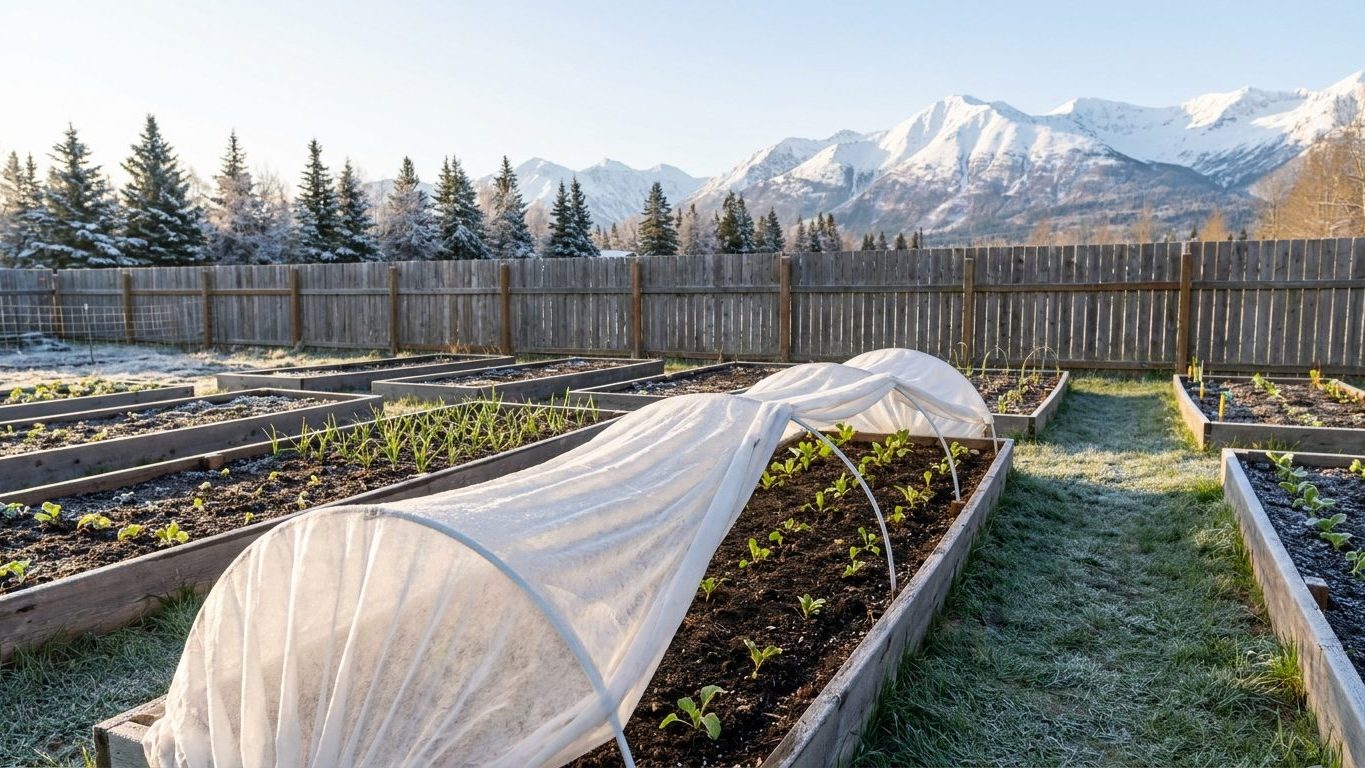

Cover tender plants on any night the forecast calls for a low near freezing, and leave the cover off when the weather is mild. In Ohio that means spring covering from early May through mid-May, then fall covering from late September until a hard freeze ends the season. Covers also have a second job, warming cold soil ahead of planting, and that follows a different schedule.
The short answer for Ohio
Put a cover over the garden the evening before a forecast low of 32°F or colder, and keep watching the forecast until at least a week past the average last spring frost, which falls May 5 to May 15 in zone 6a. In fall, start watching in late September, because the average first frost arrives October 5 to October 15 in the same zone. Those are average dates for the last spring freeze and the first fall freeze, so some years bring a freeze after the spring window or before the fall one. Covers exist to handle those years.
When do you cover the garden in spring in Ohio?
Spring has two jobs for a cover, and they run on different clocks. The first is warming soil. Clear plastic or a low tunnel set over a bed a couple of weeks before planting raises soil temperature, so cool-season crops like lettuce, spinach, peas and radishes can go in during March and early April. The second job is frost protection, and it applies to anything already planted. A hardy crop such as kale shrugs off a light frost. Tomatoes, peppers, squash and beans do not, and they should wait for the May 5 to May 15 window before going out, covers or not. A cover buys a few degrees on a clear night. It does not turn April into June.
The mechanism is simple. Soil soaks up heat during the day and releases it at night, and a cover traps part of that release. Clear, calm nights lose the most heat and are the ones that deliver frost, so they are the ones to cover for. Cloudy, windy nights are rarely frost nights even when the thermometer reads cold at dusk.
When do you cover the garden in fall in Ohio?
Fall covering starts when the first frost approaches and ends when a hard freeze arrives that no cover can beat. The first stretch is the most useful. Early frosts in the first half of October are often followed by two or three more weeks of mild weather, and a sheet or row cover can carry tomatoes, peppers and beans through that gap.
Cool-season crops tell a different story. Lettuce, spinach, kale, carrots and beets sweeten and keep growing under a low tunnel or cold frame well past the first frost. For them, the cover is a season extender in the full sense, and the question is how long daylight and cold allow growth, not whether frost arrives.
What will not work here
Winter growing with an unheated cover will not work the way many garden catalogs suggest. The mean daily minimum in the coldest month at the Columbus reference station is 22.0°F. That is the mean daily minimum of the coldest month, with no record-breaking cold involved. A single layer of row cover or thin plastic will not hold that temperature above freezing, and the daylight at about 40 degrees north (Columbus sits at 39.99) is short enough in midwinter that even protected greens mostly sit still. A cold frame or a double-layered low tunnel can keep spinach and mature kale alive and harvestable. It will not grow new lettuce in January.
Why does planting tomatoes in April under plastic go wrong?
Early planting under cover tempts every spring, and the numbers argue against it. With the average last frost running May 5 to May 15, an April transplant faces the chance of a late freeze. Plastic set tight over plants on a sunny 60°F afternoon can also overheat in an hour or two and scorch leaves, so the cover has to be vented or removed daily. Soil is the other problem. Tomatoes and peppers stall in cold soil, and a plant set out too early often sits idle and ends up no further along than one set out later. The early planting has risked a frost loss for nothing.
Does row cover work through humid summers?
It does not, and leaving it on is the usual mistake. Ohio summers are warm and humid, and a cover left over squash, cucumbers or melons traps moisture, raises disease pressure and blocks the bees those crops need. Fabric that protected plants in May should come off once nights stay mild and plants start to flower. The same goes for fall plastic. Sealing damp plants under unventilated plastic on a mild October day invites mold. A cover is a night tool, and it should be opened on warm mornings.
What changes across Ohio
The state does not have one garden climate. The USDA Plant Hardiness Zone Map, updated in 2023 from 1991 to 2020 data, places Ohio in zones 5b through 6b. That system rests on a single variable, the average annual extreme minimum temperature, so it describes how cold winter gets and says little about when the last spring frost arrives. Even so, a spread of three half-zones means there is no single answer to the title question. The dates in this article suit zone 6a, the zone used by the Ohio State University Extension gardening calendar, and the Columbus numbers (the 22.0°F coldest-month minimum, the 39.99 degrees north latitude) belong to the middle of the state.
A reader on the northern edge, near Lake Erie or up on higher ground, should expect the last spring frost to run later and the first fall frost to arrive earlier than the zone 6a window. That shrinks the useful season at both ends, which makes covers more valuable and also makes early planting riskier. Gardeners near the Ohio River in the south sit on the other side, with a longer season and a spring frost that tends to leave sooner. Latitude also shifts day length. The farther north you are from Columbus, the shorter your winter days get, and the less a cold frame can grow in December and January.
Local terrain matters as much as the state map. A garden at the bottom of a slope collects cold air on still nights and frosts before one uphill. To find your own zone, look up your location on the USDA Plant Hardiness Zone Map rather than guessing from a neighbor or a county line. Then adjust the dates above earlier or later to match.
Where to check this for your own county
Ohio State University Extension runs an office in every county, and that is the place to turn statewide timing into local timing. Start with the Ohio Gardening Calendar, which lists the zone 6a frost dates used in this article, then look for what your county office adds: the local planting calendar, the average frost dates for the nearest weather station, and any vegetable varieties that have been tried in county trials.
A county recommendation beats a state one every time, and any statewide date is a starting point. A county agent can tell you whether your area runs a week behind Columbus, whether late freezes tend to arrive late in spring, and which cold frame designs people in your county have kept alive through winter.
For season extension in particular, ask two things. When does your office advise setting out warm-season transplants, and what do they recommend for cool-season crops in fall? Then compare the answers with the guidance in Extending the Growing Season in Ohio, and with the product comparisons in Which Season Extenders Work in Ohio, to match the right cover to the date.
Checking this against your own garden
Your own beds outrank every date above. Three observations tell you more than a calendar can, and none needs equipment beyond your hands and eyes.
- Soil warmth by feel. Dig down into the soil in the morning and hold a handful. If it feels distinctly cold, warm-season seeds and transplants will sit idle. Do the same test in several spots. A bed against a south-facing wall warms days before one in the open yard, which tells you where your early crops belong.
- The first true leaves. Seedlings first show a pair of rounded seed leaves, then the first true leaves with the shape of the adult plant. Once those appear, a seedling can handle cooler nights and a gradual move outdoors. If seedlings in one bed develop true leaves a week ahead of another bed, that is a warmer microclimate.
- The first male flowers. Squash, cucumbers and melons produce male blooms before female ones. When you see them, plants are established and pollinators need access, so remove the cover during the day. Where male flowers show up first in your yard also marks the warmest spot.
Frost itself is a fourth cue. Walk the yard at dawn after a clear, cold night and note where the grass is white and where it is not. That pattern is your frost map, and it will be the same most years.
Common questions
Should I cover plants every time frost is forecast?
Cover tender plants such as tomatoes, peppers, beans and squash whenever the forecast is near 32°F. Hardy crops like kale, spinach, carrots and garlic usually do not need it for a light frost. Check the forecast for clear, calm nights, which lose the most heat.
How late in the fall can covers keep tomatoes going?
Covers help through the stretch of light frosts after the average first frost date of October 5 to October 15 in zone 6a. A hard freeze later in the month or in November usually ends tender crops no matter what you throw over them. Pick green fruit before that and ripen it indoors.
When do I take row cover off in spring?
Remove it on mild days, and take it off for good once nights stay reliably above freezing and plants begin to flower. Squash, cucumbers and melons need open access for pollinators once male flowers open.
Can I garden through an Ohio winter with a cold frame?
Yes, with limits. The coldest-month mean minimum at the Columbus reference station is 22.0°F, and daylight is short, so a cold frame will hold hardy greens such as spinach and kale and let you harvest from them, but it will not drive new growth in midwinter. Vent it on sunny days so it does not overheat.