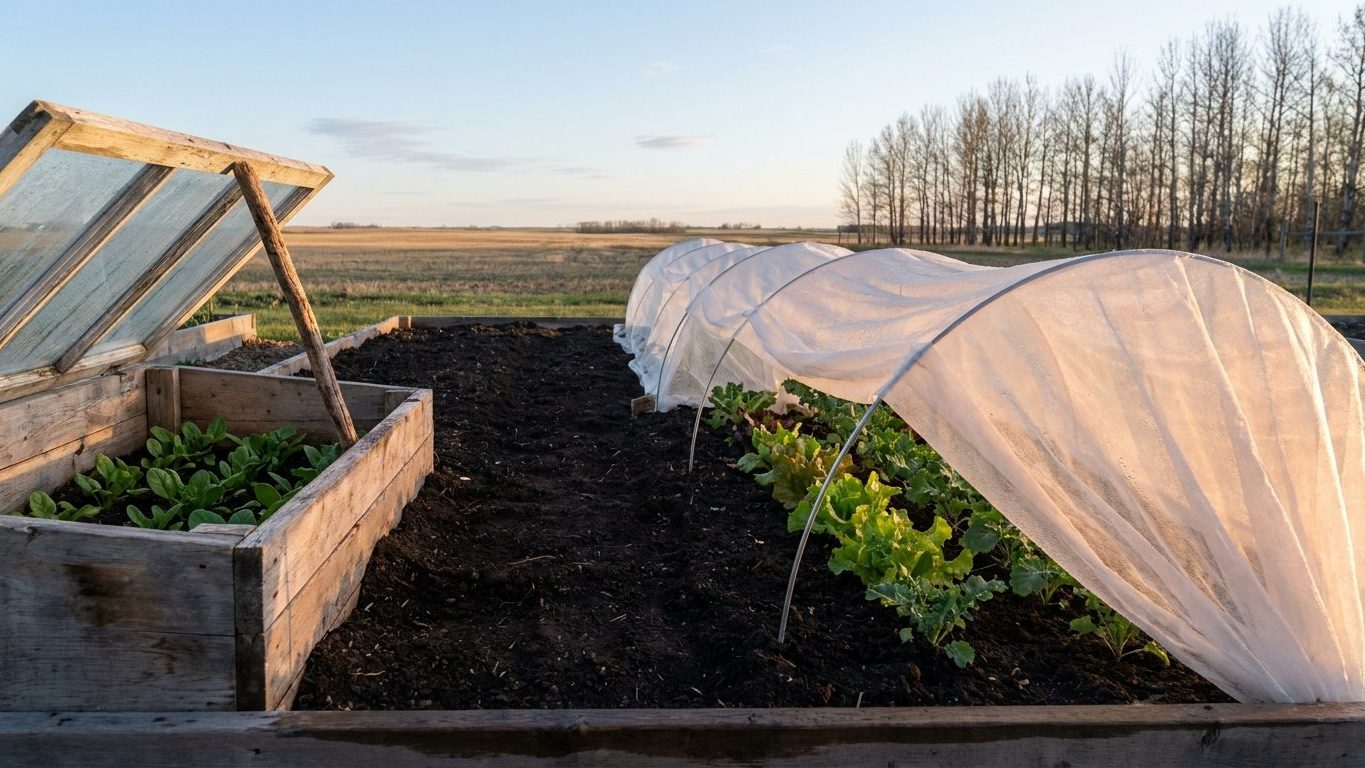

Floating row cover, low tunnels, and cold frames do most of the work in New Hampshire. They are cheap, they handle the frosts that arrive at both ends of the season, and they hold up to wind and snow better than a hoop house you forgot to vent. Which one you pick depends on the job: warming spring soil, saving tomatoes from a surprise freeze, or keeping hardy greens alive into winter.
The short answer for New Hampshire
Start with lightweight row cover over hoops. It is the best all-purpose extender here, and a cold frame is the best second purchase. Add black plastic mulch if you grow tomatoes, peppers, or squash, and consider an unheated high tunnel only if you want real winter harvests and can handle the snow load.
The reason is the frost calendar. At the Manchester airport weather station, the dates when a 32°F freeze has a 30 to 70 percent chance of showing up run from April 16 to April 27 in spring and from October 13 to October 26 in fall. Those are probabilities of a freeze, and they describe one reference city. A suburban or rural garden usually sees the last spring frost later and the first fall frost earlier, often by one to two weeks, and more at elevation. So the frost-free window for a typical home garden starts in early to mid May and ends in early October. A cover that adds a few degrees can stretch that window on both ends.
A few degrees sounds small. It is enough to save a bed of lettuce on a cold night, or to let you set out transplants a little sooner. It will not turn March into June. For a closer look at the timing decision, see When to Cover Your Garden in New Hampshire.
Which season extender fits which job?
| Extender | What it does | Best use | Watch for |
|---|---|---|---|
| Lightweight floating row cover | Adds a few degrees of frost protection and blocks wind | Early greens, newly set transplants, fall brassicas | Needs anchoring against wind; flattens under wet snow |
| Low tunnel (hoops plus cover or plastic) | Holds more heat than cover laid flat | Spring carrots and spinach, fall salad crops | Overheats on sunny days if plastic is not vented |
| Cold frame | Traps heat in a small box with a hinged lid | Hardening off, winter greens | Needs opening on any sunny day, even in January |
| Black plastic mulch | Warms the soil | Tomatoes, peppers, squash, melons | Does not stop frost; needs drip irrigation under it |
| Unheated high tunnel | Biggest temperature gain of the group | Winter spinach, kale, other hardy greens | Snow load, wind, and the cost |
Most gardeners get the best return from the first two rows. A roll of row cover and a set of hoops costs little and goes on or off in minutes, which matters when a frost warning pops up at 6 p.m.
What will not work here
Planting warm-season crops on the airport’s last-frost dates will not work. April 16 to April 27 is the reference-city window, and a rural garden can easily see a freeze in the first week or two of May. Tomatoes, peppers, basil, and squash set out in late April under a single layer of thin cover will lose on a hard freeze night. Row cover that adds a few degrees helps when the forecast warns of frost. It does little when the forecast warns of a hard freeze.
Winter growing under a single layer will not work either. The coldest month at the Manchester reference station averages a nightly low of 17.1°F, and that is an average, so plenty of nights run colder. Under one layer of row cover, lettuce, arugula, and most tender greens freeze and turn to mush. Spinach, kale, mâche, and a few other hardy crops can sit through the cold, but they will not grow much. By late fall the days are short enough that growth nearly stops, whatever the temperature under the cover. Covers in November and December hold what you planted earlier. They do not produce new leaves.
That is why timing matters for fall crops. With the first fall freeze arriving between October 13 and October 26 at the reference station, and earlier in the country, late sowings are too late to size up. Plan fall greens so they are nearly full size before the light fades, then cover them to hold them.
Clear plastic with no venting is another common failure. A sunny day in April can push the air under a closed tunnel well above what seedlings tolerate, even when the outdoor air is cold. Open the ends or lift the sides during the day, and close them again when the sun goes down. Cold frames need the same attention on bright winter days.
Snow is the other thing that breaks setups in this state. Wet, heavy snow flattens low hoops that are spaced too far apart and can collapse a high tunnel whose frame is too light. Space hoops closely, shake or brush snow off after storms, and anchor everything well, because winds across open fields will lift a loose cover and carry it into the next yard. A greenhouse kit rated for a mild climate is the wrong purchase here. Look for frames built for snow load.
What changes across New Hampshire
The USDA Plant Hardiness Zone Map (2023) puts New Hampshire across zones 3b to 6a. That is a wide spread, and it means no single answer fits the whole state. The zone is built on one variable, the average annual extreme minimum temperature, so it tells you about winter survival of perennials. It says less about how long your growing season is. Still, the spread is a fair signal of how different the northern and southern ends of the state are.
The Manchester figures describe the southern-central part of the state, at 42.93 degrees north. A gardener in the north country or the White Mountains is farther north, usually higher, and sees a shorter season with colder winters. For that reader, the sensible shift is to rely more heavily on extenders, not less. Plan on setting out transplants later than the Manchester dates suggest, start fall covers earlier, and favor low tunnels and cold frames over a big investment in warm-season crops that need a long, steady summer. Heavier row cover or a double layer buys extra protection when nights turn cold early.
Near the seacoast, the ocean moderates temperatures, and the season tends to run a bit longer. Elevation changes things even over short distances. A valley floor can collect cold air on clear, calm nights, while a slope a few dozen feet higher stays warmer. Two neighbors a mile apart can have frost on different dates.
To see which zone your location falls in, use the USDA’s interactive map and enter your ZIP code. Then treat the zone as a rough guide to winter cold. For frost dates, local observation and county advice do better.
Where to check this for your own county
University of New Hampshire Extension is the place to confirm everything above for your own ground. Its staff work with growers in every county and know which frost dates hold up in which towns.
Two things are worth looking for. The first is a local planting calendar, ideally one that gives frost dates for your county or nearest town rather than for the state as a whole. The second is a list of varieties that have been trialled near you. A tomato that ripens reliably in the southern part of the state can fail to ripen up north, and trial results show which ones hold up. If you can reach an extension educator or a Master Gardener helpline, ask which season extenders local growers use, and whether snow load has caused problems in your area.
A county recommendation beats a state one every time. Statewide guidance, including everything here, averages across very different ground, and the Manchester numbers describe an airport weather station that sits on open, flat terrain. Your yard may be colder or warmer, and extension advice can tell you which way to lean.
The Manchester dates still work as a starting point. Add one to two weeks to the spring date and subtract one to two from the fall date if you garden in a suburb or on rural land. Add more if you are on a hilltop or in the north.
Checking this against your own garden
Your own observations outrank every date on any calendar. Three are worth watching each year.
- Soil warmth by feel. Push your hand a few inches into the bed in spring. If it feels cold and damp, warm-season seeds and transplants will sit and sulk. Compare a bed under black plastic with one left bare. The gap shows how much extra heat your site gets from the sun.
- The first flush of male flowers on squash or cucumbers. Male blooms usually open before female ones. When they appear, the plants have had enough warmth to flower. If they show up weeks later than a friend’s across town, your garden runs cooler.
- The first true leaves on seedlings. The first pair are seed leaves. The second pair, the true leaves, show the plant is growing on its own. If true leaves arrive slowly under cover, the tunnel is too cool or too shaded. If they come fast and the plants look leggy, it is too warm and needs venting.
Write the dates down once a year. After two or three seasons you will know when your own last frost tends to fall, which is more useful than any airport figure. The wider Extending the Growing Season in New Hampshire guide covers how to build on those observations.
Common questions
What is the cheapest season extender for New Hampshire?
Lightweight floating row cover. A roll costs little, it can drape over plants or sit on hoops, and it works in spring and fall. Anchor the edges with soil, boards, or sandbags, because wind will lift a loose cover.
Can I grow vegetables through a New Hampshire winter?
Hardy crops such as spinach, kale, and mâche can survive under a tunnel or in a cold frame, but they grow very little in midwinter because the days are so short. Sow them in late summer so they reach size before the light fades, then use the cover to hold them for harvest.
When should I put row cover on in spring?
Put it on when the forecast shows a night near or below 32°F, and leave it on tender crops until nights are reliably warmer. The Manchester reference dates for a 32°F freeze run from April 16 to April 27, but gardens outside the city often see frost one to two weeks later.
Will a low tunnel survive New Hampshire snow?
Only if it is built for it. Use sturdy hoops spaced closely, keep the cover taut, and clear heavy snow after storms. Wet snow can flatten a loose tunnel in a single night, and plastic that is already sagging gives way first.