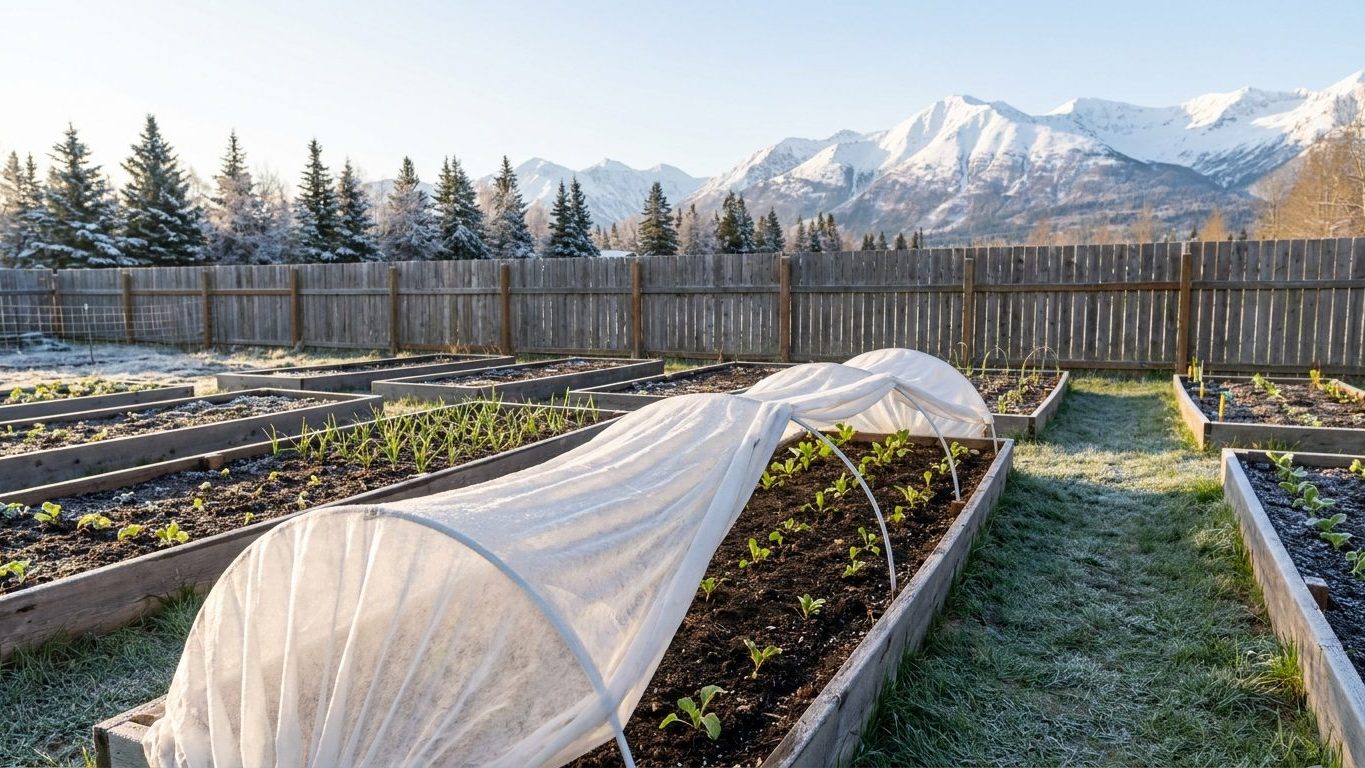

Cover tender plants on any night the forecast low reaches about 36°F. Do that from the last spring freeze window (March 29 to April 6 around Philadelphia) to the first fall one (November 5 to November 16). Covers also pay off outside those dates: in early spring they warm the soil, and in late fall they keep hardy greens alive. Elevation and latitude move every date, so use the calendar to plan and the forecast to decide.
The short answer for Pennsylvania
The spring and fall windows come from 1991-2020 NOAA climate normals at the Philadelphia station, and each one marks a probability of a 32°F freeze. Between March 29 and April 6, the odds of one more freeze sit between 30 and 70 percent. In the fall, November 5 to November 16 is the window in which the first freeze becomes likely. A freeze can still come after the spring dates or before the fall ones.
When do you cover in spring?
Put covers on two weeks or so before you plant, to warm the ground. Keep them on after planting through the freeze window. Frost-tender crops such as tomatoes, peppers, squash, cucumbers and basil need cover on every night the forecast drops near freezing until the window has passed. Hardy crops (spinach, lettuce, peas, kale, onions) take a light freeze without help. They only need covering for a hard one, so watch the forecast and cover when a hard freeze is coming.
When do you cover in fall?
Cover at the first night forecast near 36°F, because clear, calm nights frost the ground even when the official low reads a few degrees higher. Those first frosts are often followed by weeks of mild weather. A cover that gets tomatoes and peppers past one cold night can buy another two or three weeks of harvest. Plan to uncover on warm afternoons.
For a wider view of the options, see Extending the Growing Season in Pennsylvania. Which material to buy is covered in Which Season Extenders Work in Pennsylvania.
What will not work here
Planting tender crops on March 29 and trusting luck fails. That date is the front edge of a window where a freeze is still a 30 to 70 percent possibility, and a tomato transplant that meets 30°F without cover is usually gone. Cold soil is a second problem, since transplants set into it just sit there.
Why does plastic fail in spring?
Clear plastic over a low tunnel can overheat plants on a sunny late-March day, even with air in the 40s outside. Left closed, it cooks seedlings by early afternoon. Either vent it every sunny morning or use a breathable fabric row cover that tolerates a missed day. Spring in Pennsylvania swings fast, and a cover that is not managed daily does as much damage as the frost.
Why won’t covers carry tender crops through winter?
The mean daily minimum in the coldest month at the Philadelphia station is 26.0°F. Nights below freezing are the normal state of midwinter, not a cold snap. A single sheet of lightweight fabric adds only a few degrees, so it can’t hold lettuce or any tender crop through January. At 39.87 degrees north latitude, daylight in midwinter is short, and growth nearly stops when days are short. Winter covers hold hardy plants such as spinach, kale and mâche in place for picking. They do not grow a crop. Anything sown after early fall will not size up before the light gives out.
The slowest options also fall short. A cold frame or hoop house built in late October is up against a first-frost window that opens November 5 in the mildest part of the state, and earlier farther north. Build structures in summer or early fall, not after the first frost warning.
Humid summers cause one more failure, which is leaving covers on warm, wet stretches. Trapped moisture favors fungal disease, so take row covers off once nights stay well above freezing and flowering crops need pollinators.
What changes across Pennsylvania
The state has no single answer. The USDA Plant Hardiness Zone Map (2023 edition, built on 1991-2020 normals) places Pennsylvania across zones 5a to 7b, six half-zone steps. Zone rating comes from the average annual extreme minimum temperature. It tells you whether a plant survives winter, and says nothing about frost dates. The two usually travel together, but both vary by place.
Philadelphia is the mildest corner of the state, and every date above belongs to it. The northern tier and the Alleghenies run two to four weeks later in spring, so a gardener there should shift the spring cover calendar by that amount. The fall window moves the other way, so the first frost arrives earlier. That squeezes the growing season from both ends, which is why season extension matters more up north, not less. A grower at altitude may find a cover is needed on a night when Philadelphia stays well above freezing.
Latitude matters too. The 39.87 degrees north figure belongs to Philadelphia, and a reader in the far north of the state sits several degrees higher, with longer summer days and shorter winter ones. That changes how onions bulb and how quickly fall crops slow down. A reader near the edge of the state should look up their own latitude.
Local terrain adds its own variation. Valleys collect cold air on still nights, while a south-facing slope drains it away. Nobody should assume their own zone from a statewide range. Find it on the USDA Plant Hardiness Zone Map by entering a ZIP code.
Where to check this for your own county
Penn State Extension is the state’s land-grant extension service, and it has offices serving every county. Start there for planting guidance written for your area.
Look for three things. The first is a local planting calendar or frost-date table for the weather station nearest you, since the statewide spread of several weeks is too wide to plan around. The second is vegetable varieties that have been trialed or recommended in your county, especially for cool-season crops that handle cover well. The third is any guidance on low tunnels, row covers or high tunnels, along with advice on timing for your region. County educators and Master Gardener volunteers will answer questions about spring and fall conditions in your area.
A county recommendation beats a state one every time. Statewide dates like the ones above describe a reference station, and they are a starting point for gardeners who live far from it.
Checking this against your own garden
Your own beds outrank any calendar. Three observations tell you more than the dates do, and none needs an instrument.
- Soil warmth by feel. Dig a few inches down in the afternoon. If the soil feels cold and damp in your hand, it is too early for tender transplants. A bed along a south-facing wall will warm days ahead of an open lawn, which shows you where your warmest microclimate is.
- The first male flowers. Early male flowers mean a warm spot, and a long delay means the bed is cooler than you thought.
- First true leaves. Seedlings put out rounded seed leaves first, then the shaped true leaves. If seedlings under cover take weeks to produce them, the bed is cold or shaded, and you should plan for a later start.
Frost shows on grass before it does in sheltered beds, so a walk at dawn after a cold night reveals which corners freeze first. Note them, and cover those spots first next season.
Common questions
Is it too early to cover plants in March?
No, if you are warming soil or protecting hardy crops. Covers over bare beds in March help the ground thaw and warm. Tender transplants should wait until the freeze window has passed, and they still need cover on cold nights.
What temperature should trigger covering?
Cover tender plants when the forecast low is about 36°F, since frost can form below the official reading on clear, calm nights. Hardy crops can wait until the forecast turns to the mid-20s.
Can I leave row cover on all the time?
Breathable fabric can stay on for days at a stretch in cool weather. Plastic must be vented on sunny days. Remove all covers from flowering crops that need pollination once nights stay warm.
Do covers work in northern Pennsylvania and the Alleghenies?
Yes, and they matter more there. Spring arrives two to four weeks later than in Philadelphia, and the first fall frost comes sooner. A county extension office can give you the frost dates for your nearest station.