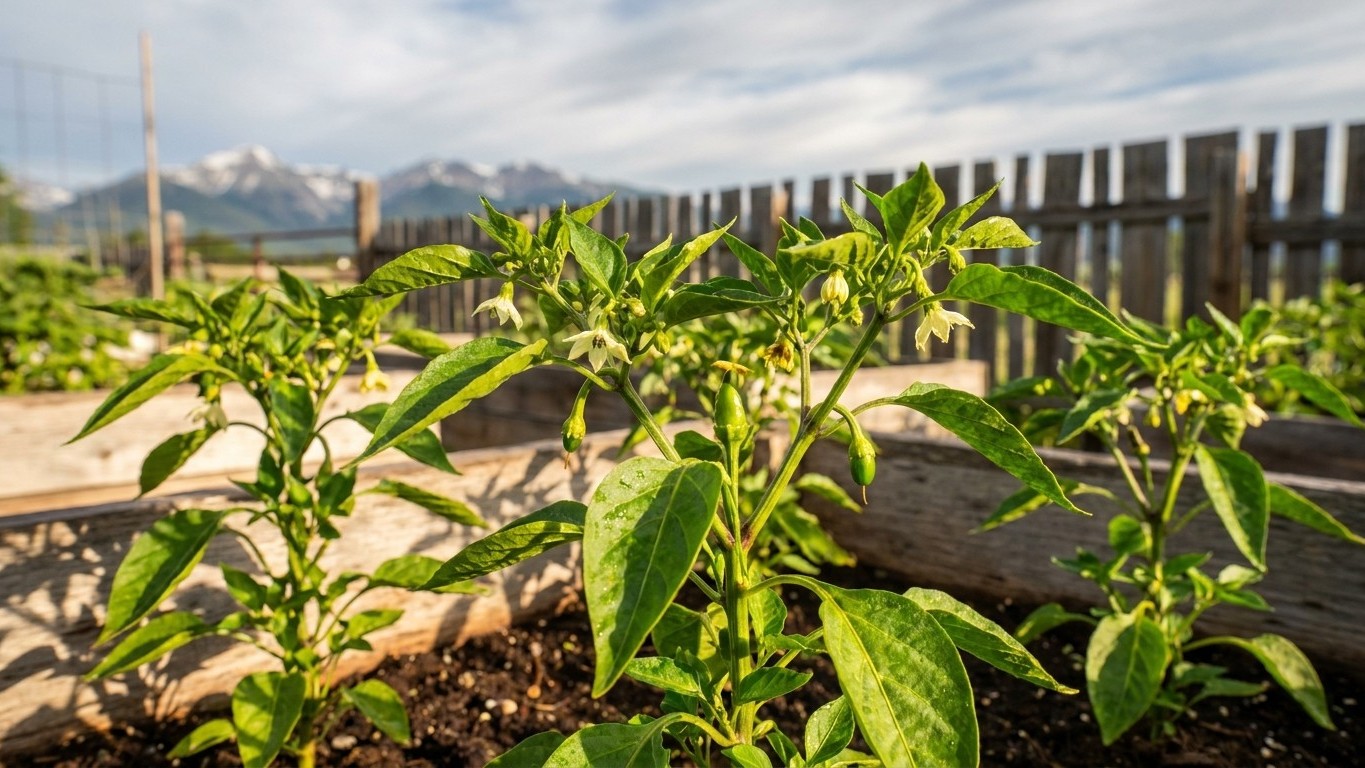

Pick peppers when they are full size, firm and glossy, which Clemson Cooperative Extension puts at about 70 to 85 days after transplanting. Then keep them out of the refrigerator. Clemson’s storage range is warmer than a household fridge, and below about 45 °F peppers pit and go soft. That damage is called chilling injury, and it catches almost everyone at least once. In Texas, summer heat adds a second timing problem on the plant itself.
Keeping them, and for how long
Clemson Cooperative Extension’s Home & Garden Information Center gives the storage conditions that work best for harvested peppers: 45 to 50 °F with 80 to 90 percent relative humidity. Under those conditions, peppers hold for two to three weeks. That duration is a ceiling reached only when temperature and humidity are both right. A pepper that sat in a hot truck bed or a sunny windowsill first will not last as long, and a pepper stored a few degrees off the range will not either.
How do you know a pepper is ready to pick?
Count from transplanting. Clemson’s 70 to 85 days starts the day the seedling goes into the garden. It does not start at sowing. Utah State University Extension says transplants need 8 to 10 weeks indoors first, so the full run from seed to first pick is well over four months. The same source says to set transplants out when the soil reaches 60 F, after frost has passed.
Frost dates vary a lot across the state. NOAA’s climate normals for the Houston airport station (IAH) place the last spring 32 F freeze somewhere between February 4 and March 1. That is the mild Gulf end of Texas. The state spans four USDA zones, and the Panhandle freezes months later in spring and months earlier in fall. Hill Country and North Texas fall on yet another schedule. Even within Houston the dates move: Hobby airport runs about two weeks milder than IAH. Your county extension office can give you the window for your own ZIP code, and that is the date to plan from.
On the plant, look for full size, firm walls and a glossy skin. A pepper that feels thin or rubbery has more growing to do. If you want a colored pepper, leave it until the whole fruit has changed. Green peppers picked early generally stay green. Cut the stem with pruners instead of yanking, since branches snap easily. Leaving ripe fruit hanging for weeks also gives insects more time to find it, a problem covered in What Eats Pepper in Texas, and When.
What does heat do to the timing?
Pepper fruit set fails at both ends of the thermometer. Utah State University Extension names nights below 55 F and days above 90 F as the two failure points. At the Houston reference station, the mean number of days a year reaching 90 F or more is 102.4. That is more than three months of conditions that can make flowers drop without setting fruit. So a Texas harvest often comes in waves: a spring flush before the worst heat, a pause, and a second push when temperatures ease.
The cool end depends on your own yard. Nights can dip under 55 F in a Texas spring or fall, so check an overnight low on a thermometer instead of guessing. A plant that is blooming without producing is the signal to look at both numbers. Why Peppers Fail to Set Fruit in Texas walks through the diagnosis. For the full planting picture, see Growing Peppers in Texas.
Why does the refrigerator ruin peppers?
A domestic refrigerator runs colder than the 45 to 50 °F range. Below about 45 °F, peppers develop chilling injury: small sunken pits appear in the skin, the walls soften, and the fruit breaks down faster than it would have on a counter. The damage often shows up a day or two after the pepper comes out of the cold, so it looks like the pepper simply “went bad” at home. Anyone who has tossed a limp, spotted pepper from the crisper drawer has seen it.
Where in the house that actually is
Few spots in a house sit at 45 to 50 °F. The refrigerator is colder. The kitchen counter, the pantry beside the stove and any heated room are warmer. In a Texas summer, an air-conditioned house rarely drops anywhere near that range, so no ordinary living space matches the target. The goal is the closest compromise, and a thermometer settles which spot that is.
| Spot | What goes wrong | Verdict |
|---|---|---|
| Refrigerator shelf or crisper | Colder than the range; pitting and softening | Too cold for whole peppers |
| Kitchen counter | Warm, dry air; peppers shrivel sooner | Fine for a few days |
| Garage | Swings with the weather; hot afternoons, cool nights | Unreliable |
| Cool interior closet or pantry away from heat | May still run warm | Closest match, once measured |
What should you check with a thermometer?
Pick the coolest interior spot you have: a pantry or closet on an inside wall, away from the stove, the water heater and any sunny window. Then leave a cheap thermometer there for a full day and night before you trust it. Read it in the morning and again in late afternoon. A spot that reads in the 45 to 50 °F range at both times is a good candidate. If skipped, you may find out about a bad spot only by losing a harvest to it.
The fridge itself may be worth testing too. A thermometer on the door shelf or in the crisper drawer will show whether the spot is colder than 45 °F. If it is, whole peppers belong somewhere else. Humidity matters as well, since Clemson’s range calls for 80 to 90 percent. A loosely closed container or a bag with a few holes keeps moisture around the fruit without trapping so much that it rots.
If no spot in the house gets close, plan on speed. Eat peppers within a few days and treat the two to three weeks as a number for ideal conditions only. Peppers you can’t use in time can be sliced and frozen, and they work well later in cooked dishes even though they lose their crunch. A slightly soft pepper is still safe to cook with if it has no mold or sour smell.
Common questions
Can I put peppers in the refrigerator at all?
Whole peppers do best outside it, since a fridge runs colder than the 45 to 50 °F range Clemson recommends and chilling injury sets in below about 45 °F. Cut or cooked peppers are a different matter, because they are already past the point where pitting matters. Store those in a covered container and use them within a few days.
Will green peppers ripen after I pick them?
Peppers picked early generally stay close to the stage they were at when cut. Full color and flavor develop best on the plant, so if you want red or yellow fruit, wait. If a cold snap or a pest problem forces an early harvest, use the green peppers soon and don’t count on them to change much on the counter.
Why are my pepper plants blooming but not producing in the Texas summer?
Days above 90 F stop fruit set, and so do nights below 55 F. In hot parts of Texas the first problem is common through summer. The Houston reference station averages 102.4 days a year at 90 F or higher. Many plants resume setting fruit when the heat eases in fall. Watch your own nighttime lows, since the cool end can bite in spring and fall. The fruit-set article linked above covers what to adjust.
When should I plant so I can pick in Texas?
Transplant after the last frost, when the soil reaches 60 F, using seedlings started 8 to 10 weeks earlier indoors. Then count 70 to 85 days to harvest from the day they go in the ground. At Houston’s IAH airport station, the last spring 32 F freeze falls between February 4 and March 1, but that is the mild Gulf end of the state. North Texas, Hill Country and the Panhandle all start later, so check your local frost window with your county extension office.