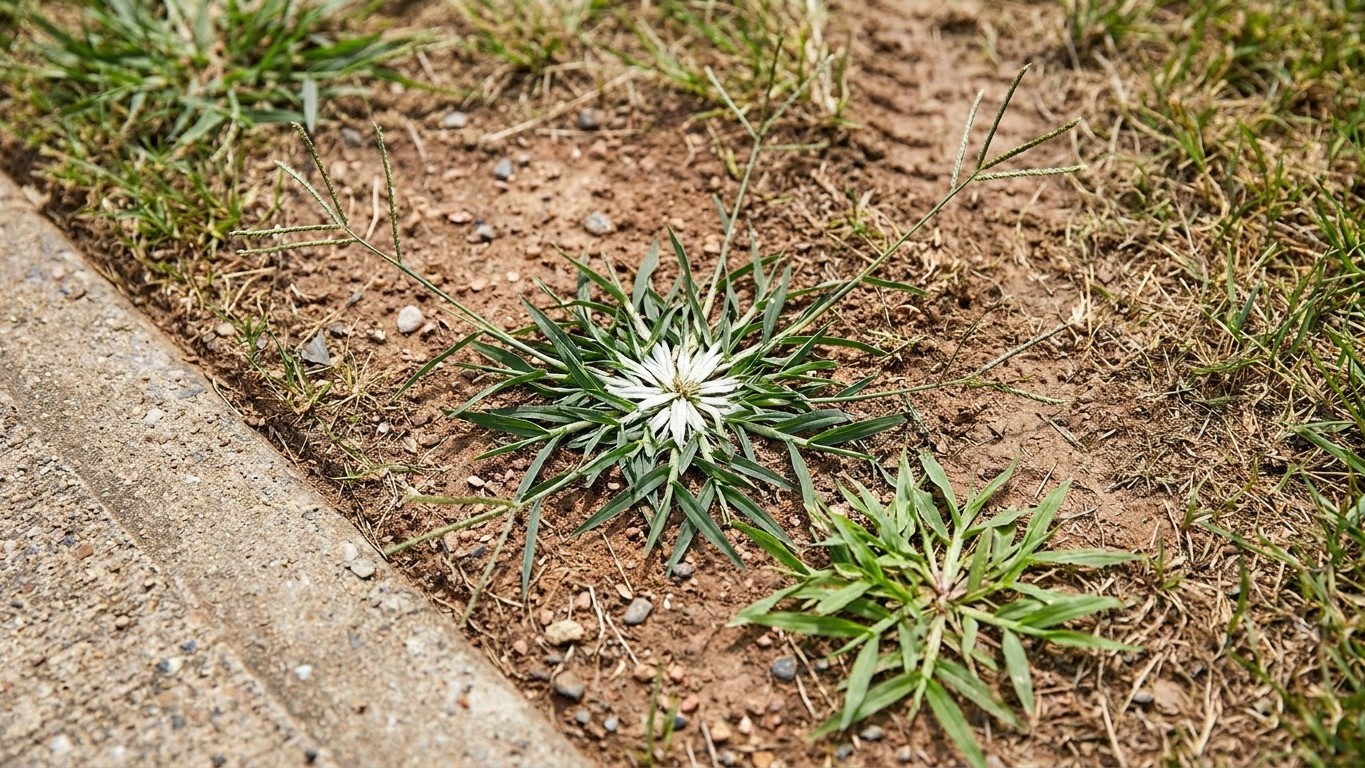

Aerate a Louisiana lawn in summer, while warm-season grass is growing hard. Most national advice points to fall, but that timing is written for cool-season lawns. Louisiana turf needs heat to heal over the holes, so the work belongs in the warm months, long before the first fall freeze. Use a core aerator when the soil is moist, never soggy. Southern Louisiana freezes so rarely that frost is a poor guide for anything on the lawn calendar.
When to aerate a lawn in Louisiana
Louisiana grows warm-season turf. Clemson Cooperative Extension (HGIC 1214, Selecting a Lawn Grass) lists the species that suit this climate: bahiagrass, bermudagrass, carpetgrass, centipedegrass, seashore paspalum, St. Augustinegrass and zoysiagrass. A cool-season grass does not hold up here because it struggles through months of hot, humid weather, thins out by late summer and rarely makes it to the next fall. Climate normals for south Louisiana, read against Clemson’s season tolerances, put a lawn there firmly in the warm zone. That label describes the southern part of the state. Higher ground and the northern parishes can run cooler, so a lawn in the far north may behave a little differently.
The usual extension rule comes from the University of Nebraska-Lincoln. For cool-season grasses, it says they “can be aerated in spring from early April through the end of May and again in fall from late August through the end of October.” For warm-season lawns, it says they “should also be aerated when they are growing actively, which is late May though late August” (UNL Water, Getting Your Lawn Ready for Summer: Aeration). Those months are Nebraska’s. Nebraska’s summer is shorter and its frost comes earlier, so the calendar does not copy over. The condition does carry over: a warm-season lawn gets aerated when it is growing actively.
For Louisiana, aerate during summer active growth, once the lawn has fully greened up and while it is still being mowed every week. Pick a stretch when rain or irrigation has soaked the ground. Grass that is growing fast closes the holes, while grass stuck in a drought or a cold snap sits there with open wounds.
Frost barely enters the picture in the south. NOAA NCEI’s 1991-2020 Climate Normals put the first fall 32F freeze, in the 30-70% probability band, between December 17 and January 8 at the south Louisiana station. A 32F freeze happens in only 86.8 percent of years there, so roughly one year in seven has no freeze at all. The window straddles the New Year. The limit on this calendar is summer heat and the end of strong growth, which comes well before December.
North Louisiana freezes far more reliably and the first freeze arrives earlier, so lawns there should finish aerating earlier in the season. For the rest of the year’s tasks, see The Louisiana Lawn Care Calendar, Month by Month, and check First and Last Frost Dates in Louisiana for your area’s freeze odds.
Core aeration, not spikes
A core aerator pulls out plugs of soil and leaves open holes. A spike tool pokes holes by pushing soil sideways, which can pack the walls of each hole even tighter. UNL Extension notes that solid-tine or spike aeration is “not effective in clay/silt soil,” and says core aeration is the method for compacted ground. Any yard where builders scraped the topsoil, drove equipment across the lot or filled in a low spot is likely to be compacted, whatever the original soil was.
Louisiana’s state soil is the Ruston series, an Ultisol. USDA NRCS records its surface layer as about 65 percent sand, 11 percent clay and 24 percent silt, with about 1.8 percent organic matter, a surface pH of about 5.5 (slightly acid), and good drainage. It is an old, heavily weathered soil that is naturally acid and low in nutrients. Sandy ground like that drains fast and does not compact as readily as heavy clay. The state has hundreds of soil series, though, and river bottoms, hill country and any ground a builder has touched will behave differently. A soil test gives your own pH and nutrient numbers, and a county extension office can tell you what to do about them.
Use a core aerator, and skip the spike tool or spiked shoes, especially on heavy or compacted ground. Good cores are short, firm plugs with grass and roots on top and soil below, spaced evenly across the lawn. If the machine is only scratching the surface or bringing up crumbled dust, the ground is too dry. If the cores smear or the tines clog with mud, it is too wet.
Moist but workable soil is the target. A simple test is to push a screwdriver into the lawn. If it slides in without a fight, the soil is ready. A handful squeezed in your fist should hold together loosely and crumble when poked. Leave the cores on the surface. They break down with mowing and rain, and they return soil and thatch to the turf.
Aerating and overseeding together
On a cool-season lawn, fall aeration and overseeding are a natural pair. The seed falls into the holes, stays moist and touches soil, so more of it sprouts. That pairing is why northern advice lumps the two jobs together.
It does not fit a Louisiana warm-season lawn, because the best time to aerate is summer, when a cool-season seed would die in the heat. Winter overseeding is a separate decision that many Louisiana homeowners make for green color through the cool months, and it follows its own calendar. When to Overseed a Lawn in Louisiana covers the timing and the choices.
Treat summer aeration and any fall overseeding as two separate jobs, and only seed in the summer when you are filling thin spots with a warm-season grass that grows from seed. Some of the grasses Louisiana homeowners use are normally established from sod or plugs, and The Best Grass Seed for Louisiana Lawns sorts out which is which. If you do seed into aeration holes in summer, keep the soil damp until the seedlings are up, because hot weather dries holes out quickly.
The general advice for the rest of the year is in Lawn Care.
What goes wrong
The first mistake is aerating a dormant lawn. Warm-season grass turns tan and stops growing once nights cool down, and it has no energy to fill open holes. The cores sit there while winter weeds move in, so skip aeration once the lawn has slowed in fall.
Aerating too close to the first fall frost is the second. Because south Louisiana’s first freeze comes so late (December 17 to January 8 in NOAA NCEI’s normals), it is easy to think there is plenty of time. The grass will have slowed down long before that date. Finish aerating well before growth slows in fall, with the lawn still actively mowed.
Soil that is too wet or too dry is the third problem. Waterlogged ground smears under the tines and seals the holes shut, which defeats the point. Bone-dry ground makes the tines bounce off, and the cores are shallow and broken. Wait for a good rain or run the irrigation, then use the screwdriver test.
The last mistake is expecting spikes to fix clay. A heavy, compacted yard will still be heavy and compacted after a spike pass, and pulling cores is what helps. If water still puddles after aerating, the cause may be grade, thatch, or a hardpan layer, and a county extension agent can help diagnose it.
Common questions
Can I aerate my Louisiana lawn in fall?
Early fall is fine for a warm-season lawn only while it is still growing strongly. Once growth slows with cooler nights, the grass cannot recover well, so it is safer to wait until the next growing season.
How often should I aerate?
Compacted lawns, such as those with heavy foot traffic or builder-scraped ground, benefit from yearly aeration. Lawns on sandy, well-drained soil often need it less. A screwdriver that will not push in easily is a sign the ground is compacted.
Should I aerate before fertilizing?
Aerate when the lawn is growing, and fertilize after the grass has recovered. A soil test tells you what the lawn needs, and acid soil may call for lime rather than fertilizer.
Do I need to rent a machine?
For a core aerator, yes, unless you hire a lawn service. Manual core tools exist for small areas. Spike tools are cheap, but they will not fix compaction.