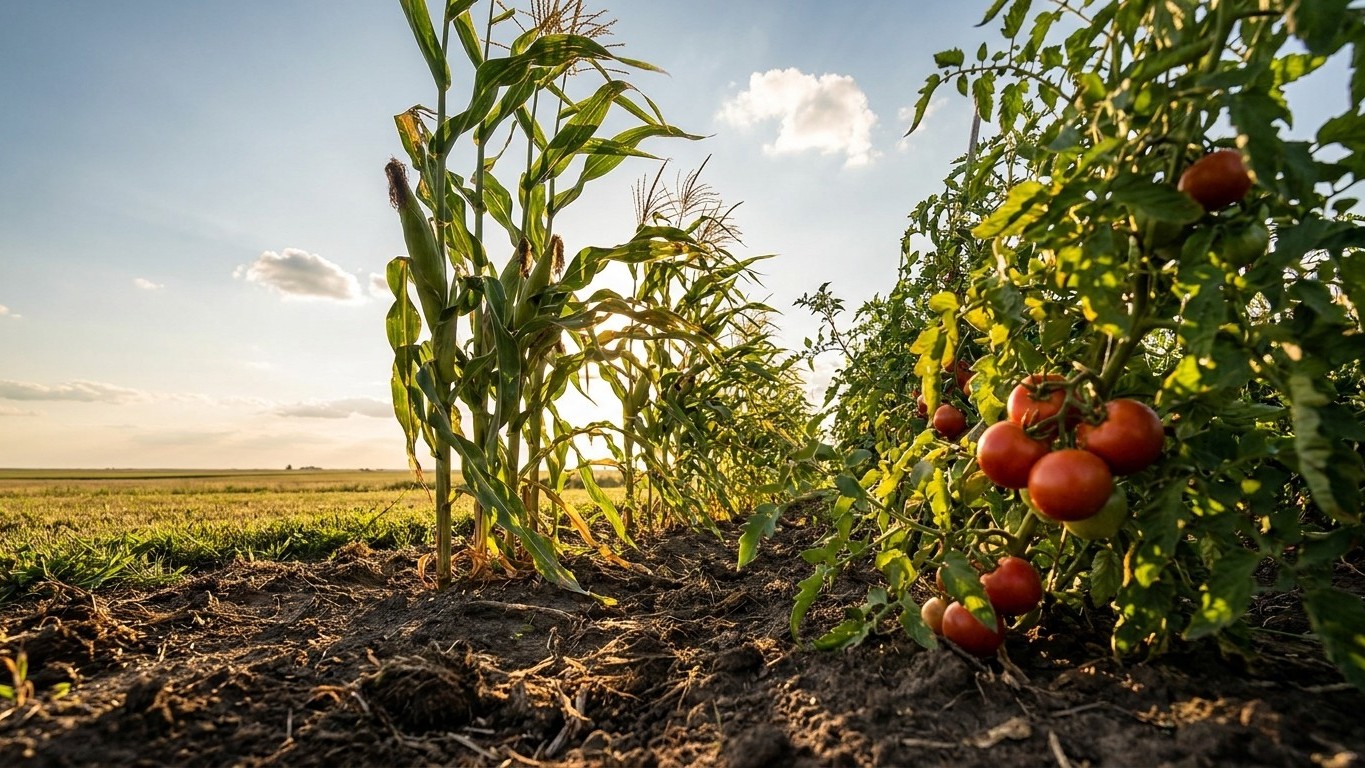

Sweet corn in Nebraska gets eaten in three waves. Seed and seedlings go first, in cool soil. Leaves, tassels and silks come next, once the plants are growing fast. Ripe ears are last, and they draw insects and animals alike. The order follows the plant’s own calendar, so the soil temperature at planting and the frost window decide what you meet and when. This guide covers the sweet corn growing basics from the pest side.
Which pests attack corn in Nebraska
The documented list for the state comes from University of Nebraska–Lincoln Extension (Nebraska Extension), which tracks crop insects county by county. Its published pest guidance for corn is organized by the part of the plant being eaten, and that is the most useful way to sort what you find in a garden row. Four groups matter for sweet corn: those that attack the seed and seedling, those that chew the leaves and whorl, those that feed on silks and ear tips, and animals that raid the ears. The exact species in each group differ from one county to the next, so the species name is the county office’s job. The pattern of damage is yours to read.
Which damage belongs on a sweet corn patch?
Seed and seedling damage shows up as gaps in the row, cut-off seedlings or seed that never came up. Leaf damage shows up as holes and ragged edges, often inside the central whorl. Ear damage starts at the silk end, where the tip is chewed or tunneled. Animals leave something different: stripped husks, ears pulled sideways, stalks bent or flattened.
Which pests can you ignore here?
Extension pest lists for the state also cover orchard insects, shade-tree borers, lawn grubs and stored-grain pests. None of those feed on a growing corn plant. A tree borer needs wood, a grain beetle needs dry kernels in a bin, and a lawn pest lives in turf roots.
Match the damage to the plant part before you match it to a name. Where the chewing is, whether it is on seedlings, whorl, silks or ears, narrows the field faster than any insect photo. A county Extension educator can then confirm which species is active near you this season.
When each one shows up, and what it does first
Start with the soil. Ordinary sweet corn should not go in until the soil at the 4-inch depth is at least 50 °F, and extra-sweet types should wait until it reaches 65 °F. At the Omaha reference station the last spring frost falls between April 12 and April 23. Soil reaches those temperatures well after that date, so seed goes in later than the frost date suggests. Rural and suburban gardens usually see the last frost a week or two later than that airport station.
The first thing you see is a thin stand. Seed sown into cold soil sits there, and that waiting time is when seed and seedling feeders get their chance. An extra-sweet seed planted at 50 °F tends to rot instead of sprouting, which can look like pest damage. If the row has gaps, dig up a few missing spots and look at what is left of the seed.
A few weeks after emergence, the first leaf damage appears. Look in the whorl, the tight funnel of new leaves at the top of the plant. Holes drilled through a leaf while it is still rolled up open into neat lines when the leaf unfurls. Ragged edges and shredded tissue on older leaves come a little later.
Silking is the next stage, and it arrives roughly two months into the 60 to 90 days that sweet corn needs from planting. At the reference station the first fall frost comes between October 15 and October 26, so a late-maturing type planted late has little room. Our guide on whether sweet corn will ripen in Nebraska works through that fit. When the silks emerge, what you see first is silk that has been clipped short, or brown, chewed tips on the ear. Damage here can reduce pollination and leave bare patches of kernels.
Ripe ears bring the last visitors. Animals tend to arrive the week the ears fill out, and most of the damage happens in a night or two. The signs are husks peeled back, partly eaten ears and stalks knocked over. Insects at this stage work from the tip inward. If you find damage at the silk end, the culprit is probably an insect. Whole ears torn off point to an animal.
Telling the damage apart from everything else
Many sweet corn problems look like insect damage and are not. Heat is one source. The Omaha reference station averages 28.1 days a year at 90 °F or more, and on those days plants roll their leaves and pollination can suffer. Cold soil, hail, wind, a nitrogen shortage and disease also produce symptoms that get blamed on bugs. The table below gives the sign that separates each one. Whatever the sign shows, confirm it with your county Extension office before treating anything.
| What you see | Possible causes | What settles it |
|---|---|---|
| Gaps in the row, seedlings missing | Insect feeding, or seed that rotted in soil below 50 °F (65 °F for extra-sweet) | Dig where seed was sown. Rotted, soft seed points to cold soil. Chewed or hollowed seed and cut stems point to feeding. |
| Holes and shredded leaves | Insect chewing, hail, wind | Hail and wind damage runs in the same direction across many plants after one storm. Insect holes vary plant to plant, and droppings may sit in the whorl. |
| Yellowing, rolled or tan leaves | Nutrient shortage, water stress, heat, disease | Yellowing that starts on the oldest leaves suggests a nutrient shortage. Rolling at midday that eases by evening suggests heat or water stress. Distinct spots or streaks suggest disease. |
| Ear with bare patches of kernels | Poor pollination, or feeding at the silks | Check the planting shape. Fewer than three rows side by side pollinates poorly. Clipped silks or chewed tips point to feeding. |
| Ears torn or stalks flattened | Animals, wind | Animals leave stripped husks and bite marks. Wind lays whole rows over in one direction. |
One look-alike deserves its own mention. Sweetness drops when su, se and sh2 types tassel at the same time, and the ears can then look starchy and uneven even with no insect in sight. That is a planting-timing problem, and an insecticide will not fix it.
What actually works here, and what is a waste of time
On a season this short, the calendar does more work than any product. Plant when the soil at the 4-inch depth reaches 50 °F for ordinary sweet corn, or 65 °F for extra-sweet. Seed that germinates quickly spends less time exposed to whatever lives in the soil, and a vigorous seedling tolerates leaf damage better. The sowing window for sweet corn in Nebraska lays out how that fits the frost dates.
Physical barriers come second. Floating row cover over young plants keeps insects off while they are small, but it has to come off before tassels open so pollination can happen. Fencing helps against ear raiders, and it works best when it goes up before the ears fill, since animals learn a patch quickly. Planting in blocks of three or more rows makes pollination more complete and leaves fewer exposed ear tips. Staggering plantings so that su, se and sh2 types do not tassel together protects sweetness. None of that needs a spray.
Picking on time also counts as pest control. Clemson Extension puts it this way: “Sweet corn loses sugar from the kernel rapidly at high temperatures… Sweet corn can be stored under optimal conditions for about five days, but will lose sweetness with each day of storage.” Ears left on the stalk past their window attract more trouble and taste worse. Among the sweet types, su loses sugar fastest, se holds it longer and sh2 longest.
The waste of time is spraying by the calendar with no identified target. A product matched to the wrong insect does nothing, and a spray applied after the damage is already inside the ear cannot reach it. For anything chemical, ask the Extension office what is registered for sweet corn in Nebraska, because only they know what is currently approved in the state.
Where to check this for your own county
The right place is your county office of University of Nebraska–Lincoln Extension. Staff there know which insects have been active locally this season, which planting dates have worked in your area and what is currently registered for home gardens in the state. Many offices accept a photo or a sample of the damaged plant part.
Presence of a pest varies inside the state. The frost dates quoted here, April 12 to April 23 for the last spring frost and October 15 to October 26 for the first fall frost, come from the Omaha reference station. Gardens outside the city typically see the last spring frost later and the first fall frost earlier, often by one to two weeks, and more at elevation. What is documented across the state does not tell you what is in your own rows.
Write down your planting date, your soil reading at 4 inches and the variety type you chose before you call. Those three facts let an educator narrow a diagnosis quickly. Take a photo of the damaged plant part and a close shot of any insect to the county office this week.
Common questions
When should I start checking sweet corn for pests?
Start the day the seed goes in, by watching for gaps in the row, and keep checking through silking. The stage decides what to look for: seed and seedlings first, then whorl and leaves, then silks and ear tips.
How can I tell if the ear is ready or if it has been damaged?
Ripeness shows in three signs together: dry brown silks, husks still moist and green, and milky juice when a kernel is punctured. Damage shows as chewed tips, tunneling or torn husks, and none of the three ripeness signs rule it out.
Does the type of sweet corn affect how much pest damage I get?
Type matters most for sugar and for germination. Extra-sweet (sh2) seed needs 65 °F soil at the 4-inch depth, and su, se and sh2 types should not tassel together. Ask the Extension office whether any variety suits your county’s pests.
Is it too late to plant if I missed the soil-temperature window?
Sweet corn needs soil above 60 °F and 60 to 90 days from planting. Count forward from the day you plant to the first fall frost, which at the Omaha reference station falls between October 15 and October 26. Rural gardens usually see that frost sooner, so check your county before committing a late planting.