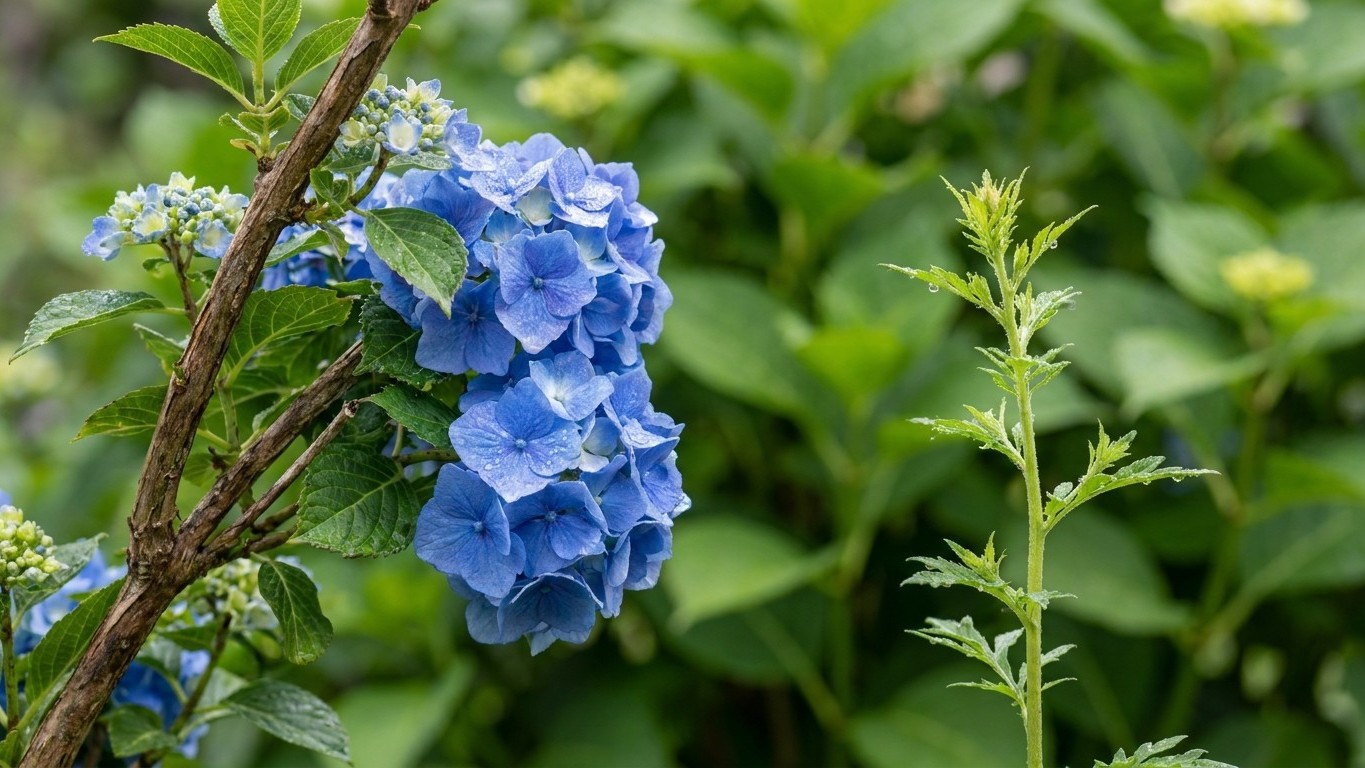

Plant hydrangeas in western Washington in fall, from late September through October, or in spring once the soil has drained and warmed. East of the Cascades, wait for spring and choose the hardier panicle and smooth types. Bigleaf hydrangeas on the east side are a gamble in winter. Flower color on bigleaf types depends on soil pH, and that is the one thing you can adjust. For the national picture, see How to Grow Hydrangeas: The Complete Guide.
When to plant Hydrangeas in Washington

The reference station for the frost dates below is Seattle-Tacoma, in the mild maritime lowlands of western Washington. NOAA’s 1991-2020 Climate Normals put the last spring freeze there between February 27 and March 18, and the first fall freeze between November 13 and November 30. Those are the 30 to 70 percent probability band for 32°F. Northern parts of the state and anywhere at higher elevation run later in spring and earlier in fall. Eastern Washington beyond the Cascades is high desert with a far shorter season, so do not borrow the Seattle dates there.
A mild frost date does not mean an early planting date. Soil in the Puget Sound lowlands stays cold and saturated well past the last freeze, and light levels in March are low. A hydrangea set into soggy ground in February sits there with its roots doing very little. Hydrangeas are not really planted by the frost calendar anyway. The goal is to get roots established before the plant has to cope with either summer drought or a hard winter.
When is the best time to plant hydrangeas west of the Cascades?
Fall is the best window. Late September through October gives you warm soil and the return of regular rain, so roots grow for weeks before the plant goes dormant. A fall-planted shrub usually enters its first summer with a root system that can handle the dry July and August stretch typical of the region. The second-best window is March through May. Check the soil before you dig: squeeze a handful, and if it forms a muddy ball that drips, wait a week. Planting in midsummer works only if you commit to deep watering every few days.
What about eastern Washington and higher elevations?
Spring planting is the safer choice east of the Cascades and in the mountain valleys. Wait until the hardest freezes are behind you, which can mean weeks to a couple of months after the western dates. If you plant in fall, do it early enough that roots can settle in before the ground freezes. Gardeners in the Spokane and Yakima areas face winters and summers closer to what Growing Hydrangeas in Idaho: Types, Colour and Winter describes than to anything in Seattle. Your county Extension office can tell you the local dates.
Can you start hydrangeas from seed or cuttings?
Seed is the wrong route. Seedlings are variable, slow, and rarely true to the parent. Gardeners propagate hydrangeas from softwood cuttings taken in early summer, which root in a humid, shaded spot. Count back from your planting date to see if it works. A cutting rooted by August, potted up, and grown on through fall will be ready to plant out the following spring. Most people simply buy a nursery shrub.
Do hydrangeas need hardening off?
Plants grown in a heated greenhouse, and any rooted cuttings you raised indoors, need a gradual adjustment. Put them in open shade outdoors for a few hours, then lengthen the time and move them toward sun. Bring them in on cold nights. Hydrangeas from the nursery yard are already acclimated. Keep a bedsheet or frost cloth handy, because bigleaf hydrangeas leaf out early and the soft new growth blackens in a late freeze.
Soil and site preparation
Give hydrangeas morning sun and some shade in the afternoon. That exposure works nearly everywhere in the state. West of the Cascades, where summers stay cooler, panicle types handle full sun, and even bigleaf types tolerate more of it than they would in the South. East of the mountains, afternoon heat scorches leaves quickly, so an east-facing wall or the shade of a tall tree is worth a lot. Avoid spots where wind funnels between buildings, because it dries leaves and breaks stems.
The ideal soil is loose, rich in organic matter, and moist without staying wet. Many yards in the Puget Sound lowlands sit on compacted, slow-draining ground, and hydrangeas hate standing water around their roots. Test drainage before you buy anything. Dig a hole, fill it with water, and let it drain. If it still holds water the next morning, build a raised bed or mound the planting area. In the drier east, the problem flips: sandy or rocky soil dries out fast and needs compost to hold moisture.
Prepare the bed a few weeks before planting day. Spread compost over an area wider than the root ball and work it into the soil. For a fall planting, do this in late August or early September. Mixing amendments into a small hole alone creates a pocket that holds water and discourages roots from moving outward. Dig the hole wider than the root ball and set the top of the root ball level with the surrounding soil.
Spacing depends on the type. Bigleaf hydrangeas, panicle types, and smooth hydrangeas each need their own spacing. Crowded plants get mildew. Finish with 2 to 3 inches of bark or leaf mold, pulled back from the stems, and water deeply.
How do you change hydrangea color in Washington?
Test the soil pH first. Your Washington guides hub points to local testing resources, and your county Extension office can direct you to a lab. Bigleaf hydrangeas turn blue in acidic soil because aluminum becomes available to the roots. They turn pink in less acidic soil. In between you get purples and mixed heads. White varieties do not change, and the panicle and smooth types do not respond to pH.
Soils west of the Cascades tend to run acidic, which makes blue easier to hold there. Many east-side soils lean alkaline, so pink is the natural result. To push blue, apply aluminum sulfate following the label. To push pink, work garden lime into the soil in fall or early spring. Change takes a full season or more, and pot-grown plants shift faster than ground-planted ones.
Varieties that suit Washington
The trait that matters most is whether a hydrangea blooms on old wood, last year’s stems, or on new wood grown this spring. Old-wood bloomers like most bigleaf and oakleaf types lose their flower buds if a hard winter or a late freeze kills the stems. New-wood bloomers, the panicle and smooth types, regrow from the base and bloom anyway. That makes them the dependable pick for colder or more exposed sites, including the east side and higher-elevation valleys. On the mild west side, any type works.
The other traits are sun tolerance, stem strength, and mature size. A compact variety fits a small city lot, and a stiff-stemmed one stays upright after the autumn rains. The table sorts widely available choices by what each does well.
| Type | Widely sold examples | Blooms on | Good for |
|---|---|---|---|
| Bigleaf | Endless Summer series, Let’s Dance series | Old and new wood (reblooming types) | Mild west side, color change by pH, partial shade |
| Panicle | Limelight, Little Lime, Quick Fire | New wood | Sun, wind, colder east-side sites, long season of bloom |
| Smooth | Annabelle, Incrediball | New wood | Cold winters, shadier spots; Incrediball has sturdier stems |
| Oakleaf | Snow Queen | Old wood | Dry shade, red fall foliage, peeling bark in winter |
Reblooming bigleaf types are worth a look in Washington’s cooler zones. They can set flowers on new growth if frost takes the old buds, so you get something in a bad year. They still do best in the maritime climate west of the Cascades. Panicle types like Limelight and Quick Fire carry the most weight if you garden east of the mountains. They bloom later and hold their dried heads into winter, which adds structure when little else is happening. For a smaller yard, Little Lime keeps a tidy size, and bigleaf mopheads in a pot on a protected patio are a fine alternative.
For a cooler maritime comparison, see Growing Hydrangeas in Newfoundland and Labrador: Types, Colour and Winter, where the same logic of old versus new wood decides what survives. Check plant tags for mature size, since labels vary from nursery to nursery.
What to plant alongside
The best companions share a hydrangea’s tastes: part shade, steady moisture, and soil on the acidic side. Rhododendrons and azaleas fit all three and bloom earlier, so the bed has color before the hydrangeas open. Ferns, especially native sword fern, fill the shadier edges and handle the same watering. Astilbe, heuchera, and foamflower add texture beneath the shrubs. Sweet woodruff makes a low ground cover that shades the soil and cuts down on weeds.
Hostas are a popular pairing, but they share the slugs that plague Washington gardens. If you already battle slugs, a bed that combines hostas and hydrangeas gives them a place to hide and breed. Use hostas sparingly, and keep slug traps or iron-phosphate bait nearby. Large trees are another common problem. Bigleaf maples, cedars, and birches pull moisture and nutrients from a wide zone, and a hydrangea planted close will struggle. Plant beyond the drip line, or accept extra watering.
Mophead and oakleaf types often have mostly sterile flowers, which offer bees little. Lacecap, panicle, and smooth types carry small fertile flowers among the showy ones and draw more pollinators. If you want a pollinator bed, choose those or add nearby plants like hardy geraniums.
Keep lavender, rosemary, and other Mediterranean plants well away. They want dry soil, and hydrangeas want moisture, so one of them always suffers. Lawn grass right up to the stems competes for water and picks up the nitrogen you meant for the shrub, so leave a mulched ring around it. Claims that marigolds or garlic planted at the base will keep aphids off hydrangeas have little evidence behind them. Healthy plants and a strong blast of water from the hose do more.
Watering, feeding and support
Dry summers are the main stress on hydrangeas in western Washington. Rain is frequent through spring and fall, then largely stops from July into September. In the first two summers, soak the root zone deeply and slowly. Frequent light sprinkling keeps roots shallow. Water at the base in the morning so leaves dry quickly and stay clean of fungal disease. In the east, where summers are hotter and drier, expect to water more often and mulch more heavily.
Midday wilting on a hot afternoon is normal, because the big leaves lose water faster than the roots can supply it. Check again in the evening. If the leaves have recovered, the plant is fine. If they stay limp after sunset, dig down a few inches. Dry soil means water now, and soggy soil means the roots are failing, which is a drainage problem.
How and when should you feed hydrangeas?
Feed lightly. A balanced slow-release fertilizer applied as buds break in early spring is usually enough, with a second small dose in early summer if growth looks weak. Stop feeding as the season winds down. Late nitrogen pushes soft growth that gets hurt by the first freeze. Too much nitrogen gives you large leaves, floppy stems, and few flowers. Renew the 2 to 3 inches of mulch each spring, because it holds moisture and keeps the shallow roots cooler.
When should you prune hydrangeas?
Timing depends on the type. Bigleaf and oakleaf hydrangeas bloom on old wood, so prune right after flowering, by August, and otherwise only remove dead stems in spring once leaf buds have swelled and you can see what survived. Panicle and smooth types bloom on new wood and take hard pruning in late winter or early spring. Cut panicles back. Smooth hydrangeas like Annabelle can be cut back hard. Bigleaf and oakleaf plants send up suckers from the base, so thin them to keep the clump open.
Panicle and smooth hydrangeas carry heavy flower heads that flop after rain. Set a peony ring or a few stakes around them in early summer, before the heads get heavy. Varieties with stiff stems, like Incrediball, need less help.
Common problems

Most hydrangea trouble shows up on the leaves or flowers first. Reading the symptom tells you where to look.
What do hydrangea leaf and flower symptoms mean?
Black, shriveled new growth in spring points to a late freeze. Cut it back to healthy buds and cover plants next time. Brown, crispy leaf edges in summer mean sunscorch or underwatering, so add mulch and shift to deeper watering. Yellow leaves with green veins indicate chlorosis, often from soil that is too alkaline for iron uptake. Test the pH before adding anything.
No blooms on a bigleaf hydrangea usually means the flower buds died over winter, or the plant was pruned at the wrong time. Too much shade or too much nitrogen can also cause it. Purplish-brown spots on the leaves are leaf spot, common in wet springs. Clear fallen leaves, avoid overhead watering, and give plants room. White powdery coating, mostly in crowded or shady beds, is powdery mildew. Improve airflow and thin stems.
Which pests bother hydrangeas in Washington?
WSU Extension’s Hortsense fact sheets name slugs, aphids, spider mites, and earwigs among the pests that matter in Washington gardens, and all four visit hydrangeas. The list is not exhaustive, and pressure varies across the state.
- Slugs chew ragged holes in leaves and leave silvery trails. Hand-pick at dusk or use iron-phosphate bait.
- Aphids cluster on soft new growth. A strong stream of water knocks them off, and insecticidal soap handles heavier infestations.
- Spider mites cause fine stippling and dusty webbing on leaf undersides, and show up during hot, dry spells. Spray the undersides with water.
- Earwigs chew petals and leaf edges at night. Rolled newspaper laid near the plant catches them overnight.
If damage looks unfamiliar, bring a sample to your county Extension office for identification before you spray anything.
Harvest and end of season
Hydrangeas are grown for their flowers, and cutting them is the harvest. Cut in the morning, when the plant is full of water, and take long stems. Sear or dip the cut ends in hot water and then place them in cool water. For fresh arrangements, choose blooms that are fully open. Mopheads wilt quickly if cut too early in the season.
To dry them, wait until late summer or fall, when the petals feel papery and the colors have shifted to dusty rose, green, or burgundy. Cut stems, strip the leaves, and stand them in an inch of water that you let evaporate, or hang them upside down in a dry, shaded room. Properly dried heads last for months indoors.
Leave the last flowers on bigleaf hydrangeas through winter. The old heads shelter the buds below them, and you can remove them in spring. Panicle heads hold their shape and stand well through the cold months.
By the time the first fall freeze arrives, between November 13 and November 30 at the Seattle-Tacoma reference station, hydrangeas have mostly dropped their leaves and gone dormant. Stop fertilizing by mid-July so that growth hardens off in time. In late fall, add a few inches of mulch over the crown. Move potted plants against a south-facing wall or into an unheated garage, because roots in containers freeze faster than roots in the ground. East of the Cascades, where freezes arrive earlier and run harder, wrap bigleaf plants in burlap and surround them with a cage of leaves.
Local help
County-level planting dates, soil testing, and pest identification are available through Washington State University Extension. Your county office knows the frost pockets, the soil types, and the pest pressure in your area, and can test your soil pH before you decide whether to push for blue or pink. More regional guides are collected in the Washington guides hub.
Common questions
Can hydrangeas grow in eastern Washington?
Yes, with the right choices. Panicle and smooth types bloom on new wood and survive hard winters that kill bigleaf flower buds. Plant in spring, give afternoon shade, mulch heavily, and water through the dry summer. If you want a bigleaf, put it in a sheltered spot against a wall and wrap it for winter.
Do hydrangeas like full sun in western Washington?
Panicle types handle full sun in the cooler maritime climate. Bigleaf, oakleaf, and smooth types do better with morning sun and afternoon shade. On hot south- or west-facing sites, even panicles scorch if the soil dries out, so keep them mulched and watered.
Why are my hydrangeas not blooming?
The usual cause on bigleaf and oakleaf types is lost buds: a freeze took them, or the plant was pruned in fall or spring. Dense shade and heavy nitrogen are the other common reasons. Switch to a reblooming bigleaf or a panicle, and only prune old-wood bloomers right after flowering.
Should I cut hydrangeas back in fall?
Generally no. Dead heads protect the buds on old-wood types, and panicle and smooth hydrangeas are better pruned in late winter. Remove only broken or clearly dead stems. Wait until leaf buds swell in spring to see what survived the cold.
Are hydrangeas deer-resistant?
No. Deer browse hydrangeas, especially the tender new growth in spring, and the plants are often eaten when other food is scarce. Where deer are a problem, use fencing or plant protection, and expect to replace damaged stems. Because panicle and smooth types bloom on new wood, they recover from heavy browsing more reliably than bigleaf types, which can lose a year’s flowers.