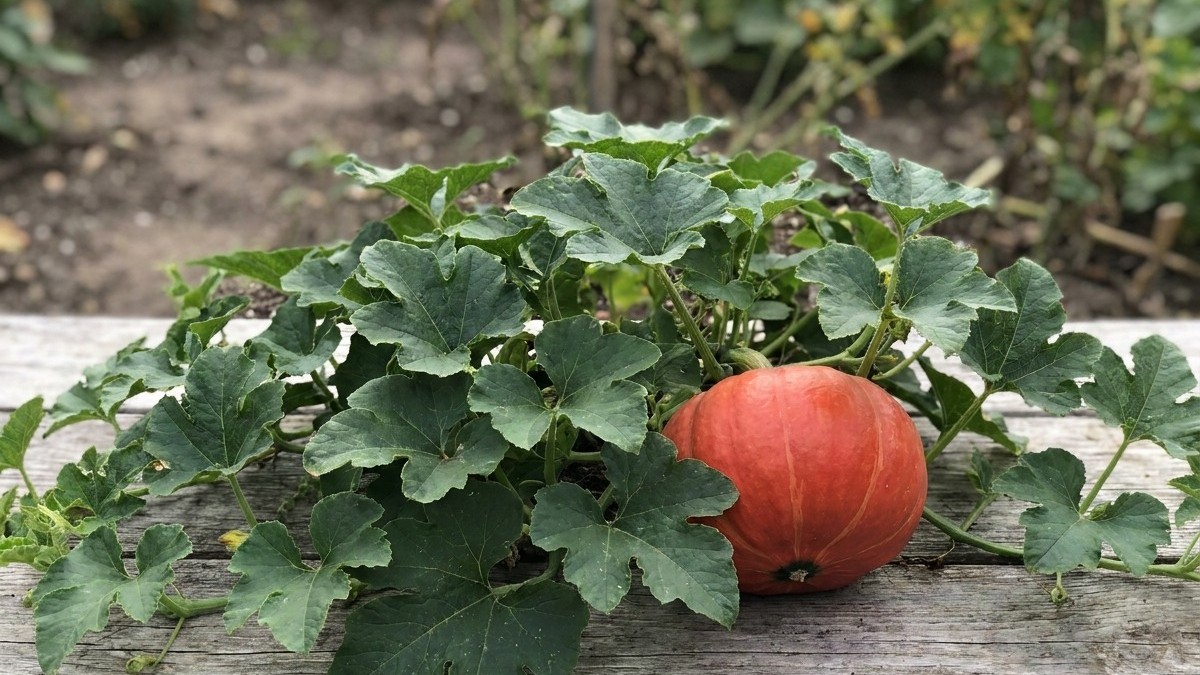

Cut a pumpkin when the rind is too hard to dent with a thumbnail, the color is deep and even, and the stem has gone dry and woody. In New Brunswick that usually lands between mid-September and the first days of October. A whole pumpkin stored cool and dark can then last up to six months, though that is the best case, and a warm hallway or a damp porch shortens it fast.
When pumpkins are ready in New Brunswick
Watch the fruit, and let the calendar come second: a pumpkin is ripe when the skin has hardened and the color has set, and the clock that gets it there is 45 to 55 days after the flower opens. For most New Brunswick gardens that puts the cutting window from mid-September into the first days of October, just ahead of the first fall frost.
That count starts at flowering. It does not start at seeding or transplanting, which is the mistake that throws off most harvest guesses. Utah State University Extension gives the same clock, and says to sow once the soil reaches 65 F. Soil at 65 F is not the same as the last spring frost. The ground warms weeks behind the air, so a garden can be frost-free in late May and still have soil too cool for seed.
How do the frost dates shape the window?
Environment and Climate Change Canada’s climate normals for the Moncton station put the average last spring frost on May 23 and the average first fall frost on October 2. That leaves about 132 frost-free days between them. Both are averages. In one year out of two the first frost arrives earlier than October 2, so treat that date as the middle of a range and never as a safe deadline.
Northern and upland districts run weeks behind the Moncton station, so a garden in the upper Saint John River valley or on high ground has less room than the numbers suggest. A neighbor who has grown pumpkins in your area for years will know the local pattern better than any station average.
Now cross the flowering count with the frost date. A flower that opens on August 1 gives a mature fruit between September 15 and September 25. A flower that opens on August 15 gives one between September 29 and October 9, right at the frost line. A flower that opens on September 1 would need until October 16 to October 26, and the fruit will almost surely still be green when the frost comes. Late blooms rarely make a pumpkin. Vines put them on in September, and the gardener ends up with small green fruit on a dying plant.
Whether a green pumpkin will finish after a cold snap is a common worry, covered in Will Pumpkins Ripen Before Frost in New Brunswick?. Pests also slow the fruit, because a vine stripped by insects stops feeding it. What Eats Pumpkin in New Brunswick, and When covers the squash bugs and cucumber beetles that do the damage.
When a frost is forecast and the pumpkins are close, cut them. Use pruners and leave a good handle of stem on each fruit, since Utah State University Extension says to harvest with the stem attached and before frost. A pumpkin carried by its stem is also less likely to break at the neck. Never lift one by the stem alone, because the weight can snap it off and leave an open wound.
Keeping them, and for how long
The University of Illinois Extension says a whole pumpkin keeps for three to six months in a cool, dark location between 45 to 50 F. That is a ceiling set by good conditions. A pumpkin with a bruise, a cracked stem, or a soft patch will go sooner, and a warm or damp spot will shorten the range from either end.
The temperature range matters because heat speeds the aging of the flesh and the rind. A pumpkin in a warm room can turn soft long before the three-month mark. Utah State University Extension adds the bottom limit from the other direction: store pumpkins where they will not freeze.
The second rule from Illinois is the one most people do not know. Keep pumpkins away from any ripening fruit or vegetables, and the extension names apples, potatoes, and tomatoes. Ripening produce gives off a gas that ages the pumpkin. That makes the porch next to the apple crate one of the worst places for it, and so is the cellar shelf beside a bin of potatoes.
Does the three-to-six-month range apply to a carved pumpkin?
No. The range is for a whole pumpkin with its skin intact. Once it is cut, the flesh is exposed to air and mold, and a carved jack-o’-lantern lasts only a short time, and less in mild, damp weather. If you want a pumpkin for Halloween and for the table, carve one and keep the others whole until you need them.
A few habits stretch the whole-pumpkin range toward its upper end. Cut with the stem on. Wipe off soil with a dry cloth. Keep them off bare concrete, which holds damp and cold. Store them away from any ripening fruit or vegetables such as apples, potatoes, or tomatoes. A soft spot spreads, so any pumpkin that develops one goes to the kitchen first. The firm ones can wait.
Where in the house that actually is
The target of 45 to 50 F is cooler than a living space and warmer than a refrigerator. A domestic fridge runs well below that range and has no spare shelf for a pumpkin anyway. A heated room runs far above it. A garage may look like the answer, but it swings with the weather, and a New Brunswick garage can dip below freezing in a cold snap, which is exactly what the pumpkins must avoid.
The closest fit in most houses is an unheated basement room, a cold cellar, or a closet on the north wall of the house against an exterior wall. These spots stay dark and cool. They also hold a steadier temperature than a garage, since the ground and the wall keep the air from swinging much between day and night. An enclosed porch that stays above freezing can work in fall, then fail once December arrives.
Whichever spot looks best, check the temperature there before you move the pumpkins in. If the low dips toward freezing, or the high sits well above 50 F because the furnace is on the other side of the wall, pick a different place. Skip the check and you may find a slumped pumpkin in January, with months of storage lost.
Look at what else is in the room, too. A basement that doubles as the root cellar for apples and potatoes is the wrong home, because of the ripening gas. If that is your only cool space, put the pumpkins as far from the produce as the room allows, and watch them more often. Keep the room dim, since light does not help a stored pumpkin, and make sure there is some air movement so damp does not collect on the rind.
Common questions
Will a frost ruin pumpkins still on the vine?
Harvest with the stem attached, before frost. A hard freeze can get into the pumpkin itself and shorten its keeping time, and a frozen fruit will not store. When frost is in the forecast and the rind is hard, cut the pumpkins and bring them in rather than gamble.
Is October 2 a safe date to harvest by?
No. October 2 is the average first fall frost at the Moncton station, which means that in about half of years the first frost comes before it. Plan to be done a week or more ahead, and expect colder districts to run weeks behind Moncton’s season.
Can I keep pumpkins next to apples or potatoes?
Keep them apart. Ripening fruit and vegetables such as apples, potatoes, and tomatoes give off a gas that ages the pumpkin faster. A separate shelf or a different room gives the pumpkin a better chance of reaching the long end of its range.
Do pumpkins ripen after they are cut?
A pumpkin cut while still green rarely turns into a good one. The 45 to 55 days after flowering do the work on the vine, so the best time to cut is once the rind is hard and the color is set. If a frost threatens a fruit that has only started to color, bring it in, but do not expect it to match one that matured on the plant.