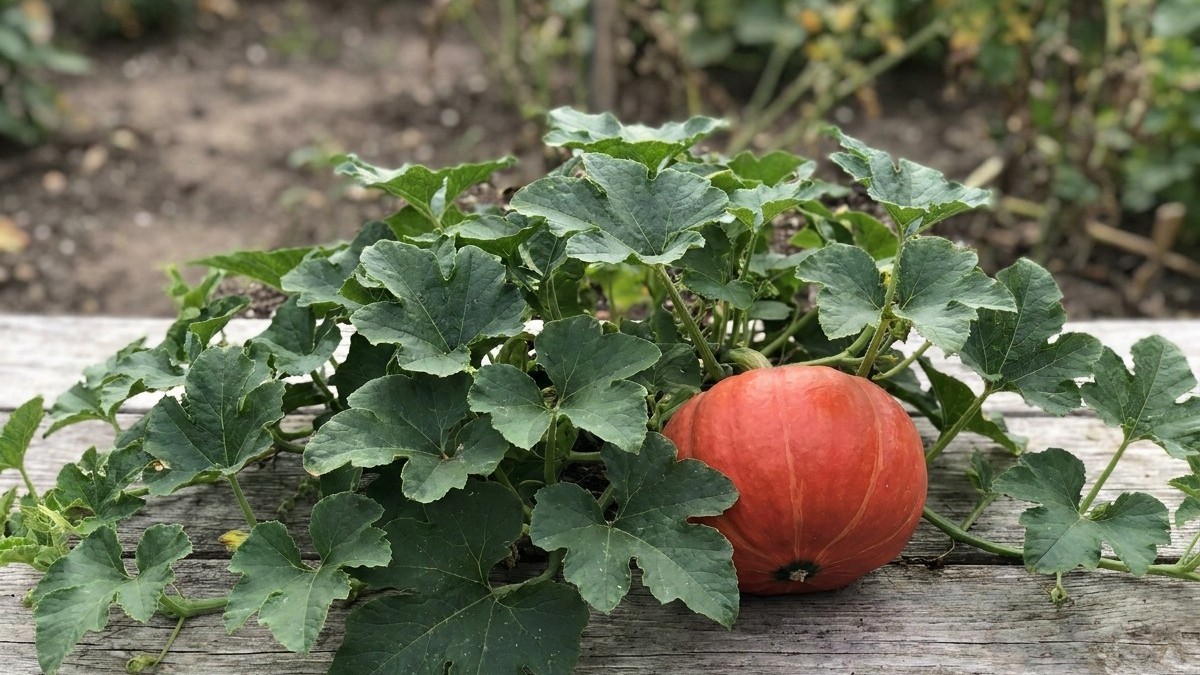

Cut pumpkins when the rind is too hard for a thumbnail to dent, the color is deep and even, and the stem has dried to a woody brown. In Minnesota that usually means late September up to the first fall frost, which in the Twin Cities falls between October 11 and October 23. A whole pumpkin can then keep for three to six months, but only in a cool, dark place that never freezes. Growing the crop itself is covered in Growing Pumpkins in Minnesota.
When pumpkins are ready in Minnesota
Cut pumpkins when the rind resists a thumbnail, the color is fully developed, and the stem is dry and corky. Plan on late September through the first fall frost, which NOAA NCEI climate normals place between October 11 and October 23 for the Twin Cities. Those dates describe the mild south of the state. Northern Minnesota runs two to three weeks tighter at both ends, so the signals show up earlier and the deadline arrives sooner.
How do you tell a pumpkin is ready to cut?
Press a thumbnail into the rind. On a ripe pumpkin it leaves a dent at most and does not break the skin. An underripe fruit punctures easily and often has a glossy, soft-looking surface. Color should be even across the shoulders, and the stem, which stays green and flexible for much of the summer, should have turned hard and brown.
Utah State University Extension says to harvest with the stem attached and before frost. Use pruners or a sharp knife and leave a good handle of stem on the fruit. A stem that snaps off leaves an open wound at the top, so lift the pumpkin from underneath rather than by the handle.
How many days do pumpkins need after flowering?
Utah State University Extension puts maturity at 45-55 days after flowering. The count starts when the flower that becomes the fruit opens. Seed packets count days from sowing, which is a longer stretch that includes the weeks before the plant blooms. The same extension says to sow when the soil reaches 65 F.
That soil temperature is not the last frost date. The last spring frost in the Twin Cities falls between April 17 and April 30, and the soil lags the air by weeks. Seed pushed into cold ground in late April sits there or rots, so wait for a soil thermometer to read 65 F.
Now lay that clock against the fall frost window. To get 45-55 days before frost, a flower has to open somewhere between mid-August and early September in the Twin Cities, depending on whether frost comes at the early or late end of the window. A flower that opens after that produces fruit that is still green when frost arrives. In northern Minnesota, move that deadline two to three weeks earlier.
The practical habit follows from this. By mid-August, stop worrying about new flowers and watch the fruit already set. Anything that opened late is likely to stay green, and Will Pumpkins Ripen Before Frost in Minnesota? covers what to expect from those.
Keeping them, and for how long
University of Illinois Extension says a whole pumpkin keeps for three to six months in a cool, dark location between 45-50 F. Treat six months as the ceiling under good conditions. A pumpkin cut late, bruised in handling, or kept in a warm room will fall short of it, and no extension office promises a particular number of weeks for a particular fruit.
What should pumpkins be stored away from?
Illinois Extension also says to keep pumpkins away from ripening fruit and vegetables such as apples, potatoes, and tomatoes. Ripening produce gives off a gas that ages the pumpkin faster, and most people have never heard of this. It explains why the porch next to the apple crate is the worst place for a pumpkin, even when the temperature there looks fine.
The warning matters in Minnesota because apple season and pumpkin season overlap. A basement shelf that holds a bushel of apples and a bin of potatoes is a poor spot for pumpkins, however cool it is. Give them a separate room, or at least the far end of the space.
Which pumpkins are worth storing long?
Pick the best ones for storage. Utah State University Extension says to cut them before frost with the stem attached, and to keep them where they will not freeze. A pumpkin with a clean rind and an intact stem is the one to put at the back of the shelf. Fruit with broken skin, a snapped stem, or soft spots belongs in the use-first pile for pies, soup, or the porch display.
Summer feeding damage on the rind often shows up here as scars or scabbed patches. What causes it, and when, is laid out in What Eats Pumpkin in Minnesota, and When. For storage purposes, a scarred pumpkin simply gets used first.
One limit to remember: the three-to-six-month range and the 45-50 F temperature describe a whole, uncut pumpkin. A carved pumpkin has its flesh open to the air, and none of those numbers apply to it. Carve close to the day you want to display it. If you need a figure for a carved one, your county extension office can speak to local conditions.
Where in the house that actually is
Few houses have a room that holds 45-50 F by design. A refrigerator runs colder than that range, and a pumpkin that size would not fit in one anyway. Any heated living space is warmer than the range. A garage looks promising but swings with the weather, and in Minnesota a garage wall that shares air with the outdoors can drop below freezing on the same nights that bring the first frost. Freezing is the one thing the Extension guidance rules out for storage.
Which room comes closest?
For most Minnesota homes, an unheated or lightly heated basement room comes closest. The surrounding ground keeps it cooler than the upstairs, and basements are usually dark. Pick a spot away from the furnace, the water heater, and any ductwork, and away from where apples or potatoes are kept. A spare room with the heat vent closed and the door shut can also work, though it may run warmer than a basement corner.
A cold room above the garage, a cellar, or a root-cellar-style closet are other candidates. Each of them has the same question: does the temperature in that exact spot match the range?
What should you check with a thermometer?
Guessing by feel is unreliable, because a room that feels cool to a person in a jacket can still sit well above 50 F. Leave a thermometer in the spot for a few days before you move any pumpkins in. A min-max thermometer is best, because it records the lowest and highest readings overnight and through the day. Skip this step and you may discover in January that a shelf ran warm and the pumpkins softened early, or that a corner dipped to freezing during a cold snap.
Read it again after the first hard cold spell, since a basement near an outside wall cools as the weather turns. Read it again after the furnace starts cycling, since it can warm a nearby shelf. The low should never reach freezing, and the target is the 45-50 F range.
Set the pumpkins on a shelf or on cardboard rather than directly on a damp concrete floor, and keep them from touching each other. Check them about once a week. One soft spot spreads, and a pumpkin caught early can still be cooked, but one found late is a mess.
Common questions
What if frost is forecast and my pumpkins are still green?
Utah State University Extension says to harvest before frost. Cut the ones with a hard rind and full color, stem attached. Fruit that is still green is a judgment call, and the ripening guide linked above explains what to expect from it.
Should I leave the stem on?
Yes. The extension guidance is to harvest with the stem attached. Cut it with pruners rather than twisting, and carry the pumpkin by its body, since a handle that breaks off leaves an opening at the top.
How long does a carved pumpkin last?
The 45-50 F range and the three to six months apply to whole pumpkins. A carved one is cut open and has no such window. Carve it close to the day you want to show it, and expect it to last far less time than a whole pumpkin would.
Do the Twin Cities frost dates apply in northern Minnesota?
No. The October 11 to October 23 window describes the Twin Cities, the mild south of the state. Northern Minnesota runs two to three weeks tighter at both ends, so cut earlier, and count back the 45-55 days after flowering from an earlier frost date.