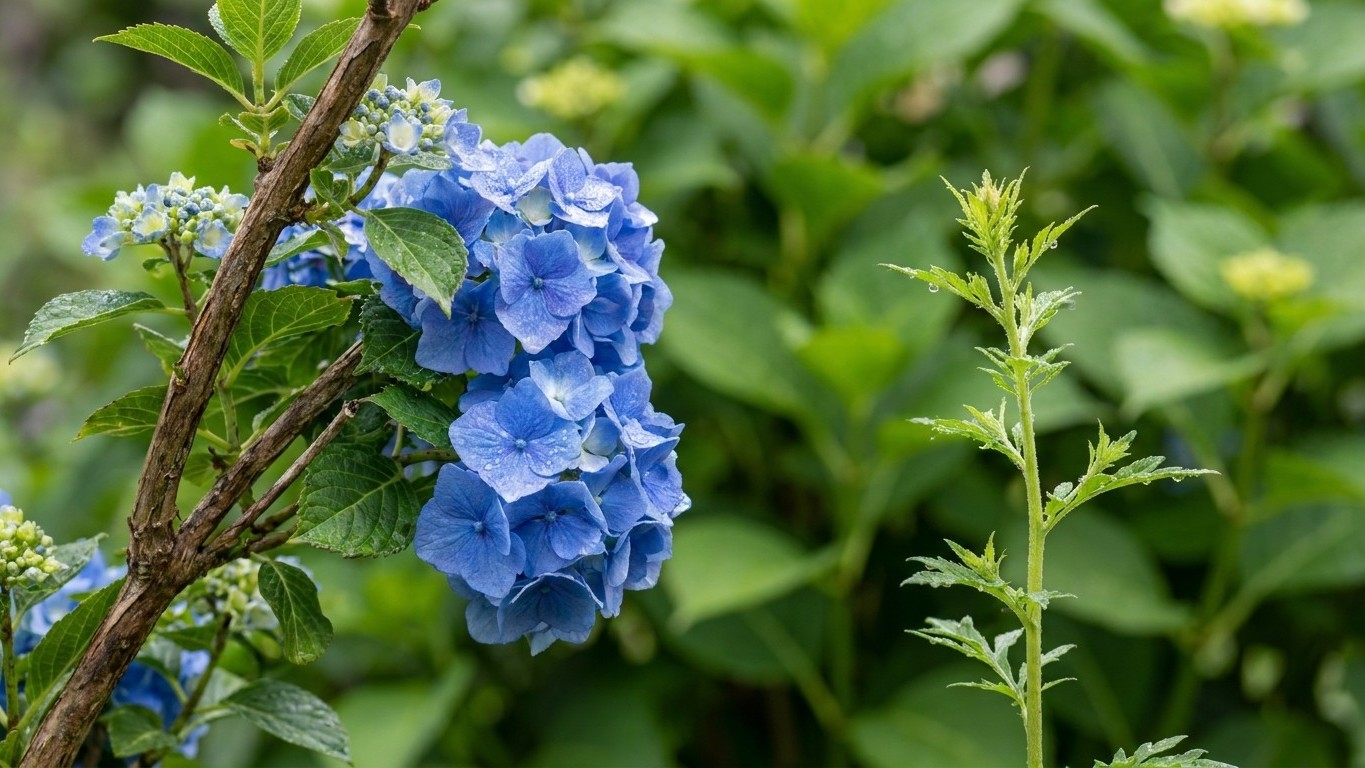

Most hydrangeas that fail in Indiana winters lose their flower buds, not their roots. Bigleaf and oakleaf types carry next summer’s blooms on old stems, so those stems need shelter. Panicle and smooth types bloom on new growth and usually need little more than mulch. The routine is simple: water the shrub well in fall, mulch the roots after the ground cools, cage the stems after leaf drop, and uncover in stages come spring.
What this comes down to in Indiana

At Indianapolis, the reference station for these dates, the first fall freeze arrives between October 21 and October 30, and the last spring freeze falls between April 9 and April 21 (NOAA NCEI 1991-2020 Climate Normals, 32F freeze probabilities). Winter protection lives between those two windows. It goes on after the first freezes have put the shrub to sleep, and it comes off as the spring window opens.
Southern Indiana runs earlier in spring and later in autumn than the north by a fortnight or more, so a gardener near the Ohio River and one near South Bend will not follow the same calendar. Hardiness adds a second layer. The USDA Plant Hardiness Zone Map, which rates a place only by its average annual extreme minimum temperature, puts Indiana anywhere from zone 5b to 7a. Several bigleaf hydrangeas sit near the limit of their cold tolerance in the colder part of that range.
Which hydrangeas need winter protection in Indiana?
The deciding trait is where the plant sets its flower buds. Bigleaf hydrangeas (the mopheads and lacecaps) and oakleaf hydrangeas form buds on old wood in late summer. If a midwinter cold snap kills those stems, the shrub grows back from the base and leafs out fine, but it skips blooming that year. Panicle hydrangeas and smooth hydrangeas, the white snowball types included, flower on wood grown the same season, so a frozen stem tip costs them very little. For the full picture of which kinds hold up, see Which Hydrangeas Survive a Indiana Winter.
What actually kills hydrangea buds in winter?
Cold alone is only part of it. Bigleaf hydrangeas that start to wake up in a warm spell in late winter or early spring are the most vulnerable, because swelling buds lose their hardiness fast. A freeze after that warm stretch does the damage. Wind and sun on bare stems pull moisture out of buds when the soil is frozen and the roots cannot replace it. Dry soil going into winter makes that worse.
That explains why a good cover does two jobs. It buffers the stems against the lowest temperatures, and it keeps them out of the wind and the low winter sun. A cage packed with leaves, or a burlap wrap on the windward side, handles both. Plastic does neither well, because it heats up in sunshine and holds moisture against the bark.
If you are not sure what type you have, or if your blooms have been inconsistent, check that before you build anything. Color problems are a separate matter and usually come from soil chemistry. That is covered in Why Hydrangeas Are Pink in Indiana, and How to Turn Them Blue.
Working it out for your own garden
A fixed calendar date fails the first time a fall is warm or a March is early. A better method ties each task to the frost window and to what the plant is doing. Start with the reference range, adjust it for where you live, and then watch the shrub.
How do you time the winter cover for your yard?
Take the Indianapolis first-freeze window, October 21 to October 30, as the earliest point at which anything starts. A single freeze does not make a hydrangea dormant. Leaves usually turn and drop over the following weeks, and the plant should be bare or nearly bare before you cage it. For most of central Indiana that puts the job after the first fall frost. Gardeners in the north, where the first freeze comes sooner, can move that earlier by about the same fortnight or more that separates north from south. Southern gardeners can move it later.
Two jobs come before the cage. Water deeply during any dry stretch in the fall, until the ground is about to freeze, because a parched root zone is a major cause of winter dieback. Then spread shredded bark, leaves or pine straw over the root zone, keeping it a few inches back from the crown. Mulch applied too early, while the soil is still warm, can shelter mice and voles.
How do you build a winter cage for hydrangeas?
Make a ring of hardware cloth or sturdy wire fencing tall enough to protect the stems, standing a few inches out from the outermost stems. Stake it so snow and wind cannot flatten it. Fill it to the top with dry shredded leaves, pine straw or straw. Wet, matted leaves hold water against the stems and can rot them, so rake them up dry or bag them on a dry day. A wrap of burlap around the outside of the cage on the windward side cuts the drying wind further. A shorter oakleaf or a young bigleaf may need only the mulch and a loose cover of leaves.
How do you uncover them in spring?
The same frost window runs in reverse. At Indianapolis the last spring freeze falls between April 9 and April 21, and Purdue notes there remains roughly a 10% chance of a 32F event after the published spring date. Do not strip everything off at the start of the range. In early April, pull the top third of the leaf fill out of the cage and leave the rest. A week or two later, take out another layer. Remove the cage once the forecast shows no freezing nights, and keep the burlap or an old bedsheet handy for any cold night after the buds break.
How do you tell if the stems survived?
Scratch a stem lightly with a thumbnail. Green and moist underneath means alive, and brown and dry means dead. Do not trust the first look in April, because bigleaf hydrangeas leaf out late and often look dead for weeks. Wait until new leaves are well along before cutting out dead wood. Prune an uncertain stem too soon and you may remove buds that would have bloomed.
What changes across the state
Indiana is long north to south and flat for most of its length, so the differences come from latitude, lakes and local landform. The north cools earlier in fall and warms later in spring. That gives it a shorter gap between the first and last freezes than the south, as the fortnight or more mentioned above suggests. Near Lake Michigan, lake-effect snow often lays an insulating blanket over the ground. That snow cover protects low stems and roots better than any wrap, though it does nothing for the part of the plant that sticks above it.
The south has milder winters on average, which can lull gardeners into skipping protection. It also has more early warm spells followed by hard freezes in March and April. For a bigleaf hydrangea that is the worst pattern, because the plant wakes up and then gets caught. In practice, southern gardeners need to be more patient about uncovering than northern ones, even though their winters are gentler.
Inside any region, the specific spot matters nearly as much as the latitude. A shrub on the south or west side of a house, out of the prevailing winter wind, can sit in a pocket that behaves like a zone warmer. A hydrangea in an open yard, on a ridge or in a low spot where cold air settles, takes the harshest version of the local winter. The rolling hills of south-central Indiana can hold cold air in hollows even where the regional average is mild. Put the cage where the wind hits hardest, and treat the exposed plants first.
The mistakes this state punishes

Indiana’s winters swing between mild and harsh, and the mistakes that cost the most tend to involve timing.
- Mulching or caging too early. Covering the plant after the first freeze, while it is still leafy and the soil is warm, keeps it from hardening off and invites rodents. Wait for leaf drop.
- Pruning old-wood bloomers in fall. Cutting back a bigleaf or oakleaf in autumn removes next summer’s flower buds. Leave the stems alone until after leaf-out.
- Feeding late. Fertilizer applied in late summer or fall pushes soft new growth that freezes.
- Wrapping in plastic. Plastic traps heat on sunny days and moisture against the bark. Use burlap or a wire cage filled with leaves.
- Uncovering on the first warm spell. A mild week in March is not spring. Take covers off in stages, and keep them close until the last-frost window has passed.
- Going into winter dry. A fall without rain leaves the root zone parched. Water deeply until the ground freezes.
Each of these has the same fix, which is to let the shrub’s own state guide you. Cover it when it is dormant, uncover it when it is clearly growing, and give it water in between.
Checking this against your county
The dates here come from a single station, Indianapolis, and a county an hour or two away can run noticeably earlier or later. Your county’s Purdue Extension office can tell you how local conditions compare and what late-season frost patterns look like where you live. For the broader picture of site, soil and care, see growing hydrangeas in Indiana, which is the starting point for everything beyond winter.
Common questions
Do panicle and smooth hydrangeas need winter protection in Indiana?
Rarely. They bloom on new wood, so even a hard winter that kills the stem tips leaves the flowers intact. A layer of mulch over the roots is usually enough, and a young plant in its first winter may benefit from a little extra leaf cover.
When should I take the cage off my hydrangeas?
Remove it in stages as the spring window opens. At Indianapolis the last spring freeze falls between April 9 and April 21, with roughly a 10% chance of a 32F event afterward. Take out some of the fill in early April, more a week or two later, and the cage once nights stay above freezing. Keep burlap ready in case of a cold snap after leaf-out.
Can I use plastic or a tarp to cover hydrangeas?
Avoid it. Plastic and tarps trap heat on sunny days, which can push buds to open early, and they hold moisture against the bark. Burlap and wire cages packed with dry leaves let the plant breathe while still blocking wind.
My hydrangea looks dead in spring. Should I dig it up?
Not yet. Bigleaf hydrangeas often leaf out late. Scratch a stem with a thumbnail, and if it is green underneath it is alive. Cut out only the stems that are brown and dry all the way through, and leave the rest to grow. If the whole top is dead, new shoots may still come from the base.