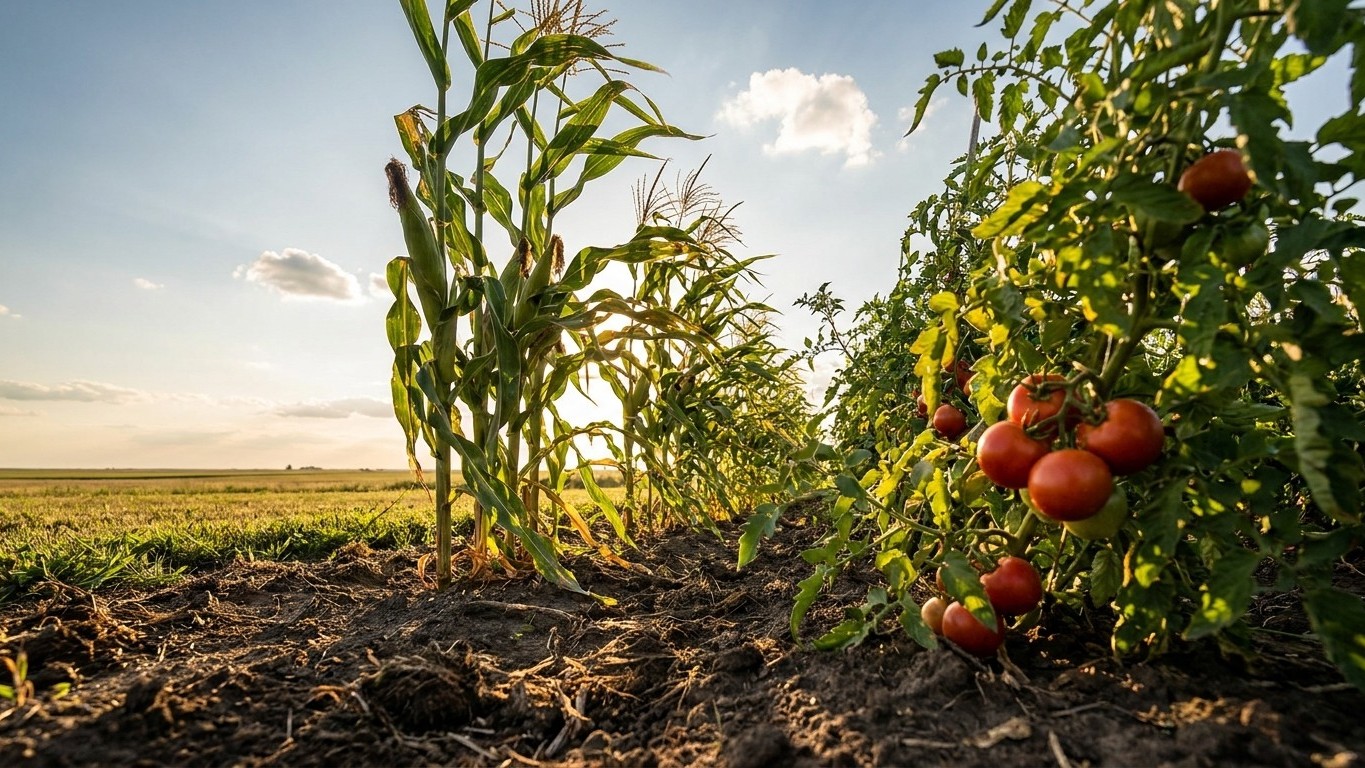

Sweet corn starts losing sugar the hour it comes off the stalk, and heat speeds the loss. That makes ripeness a one- or two-day target, and cooling the ears right after picking is the first job. On the Gulf coast of Texas, the picking window runs from late spring into early summer. The ear itself will tell you the day better than any calendar.
When sweet corn are ready in Texas
Sweet corn is ready when the silks have dried brown, the husk is still moist and green, and a punctured kernel squirts milky juice. Counted from planting, that comes 60 to 90 days later.
The spread comes mostly from variety. Early types sit at the short end of the count, and late types need the full three months. A cool spring that holds soil temperatures down pushes everything later, because the clock only runs well once the seed is actually growing.
How do you tell sweet corn is ripe?
Use all three signs together. Dry brown silks alone can fool you, since silks brown before the kernels fill out. A green, tight husk with no check of the kernels tells you little. And the milky juice test only means something on an ear whose silks have already dried.
To run the test, peel back a little husk on an ear from the middle of the row. Press a thumbnail into a kernel near the tip. Clear juice means wait a few more days. Milky juice means pick. A thick, doughy paste means the ear has passed its best.
A second clock helps you decide which week to start checking. Silks appear first, and ears are ready when the silks turn brown and the kernels feel full through the husk. Mark the day the first silks show on a few ears, and begin testing near the early end of that span. The count from planting tells you whether a variety fits your season. The count from silks tells you when to walk out with a thumbnail.
Does a Houston frost window apply to the rest of Texas?
No. Texas spans four USDA zones, and the Houston numbers describe the mild Gulf end. At the Houston reference station (IAH), NOAA’s NCEI climate normals put the end of 32 F freeze risk in spring between February 4 and March 1, and its return in fall between December 1 and December 19. Hobby airport runs about two weeks milder than IAH, so even within one metro area the dates slide. The Panhandle freezes later in spring and earlier in fall, by weeks to months. Hill Country and North Texas fall somewhere between, each with its own pattern.
Soil warms well after the last frost, so the frost date is never the planting date. Utah State University Extension says sweet corn needs soil above 60 F. Clemson Cooperative Extension is more specific: “Do not plant before the soil temperature at the 4-inch depth is at least 50 ºF. Wait to plant extra-sweet varieties until soil temperatures reach 65 °F.” Take that reading at 4 inches, since a surface reading runs warmer and sends you out too early. For dates that suit your own ground, see When to Sow Sweet Corn in Texas.
The same 60 to 90 days has to fit before fall as well. Counting back from the first fall freeze window on the Gulf coast lands in roughly early September for a 90-day variety and early October for a 60-day one. Farther north, that count can run out of room, so check the first fall freeze with your county extension office before sowing a late variety.
Keeping them, and for how long
Clemson Cooperative Extension’s Home & Garden Information Center explains the mechanism behind the old advice to run from the garden to the pot: “Sweet corn loses sugar from the kernel rapidly at high temperatures… Sweet corn can be stored under optimal conditions for about five days, but will lose sweetness with each day of storage.” That about five days is a ceiling under the best conditions, and sweetness slips on every day before it.
The practical reading is simple. Heat speeds the sugar loss, and cold slows it. Husks left on and ears kept in a humid spot slow drying of the kernels, so corn in its husk, loosely wrapped, does better than shucked ears left open. And the clock starts at picking, so an ear that sat warm in the sun for an hour has already spent some of its allowance.
Gulf coast heat makes that hour matter. The Houston reference station averages 102.4 days a year at 90 F or more. A late-morning picking in June often happens in the kind of heat that drains sugar fastest. Pick early, carry the ears into shade, and cool them before you do anything else.
Which type of sweet corn holds its sweetness longest?
Genotype changes how much of that allowance you get. Sweet corn comes in three main types, and they lose sugar at different speeds after picking:
- su (standard sugary) loses sugar fastest, so it rewards a short trip from stalk to pot.
- se (sugary enhanced) holds its sugar longer than su.
- sh2 (extra-sweet) holds sugar longest, which is the practical reason to pick it if you can’t eat the harvest the same day.
Sweetness is also decided by what tassels nearby. Utah State University Extension warns that sweetness is lost when su, se and sh2 types tassel at the same time. The fix is timing and separation. Stagger plantings of different types so they don’t shed pollen together, and keep each type in its own planting. Plant each type in blocks of three or more rows, since a single long row pollinates poorly. This is a shape of garden, with no fixed date attached. The full growing picture is in Growing Sweet Corn in Texas.
The other soil rule matters here too. An sh2 seed sown into 50 F soil tends to rot rather than sprout, so a gardener who switches to an extra-sweet type may fail where last year’s variety succeeded.
Where in the house that actually is
The refrigerator comes closest. Cold is what slows sugar loss, and corn in its husk tolerates a cold fridge in a way that tomatoes or basil don’t. A heated room is too warm, since a kitchen counter or pantry shelf lets the sugar drain at the speed Clemson describes. A garage swings with the weather, and on the Gulf coast it can sit hot through a late spring afternoon and stay warm into the evening.
What should you check with a thermometer?
Fridges vary more than people expect. The door runs warmer than the back, the top shelf differs from the crisper drawer, and a crowded fridge can hold warm pockets. A cheap appliance thermometer answers the question. Leave it where the corn will sit for several hours, then read it. Look for the coldest spot that doesn’t freeze the ears or a glass of water beside them.
Make room before you pick. Ears with their husks on take space, so clear a shelf in advance rather than stacking corn on the counter while you sort the fridge. Test the spot with a thermometer before harvest day, because a day on a warm counter costs sweetness you cannot get back.
A fridge doesn’t solve everything. If the harvest is more than you can eat in the few days it holds its sweetness, the extra ears belong in the freezer or in a neighbor’s kitchen. Heat also helps the other pests that arrive as ears fill. Animals often find ripe corn the same week you do, so see What Eats Corn in Texas, and When for what to watch.
Common questions
Can you pick sweet corn early and let it ripen on the counter?
No. Corn does not gain sugar after picking. Clemson Extension says it “will lose sweetness with each day of storage.” An underripe ear stays underripe, and a warm counter makes it worse. Wait for all three signs: dry brown silks, a moist green husk and milky juice.
How many days after the silks appear is corn ready?
Ears are ready when the silks turn brown and the kernels feel full through the husk. That count says which week to start checking. It is separate from the 60 to 90 days counted from planting, which tells you whether a variety fits your season. The thumbnail test on a kernel makes the final call.
Does the Houston window work for Dallas or Lubbock?
No. The Houston dates come from a mild Gulf station, and Texas covers four USDA zones. North Texas and the Hill Country differ, and the Panhandle freezes later in spring and earlier in fall. Check the frost dates for your own county with your county extension office, and plant by the 4-inch soil reading rather than by calendar.
Why did my corn taste starchy instead of sweet?
Two causes are common. Ears left in warm conditions after picking convert sugar quickly, especially su types. Or su, se and sh2 plantings tasseled at the same time, which costs sweetness through cross-pollination. Pick in the cool of the morning, chill the ears fast, and stagger different types so their tassels don’t overlap.