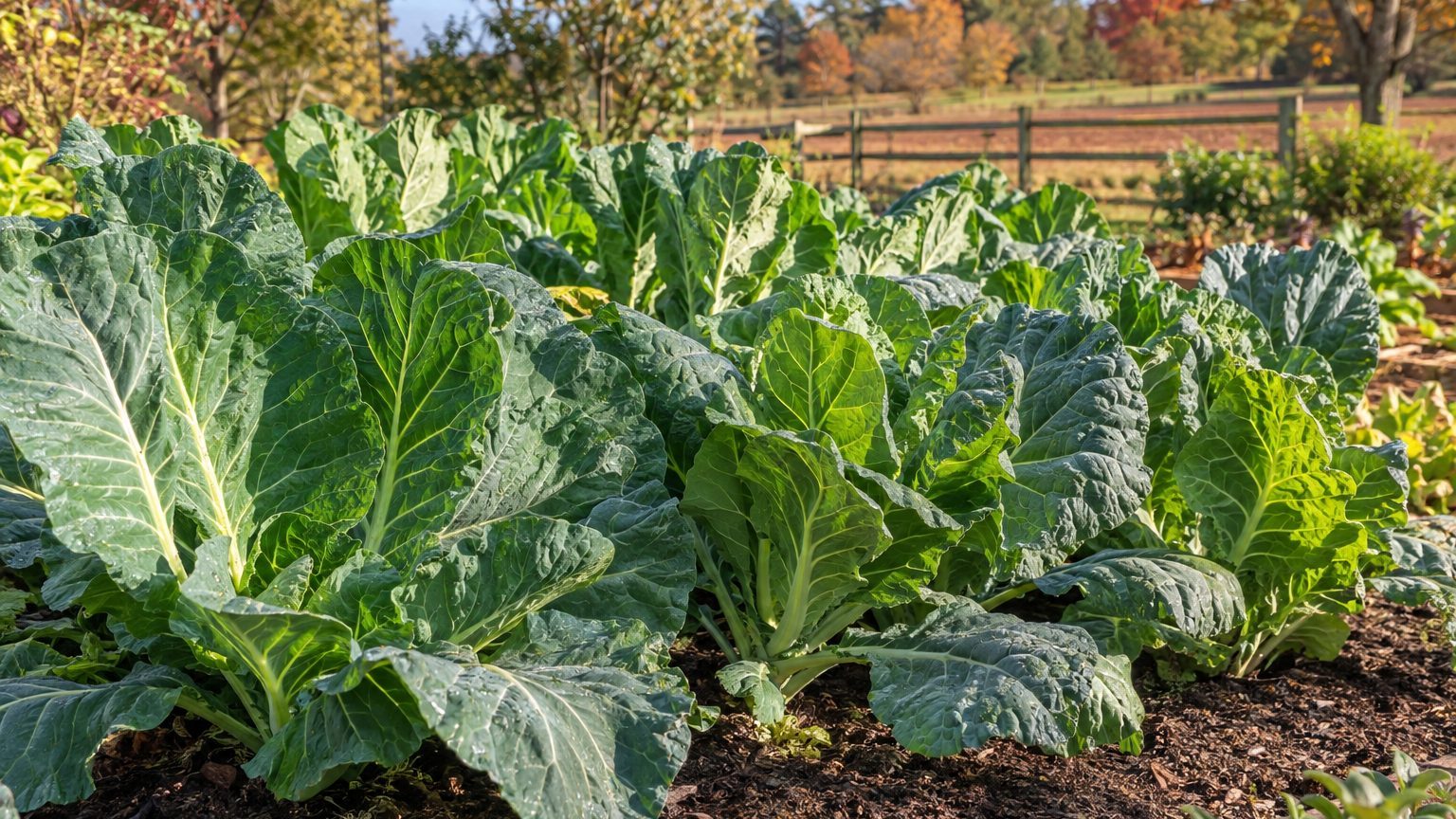

Plant an open-leaf, cold-tolerant collard such as Vates or a Georgia-type heirloom. Set transplants out in early spring, then again in midsummer for a fall crop that frost sweetens. Kale and mustard handle the same cold, and turnip greens fill the gaps quickly. Heading collards also grow here, but the standard open-leaf types are the safer choice across the full range from zone 5b to 7a.
The short answer for Indiana
Two things set the schedule: frost dates and summer heat. At the Indianapolis reference station, the last spring freeze (32°F) falls between April 9 and April 21, using NOAA’s 1991-2020 normals for the band where the odds of a freeze run between 30 and 70 percent. The first fall freeze falls between October 21 and October 30 on the same measure. Purdue adds that roughly a 10% chance of a 32°F night remains after the spring date, so keep a sheet or row cover handy for anything set out early. Collards shrug off light frost, which lets the spring crop start before the window closes and lets the fall crop run past the first freeze.
Which collard types suit Indiana best?
Choose by plant habit first and cultivar second. Open-leaf collards produce large, flat leaves on a tall central stem and can be picked leaf by leaf for months. Vates is a compact, cold-hardy cultivar that fits smaller beds. Georgia-type heirlooms grow bigger and tolerate heat well, but they take longer to size up. Heading collards form loose, cabbage-like heads, which is a nice novelty, though they need more time and give less total harvest per plant.
Which other greens belong beside collards?
Greens with different speeds spread the harvest across the season. Mustard and turnip greens finish fast, while kale holds up in cold as well as collards do.
| Type | Best role in an Indiana garden | Watch for |
|---|---|---|
| Open-leaf collards (Vates, Georgia types) | Main crop, spring and fall | Slow growers need an early start |
| Heading collards | Fall crop, small trial row | Longer time to harvest |
| Kale | Fall and early winter picking | Cabbage worms in warm weather |
| Mustard greens | Quick spring and fall filler | Bolts fast when it turns hot |
| Turnip greens | Cool-weather leaf crop | Best pulled young |
For a full season-by-season plan, see Growing Collards in Indiana.
What will not work here

Why do late-planted fall collards disappoint?
The first fall freeze lands between October 21 and October 30, and growth slows well before that as days shorten and nights cool. A transplant set out in late September is still a seedling when the cold arrives. It will survive the freeze but give you only a few small leaves. The slowest heirloom types suffer most, so they belong in the ground in midsummer, not early autumn.
Can collards overwinter in the open?
Not reliably. The mean daily minimum of the coldest month at the reference station is 20.9°F, which means many winter nights fall below that. Collards take light freezes and the occasional night in the low 20s, but a long cold snap kills the leaves outright. Gardeners in the northern half who count on a spring harvest from fall plants will lose some winters and win others. In the south, a thick straw mulch and a row cover raise the odds, though they do not remove the risk.
What goes wrong with spring collards set out too late?
Plants started in late May or June meet summer heat before they have grown a framework of leaves. Heat pushes mustard and turnip greens into flower within days, makes the leaves strong and bitter, and invites cabbage worms and aphids at peak numbers. A spring crop pays off when the transplants go out in the first weeks after the April freeze window, and not much later.
Does humid weather change how close you can plant?
It does. Indiana summers are humid, and leaves that stay wet after rain or dew carry fungal and bacterial leaf spots from plant to plant. Crowded rows stay damp longer. Spacing collards generously lets air move through the canopy and the foliage dry by midmorning. Watering the soil rather than the leaves helps too. Shallow-rooted greens want steady moisture, and mulch helps hold it.
What changes across Indiana
The state has no single answer. The USDA Plant Hardiness Zone Map (2023 edition, built on 1991-2020 normals) places Indiana across zones 5b to 7a. That spread comes from one variable, the average annual extreme minimum temperature, so it says a lot about winter survival and little about summer heat or rainfall. Indianapolis is the reference point for the dates above, but a fortnight or more separates the southern counties from the northern ones in both spring and fall.
What should a northern Indiana gardener shift?
Move spring planting later by a week or two, and start the fall crop earlier, since the first freeze arrives sooner than at the reference station. Favor the compact, cold-hardy cultivars and the faster greens. Plan to protect plants with row cover at both ends of the season, and treat overwintering as a bonus. Someone in the colder zone 5b areas should assume that the spring harvest comes from spring-planted transplants.
What should a southern Indiana gardener shift?
Spring starts earlier and fall lasts longer, so the fall crop can be planted a little later and still reach a decent size. Overwintering under mulch or cover has a real chance in the milder zones. The tradeoff is more heat in July and August, so shade cloth over young fall transplants and steady watering matter more. Look up your own spot on the USDA Plant Hardiness Zone Map and read the zone yourself instead of guessing from a neighbor’s garden.
Where to check this for your own county
Purdue Extension runs an office in every county, and its staff and Master Gardener volunteers know the local soils and frost pockets. Start by finding your county office and asking for two things. The first is a local planting calendar, which will give dates tied to your frost data rather than to Indianapolis. The second is a list of varieties that have been grown and evaluated in your county, since a cultivar that thrives in the sandy ground of the north can sulk in southern clay.
Ask also which pests are showing up each year, because cabbage worm and aphid timing shifts with the weather. A county recommendation beats a statewide one every time. Statewide guidance, including the Indianapolis-based dates above, is an average across a very long state, and your yard may sit well to one side of it. Pair what the county office tells you with the timing in When to Plant Collards in Indiana to settle your own dates.
Checking this against your own garden
What you see in your own beds outranks any date in a table. Three observations cover most of it.
- Soil warmth by feel. In spring, push a hand into the bed. If the soil feels cold enough to numb your fingers within a minute, wait. Beds that warm early are sheltered and well drained, and those that stay cold are low or shaded.
- First true leaves. A seedling’s first pair of leaves is rounded, and the true leaves that follow have the collard shape. If true leaves appear slowly, the spot is cooler or shadier than you assumed. Move transplants out only after hardening them off for a week.
- Where frost shows first. On the first frosty morning, walk the yard and note which spots are white and which are clear. The clear patches near walls and fences are where tender plants, or a late fall crop, will last longest.
Note the dates in a notebook for a couple of seasons. Your own yard’s pattern will be more precise than any statewide figure.
Common questions
What is the best collard variety for Indiana?
A cold-tolerant, open-leaf type is the dependable choice. Vates suits small beds, and a Georgia-type heirloom suits gardeners who start early and want large leaves. Growing two cultivars side by side for a season shows which one your garden favors.
Can collards survive an Indiana winter?
Sometimes. The coldest month averages a nightly low of 20.9°F at the reference station, and many nights run colder. Plants under mulch or row cover in southern Indiana have the best chance. In the north, expect losses in a hard winter.
Are collards or kale better for Indiana gardens?
Both thrive in the cool seasons, and collards tolerate summer heat better than kale. Many gardeners grow collards for the long picking and kale for fall and early winter. Neither is clearly better, and they make good neighbors.
Do collards taste better after frost?
Yes. Cold nights soften the bitterness of the greens. Leaves picked after a few light frosts taste milder and sweeter than summer leaves, which is why the fall crop is the favorite.