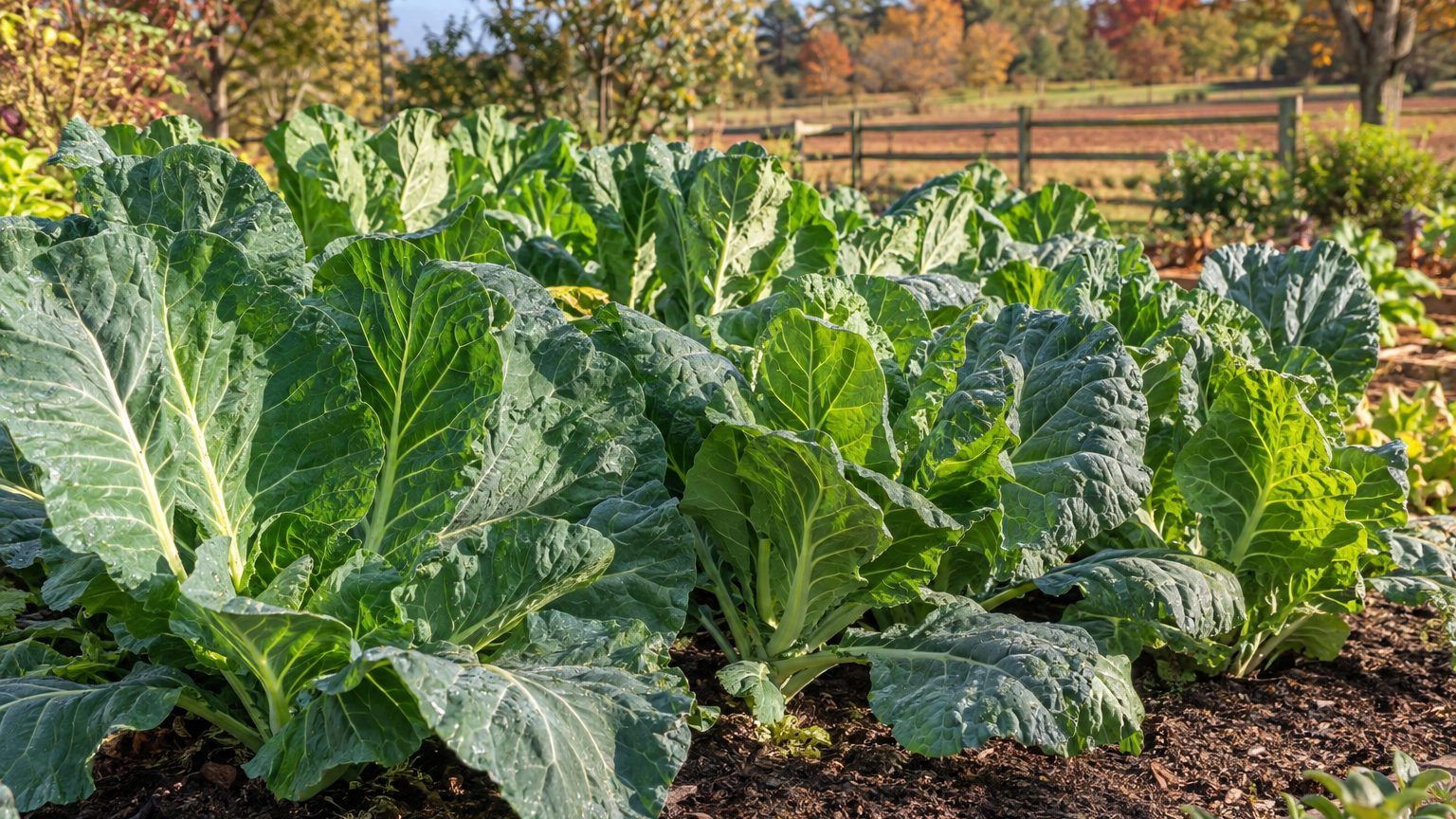

Plant a compact, faster-maturing collard such as Vates, and sow it twice: transplants in spring a few weeks ahead of the last frost, then again in midsummer for a fall crop that ripens in cool nights. Giant, slow Southern heirlooms will grow in Iowa, but they need more season than most gardens give them. Kale, mustard and turnip greens fill the gaps.
The short answer for Iowa
Choose by type, and let the frost dates set the limit. At the Des Moines reference station, the last spring frost falls between April 12 and April 24, and the first fall frost between October 14 and October 25. Both ranges describe the dates when the chance of a 32°F freeze sits between 30 and 70 percent, taken from the NOAA 1991-2020 Climate Normals. Iowa State Extension county records (1950-2021) run about 4 days later in spring and 10 days earlier in fall than that airport station. Treat the airport dates as the generous end and plan around the shorter season.
Collards shrug off light frost, which stretches the season at both ends. A few frosty nights in fall also sweeten the leaves, because the plant converts starch to sugar to protect itself. That gives the fall crop its flavor edge. But a crop still has to reach harvest size before hard freezes shut it down, and that is where type matters.
Which collard varieties suit a short Iowa season?
Three types cover most Iowa gardens. The table sets them against the local season.
| Type | Examples | Fit for Iowa | Best use |
|---|---|---|---|
| Compact, open-pollinated | Vates | Good. Smaller plants reach pickable size sooner and handle cold well. | Spring and fall main crop |
| Quick hybrids | Flash | Good. Bred for uniform, speedy growth. | Succession plantings, fall crop |
| Large heirloom Southern types | Georgia Southern | Marginal. Slow, tall plants want a long season. | Early spring transplants, picked leaf by leaf |
Kale is the natural partner, since it tolerates cold at least as well as collards and matures on a similar schedule. Mustard and turnip greens grow faster still and suit short gaps in the garden. The full growing routine is in Growing Collards in Iowa, and the sowing windows are laid out in When to Plant Collards in Iowa.
What will not work here

The slowest, tallest heirloom collards are the first casualty. Planted late, they spend the best growing weeks in summer heat and reach full size just as frosts arrive. County records put the first fall frost about 10 days earlier than the airport range of October 14 to October 25, so the margin shrinks again. A big Southern plant may give a few leaves, then stall.
Summer humidity works against close spacing. Iowa summers are warm and muggy, and leaves packed together stay wet after rain and dew. That invites leaf spots and gives cabbageworms and aphids plenty of cover. Space plants generously apart, even when seedlings look lost at that distance. By midsummer, the leaves fill the gap.
Sowing seed outdoors in early April is another trap. The last spring frost range of April 12 to April 24 sounds like a green light, but county records run about 4 days later, and soil stays cold well beyond the air. Seed sits in cold, wet ground and many fail to come up. Transplants hold up better than seed in early spring.
Late planting of the fall crop fails the same way. Seedlings set out in September have no time to build leaf area before nights drop below freezing. For fall, count backward from the first frost range and give plants the weeks they need to size up.
Can collards survive an Iowa winter?
Usually not. The mean daily minimum of the coldest month is 13.8°F at Des Moines, and that is an average. Individual nights go lower. Collards take light and moderate frost, but open-ground plants generally die back over an Iowa winter, and survival under heavy mulch in the colder parts of the state is a gamble. Treat collards as an annual and put your effort into two well-timed plantings rather than into overwintering.
What changes across Iowa
Iowa is not one garden. The USDA Plant Hardiness Zone Map, built on the average annual extreme minimum temperature, places the state across zones 4b to 6a. There is no single answer for the whole state. The spread between the cold northern counties and the milder south is about two zones, which is a real difference in how hard winter hits and how long the season runs.
Des Moines is the reference city for the dates and cold figures above. A gardener near the Minnesota line should expect a shorter season than those dates and lean toward the quicker types, such as compact open-pollinated collards and hybrids. Fall sowing there should go in earlier, and a row cover on cold nights can buy extra weeks of harvest. In the south, the fall window stays open longer, and a larger heirloom has a better chance of reaching size.
Hardiness zones describe winter lows only. They say little about summer heat, humidity or the dates of the first and last frosts, which matter more for collards, since the plant is grown as an annual here. Look up your own zone on the USDA map by ZIP code, then use it as one input alongside local frost dates.
Where to check this for your own county
Start with Iowa State University Extension. The extension office serves every county, and its staff and Master Gardener volunteers know local soil, frost pockets and pest pressure in a way no statewide guide can.
Look for two things there. The first is a planting calendar for your county, with spring and fall dates for cool-season vegetables like collards, kale and mustard. The second is a list of varieties that have been trialed or recommended locally. A collard that thrives at a research farm in one corner of the state may sulk in another part of the state.
Statewide dates, including the ones above, are a starting point. A county recommendation beats a state one every time, because county records reflect nearby weather stations and local growing conditions. If a county calendar disagrees with the airport frost dates here, follow the county calendar.
Checking this against your own garden
Your own observations outrank every date in print. Three things are worth watching, and none needs an instrument.
- Soil warmth by feel. Push a hand a few inches into the bed. If the soil numbs your fingers within a minute, it is too cold for seed or tender transplants. Beds that warm up first are your early spring spots.
- First true leaves on seedlings. The first pair are seed leaves; the next ones look like a collard leaf. If true leaves come slowly in a cold frame or window, the spot is cooler or dimmer than you thought.
- Frost on the grass at dawn. Note which corners of the yard stay white longest and which clear early. Low spots collect cold air and frost later in spring and sooner in fall, so put the hardiest plants there and keep tender crops on higher ground.
Write the dates in a notebook for a season or two. After that, the pattern is yours, and it will often differ from the county’s.
Common questions
What is the best collard variety for Iowa?
A compact, open-pollinated type such as Vates is a dependable starting point, because it reaches pickable size faster than tall heirlooms and handles cold well. Hybrids bred for speed, such as Flash, are also a good fit. County extension trial results can refine the choice.
Should I plant collards in spring or fall in Iowa?
Both. Spring transplants set out a few weeks before the last frost give an early crop, while a midsummer planting for fall tends to taste sweeter because cool nights and light frost raise sugar levels in the leaves.
Do collards come back after an Iowa winter?
Rarely. With the coldest month’s average nightly low at 13.8°F in Des Moines, open-ground plants generally die back. Treat them as annuals.
Which other greens grow well alongside collards in Iowa?
Kale matches collards for cold tolerance, and mustard and turnip greens mature faster and fit short windows. Swiss chard handles summer heat better than most greens and keeps producing between the spring and fall crops.