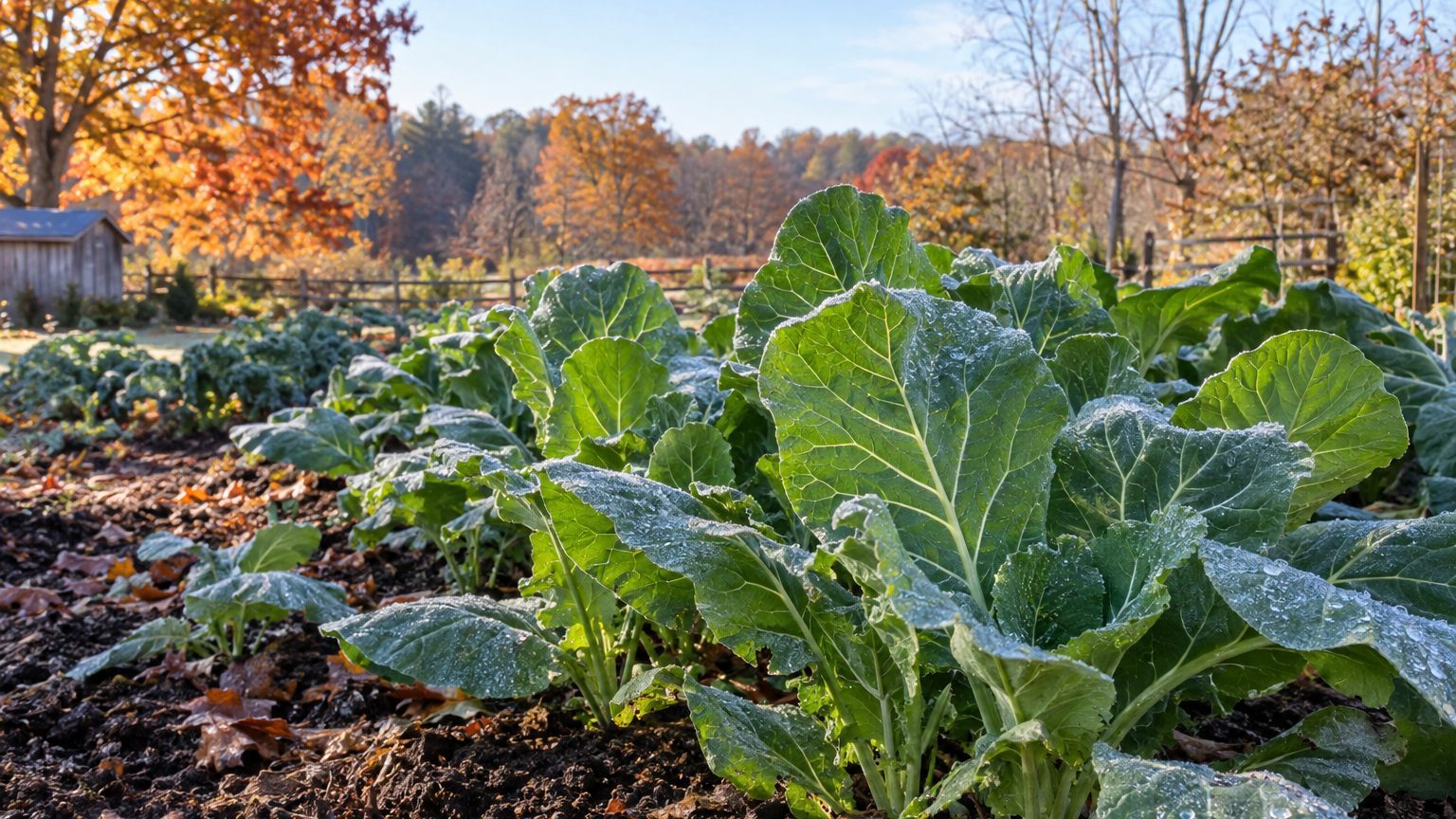

In Iowa, set spring collard transplants outside in early to mid-April, about two weeks before the last spring freeze. Plant the fall crop in July so it reaches size as frost arrives. The last spring freeze at the Des Moines reference station falls between April 12 and April 24. The first fall freeze falls between October 14 and October 25. County records run tighter at both ends.
The short answer for Iowa
Each of those date ranges is the stretch where the chance of a 32°F freeze sits between 30 and 70 percent, based on NOAA’s 1991-2020 Climate Normals. A freeze after April 24 is still possible, and so is one before October 14. Collards take light frost without damage, so the dates work as a guide for timing, not a deadline.
There is one adjustment to make. Iowa State Extension county records, which cover 1950 to 2021, run about four days later in spring and ten days earlier in fall than the airport station. The airport numbers are the optimistic end. A garden outside Des Moines should plan for a slightly shorter season than the ranges suggest.
What does a sowing calendar for collards in Iowa look like?
| Task | Window |
|---|---|
| Start spring seed indoors | Late February to mid-March |
| Set spring transplants in the garden | Early to mid-April, hardened off first |
| Start fall seed indoors or in a shaded nursery row | June |
| Set fall transplants in the garden | July, early August at the very latest |
| Harvest | Spring crop from early summer; fall crop until a hard freeze |
Most collard varieties need a stretch from transplanting to a full harvest, though picking young leaves starts sooner. Counting back from a first freeze that may arrive in early October in many counties, a July transplant has time to size up. A late August transplant does not. Collards also taste sweeter after a few frosty nights, so the fall crop is the one most Iowa gardeners end up preferring.
What will not work here

Overwintering fails. The mean daily minimum of the coldest month at the Des Moines reference station is 13.8°F, and that is an average, so plenty of nights run colder. Collards can sometimes limp through a mild winter in the Deep South, but an Iowa January usually kills them even under mulch. Plan on replanting every year.
Planting spring transplants at the last-frost date wastes the best weeks. Collards grow well in cool weather, and Iowa spring turns hot quickly. A plant set out in mid-May has only a few weeks before summer heat and cabbageworm pressure arrive. The plants in the ground by mid-April are the ones that give a real spring harvest.
Sowing the fall crop in August is another miss. With a first freeze as early as the first half of October in many counties, a seedling that is still small in September has no time to catch up. Slow-maturing types suffer most. If the packet says a long season, treat it as a spring variety only. The best collards and greens for Iowa include faster options that suit a July planting.
Tight spacing hurts in humid summers. Iowa July and August often bring warm nights and high humidity, and crowded leaves stay wet longer. That invites leaf spot and gives cabbage loopers a place to hide. Give each plant room in the row, and more if the variety grows large.
Weekly watering also falls short in a dry stretch. Collards have wide leaves and lose a lot of water in summer heat. A slow soaking when the top inch of soil is dry works better than a fixed schedule, and mulch helps the bed hold moisture between waterings.
What changes across Iowa
The USDA Plant Hardiness Zone Map (2023 edition, built on 1991-2020 normals) places Iowa in zones 4b to 6a. That range covers four half-zone steps, so no single answer fits the whole state. The zone is based on one variable, the average annual extreme minimum temperature. It tells you about winter survival, not about when to sow.
Because collards are grown as an annual here, the zone matters less than the frost dates. Still, the same pattern that makes the north colder in winter usually makes spring later and fall earlier. In northern Iowa, wait a little longer in spring before setting out transplants, and plan on setting the fall crop out earlier in July. A gardener in the south or along the Missouri River side of the state has a few more days at both ends.
Local conditions can outweigh latitude. Low spots and river bottoms collect cold air and frost earlier than the slopes above them. A garden on a south-facing slope or against a house wall warms sooner. Even within one town, two yards can differ by several days. For your own zone, look up your location on the USDA map instead of guessing from a neighbor’s experience. The overview of growing collards in Iowa covers soil and care once the plants are in the ground.
Where to check this for your own county
The best local source is Iowa State University Extension. Look for two things. The first is a planting calendar for cool-season vegetables in your county or region, usually listed under cabbage, broccoli and other cole crops, since collards follow the same schedule. The second is any variety trial results from nearby, which show what grew well in your soil and weather.
County extension offices and Master Gardener volunteers can also answer timing questions for your area, and they often know about local frost pockets or a late-spring pattern in your part of the state.
A county recommendation beats a statewide one. The dates here describe Iowa as a whole, anchored to Des Moines, and they come with the airport-versus-county gap described above. A county office works from records closer to your garden, and those can shift a calendar by a week or more. Use the state dates to get oriented, then let the county dates take over.
Checking this against your own garden
Three observations outrank every date above. The first is soil warmth by feel. In spring, push your hand into the bed. If the soil crumbles instead of clumping, and your hand doesn’t ache after a minute, it is ready for transplants. A bed that reaches that point a week before the rest of your yard has a warm microclimate, perhaps from a south-facing wall or good drainage.
The second is the first true leaves on your seedlings. The first pair of leaves to appear are seed leaves. The real, ruffled collard leaves come after. Seedlings with three or four true leaves are ready to harden off and move outside. If yours reach that stage faster than the calendar suggests, your indoor setup is warm and bright. If they are slow, start earlier next year.
The third is the first white morning of fall. Note the date frost first appears on your lawn or car, and compare it with the dates in this article. If your frost arrives sooner than the ranges, you live in a cold pocket, and your fall plants should go out earlier. If it comes later, you have a few extra days to work with. Keep a note from year to year and your own record will soon be more accurate than any state calendar.
If you follow the almanac, here is when to plant collard greens by the moon. It is a tradition, not a proven method.
Common questions
Can you sow collard seed directly in the garden in Iowa?
Yes, but transplants give a better head start for the spring crop. Direct seed works for the fall crop if sown while the soil is warm and seeds sprout quickly. Water the row often until seedlings emerge, since midsummer soil dries fast.
How late can you plant fall collards in Iowa?
Aim for July. Transplants set out in early August can still work with a fast-maturing variety, especially in southern Iowa, but later than that the plants rarely reach full size before hard freezes arrive. In the north, where fall comes sooner, move the deadline up by a week or so.
Do collards survive an Iowa winter?
Rarely. With a January mean daily minimum of 13.8°F at the Des Moines reference station, most plants die back. A thick layer of straw and a mild winter may keep a few alive, but treating collards as an annual is the safer plan.
Will a light frost hurt spring collard transplants?
A light frost usually does not. Collards are among the more cold-tolerant garden greens, and hardened-off transplants can handle a brief dip to 32°F. A hard freeze or a long cold snap can still burn leaves, so keep a sheet or row cover handy for those nights.