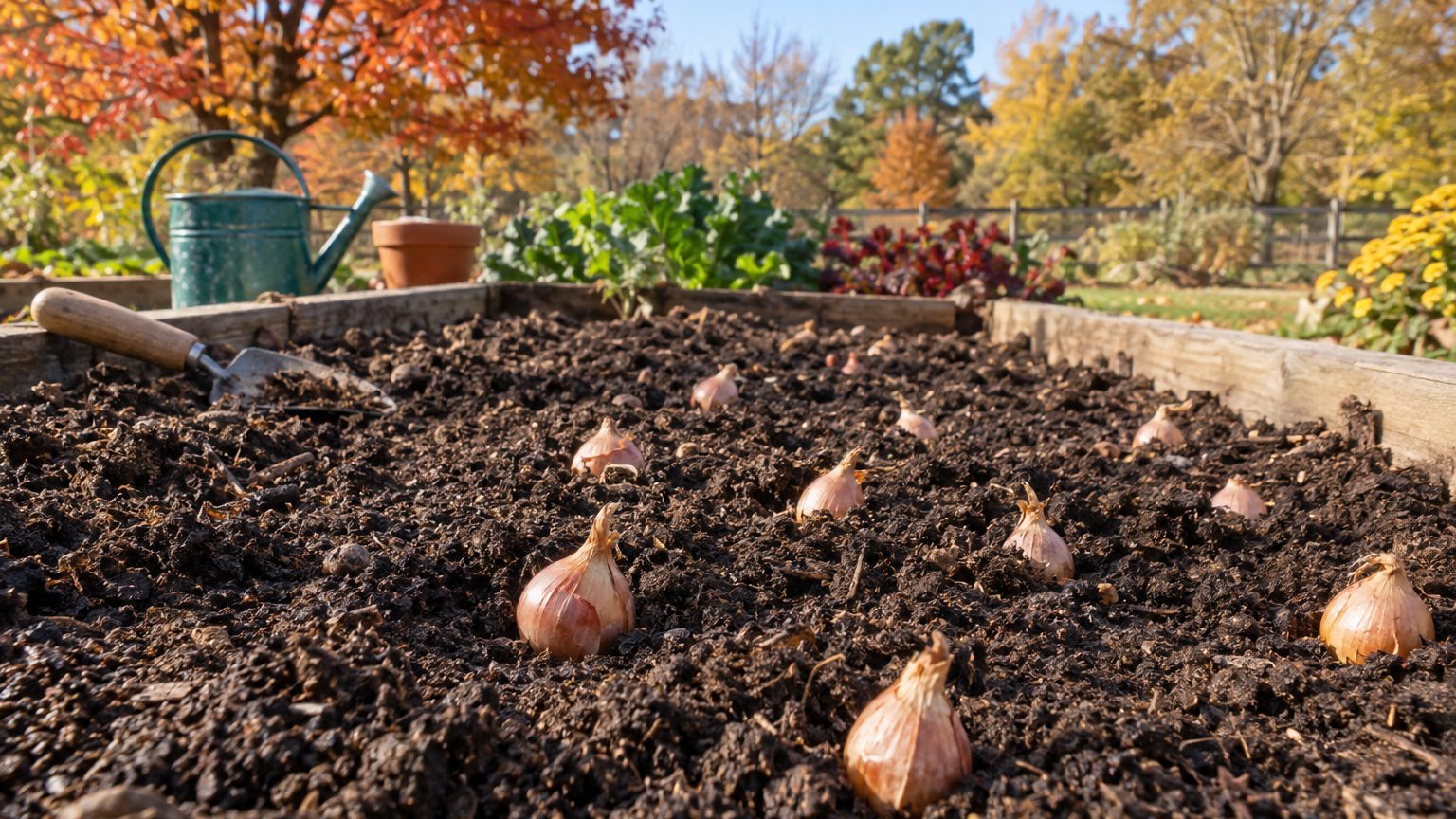

Plant shallots in Utah in early spring, as soon as the soil can be worked, or in fall, in the weeks around the first hard freeze. At the Salt Lake City reference station, the last spring freeze falls between April 12 and April 29, and the first fall freeze between October 18 and October 29. Higher ground runs later in spring and earlier in fall. For the full crop picture, start with Growing Shallots in Utah.
The short answer for Utah
Spring planting begins when a handful of soil crumbles instead of smearing, which in the Salt Lake valley lands around or ahead of the April 12 to April 29 band. Fall planting goes in close to the October 18 to October 29 band, late enough that the bulbs root but send up little top growth before winter. Both windows work because shallots shrug off freezes that would flatten a tomato.
Those two date ranges come from NOAA’s 1991-2020 Climate Normals for the Salt Lake City station. They mark the stretch when the chance of a 32°F freeze sits between 30 and 70 percent. Neither is a deadline that a freeze respects. A freeze can still show up outside the band, and a shallot bed planted in March has usually seen a few.
When should you plant shallots in Utah in spring?
As early as the ground allows, and that is the whole rule. Shallots form bulbs in response to lengthening days and rising heat, so a bulb set in the cool soil of late winter has weeks to build roots and leaves before the signal arrives. A bulb set in May has far less time. It makes a smaller plant and, in turn, a smaller bulb. In the Salt Lake valley, that often means working the bed before the April 12 to April 29 band has even started. Set each bulb with its tip at or just below the soil surface.
Can you plant shallots in fall in Utah?
Yes, and many Utah gardeners get their best bulbs this way. The mean daily minimum of the coldest month at Salt Lake City is 24.2°F, a figure that bulbs buried in soil handle without trouble. Fall planting around the October 18 to October 29 band gives roots a head start, and the plants take off the moment the soil warms in spring. A loose layer of straw or shredded leaves over the bed keeps the soil from heaving during freeze and thaw cycles. Pull it back in spring once green shoots push through.
Seed-grown shallots are a separate case. They start indoors in late winter and move out in spring, and they suit gardeners who want a different crop rather than a longer one. Sets and bulbs, covered in The Best Shallots to Grow in Utah, are the simpler path for most beds.
What will not work here

Why does late-spring planting fail in Utah?
Utah springs can swing from snow to 80°F within weeks, and the heat arrives fast. Shallots planted in May or June meet long days and warm soil almost at once, so they bulb up before the plant has grown enough leaves to feed a good bulb. The result is a clump of small, thin-necked shallots. If the early-spring window slips by, a fall planting later in the year beats a rushed one.
Seed-grown shallots on a late schedule face the same problem. Seedlings that go out well after the last freeze have little time to size up before summer heat slows the plant.
What goes wrong with fall planting?
Planting too early is the common mistake. Put bulbs in during warm September weather and they send up tall green tops that winter then cuts back, leaving a weakened plant. The October 18 to October 29 band in the valley is a reasonable guide for timing, and it moves earlier as you climb in elevation. Fall planting also fails in beds that hold water. Heavy clay that stays soggy through winter rots bulbs, and many Utah valley soils turn dense when wet. Raised rows or a bed amended with compost solve most of it.
Skipping mulch in the colder parts of the state is the other trap. A bare bed at higher elevation can heave bulbs out of the ground during repeated freezing and thawing.
Does a weekly deep soak work in a Utah summer?
Not for long. Utah summers are hot and dry, and shallots have shallow roots that dry out between soakings. A single deep watering each week often leaves the top few inches bone dry by midweek, which stresses the plants during the weeks when bulbs are filling. Shallots do better with lighter, more frequent watering through spring and early summer, with mulch to hold moisture. Stop watering when the tops begin to yellow and fall over, since a wet bed at that stage invites rot and poor storage.
Copying Salt Lake City dates in a colder town is the last mistake worth naming. The valley is milder than most of Utah, so a calendar built on that station runs early for anyone higher up.
What changes across Utah
Utah has no single answer. The USDA Plant Hardiness Zone Map (2023 edition, built on 1991-2020 normals) spans zones 4a to 9a within the state, and other parts of the territory differ. That range covers high mountain valleys with long, hard winters and the warm lowlands of the south. The dates above belong to Salt Lake City, a mild valley, so they describe the middle of the spread. Zone is based on one number, the average yearly extreme minimum temperature, so it says how cold the winter gets and little about when the ground thaws.
Readers in the north or at altitude should shift later in spring and earlier in fall. Soil that thaws weeks after the valley floor means a later spring planting, and a first freeze that arrives earlier than October 18 means fall bulbs need to go in sooner so roots form. At the colder end, a thick mulch matters more, and spring planting is often the safer bet if winters bring little snow cover. Choosing varieties that mature on a short season helps as well.
In the warmer south and at low elevations, the shift runs the other way. Fall planting can wait later, spring planting can start earlier, and summer heat arrives sooner, so spring-planted shallots there have less time to size up. Fall planting often gives the better crop in those spots.
To see where your own garden falls, look up your location on the USDA Plant Hardiness Zone Map. Zones can change within a few miles in Utah, so the map beats any guess based on the nearest big town.
Where to check this for your own county
Your state extension service holds the local answer. Utah State University Extension runs offices across the state, and its gardening staff know how planting dates shift from one county to the next. Search for the vegetable planting guide and any calendar written for your county or elevation. Look for a spring and a fall planting window for onions and garlic, since shallots follow the same pattern, and for the last and first freeze dates for the town closest to you.
Also look for the varieties that have been tried in your county. A variety that does well in a valley with a long season may stall in a mountain town, and local trials or county extension staff will tell you which shallots have held up where you live. If a county office is nearby, a call or visit often gets you an answer faster than a web search.
A county recommendation beats a state one. The dates in this article come from a single Salt Lake City station, and they serve as a starting point for the state as a whole. Where your county office gives a different window, follow the county.
Checking this against your own garden
Your own observations outrank every date here. Three things are worth watching, and none needs a gadget.
- Soil warmth by feel. Squeeze a handful. If it crumbles and does not stick to your hand, the bed is ready for spring bulbs. A bed that stays cold and wet long after the neighbors’ soil has thawed is telling you to plant later and consider raised rows.
- The first flush of male flowers. Watch the first signs of new growth on the trees in your neighborhood, a sign that spring has truly started where you live. If they appear early, your spot runs warm. A late showing tells you to push back planting.
- The first true leaves. Green shoots on fall-planted shallots, or on any volunteer onions, show how fast your bed wakes up. Shoots that come early mean a warm microclimate, such as a south-facing wall. Late ones suggest a cold pocket where frost lingers.
Write down what you see for a season or two, along with the dates you planted and the size of the bulbs at harvest. That small notebook will soon fit your yard better than any statewide table.
Common questions
Is it better to plant shallots in fall or spring in Utah?
Fall planting often gives larger bulbs because roots are set before spring. Spring planting is simpler in the coldest parts of the state, where winter can heave unprotected bulbs. Either works if you plant early in the season.
What is the last chance to plant shallots in spring in Utah?
Plant as soon as the soil can be worked. In the Salt Lake valley that is around the April 12 to April 29 band for the last spring freeze, and sometimes earlier. The later the planting, the smaller the bulb.
Will a freeze kill shallots in Utah?
Mature bulbs underground handle Utah winters well, including a coldest-month mean minimum of 24.2°F at Salt Lake City. Young tops can take a light freeze too. Mulch protects against freeze and thaw heaving in colder areas.
Do the Salt Lake City dates apply to my town?
Only if you garden in a similar mild valley. Most of Utah is higher and colder, and the south is warmer. Check the USDA hardiness zone map and your county extension office to adjust.