
Collards grow in every part of California, but the calendar depends on the region. Along the coast and in the south, no freeze arrives in an average year, so plants can stand in the bed all winter and be picked leaf by leaf. Northern California, the Central Valley and the Sierra do freeze, and collards there run on a spring or fall schedule. Summer heat and water limits shape the bed almost everywhere.
When the soil is warm enough in California

Most gardeners start with the last spring frost, and for the Los Angeles reference station there is no date to give. NOAA’s 1991-2020 Climate Normals show that no freeze occurs in an average year, and daily records show zero days at or below 32°F across 30 years. Coastal and southern California is frost-free, so the usual spring countdown does not apply. Northern California, the Central Valley and the Sierra are different. They freeze, and a Los Angeles answer should never be carried north.
For those freezing regions, look up the average last spring frost for your town through your county extension office. Treat it as a planning average, since any single year can break it. The soil follows the air: it warms after the frost risk ends, and collards respond to the soil.
How do you tell when the soil is ready for collards?
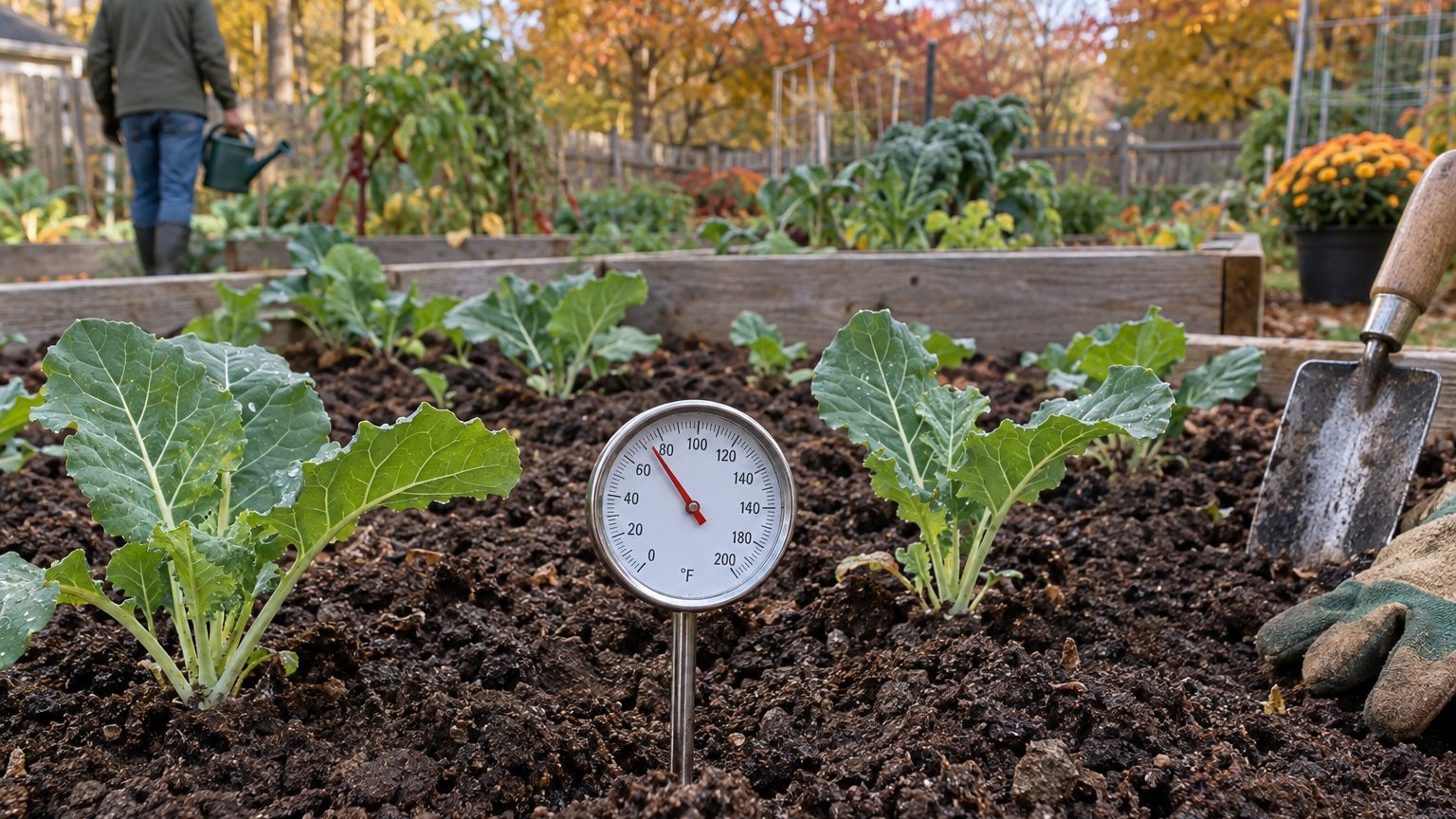
Push a soil thermometer into the soil and check it in the morning, when the reading is at its lowest. Collard seed will sprout in cool soil, and it moves faster as the soil warms. Transplants can go out once the ground is workable and the nights no longer drop below freezing. Inland, that often happens after the last frost, because wet spring ground lags behind the air.
Along the coast the problem is reversed. Soil in a sunny summer bed can run hot enough to make germination patchy and seedlings stall. Sowing moves to the cooler side of the calendar instead.
When should you sow collards in coastal and southern California?
Late summer through fall is the most dependable window. Plants sown then grow through mild weather, and the picking runs from late fall into spring. A spring sowing also works, but the plants then have to get through the first hot weeks of summer. Mature plants can hold up if they get steady water and afternoon shade, though the leaves turn tougher and stronger in flavor.
In the inland valleys, the Sierra foothills and the north, sow as soon as the soil is workable in spring for an early crop. A second sowing in summer lets the plants establish before fall, and your county extension office can date the first fall freeze for your town. The Growing Collards: One Planting, Months of Harvest guide covers the single-planting approach that suits mild-winter beds.
A final point on the date question: California spans USDA zones 5a to 11a on the 2023 Plant Hardiness Zone Map, so a recommendation built for the Los Angeles basin misleads a gardener in the Sierra foothills. The coast and the mountains might as well be different countries as far as a collard plant is concerned.
How long the season lasts here
The Los Angeles reference station has 365 frost-free days, with no mean last spring frost and no mean first fall frost to bracket them. Cold never closes the window, which changes how you plan. The question shifts from “how much season is there?” to “which months are comfortable for the plant?”
Can you sow collards more than once in California?
Yes, and in the frost-free zones it is the better plan. A single large sowing produces a glut and then a gap. Smaller sowings every few weeks through the cool months keep young, tender plants coming along behind the older ones. Each plant gives leaves for a long stretch, so you rarely need more than a handful at any one time.
Where the winter low stays mild, a plant picked a few leaves at a time from the bottom up can stay productive for months. Pull plants that bolt, which means sending up a flower stalk, or that have turned bitter and tough. Replace them from the next sowing.
Is transplanting worth it in a long season?
With a long window, you can sow directly and skip the transplant risk altogether. Direct sowing avoids root disturbance, and seedlings thinned to the right spacing tend to settle in quickly. Transplants earn their place when you want to bridge a hot spell, when the bed is occupied until late, or when a gardener starts seed in a protected spot while the bed finishes another crop.
Before you buy or plant a transplant, slide it out of the pot and look at the roots. White, loose roots running through the soil ball are what you want. A dense mat of circling roots should be teased apart before planting, and a plant with brown, soft roots goes back.
Inland, where a freeze does end the season, the window is shorter and the first sowing may be the only one. Transplants then earn their keep because they start the clock early, and the root check matters more, since a stalled plant has no time to recover. Gardeners comparing California with the Southeast can look at Growing Collards in Georgia and Growing Collards in North Carolina, where freezes and humid summers set a different rhythm for the same crop.
Heat and water in California

Across most of California, rain falls in the cool months and summers run dry. A collard plant has to be watered through that dry season by the gardener or it will not stay tender. Heat and water supply set the limits in summer, and the winter low decides what kind of crop the bed can be.
Do collards survive California summers?
They survive more readily than they thrive. Hot, dry weather pushes the plants toward bolting and makes leaves tough and bitter. Stressed plants also draw aphids and whiteflies, which are easier to prevent than to remove. Afternoon shade from a shade cloth or a taller crop, a thick mulch over the root zone, and steady moisture all help. Mulch keeps the soil cooler and holds moisture, which also stretches what your water allowance covers during a restriction.
Drip lines or soaker hoses put water at the root and keep the foliage dry, which saves water and cuts disease. Deep, less frequent watering beats a daily sprinkle. Check local water rules before you plan a summer bed, because some districts limit irrigation days and hours.
Along the cool, foggy north coast, the problem is the reverse. Where summers stay cool and damp, plants ripen slowly and gather mildew and other leaf diseases. Give them wider spacing, morning sun and good air movement. Water the soil and not the leaves.
What does the winter low change about the bed?
The coldest month at the Los Angeles reference station has a mean daily minimum of 49.1°F (NOAA 1991-2020 Climate Normals). That is mild enough to keep collards growing through winter. Where the coldest month stays that mild, they become a standing crop, picked leaf by leaf.
Where winter gets colder, collards become an autumn crop. They tolerate light frost, and the cold sweetens the leaves, but a hard freeze ends the planting. The Central Valley, the Sierra foothills and the northern interior sit in that second group, and the bed there is planned around the first fall freeze and not around summer.
Collards share their troubles with cabbage, kale and mustard, and turnip and rutabaga belong to the same brassica family. Caterpillars, black rot and clubroot move between them. A bed that follows cabbage with collards, or turnips with collards, has rotated nothing. Rotate away from the whole family and give the ground a rest before brassicas return.
Which collards suit California
The right collard depends on where in the state the bed sits. Choose by type first, then check which varieties have been trialed near you. Because California runs from USDA zone 5a to 11a, no single variety recommendation is useful across the whole state.
Which types suit a short inland season?
Where a freeze ends the season, favor the earliest-maturing types. They give a usable harvest before hard cold arrives. Compact plants are easier to protect with row cover, and a quick start matters more than a tall plant. Check seed packets for words like “early” in the description.
Which types suit hot summers and humid pockets?
Where summers are hot, look for open, upright plants that give airflow around the leaves, and plan shade and mulch at the root. Where summers are cool and damp, as in the foggy coast, disease resistance should be the first thing you look for. Seed packets and catalogs list the diseases a type resists, and the line is worth reading closely. For a standing winter crop, tall upright types that keep making new leaves from the top suit the mild-winter coast best.
Where do you find varieties trialed in California?
A named variety recommended by someone else may perform poorly in your conditions, and that is a good reason to ask locally. University of California Agriculture and Natural Resources runs advisors in the counties across the state, and their staff know what has been tried near you. Ask about variety trials, the best sowing months for your microclimate, and the pest pressures that show up in your area. Those answers carry more weight than any list from outside the state.
Common questions
Can you grow collards in California all year?
In frost-free coastal and southern areas you can grow them nearly year-round, though summer demands shade, mulch and steady water. The easiest months are late summer through spring. In freezing regions the season ends at the hard freeze.
Do collards need frost to taste good?
Cold weather sweetens the leaves, but a frost is not required. Collards grown through a mild winter on the coast still develop good flavor as the weather cools. Hot spells make them bitter.
How often should you water collards?
Keep the top few inches of soil evenly moist and do not let the bed dry out between waterings. Deep watering at the root with drip or soaker lines works best, and mulch reduces how often you need to water. Check local irrigation restrictions first.
Can you plant collards where turnips or rutabagas grew?
Avoid it. Turnips and rutabagas are brassicas, like collards, cabbage, kale and mustard, and they share pests and diseases. Plant collards in a bed that has been free of the whole family.